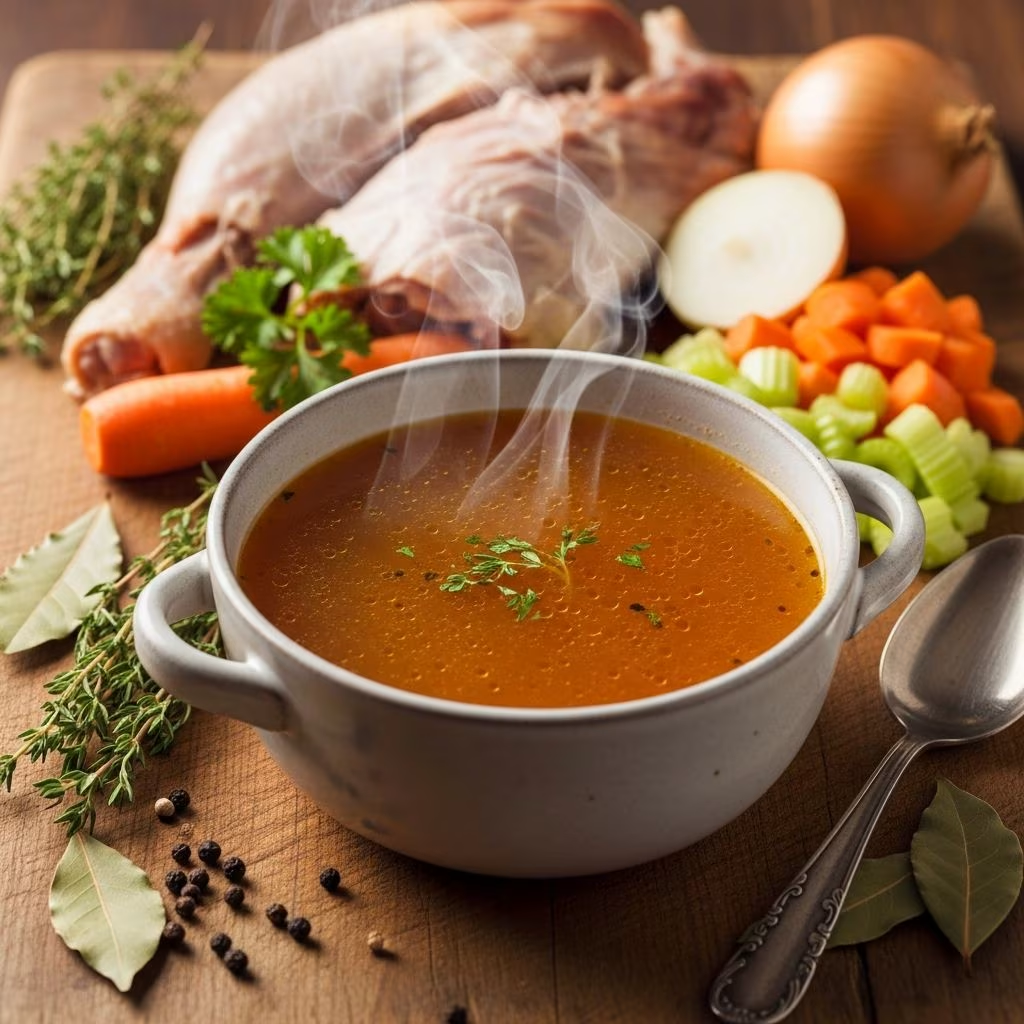
Turkey stock represents one of the most valuable foundations in home cooking, offering a rich, savory base that elevates countless dishes throughout the year. Whether you’re preparing holiday gatherings or everyday meals, understanding how to craft this ingredient from scratch transforms your kitchen’s capabilities. This comprehensive guide explores every aspect of turkey stock creation, from ingredient selection through storage and culinary applications.
Understanding the Fundamentals of Turkey Stock
Turkey stock differs from simple broth in its composition and cooking methodology. Stock develops its character through prolonged simmering of bones, connective tissues, and aromatic vegetables, extracting gelatin, minerals, and deep flavors that create a luxurious mouthfeel. The process requires patience but demands minimal active participation, making it an ideal project for home cooks seeking to maximize their culinary investments.
The distinction between using a leftover carcass and purchasing raw turkey parts lies in preparation time and flavor development. A cooked carcass requires less cooking time—typically three to four hours—while raw turkey wings and drumsticks benefit from roasting before simmering, which develops complex, caramelized flavors through the Maillard reaction.
Essential Ingredients for Stock Preparation
Creating exceptional turkey stock begins with understanding your ingredient options and their individual contributions to the final product.
Primary Protein Components
- Cooked Turkey Carcass: The most economical option, typically yielding 2.5 to 3 quarts of stock. Contains residual meat, skin, and bones that contribute both flavor and body.
- Raw Turkey Wings: Three to five pounds of wings provide substantial flavor without requiring a holiday bird. Their high collagen content produces exceptional gelatin development.
- Turkey Drumsticks: Two large drumsticks contribute meaty flavor and substantial bone content, ideal when combined with wings for deeper complexity.
- Turkey Necks: Optional but highly recommended additions that intensify savory characteristics and contribute additional gelatin.
Aromatic Vegetables and Flavoring Elements
The mirepoix foundation—carrots, celery, and onion—provides the aromatics essential to stock development. Carrots contribute subtle sweetness, celery adds herbal notes, and onions offer deep umami character. Cut vegetables into uniform two-inch pieces to maximize surface area while maintaining structural integrity throughout extended simmering.
Fresh herbs including parsley, thyme, and bay leaves introduce complexity without overpowering delicate flavors. Garlic cloves, peppercorns, and optional sage or tarragon allow for personalization based on intended culinary applications. Some cooks incorporate apple cider vinegar to enhance mineral extraction from bones, though this remains optional.
Equipment Requirements and Preparation
Successful stock production requires minimal equipment but demands proper sizing. An eight-quart stockpot accommodates ingredients comfortably while allowing adequate water coverage. A fine-mesh strainer or cheesecloth effectively separates solids from liquid without compromising clarity. Additional useful items include a thermometer for monitoring simmer temperature, a wooden spoon for skimming, and storage containers for finished stock.
Begin preparation by breaking turkey carcasses into four to six-inch pieces to maximize surface area and ensure even cooking. If using raw turkey parts, pat them completely dry before roasting—moisture prevents proper browning and caramelization essential to flavor development.
Roasting Method for Enhanced Flavor Development
Creating golden turkey stock begins with roasting raw turkey parts before simmering. This preliminary step develops the deep, complex flavors that distinguish exceptional stock from mediocre versions.
Roasting Process
Preheat your oven to 450 degrees Fahrenheit. Arrange turkey wings and any necks on a sheet pan, drizzle lightly with olive or neutral oil, and season generously with kosher salt and freshly ground black pepper. Roast for forty to fifty minutes, turning pieces once or twice halfway through, until deeply golden brown and caramelized on all surfaces.
After removing from the oven, transfer the roasted turkey parts directly to your stockpot. Pour one cup of water onto the used sheet pan, using a wooden spoon or spatula to scrape up caramelized bits and flavorful drippings. Add all collected pan juices and drippings to the stockpot—this deglazing step preserves valuable browned flavor compounds.
The Simmering Process: Building Complex Flavors
Combine your prepared turkey parts, cut aromatic vegetables, fresh herbs, garlic, peppercorns, and bay leaves in the stockpot. Add enough cold water to cover ingredients almost completely, reaching approximately one inch below the pot’s rim.
Temperature Management and Cooking Duration
Bring the pot to a full rolling boil over high heat. Once boiling, immediately reduce heat to medium-low, establishing a gentle, steady simmer. Skim white foam and impurities from the surface during the first fifteen to twenty minutes—these proteins rise as the stock heats and should be discarded to maintain clarity.
Simmer times vary based on protein source. A cooked carcass typically requires three to four hours, while raw turkey parts benefit from four to six hours of simmering. Some traditional methods employ eight-hour stovetop simmering or overnight cooking in a low oven at 180 to 200 degrees Fahrenheit.
Maintain a gentle simmer throughout cooking—aggressive boiling breaks down bone structure, clouding the stock and extracting unwanted flavors. The surface should barely ripple, with occasional small bubbles rising slowly. Expect gradual liquid reduction as water evaporates; this concentration intensifies flavors naturally.
Vegetable and Herb Addition Timing
Two distinct approaches exist regarding aromatic vegetable introduction. Some cooks combine all vegetables at the beginning for unified flavor development over hours. Others add vegetables after initial cooking periods—particularly beneficial when simmering for extended durations, as vegetables can become overcooked and bitter with prolonged exposure.
For longer cooking methods, consider adding vegetables after five hours of simmering the bones alone. This approach preserves fresh vegetable character while still extracting their beneficial contributions. Fresh herbs respond best to addition during the final hour of cooking, preserving their delicate aromatic compounds.
Straining and Clarification Methods
Once cooking completes, remove the pot from heat and allow the stock to cool for thirty minutes to one hour. This resting period permits solids to settle and facilitates easier separation.
Straining Techniques
Place a fine-mesh strainer over a large bowl or clean pot. Using tongs, remove large bone and vegetable pieces, discarding them completely. Pour the remaining stock through the strainer, allowing liquid to flow naturally without forcing. For exceptionally clear stock, line your strainer with cheesecloth before pouring, though this adds time and labor.
The resulting strained liquid may appear slightly cloudy—this indicates successful gelatin extraction and contributes to superior mouthfeel and body. Some cooks prefer crystal-clear stock for specific applications, achievable through additional straining through cheesecloth or careful decanting once congealed fat solidifies during refrigeration.
Storage and Preservation Strategies
Proper storage extends your stock’s utility significantly. Cool the finished stock to room temperature before transferring to storage containers. Refrigerate in covered containers for up to four days, or freeze in quart containers, ice cube trays, or specialty stock containers for extended preservation.
When refrigerated, fat naturally congeals on the surface, creating a protective seal that actually extends shelf life. Some cooks deliberately preserve this fat layer for use in gravy production or cooking applications. Remove the fat layer only when using the stock for applications where you prefer reduced fat content.
Frozen stock remains viable for three to four months when properly sealed. Label containers with contents and preparation dates for easy identification. Thaw overnight in the refrigerator before use, or heat frozen stock gently in a saucepan until thawed and ready for application.
Comparing Cooking Methods: A Comprehensive Overview
| Method | Cook Time | Protein Source | Best For | Considerations |
|---|---|---|---|---|
| Stovetop Simmer | 3-6 hours | Cooked carcass or raw parts | Active cooks, day-of preparation | Requires monitoring; gentle heat adjustment needed |
| Low Oven Method | 8+ hours | Raw turkey parts | Overnight cooking, hands-off approach | Set oven to 180-200°F; minimal monitoring required |
| Roasted then Simmered | 4-6 hours plus roasting | Raw turkey wings/necks | Maximum flavor development | Requires roasting step; superior depth of flavor |
Culinary Applications and Usage
Turkey stock serves as the foundation for countless holiday and everyday dishes. Traditional Thanksgiving gravy gains body and depth from quality stock rather than relying solely on pan drippings. Soups—from simple turkey and vegetable combinations to complex bisques—benefit enormously from homemade stock’s superior flavor profile.
Braise turkey parts or other proteins using stock as the braising liquid, infusing meat with subtle flavors while cooking. Rice pilaf, stuffing, and other grains become exponentially more flavorful when cooked in stock rather than plain water. Even vegetable sides gain sophistication when finished with a splash of quality turkey stock.
Frequently Asked Questions About Turkey Stock
Can I make turkey stock from a raw carcass?
Yes, though raw carcasses benefit from roasting before simmering. Break the carcass into pieces, roast at 450 degrees Fahrenheit for thirty to forty minutes until golden, then proceed with standard simmering.
Why does my stock taste weak or thin?
Insufficient cooking time or too much water relative to bones causes weak stock. Ensure adequate bone-to-water ratio and simmer for at least four hours. Reducing finished stock further concentrates flavors naturally.
Is cloudy stock inferior to clear stock?
Cloudiness indicates gelatin and collagen extraction—actually desirable characteristics contributing to mouthfeel and body. Clear stock contains less gelatin and may feel thinner on the palate.
Can I use chicken parts instead of turkey?
Absolutely. Chicken stock follows identical methodology, though cooking time reduces to two to three hours for cooked carcasses due to smaller bone structure.
How much stock should I expect to yield?
A single cooked turkey carcass typically produces two and a half to three quarts of finished stock after straining and reduction.
Advanced Techniques for Stock Enhancement
Experienced cooks employ several techniques to elevate stock quality further. Double-roasting involves roasting both initial turkey parts and aromatic vegetables before combining—this develops additional caramelized flavor layers but requires additional time and oven space.
Reduction concentration intensifies finished stock by simmering after straining, evaporating water while concentrating flavors. Reduce by half or more depending on desired intensity and intended storage. Frozen reduced stock occupies less freezer space while delivering equivalent flavor contribution.
Infusing finished stock with additional aromatics—perhaps a bay leaf, peppercorns, and fresh herbs—customizes flavor profiles for specific culinary applications without requiring additional long cooking periods.
Conclusion: Mastering Turkey Stock Production
Homemade turkey stock represents an achievable culinary achievement that rewards minimal effort with maximum flavor dividends. Whether you employ a quick three-hour stovetop method using a roasted carcass or invest in an overnight low-oven approach using raw parts, the resulting stock elevates your cooking substantially. By understanding ingredient selection, temperature management, and storage methodology, you transform holiday bird remains or inexpensive turkey parts into liquid gold that enhances everything from gravy to grain dishes. Stock your freezer with multiple containers of this foundational ingredient and experience the confidence that comes from knowing your kitchen’s flavor foundation rests on genuine, homemade excellence.
References
- Homemade Turkey Stock Recipes and Techniques — Preppy Kitchen. Accessed April 2026. https://preppykitchen.com/turkey-stock/
- Best Turkey Stock Recipe for Holiday Cooking — How Sweet Eats. Accessed April 2026. https://www.howsweeteats.com/2020/11/turkey-stock-recipe/
- Golden Turkey Stock: Flavor Development Methods — Alison Roman. Accessed April 2026. https://www.alisoneroman.com/recipes/golden-turkey-stock/
- Easy Turkey Stock from Raw and Cooked Bones — Michael Ruhlman. Accessed April 2026. https://ruhlman.com/easy-turkey-stock/
- Turkey Bone Broth: Extended Simmering Methods — The Delicious Life. Accessed April 2026. https://thedeliciouslife.com/how-to-make-roast-turkey-stock-slow-cooker-and-stove-top/