The Old Fashioned stands as one of the most iconic cocktails in history, a simple yet profound blend of whiskey, sugar, bitters, and water that has captivated drinkers for generations. Its enduring popularity lies in its straightforward elegance, allowing the quality of its components to shine through. Whether you’re a novice mixologist or a seasoned bartender, perfecting this drink requires attention to detail, quality ingredients, and a touch of tradition. In this guide, we’ll explore everything from its origins to modern adaptations, equipping you with the knowledge to craft a flawless Old Fashioned every time.
The Rich Heritage of the Old Fashioned
Tracing back to the early 19th century, the Old Fashioned emerged during a time when cocktails were rudimentary mixtures of spirits, sweetness, and aromatics. The first documented reference appeared in 1806 in a St. Louis newspaper, describing a drink made with whiskey, sugar, water, and bitters—a formula that remains largely unchanged today. By the mid-1800s, as cocktail culture evolved with more complex recipes, patrons began requesting drinks ‘the old-fashioned way,’ giving the cocktail its name.
James Thurber’s 1930s cartoon famously depicted a debate over its preparation, highlighting early controversies like the use of fruit muddling versus a cleaner build. This spirit lives on, with bartenders worldwide debating nuances while honoring its roots. The drink’s resurgence in the 2000s, fueled by the craft cocktail movement, cemented its status as a staple in bars from speakeasies to high-end lounges.
Selecting Premium Ingredients
Greatness starts with superior components. Here’s a breakdown of what to seek:
- Whiskey: Bourbon or rye are traditional choices. Opt for 100-proof expressions like high-rye bourbons for spice or wheated varieties for smoothness. Avoid flavored or low-quality blends.
- Sugar: Demerara sugar cubes dissolve slowly, adding rich caramel notes. Raw cane sugar syrup works for quicker integration.
- Bitters: Angostura aromatic bitters provide essential spice and depth. Experiment with orange bitters for citrus lift.
- Water: Filtered or whiskey’s natural proof dilution prevents off-flavors.
- Garnish: Expressed orange peel and Luxardo cherries elevate aroma without overpowering sweetness.
Investing in these elevates the drink from ordinary to extraordinary. Store whiskey at room temperature and bitters in a cool, dark place for longevity.
Essential Tools for the Home Bar
Minimalism defines the Old Fashioned, but the right gear ensures precision:
| Tool | Purpose | Recommendation |
|---|---|---|
| Old Fashioned Glass (Rocks Glass) | Low profile for gentle stirring | 10-12 oz double old-fashioned |
| Bar Spoon | Even stirring without dilution | Teardrop design, 12-inch |
| Jigger | Accurate measurements | Japanese-style for versatility |
| Muddler | Sugar cube crushing (optional) | Wooden, non-porous |
| Channel Knife | Peel twisting for oils | Precision citrus tool |
These tools, often under $50 total, transform your setup into a professional station.
Classic Old Fashioned Recipe: Step-by-Step
Yield: 1 cocktail | Prep Time: 3 minutes
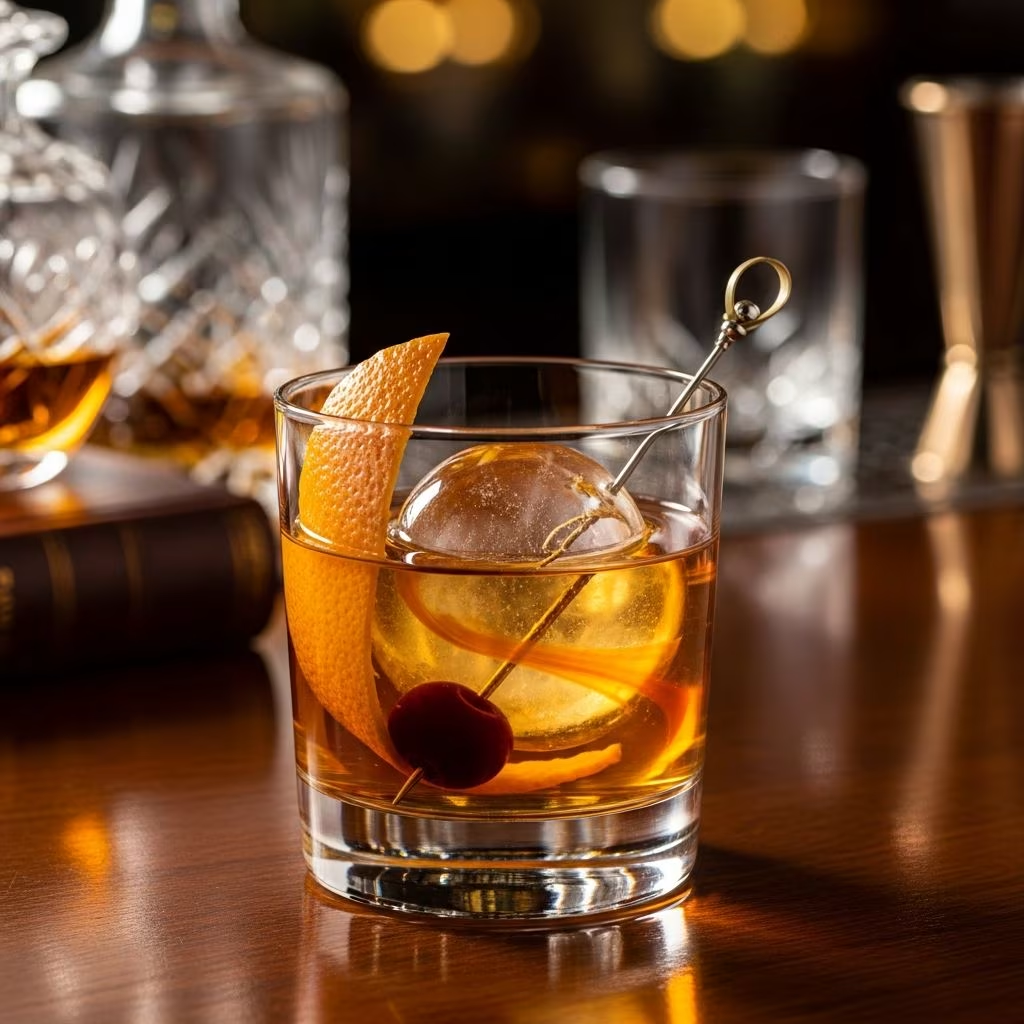
- Place 1 sugar cube in a rocks glass. Add 2 dashes Angostura bitters and 1 tsp water. Muddle until dissolved into a paste.
- Add 2 oz bourbon or rye whiskey.
- Fill glass with a large ice cube or sphere for slow dilution.
- Stir gently with a bar spoon for 20-30 seconds until chilled.
- Express an orange peel over the drink by twisting, then rub the rim. Drop in peel and add a Luxardo cherry.
- Sip slowly, appreciating the layered flavors.
This method prioritizes clarity and balance, yielding a silky texture with whiskey-forward profile.
Mastering Stirring and Ice Techniques
Stirring isn’t just mixing—it’s about integration. Use a deliberate, circular motion to chill without bruising the spirit. Aim for 25 rotations, tasting for dilution. Large format ice minimizes melt, preserving strength; hand-cut cubes or spheres are ideal as they have less surface area.
Avoid shaking, which introduces foam and excessive air. Temperature control is key: pre-chill glassware and whiskey slightly for consistency. Pro tip: stir to 45°F for optimal mouthfeel.
Contemporary Twists on the Classic
While tradition reigns, innovation keeps the Old Fashioned fresh:
- Spiced Rum Old Fashioned: Swap whiskey for aged rum, add clove bitters.
- Maple Old Fashioned: Use maple syrup for autumnal depth.
- Smoked Old Fashioned: Infuse with lapsang souchong tea or a smoking gun.
- Applejack Variation: Apple brandy with cinnamon bark syrup.
- Mezcal Old Fashioned: Smoky agave spirit with chocolate bitters.
These maintain core ratios (2:1 spirit-to-sweetener) while introducing seasonal flair.
Troubleshooting Common Mistakes
Even experts falter—here’s how to sidestep pitfalls:
- Too Sweet: Reduce sugar; taste pre-garnish.
- Overly Watery: Use larger ice, stir less.
- Fruit Muddle Mess: Skip cherries/oranges in build; garnish only.
- Weak Whiskey Taste: Choose bolder proofs.
- Bitters Overload: One dash at a time.
Practice builds intuition; log batches for refinement.
Pairing the Old Fashioned with Food
This cocktail’s bold profile complements hearty fare. Pair with charred steaks, smoked brisket, or dark chocolate desserts. Cheese boards with aged cheddar or blue veining harmonize with its spice. For lighter bites, try bacon-wrapped dates or walnut brittle.
Temperature matters: serve at 50-55°F to align with room-temp charcuterie.
Scaling Up for Batches and Parties
Entertaining? Batch ahead: For 10 servings, combine 20 oz whiskey, 5 oz simple syrup, 20 dashes bitters in a bottle. Chill, then pour over ice per glass. Add fresh garnishes. This ensures consistency without last-minute fuss.
Health and Moderation Notes
Enjoy responsibly. A standard Old Fashioned packs about 150-200 calories, mostly from alcohol and sugar. Hydrate between sips and limit to 1-2 per sitting per CDC guidelines on moderate drinking.
FAQs
What whiskey is best for an Old Fashioned?
Bourbon for sweetness, rye for spice. High-rye bourbons like Wild Turkey 101 offer balance.
Should I muddle fruit in an Old Fashioned?
No—modern consensus favors no muddling to avoid pulp and off-flavors. Garnish separately.
Can I make it without sugar?
Try agave or honey, but adjust for viscosity. Keto versions use monk fruit.
How do I express orange oils properly?
Twist peel skin-side out over the drink; oils spray onto surface and glass.
What’s the ideal dilution level?
20-25% water by volume, achieved through precise stirring and quality ice.
Conclusion: Elevate Your Cocktail Game
The Old Fashioned’s beauty lies in its simplicity, rewarding precision with profound satisfaction. Experiment confidently, respect the classics, and soon you’ll craft drinks that rival any bar. Cheers to timeless perfection.
References
- Imbibe! From Absinthe Cocktail to Whiskey Smash, a Salute in Stories and Drinks to “Professor” Jerry Thomas, Pioneer of the American Bar — David Wondrich. 2007 (revised 2015). https://www.penguinrandomhouse.com/books/533026/imbibe-updated-edition-by-david-wondrich/
- USDA Dietary Guidelines for Americans, 2020-2025 — U.S. Department of Health and Human Services and U.S. Department of Agriculture. 2020-12-01. https://www.dietaryguidelines.gov/sites/default/files/2020-12/Dietary_Guidelines_for_Americans_2020-2025.pdf
- Death & Co: Modern Classic Cocktails — David Kaplan et al. 2014. https://ten-speed.com/books/death-co/
- International Bartenders Association Official Cocktails — IBA. 2020-10-26. https://iba-world.com/iba-official-cocktails/