The banana split represents one of America’s most iconic desserts, combining fresh fruit, creamy ice cream, and an array of delectable toppings into a single indulgent creation. This timeless treat has delighted generations of dessert enthusiasts with its perfect balance of flavors and textures. Whether you’re a seasoned dessert maker or a beginner looking to master a classic, understanding the fundamentals of constructing an exceptional banana split will elevate your dessert game and impress anyone fortunate enough to enjoy your creation.
Understanding the Foundation: Core Components
Every memorable banana split begins with understanding its essential building blocks. The foundation of this dessert rests on carefully selected ingredients that work harmoniously together to create a satisfying and visually appealing treat.
The Banana: Starting with Quality Fruit
The banana serves as both the structural foundation and the primary fruit element of this dessert. Selecting the right banana is crucial for achieving optimal results. Choose bananas that are ripe but still slightly firm, avoiding those that are overly soft or have brown spots, as these will be difficult to slice cleanly and may become mushy when combined with cold ice cream. The ideal banana should have a bright yellow color with minimal browning.
Preparation technique matters considerably when working with bananas. Peel the banana carefully to avoid bruising, then slice it lengthwise to create two long halves. Some variations call for additional cross-cutting to create smaller, more manageable pieces. The sliced banana halves are typically arranged along the sides of a shallow, elongated bowl, creating a natural frame that holds the ice cream scoops in place while adding visual appeal to the finished dessert.
Ice Cream Selection: The Triple Crown
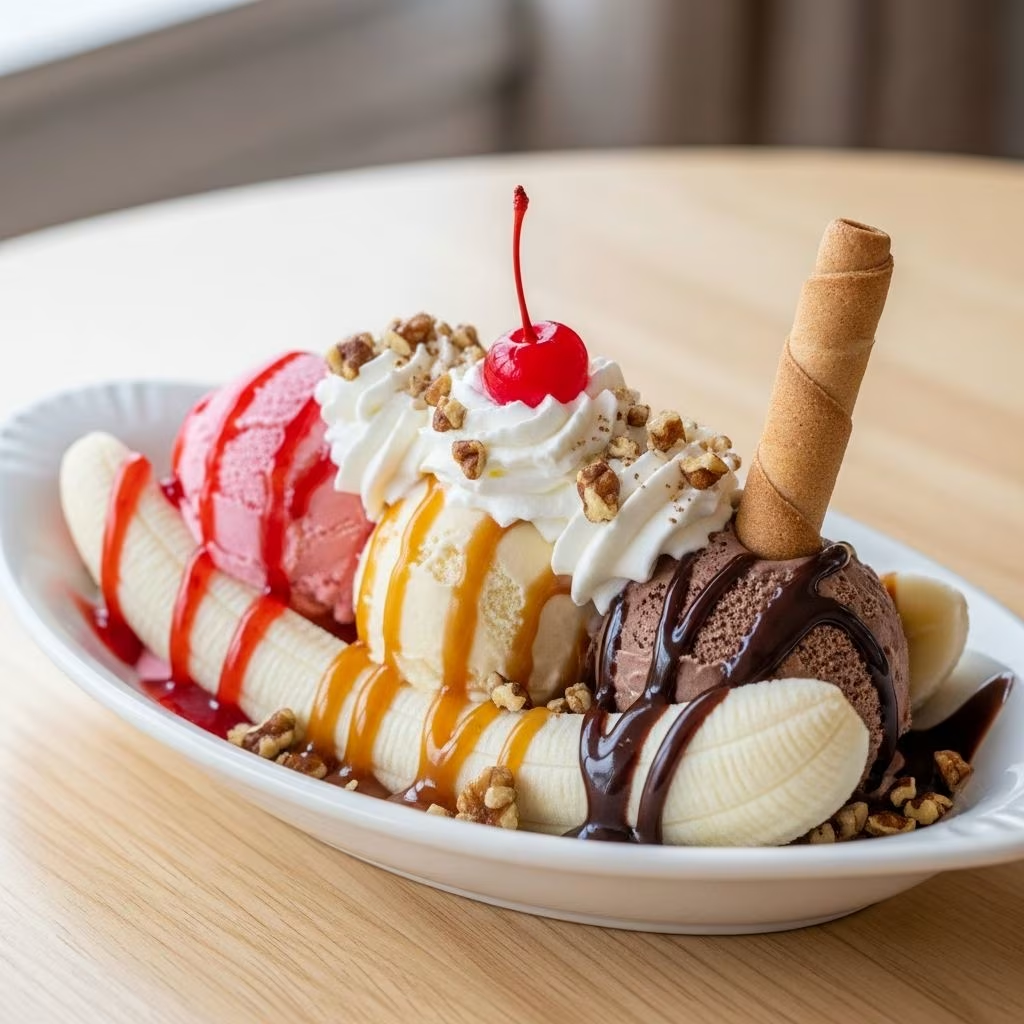
Traditional banana splits feature three distinct ice cream flavors arranged in a row, creating a visually striking presentation. The classic combination includes vanilla, chocolate, and strawberry ice cream, each offering its own flavor profile and textural contribution. This tri-color arrangement not only tastes exceptional but also creates an aesthetically pleasing appearance that makes the dessert immediately recognizable.
When selecting ice cream, quality makes a significant difference in the final result. Premium ice cream with higher fat content tends to offer richer flavor and smoother texture compared to lower-quality alternatives. Each scoop should be generous and well-formed, typically using an ice cream scoop to ensure consistency. Some recipes call for multiple scoops of each flavor, while others stick to the traditional single scoop of each variety.
The Sauce Layer: Creating Flavor Complexity
The sauces applied to each ice cream flavor represent the next critical layer of flavor development in a well-constructed banana split. These liquid toppings complement each ice cream variety while adding temperature contrast and richness to the overall experience.
Classic Sauce Pairings
Traditional banana split presentations follow a specific sauce-to-ice-cream pairing system. Hot fudge sauce typically adorns the chocolate ice cream, creating a warm-and-cold contrast that enhances the chocolate flavor. Caramel sauce usually accompanies the vanilla ice cream, adding sweetness and depth to the mild vanilla notes. Pineapple sauce or strawberry syrup crowns the strawberry ice cream, either reinforcing or complementing the fruit flavor depending on the sauce selected.
Beyond these traditional choices, creative variations allow for experimentation. Butterscotch sauce offers a nutty complexity when paired with vanilla ice cream. Strawberry sauce can be made fresh from puréed berries or selected from quality commercial options. Hot fudge sauce can be drizzled generously for those who favor intense chocolate flavor, or applied more sparingly for subtle contribution.
| Ice Cream Flavor | Traditional Sauce | Alternative Options |
|---|---|---|
| Chocolate | Hot Fudge | Chocolate Syrup, Mocha Sauce |
| Vanilla | Caramel | Butterscotch, Dulce de Leche |
| Strawberry | Pineapple or Strawberry | Cherry, Raspberry |
The Finishing Touches: Elevation Through Toppings
The final presentation of a banana split depends heavily on thoughtfully selected toppings that add textural contrast and visual appeal to the finished dessert.
Whipped Cream: The Crowning Element
Freshly whipped cream serves as a generous topping that provides a light, airy contrast to the denser ice cream and sauce layers below. A substantial dollop of whipped cream can be placed atop each ice cream scoop or applied in one generous swirl across the entire dessert. Some presentation styles involve piping the whipped cream for a more refined appearance, while casual versions embrace a more rustic application.
Nuts: Adding Crunch and Complexity
Crushed or chopped nuts provide essential textural contrast that prevents the dessert from becoming monotonously creamy. Peanuts represent the most traditional choice, offering familiar flavor and satisfying crunch. Walnuts contribute an earthy depth, while pecans add subtle sweetness. Even pistachios can work beautifully for those seeking something slightly different from the conventional approach. These nuts should be roughly chopped rather than pulverized, allowing them to maintain their textural integrity when mixed with ice cream.
Cherries and Additional Garnishes
Maraschino cherries provide both visual pop and a bright flavor note that cuts through the richness of the other components. These should be placed strategically atop the whipped cream for maximum visual impact. Some variations incorporate fresh berries, chocolate-dipped strawberries, or other fresh fruit additions for added nutrition and visual interest.
Assembly Techniques: From Components to Complete Dessert
The Step-by-Step Assembly Process
Creating a professional-looking banana split requires following a logical assembly sequence that ensures each component is properly positioned and visually appealing.
- Begin by selecting an appropriately sized serving vessel—a shallow, elongated bowl works best for traditional presentations
- Prepare the banana by peeling and slicing it lengthwise, then position both halves along the sides of the bowl
- Scoop three generous portions of ice cream and position them in a row down the center of the bowl, nestled between the banana pieces
- Apply sauces with intention, drizzling each sauce over its corresponding ice cream flavor
- Crown the entire creation with generous dollops of whipped cream positioned atop each ice cream scoop
- Sprinkle crushed nuts across the whipped cream for textural contrast
- Top with maraschino cherries placed strategically for visual appeal
- Serve immediately to ensure optimal temperature contrast and texture
Timing Considerations
Timing proves essential when preparing banana splits. Ice cream should come directly from the freezer, ensuring it maintains its structure and firmness. Bananas should be cut immediately before assembly to minimize oxidation and browning. Hot sauces should be applied just before serving to maintain temperature contrast. Whipped cream should be prepared fresh shortly before assembly whenever possible, though store-bought alternatives work in a pinch. The entire assembly process should take no more than ten minutes from start to finish.
Variations on a Classic: Creative Interpretations
The Giant Celebration Split
For serving a crowd, the traditional single-serving banana split can be expanded into a communal dessert. This variation uses multiple bananas, quarts of ice cream, generous quantities of sauces, and abundant toppings. Brownie chunks can be incorporated into this larger version, adding chocolate richness and textural variation. This approach works beautifully for parties, family gatherings, or special celebrations where shared indulgence creates memorable moments.
Seasonal and Flavor Variations
While the classic combination of vanilla, chocolate, and strawberry remains timeless, seasonal variations allow for creative exploration. Summer versions might incorporate fresh fruit toppings like berries or peaches. Winter interpretations could feature mint chocolate chip, butter pecan, or other seasonal flavors. Coffee ice cream paired with hot fudge creates a sophisticated flavor combination, while cookies and cream ice cream offers textural complexity.
Modern Dessert Innovations
Contemporary interpretations of the banana split continue evolving to suit modern palates. Some versions incorporate artisanal ice cream flavors like salted caramel, brown butter, or black licorice. Others add chocolate-dipped elements, crispy wafer cookies, or homemade granola for enhanced texture. Vegan and dairy-free versions utilize plant-based ice cream alternatives, allowing more people to enjoy this beloved dessert.
Ingredient Selection Guide: Quality Matters
Ice Cream Quality Considerations
The quality of ice cream directly impacts the final dessert experience. Premium ice cream with higher butterfat content typically offers superior flavor and smoother mouthfeel compared to lower-fat alternatives. When possible, seek out ice cream made with natural ingredients and authentic flavorings rather than artificial substitutes. Homemade ice cream represents another excellent option for those willing to invest time and effort.
Sauce Selection and Preparation
While commercial sauces offer convenience, homemade options often provide superior flavor and allow for customization. Hot fudge sauce made from quality chocolate delivers richer results than basic chocolate syrup. Fresh strawberry sauce prepared from ripe berries surpasses artificial strawberry syrup. Caramel sauce made from scratch offers complex sweetness impossible to replicate with commercial versions. Investing time in sauce preparation pays dividends in the final product quality.
Troubleshooting Common Issues
Ice Cream Melting Too Quickly
When ice cream softens faster than desired, ensure your bowl is chilled before assembly. Work quickly from preparation through serving. Consider freezing the assembled bowl for a few minutes before adding the final toppings. Applying hot sauces immediately before serving, rather than several minutes in advance, helps maintain ice cream firmness.
Achieving Proper Sauce Consistency
Sauces that are too thick won’t distribute properly, while overly thin versions lack visual appeal and may pool in the bottom of the bowl. Heat sauces gently to achieve optimal pourable consistency. If commercial sauces seem too thick, warming them slightly usually solves the problem. Homemade sauces should be tested before assembly to ensure they reach the desired consistency.
Serving Suggestions and Presentation Tips
The presentation of a banana split contributes significantly to the overall experience. Serve immediately upon completion for optimal temperature contrast between cold ice cream and warm sauces. Use appropriately sized bowls—too large and the dessert appears sparse; too small and components crowd uncomfortably. Provide long spoons that allow guests to easily reach all components simultaneously. Consider serving on a chilled plate for additional thermal stability.
Frequently Asked Questions
What’s the best way to prevent the banana from browning?
Slice the banana immediately before assembly and serve the completed dessert right away. While browning is primarily a visual concern rather than a taste issue, limiting the time between slicing and serving minimizes oxidation.
Can I prepare banana splits in advance?
Banana splits are best assembled to order for optimal quality. However, you can prepare components in advance: slice bananas and store them covered, prepare sauces and refrigerate them, and whip cream ahead of time. Assemble within minutes of serving for the best results.
Are there dairy-free options for banana splits?
Yes, plant-based ice cream alternatives have become increasingly sophisticated and tasty. Many commercial options now offer dairy-free sauces as well. Coconut whipped cream serves as an excellent alternative to traditional whipped cream.
What makes a banana split different from a sundae?
The key distinction lies in the structural presence of the banana. A banana split requires sliced banana as a foundational element, while a sundae features ice cream and toppings without fruit components.
How can I make the sauce warm when serving?
Prepare hot fudge and other sauces shortly before serving and apply them immediately for maximum temperature contrast. Alternatively, briefly warm sauces in a microwave or over gentle heat just before application.
References
- Professional Ice Cream Production Standards — International Dairy Federation. 2023. https://www.idf-dairy.org
- Fruit Ripeness and Quality Guidelines — United States Department of Agriculture, Agricultural Marketing Service. 2024. https://www.ams.usda.gov
- Temperature and Food Safety in Dessert Preparation — U.S. Food and Drug Administration. 2025. https://www.fda.gov/food