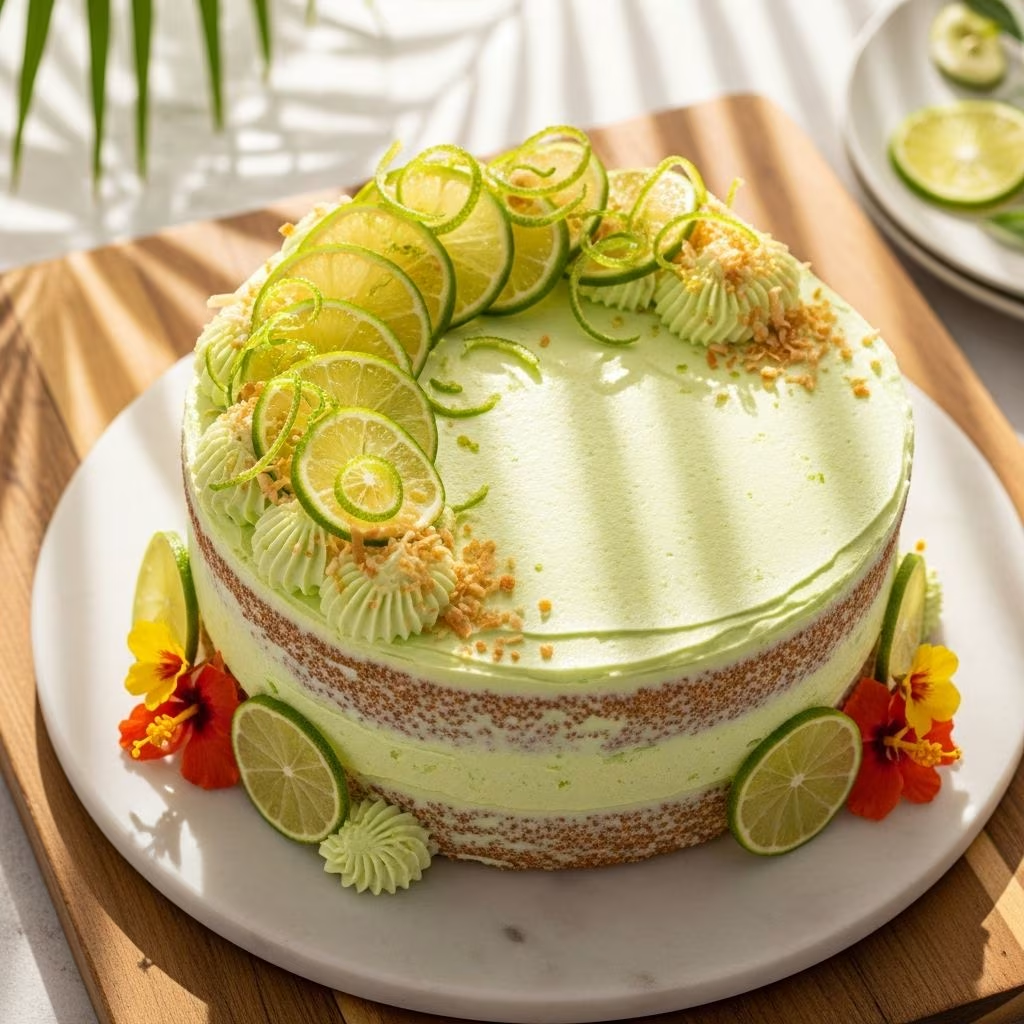
Key lime cake represents a delightful fusion of tropical flavors and classic baking techniques. Unlike its famous cousin, key lime pie, this cake version delivers the same bright, tangy citrus notes through a lighter, more forgiving format. The beauty of key lime cake lies in its versatility—it works equally well as an elegant dinner party dessert or a casual outdoor gathering treat. Whether you’re a seasoned baker or someone exploring homemade cakes for the first time, this comprehensive guide will walk you through every aspect of creating a stunning key lime cake that will impress your guests and satisfy your cravings.
Understanding the Flavor Profile and Appeal
The distinctive appeal of key lime cake stems from the unique tartness of key limes, which are smaller and more acidic than regular Persian limes commonly found in grocery stores. This heightened acidity creates a sophisticated flavor balance when combined with sweet cake layers and creamy frosting. The cake’s charm lies in achieving equilibrium between tartness and sweetness—too much lime juice results in an overpowering sour taste, while too little dilutes the signature flavor that makes this dessert special.
Fresh key lime juice serves as the cornerstone ingredient that distinguishes this cake from standard vanilla varieties. The bright, almost floral notes of authentic key lime juice cannot be replicated by bottled alternatives or regular lime juice, making sourcing genuine ingredients worth the effort. Many bakers discover that incorporating both lime zest and juice intensifies the citrus character without adding excessive moisture to the batter.
Essential Ingredients and Their Functions
The Cake Foundation
The structural integrity of your key lime cake depends on carefully selected dry ingredients. All-purpose flour provides the framework, while baking powder and baking soda work together to create lift and a tender crumb structure. The ratio of leavening agents matters significantly—too much creates a cake that rises aggressively then collapses, while too little produces a dense, heavy result.
Granulated sugar serves multiple purposes: sweetness, moisture retention, and texture development. The fine crystals dissolve into the wet ingredients, creating a smooth batter that rises evenly in the oven. Confectioner’s sugar appears in the frosting component, providing a silky texture that regular sugar cannot achieve.
Moisture Components
The wet ingredients create the crucial moist crumb that distinguishes exceptional cakes from mediocre ones. Vegetable oil, rather than butter, maintains moisture throughout the baking process and prevents the cake from drying out quickly. Sour cream or whole milk adds richness and tang, complementing the lime’s acidic notes perfectly. Fresh eggs, ideally at room temperature, incorporate air into the batter while binding dry and wet components together.
Lime Elements
Fresh key lime juice forms the backbone of authentic flavor. Lime zest—the colored outer layer of the peel—contains concentrated essential oils that deliver intense citrus aroma and taste. Many recipes call for both components, as juice provides flavor while zest contributes complexity and visual appeal. Some bakers incorporate lime extract or flavored gelatin to amplify the citrus character, though purists prefer working exclusively with fresh ingredients.
Frosting Components
Cream cheese frosting balances the lime’s tartness with creamy richness. Softened butter and room-temperature cream cheese blend into a smooth base, while confectioner’s sugar adds sweetness and body. Fresh key lime juice incorporated into the frosting creates harmony between cake and topping, while lime zest provides garnish appeal. Many recipes include optional green food coloring to achieve a visually striking pale green hue.
Preparation Techniques for Success
Temperature Matters
Bringing ingredients to room temperature before mixing significantly impacts the final texture. Room-temperature eggs incorporate more efficiently into the batter, creating better emulsification. Cold cream cheese for frosting becomes difficult to blend smoothly, resulting in lumps that undermine the finished texture. Setting ingredients on the counter for 30 minutes before starting yields superior results compared to using cold ingredients directly from the refrigerator.
Oven Preheating
A properly preheated oven ensures even baking and proper rise. Most key lime cake recipes call for temperatures between 325°F and 350°F. Lower temperatures (325°F) suit glass baking pans that conduct heat more aggressively, while standard 350°F works for metal pans. The preheating period allows the oven to stabilize at the target temperature, creating consistent heat distribution throughout the baking process.
Pan Preparation
Proper pan preparation prevents sticking and ensures easy cake removal. Greasing the pan with butter or cooking spray creates a barrier between batter and metal surface. Some bakers add a light flour coating to the greased surface for additional insurance. For layered cakes using multiple round pans, parchment paper circles cut to size eliminate any possibility of sticking, allowing for perfectly intact cake layers.
Mixing Methods and Batter Development
Dry Ingredient Combination
Whisking together flour, baking powder, baking soda, and salt distributes leavening agents uniformly throughout the flour. This step prevents baking powder or soda from concentrating in specific areas, which would create uneven rising and texture variations. A simple whisk performs this task effectively, requiring only 30 seconds of thorough mixing.
Wet Ingredient Preparation
Combining wet ingredients in a separate bowl before joining them with dry components follows the standard cake-mixing protocol. Adding oil, eggs, milk, lime juice, and lime zest to one vessel, then whisking or beating until combined, creates uniformity before incorporation into the dry mixture. This method prevents dry pockets from forming and ensures the lime flavoring distributes evenly.
Integration Process
The moment dry and wet ingredients meet requires careful attention. Overmixing develops excess gluten, creating tough, dense cakes with undesirable texture. Mixing just until ingredients combine ensures tender crumb. Some recipes employ a gentle folding technique rather than vigorous beating, which further reduces gluten development and creates exceptionally light, airy cakes.
Baking Process and Visual Cues
Pour prepared batter into the prepared pan, filling it approximately two-thirds full. Tap the pan gently on the counter to release trapped air bubbles, which prevents large holes in the finished cake. Place in the preheated oven and avoid opening the door during the first 20 minutes of baking, as temperature fluctuations can cause uneven rising.
Baking time varies based on pan size and oven characteristics, typically ranging from 20 to 35 minutes for standard cake pans. The cake reaches doneness when a toothpick inserted in the center emerges clean or with just a few moist crumbs. The cake’s surface should turn pale golden, and the edges may pull slightly away from the pan sides.
Remove from the oven and allow cooling in the pan for approximately 15 minutes. This resting period allows the cake structure to set sufficiently for unmolding without falling apart. Invert onto a wire cooling rack and cool completely before frosting—this step prevents frosting from melting into warm cake layers.
Frosting Techniques and Application
Creating the Perfect Frosting Base
Beat softened butter and cream cheese together until completely smooth and free of lumps. This typically requires 2-3 minutes of beating with an electric mixer. Gradually add confectioner’s sugar while continuing to beat, incorporating fresh key lime juice in stages. The frosting reaches ideal consistency when it holds stiff peaks yet remains spreadable without cracking.
Layering and Frosting
For layered cakes, place the first cake layer on a serving plate, then apply a generous frosting layer. Repeat with remaining layers, ensuring even application between layers. Crumb coat—applying a thin frosting layer over the entire cake—seals crumbs and creates a foundation for the final frosting coat. Chill for 15 minutes, then apply the final frosting layer for a polished appearance.
Garnishing Options
Fresh lime zest scattered across the frosting provides visual interest and flavor enhancement. Thin lime slices arranged decoratively on top create an elegant presentation. Whipped cream dollops offer textural contrast and additional richness. Some bakers dust the frosting with confectioner’s sugar for a refined, bakery-quality appearance.
Common Challenges and Solutions
| Challenge | Cause | Solution |
|---|---|---|
| Dense, heavy texture | Overmixing or excess flour | Mix only until combined; spoon flour into measuring cup without packing |
| Cake sinks in center | Underbaking or insufficient leavening | Verify oven temperature; increase baking time slightly |
| Dry crumb | Overbaking or insufficient oil | Reduce baking time; ensure adequate oil ratio |
| Frosting too soft | Warm ingredients or excess frosting | Chill frosting; use room-temperature ingredients |
| Overpowering lime flavor | Excessive lime juice or extract | Reduce lime juice; rely more on zest for flavor |
Storage and Serving Recommendations
Properly stored key lime cake maintains quality for several days. Keep unfrosted cake layers in an airtight container at room temperature for up to two days, or refrigerate for extended shelf life. Frosted cakes store best in the refrigerator, covered loosely with plastic wrap to prevent the frosting from drying while allowing minimal air exposure. Remove from refrigeration 30 minutes before serving to achieve optimal flavor and texture—cold frosting masks the delicate lime notes and becomes too firm to enjoy properly.
Freeze unfrosted cake layers wrapped individually in plastic wrap for up to three months. Thaw at room temperature before frosting and serving. Frosted cakes freeze less successfully, as frosting texture changes upon thawing, though they can be frozen for 2-3 weeks if absolutely necessary.
Ingredient Sourcing Tips
Finding authentic key limes requires knowledge of seasonal availability and sourcing options. Fresh key limes typically appear in produce sections from June through September, with peak availability in summer months. When unavailable, quality specialty grocery stores or online produce retailers offer fresh key limes year-round. Bottled key lime juice serves as an acceptable backup when fresh limes aren’t available, though fresh juice always produces superior flavor.
Regular Persian limes, while more commonly available, contain less juice and differ in flavor profile compared to key limes. Substituting regular limes produces acceptable results but delivers a noticeably different—less complex and slightly less acidic—final product. For the most authentic experience, prioritize sourcing genuine key limes when possible.
Frequently Asked Questions
- Can I substitute regular limes for key limes?
- Yes, though the flavor will be noticeably different. Regular limes are less acidic and more floral-forward. Use the same quantity of juice and zest from regular limes as your recipe calls for with key limes.
- Is bottled lime juice acceptable?
- Bottled juice works in an emergency but lacks the brightness of fresh juice. If using bottled, reduce the quantity slightly as it concentrates more intensely than fresh juice.
- How far in advance can I prepare this cake?
- Unfrosted layers can be prepared up to two days ahead and stored in an airtight container. Frost no more than 4 hours before serving for optimal frosting appearance and texture.
- Can I use a box cake mix as the base?
- Yes, vanilla or yellow cake mixes provide convenient shortcuts. Enhance with fresh lime juice and zest mixed into the batter according to package directions, then top with homemade key lime cream cheese frosting.
- What’s the difference between baking at 325°F versus 350°F?
- Lower temperatures (325°F) bake cakes more gently, particularly beneficial in glass pans which conduct heat aggressively. Standard metal pans typically use 350°F. Adjust based on your oven and pan material.
Variations and Creative Adaptations
Once you master the basic key lime cake, numerous creative variations await exploration. Adding coconut flakes to the cake batter creates a tropical twist that complements the lime beautifully. White chocolate shavings in or on the frosting introduce sweetness that balances tartness. Some bakers incorporate a lime curd layer between cake sections, adding moisture and intensifying lime flavor in specific areas.
For a lighter version, substitute sour cream with Greek yogurt, which maintains moisture while reducing fat content. Almond extract added to the frosting creates subtle complexity without overpowering the lime. Experimenting with these variations allows you to personalize the recipe and create your signature version.
Final Thoughts on Mastering Key Lime Cake
Creating an exceptional key lime cake requires attention to detail, quality ingredients, and understanding fundamental baking principles. The combination of moist, tender cake layers with tart lime flavor and creamy frosting creates a sophisticated dessert that impresses both casual diners and discerning palates. With practice and the techniques outlined in this guide, you’ll develop confidence in your baking abilities and consistently produce beautiful, delicious cakes that become your signature dessert.
References
- Food Science and Cooking: Understanding Flour and Gluten Development — University of Illinois Extension. 2023. https://extension.illinois.edu/
- Safe Food Storage Guidelines and Procedures — U.S. Food and Drug Administration. 2024. https://www.fda.gov/food/foodsafetytranslations/ucm113996.htm
- Citrus Fruits: Nutrition and Culinary Properties — United States Department of Agriculture National Institute of Food and Agriculture. 2022. https://www.nifa.usda.gov/