Creating the ideal sushi vinegar transforms ordinary rice into the glossy, flavorful base essential for authentic sushi. This seasoned mixture balances acidity, sweetness, and saltiness, elevating dishes from simple rolls to intricate nigiri. Home cooks can replicate professional results using basic pantry staples, following precise ratios and gentle heating techniques.
Understanding the Role of Sushi Vinegar
Sushi vinegar, also known as seasoned rice vinegar or awasezu, is the key to achieving the shiny, slightly sticky texture and tangy taste of traditional sushi rice. It infuses cooked short-grain rice with a harmonious blend of flavors, preventing it from becoming mushy or bland. Unlike plain rice vinegar, this version incorporates sugar and salt to create a syrupy dressing that coats each grain evenly.
The vinegar’s acidity cuts through the rice’s starchiness, while sugar adds subtle sweetness and helps preserve freshness. Salt enhances umami and aids in moisture control. When applied correctly to hot rice, it promotes a light sheen and firm yet tender consistency ideal for shaping sushi.
Core Ingredients for Authentic Flavor
Most recipes rely on three primary components: unseasoned rice vinegar, granulated sugar, and salt. Rice vinegar provides the mild, clean tang without overpowering sharpness found in white or apple cider varieties. Granulated white sugar dissolves smoothly for even distribution, though some opt for brown sugar for deeper notes.
Salt choices include kosher, sea, or fine table salt; coarser types may require longer dissolving time. For enhanced authenticity, a small piece of kombu (dried kelp) can infuse subtle oceanic umami during preparation. Avoid seasoned rice vinegars, as they contain additives that disrupt balance.
- Rice vinegar: Unseasoned, mild Japanese style preferred for subtlety.
- Sugar: White granulated for clarity; brown for caramel undertones.
- Salt: Kosher or sea salt for clean mineral taste.
- Optional kombu: 7g per 800ml vinegar for natural glutamates.
Proven Ratios for Consistent Results
Recipes vary slightly by scale and preference, but ratios ensure balance. A common scalable approach uses 8 parts vinegar, 5 parts sugar, and 1 part salt by volume, yielding about 2.5 cups. For precision, weight-based formulas like 1175g vinegar, 120g sugar, and 17g salt produce professional-grade batches.
| Recipe Scale | Vinegar | Sugar | Salt | Yield |
|---|---|---|---|---|
| Basic (Volume Ratio 8:5:1) | 2 cups | 1.25 cups | 0.25 cup | 2.5 cups |
| Metric Precision | 200ml | 45g | 16g | ~250ml |
| Pro Batch | 1175g | 120g | 17g | ~1.3L |
| Restaurant Style w/ Kombu | 800ml | 300g (brown) | 150g | ~1.25L |
These proportions maintain a pH around 3.5-4.0, ideal for food safety and flavor harmony. Rice usage follows 1 part vinegar per 3 parts uncooked rice. Adjust slightly for taste after mixing with rice.
Step-by-Step Preparation Methods
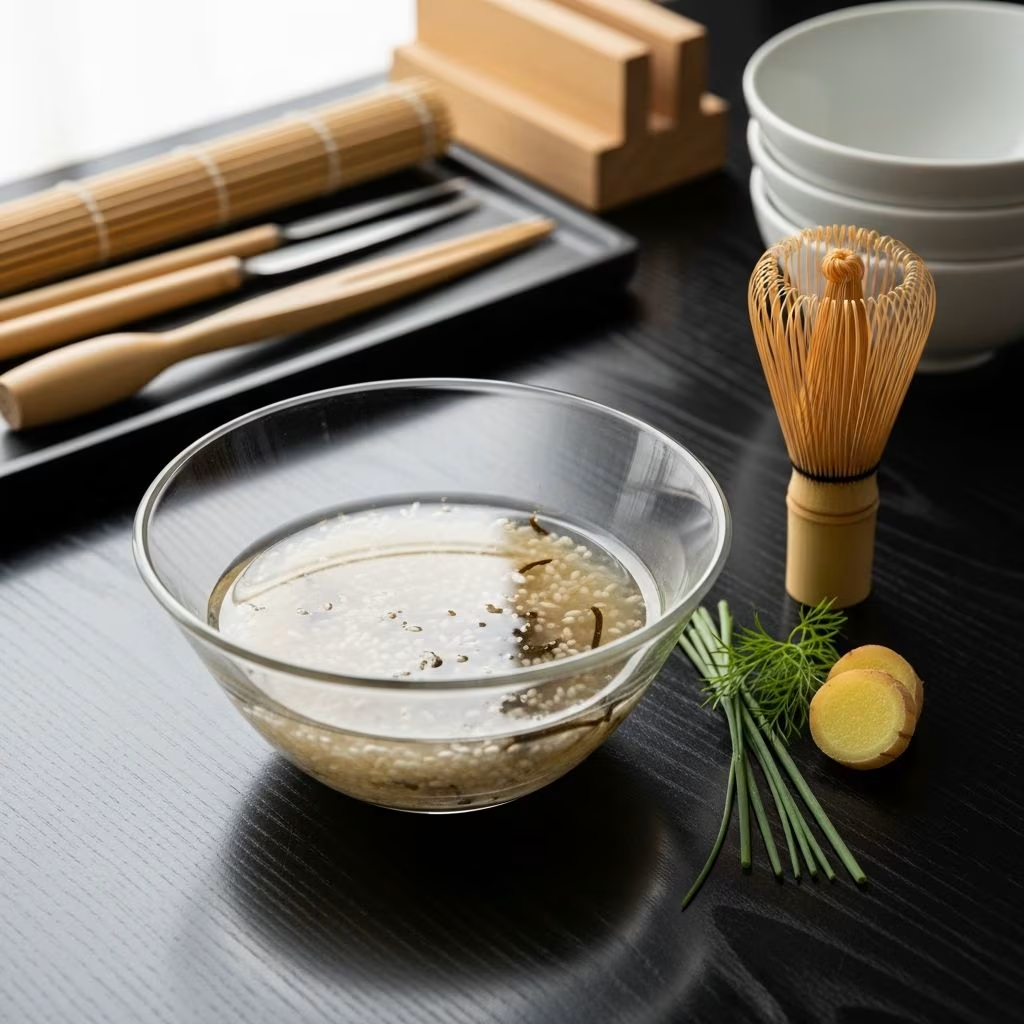
Preparing sushi vinegar requires minimal equipment: a saucepan, whisk, and storage jar. Heat gently to dissolve solids without boiling, preserving delicate flavors.
- Measure ingredients: Use a scale for accuracy, especially in larger batches.
- Combine in pan: Add vinegar, sugar, and salt to a saucepan over medium heat.
- Stir until dissolved: Whisk continuously for 5-10 minutes until clear and smooth. A slight simmer suffices; avoid bubbles.
- Add kombu if using: Infuse during heating, then remove.
- Cool and store: Transfer to a jar or squeeze bottle; cool to room temperature. Refrigerate up to 6 months.
Alternative no-heat method: Shake vigorously in a sealed bottle for 2-3 minutes if using fine sugar and salt. For rice integration, drizzle over hot cooked sushi rice on a baking sheet, folding gently with a paddle while fanning to cool.
Perfecting Sushi Rice with Your Vinegar
Start with high-quality short-grain or sushi rice, rinsed until water runs clear to remove excess starch. Cook in a 1:1 ratio with water using a rice cooker, Instant Pot, or stovetop (20 minutes simmer, 10-minute rest).
While rice cooks, prepare vinegar. For 3 cups uncooked rice, use 1/2 cup vinegar mixture. Transfer hot rice to a wide pan, drizzle vinegar, and fold with slicing motions to distribute evenly without mashing. Cool to body temperature before assembly. This yields glossy, seasoned rice ready for maki, temaki, or chirashi.
Beyond Sushi: Versatile Applications
Sushi vinegar’s balanced profile extends to salads, pickles, and marinades. Use as a dressing for sunomono (vinegared cucumbers) by tossing thin slices with extra chili flakes. Quick-pickle carrots, onions, or radishes by soaking 10-15 minutes.
In potato salad, replace mayonnaise with a splash for tangy lightness. Marinate fried foods like karaage in a nanbanzuke style, combining with vegetables for a refreshing dish. Dilute for light vinaigrettes or drizzle over steamed vegetables.
- Cucumber sunomono: Slices + vinegar + sesame seeds.
- Quick pickles: Julienne veggies + 1:1 vinegar-water.
- Grain bowls: Season quinoa or barley similarly.
- Stir into coleslaw for Asian twist.
Troubleshooting Common Issues
Grainy texture? Extend heating or use finer sugar/salt. Too sweet? Increase vinegar by 10% next batch. Rice too wet? Reduce vinegar or fan more aggressively.
Store in glass for longevity; plastic absorbs odors. If vinegar separates, shake before use. For gluten-free/vegan assurance, confirm labels as most ingredients are naturally compliant.
Storage, Shelf Life, and Scaling
Airtight refrigeration extends usability to 6 months; freeze in ice cube trays for portions. Scale up for parties using the 8:5:1 ratio—double for 5 cups yield. Label jars with date and ratio for consistency.
Yield calculator: For 10 sushi rolls (2 cups rice), prepare 2/3 cup vinegar. Larger batches save time for weekly prep.
FAQ
Can I substitute white vinegar for rice vinegar?
Possible, but rice vinegar’s milder profile is superior. White vinegar may overpower; dilute 50/50 with water if needed.
How much vinegar per cup of rice?
Approximately 1/3 cup per 2 rice cooker cups cooked rice, or 1 part vinegar to 3 parts uncooked.
Is boiling necessary?
No—gentle simmering dissolves ingredients without evaporating acids.
Can I make it sugar-free?
Stevia or monk fruit substitutes work, but alter texture; test small batches.
Does kombu make a big difference?
It adds umami depth, mimicking restaurant taste, but optional for beginners.
Nutrition and Customization Tips
A 1-tablespoon serving offers ~10 calories, mostly from sugar. Customize with mirin for gloss or dashi for savoriness. Experiment with yuzu juice for citrus lift.
References
- Easy Sushi Vinegar | Kitchen Cents — Kitchen Cents. Accessed 2026. https://kitchencents.com/sushi-vinegar/
- Homemade Sushi Rice + Sushi Vinegar — Kitchen Joy. Accessed 2026. https://kitchenjoyblog.com/homemade-sushi-rice-sushi-vinegar/
- Homemade Sushi Vinegar | すし酢 — Ellie Likes Cooking. Accessed 2026. https://www.ellielikes.cooking/homemade-sushi-vinegar/
- Master the Art of Sushi with Authentic Sushi Vinegar — No Recipes. Accessed 2026. https://norecipes.com/seasoned-sushi-vinegar/
- How To Make Sushi Vinegar | Recipe — Outdoor Chef Life (YouTube). Accessed 2026. https://www.youtube.com/watch?v=JfW9nSqy_3Q
- How To Make Vinegar For Sushi (Seasoning Recipe) — No Recipes (YouTube). Accessed 2026. https://www.youtube.com/watch?v=ALGoWjyaifI