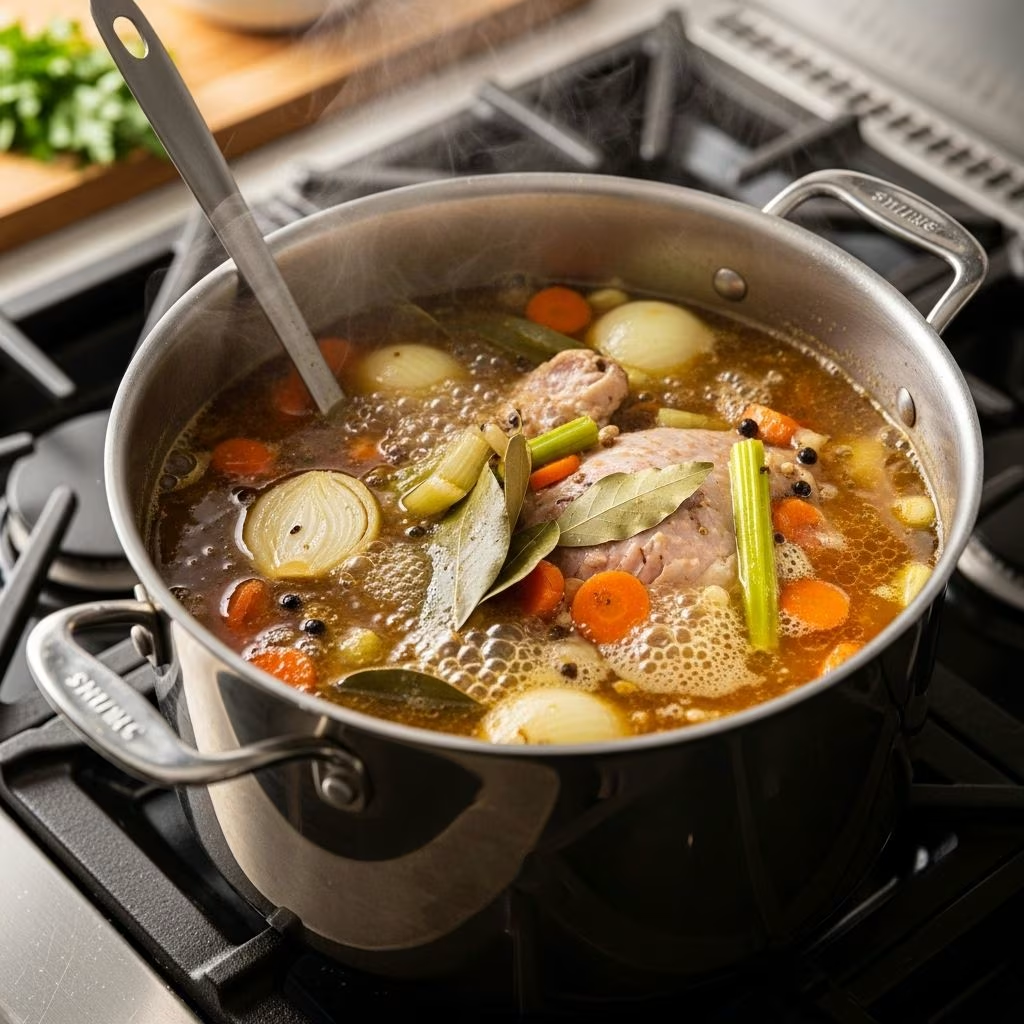
Turkey stock forms the backbone of many holiday dishes, delivering deep, savory flavors that elevate gravies, soups, and stuffings. Made from roasted bones and aromatic vegetables, it captures the essence of turkey in a versatile liquid gold that’s simple to prepare at home.
Why Choose Homemade Turkey Stock?
Store-bought versions often lack the intensity and purity of homemade stock. By roasting turkey parts first, you develop caramelized flavors through the Maillard reaction, resulting in a richer base for your recipes. This method maximizes extraction of collagen from bones, yielding a stock that gels when cooled— a sign of quality.
Perfect for Thanksgiving, it uses leftover carcasses or fresh wings and necks, reducing waste while enhancing meals. Its applications extend beyond holidays, from risottos to braises.
Essential Ingredients for Superior Stock
Start with high-quality components to build layers of flavor:
- Turkey bones or parts: Use a 12-15 lb roasted carcass, 3-4 lbs wings, or necks for concentrated taste.
- Aromatics: Onions, carrots, celery (the classic mirepoix), providing sweetness and depth.
- Herbs: Fresh parsley, thyme, sage, and bay leaves for earthy notes.
- Seasonings: Peppercorns, garlic, and a pinch of salt to enhance without overpowering.
- Liquid: Cold water or a mix with chicken stock for better clarity and flavor.
Avoid over-seasoning initially; taste and adjust post-straining.
Step-by-Step Roasting Method
Roasting intensifies flavors far beyond simmering raw bones. Here’s a proven approach:
- Prep the turkey: If using fresh wings or necks (3-4 lbs total), pat dry, season with salt and pepper, and drizzle with olive oil.
- Roast: Preheat oven to 450°F. Place on a rimmed baking sheet and roast 45-60 minutes, flipping halfway, until deeply golden. This step is crucial for nutty, caramelized notes.
- Brown vegetables: Meanwhile, in a large stockpot, heat oil over medium. Add chopped onion, carrot, and celery; cook until softened and browned, about 10-15 minutes.
- Deglaze: Transfer roasted turkey to the pot. Add 2 cups water to the roasting pan, scrape browned bits, and pour into pot.
- Simmer: Cover with 12-16 cups cold water, add herbs and peppercorns. Bring to boil, then simmer uncovered 2-4 hours, skimming foam.
- Strain and cool: Discard solids through a fine-mesh sieve. Cool rapidly in an ice bath, then refrigerate.
| Method | Time | Flavor Profile |
|---|---|---|
| Roasted Wings/Necks | 3-4 hours | Rich, caramelized |
| Carcass Simmer | 6 hours | Mild, clean |
| Pressure Cooker | 1-2 hours | Intense, quick |
Using Leftover Carcasses Efficiently
Post-Thanksgiving, break down the carcass into manageable pieces. Place in a stockpot with rough-chopped veggies (1 onion, 2 carrots, 2 celery stalks), garlic cloves, bay leaves, peppercorns, and herbs. Cover with water, boil, then simmer 6 hours. This yields 8-10 quarts of stock, ideal for freezing in portions.
For ahead-of-time prep, buy wings and necks from the butcher. Roast as above for stock ready before the holiday rush.
Storage and Freezing Tips
Proper storage preserves freshness:
- Refrigerate: Up to 5 days in airtight containers.
- Freeze: In ice cube trays, quart bags, or muffin tins for easy use. Label with date; lasts 6 months.
- Degrease: Chill overnight; skim solidified fat for clearer stock.
Thaw overnight in fridge or under cool water. Boil before using in recipes.
Flavor Boosters and Variations
Customize for unique profiles:
- Asian-inspired: Add ginger, star anise, scallions.
- Smoky: Include smoked paprika or chipotle.
- Herb-heavy: Rosemary and extra sage for poultry punch.
- Acid touch: Splash of apple cider vinegar to aid mineral extraction from bones.
For clearer stock, blanch bones first or use a cheesecloth bag for aromatics.
Recipe Applications: From Gravy to Soups
Turkey stock shines in:
- Classic Gravy: Simmer with roux, giblets, and seasonings for silky smoothness.
- Soups: Base for turkey noodle, pozole, or wild rice varieties.
- Sides: Moisten stuffing or mash potatoes.
- Mains: Braise vegetables or deglaze pans.
Substitute 1:1 for chicken stock in most recipes.
Common Mistakes to Avoid
Steer clear of these pitfalls:
- Using hot water initially—cold extracts more flavor.
- Stirring vigorously—causes cloudiness.
- Over-boiling—leads to bitterness.
- Ignoring skim—results in greasy stock.
Quick Comparison of Stock Types
| Stock Type | Key Ingredients | Best For |
|---|---|---|
| Turkey Wing Stock | Wings, mirepoix, herbs | Gravy, risottos |
| Carcass Stock | Roasted carcass, veggies | Soups, stews |
| Quick Simmer | Raw bones, short cook | Everyday use |
Frequently Asked Questions (FAQs)
Can I make turkey stock without roasting?
Yes, but roasting adds superior depth. Simmer raw for 6+ hours as an alternative.
How long does homemade stock last?
5 days refrigerated, 6 months frozen.
What’s the difference between stock and broth?
Stock uses bones for gelatinous texture; broth is meat-focused and lighter.
Can I use a pressure cooker?
Absolutely—cook on high for 60-90 minutes for fast results.
Is salt necessary?
Use sparingly upfront; season final dishes.
Advanced Techniques for Chefs
For pros, try double stock: reduce first batch, then simmer with fresh bones. Or infuse with dried mushrooms for umami. Clarify with egg whites for consomme.
Experiment with ratios: 1 lb bones per 4 cups water for concentrated stock.
References
- How I Make The Best Turkey Stock to Use On Thanksgiving! — How Sweet Eats. 2020-11-01. https://www.howsweeteats.com/2020/11/turkey-stock-recipe/
- The Most Delicious Turkey Stock for your Holiday Menu — No Crumbs Left. 2016-11-18. https://nocrumbsleft.net/2016/11/18/turkey-stock/
- How to Make Turkey Stock — The Modern Proper. n.d. https://themodernproper.com/how-to-make-turkey-stock