Creating your own pizza dough from scratch elevates any pizza night, offering control over texture, flavor, and freshness that store-bought versions can’t match. This guide explores essential ingredients, proven methods, and practical advice to help you produce reliable results, whether you’re aiming for thin, crispy crusts or thick, chewy ones.
Why Make Your Own Pizza Dough?
Homemade dough allows customization for dietary needs, such as adjusting salt or using alternative flours, and it’s often more economical for frequent pizza makers. The process builds skills in yeast handling and dough management, leading to consistent, superior pies. Active dry or instant yeast provides the leavening power, while precise water temperatures ensure proper activation without killing the yeast.
Fresh dough ferments subtly, developing complex flavors from natural sugars and proteins in the flour. Unlike pre-made options, it avoids preservatives, resulting in a cleaner taste. With basic pantry staples, you can prepare enough for multiple pizzas, adapting to various pan sizes or styles.
Essential Ingredients for Success
The foundation of great pizza dough lies in quality components balanced for structure and taste. Here’s a breakdown:
- Flour: All-purpose flour offers versatility, providing gluten for elasticity. For finer texture, Tipo 00 flour mimics professional Italian results.
- Yeast: Active dry yeast needs proofing; instant or pizza crust yeast mixes directly for faster prep.
- Water: Warm (100-130°F) activates yeast optimally; too hot denatures it, too cold slows rising.
- Oil: Olive oil adds richness and tenderness, preventing sticking.
- Salt and Sugar: Salt enhances flavor and controls gluten; sugar feeds yeast for better rise.
Measurements vary by recipe yield, but a standard batch uses 2-3 cups flour, 1-2 teaspoons yeast, 1 cup water, 2 tablespoons oil, 1 teaspoon salt, and 1 teaspoon sugar.
Comparing Popular Dough Recipes
Different formulas suit various preferences. This table highlights key variations from reliable sources:
| Recipe Source | Flour (cups) | Yeast Type/Amount | Water Temp/Amount | Oil (tbsp) | Yield |
|---|---|---|---|---|---|
| Fleischmann’s Yeast | 2.5-3 | Pizza Crust/1 env | 120-130°F / 1 cup | 2 | 1×14″ or 2×12″ |
| Love and Lemons | 2 | Active Dry/1 pkt | Warm / ¾ cup | 1 | 1-2 pizzas |
| A Couple Cooks | 3⅓ (Tipo 00) | Instant/2 tsp | Warm / 1¼ cups + | 1 | 2 large |
| East Coast Kitchen | 3 | Active Dry/2 tsp | Warm / 1⅓ cup | 2 | 2 balls |
Choose based on time: instant yeast skips proofing for quicker results.
Step-by-Step: Activating Yeast Properly
Yeast activation is crucial for rise. For active dry: Dissolve in ¼ cup warm water with a pinch of sugar, wait 5-10 minutes for foam. This confirms viability. Instant yeast blends directly into dry ingredients, simplifying the process.
- Mix warm water (not exceeding 130°F), sugar, and yeast in a bowl.
- Let sit until bubbly, indicating live yeast.
- Combine with flour, salt, oil for shaggy dough.
Avoid chlorinated tap water; filtered yields better results. If no foam appears, discard and start fresh—dead yeast ruins batches.
Mixing and Kneading Techniques
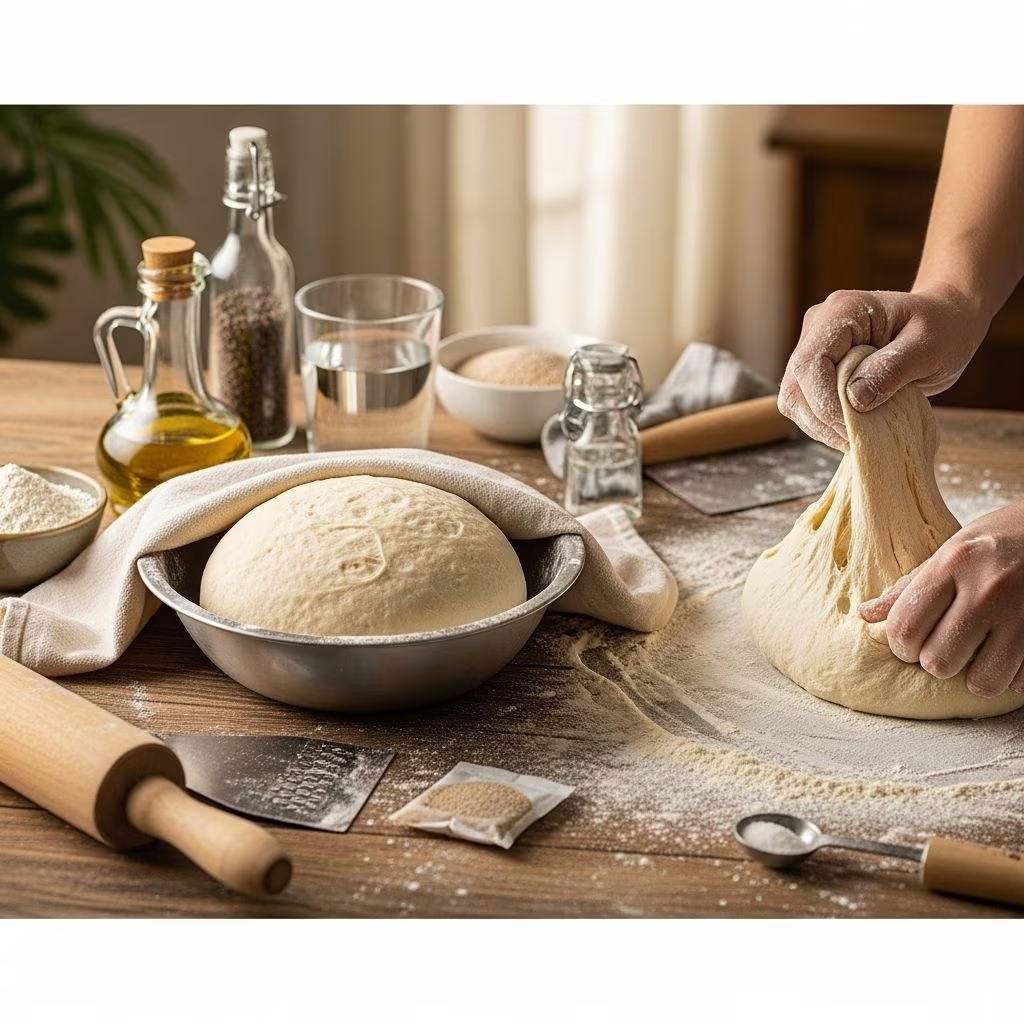
Combine dry ingredients first, then incorporate wet. Stir until a rough ball forms, then knead 4-8 minutes on a floured surface for smooth, elastic texture. Gluten development creates chewiness; under-knead for tenderness, over-knead for toughness.
Hand-kneading builds intuition: fold, push, rotate. For no-knead options, extended rests achieve similar results via autolyse, where flour hydrates naturally.
First Rise: Achieving Optimal Fermentation
Place oiled dough in a covered bowl in a warm spot (75-85°F). It doubles in 30-60 minutes, depending on yeast type and environment. Punch down to release gases, promoting even structure.
Cold fermentation in the fridge (24-72 hours) enhances flavor through slow yeast activity, ideal for advance prep.
Shaping Your Dough
Gently deflate, divide if needed, and form balls. Rest 10 minutes covered to relax gluten. Press into pans dusted with cornmeal to prevent sticking. Stretch edges evenly for uniform crusts; avoid rolling pins, which deflate air pockets.
- Thin-crust: Stretch to 12-inch rounds, bake at high heat.
- Thick-crust: Use deeper pans, allow extra rise.
- Pan pizza: Oil generously for crispy bottoms.
Baking for Perfection
Preheat oven to 450-500°F with a stone or steel for heat retention. Bake 15-25 minutes until golden, rotating midway. High heat mimics wood-fired ovens, creating leopard spotting on the crust.
Steam injection (ice cubes in oven) boosts oven spring for airy interiors.
Storage and Freezing Tips
Refrigerate dough balls up to 3 days, covered in oil. Freeze up to 3 months: wrap tightly, thaw overnight in fridge, then room temp 1-2 hours before use. Avoid refreezing for best texture.
Versatile Uses Beyond Pizza
This dough adapts easily:
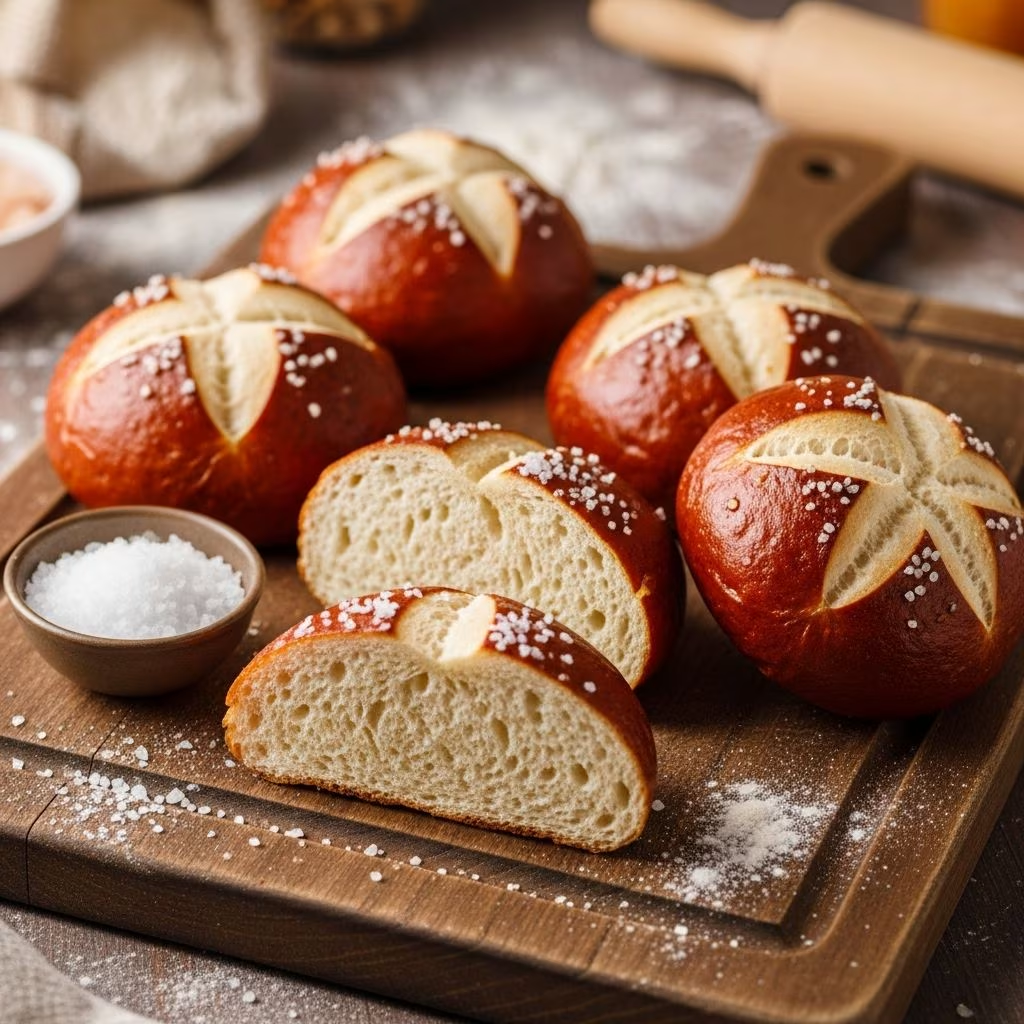
- Pretzel bites: Boil in baking soda water, bake crispy.
- Flatbreads: Grill or bake plain.
- Rolls: Shape small, proof, bake soft.
Topping Strategies for Balance
Apply sauce sparingly to avoid sogginess, layer cheese evenly, add proteins and veggies. Pre-bake crust 5 minutes for sturdy bases under heavy toppings. Favorites include fresh basil post-bake to preserve aroma.
Common Mistakes and Fixes
| Issue | Cause | Solution |
|---|---|---|
| Dense crust | Weak yeast or over-kneading | Proof yeast; knead lightly |
| Tough dough | Too much flour | Measure by weight; add gradually |
| No rise | Cold water/kill heat | Use thermometer; test yeast |
| Soggy bottom | Too much sauce | Pre-bake; use cornmeal |
Frequently Asked Questions
Can I use bread flour?
Yes, for chewier texture due to higher protein, but all-purpose works well for balance.
How do I know if yeast is good?
Foams in 10 minutes with warm water and sugar.
Gluten-free options?
Substitute 1:1 blends, but expect different rise; add xanthan gum.
Best oven temp?
475-500°F on lowest rack with stone.
Make ahead?
Fridge 72 hours or freeze 3 months.
Advanced Variations
Experiment with whole wheat (up to 50% for nutty flavor), semolina for crispiness, or herbed oils. Sourdough discard adds tang without full starter maintenance.
Mastering dough involves practice, but these techniques ensure success. Experiment confidently for personalized pizzas.
References
- Master Pizza Dough — Fleischmann’s Yeast. Accessed 2026. https://www.fleischmannsyeast.com/recipe/master-pizza-dough/
- One Dough, Three Recipes Part 1 – Pizza — Global Bakes. Accessed 2026. https://globalbakes.com/pizza-dough/
- Homemade Pizza Dough: Easy and Versatile Recipe — The East Coast Kitchen. Accessed 2026. https://theeastcoastkitchen.com/master-dough-perfect-for-pizza-pretzels-dinner-rolls/
- Homemade Pizza Dough Recipe — Love and Lemons. Accessed 2026. https://www.loveandlemons.com/pizza-dough-recipe/
- Homemade Pizza Dough Recipe (Fan-Favorite!) — A Couple Cooks. Accessed 2026. https://www.acouplecooks.com/pizza-dough-recipe/
- Best Easy Pizza Dough – No Mixer or Yeast Proofing Required — 101 Cookbooks. Accessed 2026. https://www.101cookbooks.com/best-pizza-dough-ever/