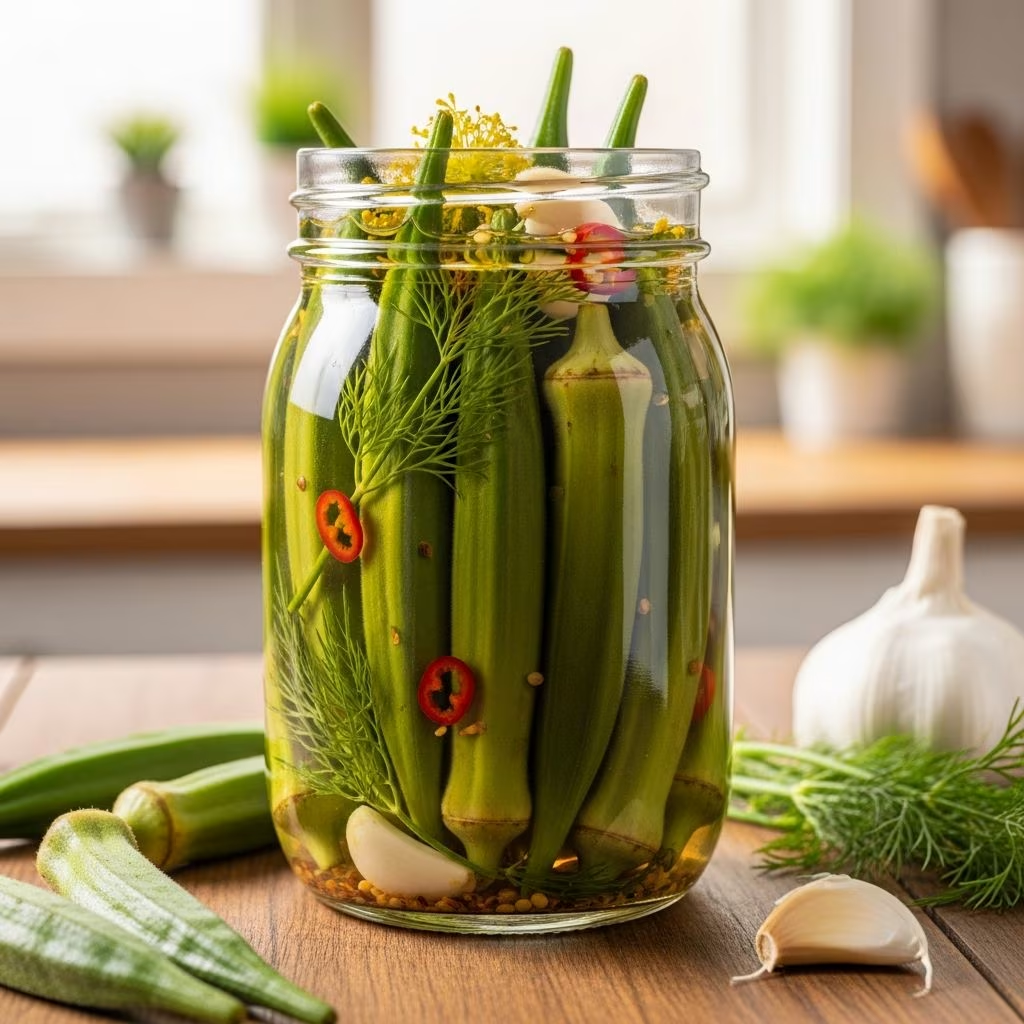
Pickled okra stands as a beloved staple in Southern kitchens, transforming humble green pods into a zesty, crunchy delicacy. This preservation technique not only extends the short season of fresh okra but also infuses it with bold flavors from vinegar, dill, garlic, and a touch of heat. Whether you’re a seasoned canner or a novice preserver, this guide walks you through selecting prime okra, preparing a balanced brine, and safely processing jars for pantry storage. The result? Vibrant pints ready to elevate snacks, salads, or cocktails.
Why Pickle Okra?
Okra’s unique texture—crisp when young and tender—makes it ideal for pickling, where acidity keeps it firm rather than slimy. Historically rooted in Southern and Creole traditions, pickled okra serves as a versatile condiment. It adds tang to Bloody Marys, perks up cheese boards, or stands alone as a spicy snack. Unlike refrigerator pickles, canned versions offer shelf stability for up to a year, ensuring summer’s bounty lasts through winter.
Selecting the Best Okra for Pickling
Success starts with quality ingredients. Choose small, firm okra pods, ideally 2 to 4 inches long, with bright green skin free of blemishes or yellowing. Larger pods turn tough and fibrous, ruining the crunch. Harvest or buy fresh from farmers’ markets during peak summer months. Aim for 1.5 to 2.5 pounds to fill three pint jars snugly.
- Freshness check: Pods should snap cleanly when bent; avoid any with soft spots.
- Quantity tip: Small pods fit jars better and pack tighter for even pickling.
- Organic preference: Reduces pesticide residues in preserved foods.
Wash okra gently under cool water, trimming only the stem end without piercing the pod—this prevents sliminess during processing.
Essential Ingredients and Substitutions
A simple brine of vinegar, water, and salt forms the base, enhanced by aromatic spices. Use 5% acidity white vinegar for safety and clarity.
| Ingredient | Quantity (for 3 pints) | Purpose | Substitutions |
|---|---|---|---|
| Fresh okra pods | 2-2.5 lbs | Main vegetable | None—must be fresh |
| White vinegar (5% acidity) | 2 cups | Acidity for preservation | Apple cider vinegar (slightly darker color) |
| Water | 2 cups | Dilutes brine | None |
| Canning salt (non-iodized) | 3 tsp (1 tsp/jar) | Flavor and crispness | Pickling salt |
| Dried dill seed or fresh dill | 3 tsp (1 tsp/jar) | Herbaceous aroma | Dill weed (use more) |
| Garlic cloves, peeled | 3 (1/jar) | Savory depth | Shallots |
| Whole black peppercorns or dried chiles | 3/4 tsp or 3 chiles | Heat | Red pepper flakes (1/4 tsp/jar) |
These measurements yield a balanced tang with subtle spice. Scale proportionally for fewer jars.
Step-by-Step Pickling Process
Follow these instructions precisely for safe, delicious results. Total time: about 55 minutes active, plus processing.
- Prepare equipment: Sterilize three pint jars, lids, and rings by boiling for 10 minutes. Keep hot until use. Prepare a water bath canner with rack, filling halfway with water.
- Pack jars: Place one garlic clove, 1 tsp dill, 1 tsp salt, and peppercorns/chile at jar bottom. Stand okra upright, tips up, packing tightly. Fill gaps with additional pods, tips down.
- Make brine: Boil vinegar and water in a saucepan until salt from jars dissolves into it (if added earlier). Pour hot brine over okra, leaving 1/4-inch headspace. Remove air bubbles with a non-metallic tool.
- Seal jars: Wipe rims clean, apply lids and rings fingertip-tight.
- Process in canner: Submerge jars in boiling water (1 inch above tops). Boil 10 minutes (up to 1,000 ft altitude), 15 minutes (1,001-6,000 ft), or 20 minutes (over 6,000 ft). Adjust for your elevation using USDA guidelines.
- Cool and check seals: Remove jars to a towel-lined surface. Cool 12-24 hours undisturbed. Lids should not flex when pressed; refrigerate any that do.
Label jars with date and store in a cool, dark place.
Safe Canning Practices
Proper technique prevents spoilage. Always use tested recipes like this one, which meets acidity standards for low-risk botulism. Check jars for cracks before filling. Use a jar lifter for hot handling. If seals fail post-processing, reprocess within 24 hours or refrigerate and use within a month. For beginners, consult the National Center for Home Food Preservation for full protocols.
Storage and Shelf Life
Processed jars last 12-18 months unopened in the pantry. Once opened, refrigerate and consume within two weeks. Flavor peaks after 2-4 weeks, developing deeper notes. Unprocessed refrigerator versions last 1 month chilled but lack shelf stability.
Flavor Variations to Try
Customize your batch for different tastes:
- Spicy Kick: Add sliced jalapeños or extra chiles per jar.
- Herb Garden: Include mustard seeds or fresh dill heads.
- Citrus Twist: Add lemon zest strips for brightness.
- Garlicky Boost: Double garlic or add pearl onions.
- Sweet Heat: A pinch of sugar in the brine mellows vinegar sharpness.
Experiment cautiously to maintain safe pH levels.
Creative Ways to Enjoy Pickled Okra
Beyond snacking, integrate into meals:
- Garnish Bloody Marys or martinis for pod-shaped flair.
- Chop into potato salad or coleslaw for tang.
- Pair with cheeses, cured meats, and crackers on boards.
- Slice into fried rice or stir-fries for pickled pop.
- Muddle into vinaigrettes for salads.
Its crunch contrasts creamy dips or soft cheeses perfectly.
Troubleshooting Common Issues
| Problem | Cause | Solution |
|---|---|---|
| Soft okra | Overripe pods or low acidity | Use young okra; verify vinegar strength |
| Cloudy brine | Iodized salt or hard water | Use canning salt; filter water |
| Failed seals | Improper tightening or debris on rim | Reprocess or refrigerate |
| Slimy texture | Cut into pods | Trim stems only next time |
Discard any jars showing mold, off odors, or spurting liquid upon opening.
Frequently Asked Questions (FAQs)
Can I make refrigerator pickled okra without canning?
Yes—pack jars, pour hot brine, cool, and refrigerate. Ready in 48 hours, best within a month.
Is pickled okra safe for water bath canning?
Absolutely, due to high vinegar acidity. Follow altitude-adjusted times precisely.
How do I know if my okra is fresh enough?
Firm pods with velvety texture that snap when bent indicate peak freshness.
Can I reuse jars from store-bought pickles?
Yes, if undamaged Mason-style jars with two-piece lids. Always inspect for chips.
What’s the best way to serve pickled okra?
Straight from the jar, skewered in cocktails, or as a relish in sandwiches.
Nutritional Benefits of Pickled Okra
Okra provides fiber, vitamin C, and folate; pickling retains most nutrients while adding probiotics from fermentation-like acidity. Low-calorie (about 30 per pod) and naturally gluten-free, it’s a healthy snack option.
This recipe captures the essence of traditional Southern pickling, yielding jars you’ll reach for year-round. With practice, you’ll perfect the balance of crunch, tang, and spice.
References
- Recipe Grandma Omas Pickled Okra — YouTube. Accessed 2026. https://www.youtube.com/watch?v=pPJYLttTYkg
- Quick Pickled Okra (Refrigerator) — In the Curious Kitchen. Accessed 2026. https://inthecuriouskitchen.com/blogs/recipes/okra-pickles
- Homemade Pickled Okra Canning Process — Lana’s Cooking. Accessed 2026. https://www.lanascooking.com/pickled-okra/