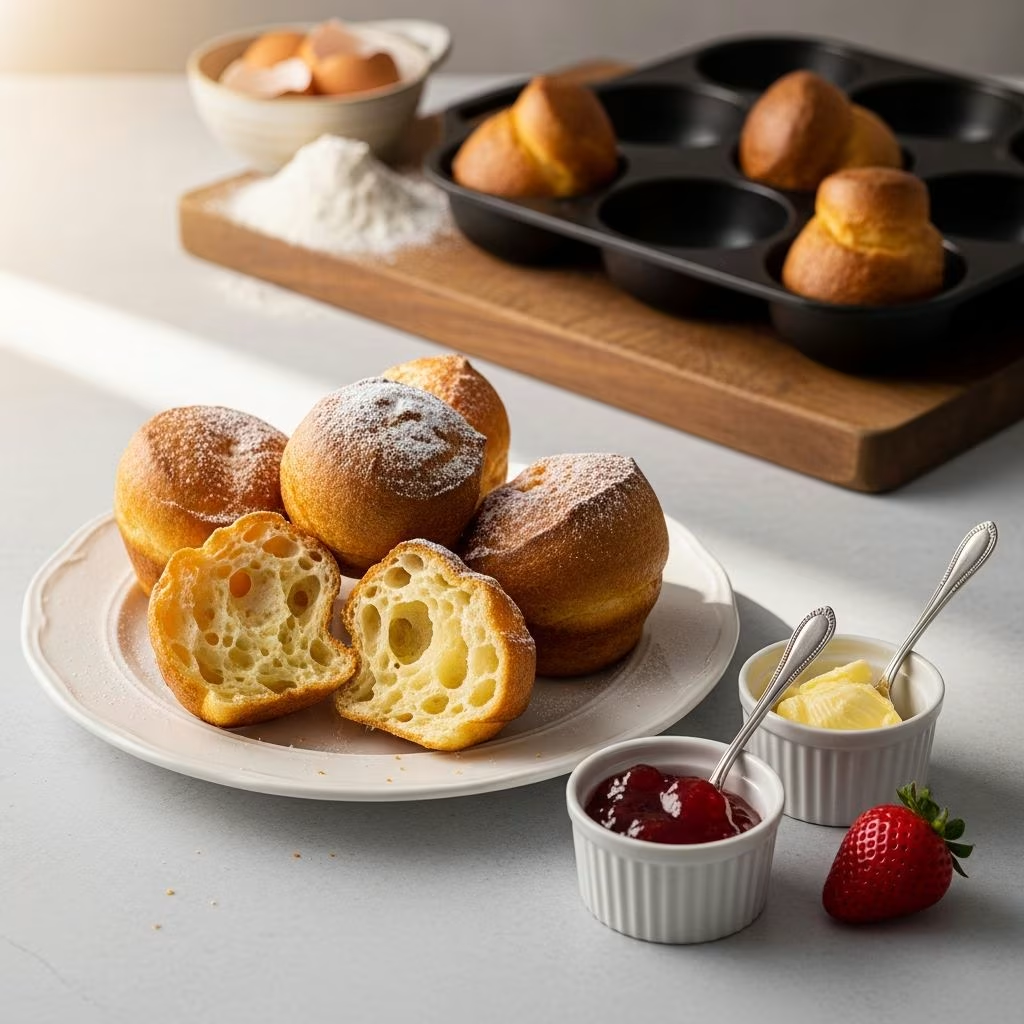
Popovers are magical creations from the oven—light, airy pastries that rise dramatically thanks to steam, boasting crisp exteriors and soft, custardy interiors. Originating in the United States during the 19th century, these treats have captivated bakers with their simplicity and impressive height. Unlike yeast breads, popovers rely on heat and moisture rather than leavening agents, making them an accessible entry into advanced baking. This guide equips you with everything needed to produce flawless popovers, from selecting ingredients to perfecting oven techniques.
Understanding What Makes Popovers Rise
The science behind popovers is fascinating. When batter hits a scorching-hot pan, the eggs and milk rapidly expand, creating steam that pushes the batter upward. This forms the signature popover dome. A precise balance of heat, moisture, and batter consistency is crucial. Too much liquid, and they collapse; too little fat, and they won’t release properly from the pan.
Key factors include:
- Temperature extremes: Blazing oven and room-temperature ingredients create optimal steam.
- Batter thinness: Similar to pancake batter, it must flow easily to climb the pan walls.
- No peeking: Opening the oven door mid-bake lets heat escape, deflating the rise.
Essential Ingredients for Perfect Popovers
Great popovers start with quality basics. Here’s a breakdown:
| Ingredient | Role | Tips |
|---|---|---|
| Milk (whole) | Provides moisture and steam | Warm to 120°F; avoid boiling |
| Eggs (large) | Structure and lift | Room temperature for max volume |
| Flour (all-purpose) | Framework for rise | Sift to aerate; measure by weight |
| Salt | Flavor enhancer | Kosher or sea salt preferred |
| Butter (melted) | Tenderness and release | Unsalted; browned for nutty flavor |
Substitutions like skim milk or bread flour alter texture—stick to the classics first.
Step-by-Step Recipe for Classic Popovers
Yield: 12 popovers | Prep: 10 min | Bake: 35 min
Ingredients (scaled for standard muffin tin):
- 1 cup whole milk, warmed
- 2 large eggs, room temperature
- 1 cup all-purpose flour (120g)
- 1/2 tsp salt
- 2 tbsp unsalted butter, melted
Instructions:
- Preheat and prep: Set oven to 425°F (220°C). Grease a 12-cup popover pan or muffin tin generously with butter or oil. For extra insurance, dust with flour and tap out excess.
- Warm milk: Heat milk until steaming (not boiling). This jumpstarts steam production.
- Mix wet: Whisk eggs, warm milk, and melted butter until combined.
- Add dry: Sift flour and salt together. Gradually whisk into wet mixture until smooth—no lumps, but don’t overmix. Batter should be like heavy cream.
- Rest (optional): Let batter sit 15 minutes; gluten relaxes for better rise.
- Fill and bake: Pour batter into hot pans, filling 2/3 full. Bake undisturbed 20 minutes at 425°F, then reduce to 350°F for 15 more minutes.
- Cool slightly: Pop out immediately; pierce tops with a skewer to release steam and prevent sogginess.
Serve warm with butter and jam for peak enjoyment.
Choosing the Right Baking Equipment
Popover pans with tall, narrow cups are ideal, concentrating heat for maximum height. Muffin tins work but yield shorter popovers. Avoid nonstick unless well-greased—metal conducts heat better. Pro tip: Place pan on a baking sheet for even heating and easy oven handling.
Troubleshooting Common Popover Problems
Even experts face flops. Here’s how to fix issues:
- Flat or dense: Cold ingredients or low oven temp. Verify with thermometer.
- Stuck to pan: Insufficient grease. Use softened butter and flour coating.
- Cracked or lopsided: Uneven oven heat. Rotate pan midway if needed.
- Soggy interiors: Overbaked or not pierced post-bake. Aim for hollow sound when tapped.
- No rise: Overmixed batter or inaccurate measurements. Weigh flour precisely.
Track variables in a baking journal to refine your method.
Creative Variations to Elevate Your Popovers
Once mastered, experiment:
Savory Options
- Cheese popovers: Stir in 1/2 cup grated Gruyère or cheddar.
- Herb-infused: Add 2 tbsp chopped chives, rosemary, or thyme to batter.
- Bacon bits: Fold in 1/4 cup cooked, crumbled bacon.
Sweet Twists
- Cinnamon sugar: Dust hot popovers with cinnamon-sugar mix.
- Vanilla bean: Scrape seeds from 1 pod into batter.
- Chocolate chip: Add 1/3 cup mini chips for brunch delight.
Dietary Adaptations
For gluten-free: Use a 1:1 baking blend with xanthan gum. Vegan: Swap eggs with aquafaba (6 tbsp) and milk with oat milk; results are slightly less lofty but tasty.
Perfect Pairings and Serving Ideas
Popovers shine as breakfast stars alongside eggs Benedict or fruit compote. For dinner, they sop up stews, chili, or gravy like mini Yorkshire puddings. At tea time, fill splits with lemon curd or clotted cream. Their neutral base invites endless creativity.
Storage and Reheating Best Practices
Fresh is best, but store extras airtight at room temp up to 2 days. Freeze baked popovers up to 1 month; thaw and reheat at 350°F for 5-7 minutes. Avoid microwaving—it turns them chewy. Revive staleness by warming in a 375°F oven briefly.
Advanced Techniques for Pro-Level Results
Brown the butter: Cook melted butter until fragrant and golden for deeper flavor.
Double preheat: Heat empty greased pan in oven 5 minutes before filling.
Altitude adjustments: Above 3,000 ft, reduce milk by 2 tbsp and bake 5 minutes longer.
Pan rotation: For mega-pans, turn 180° at 20-minute mark.
Invest in an oven thermometer—built-in gauges often lie by 25°F or more.
Nutrition and Fun Facts
One popover (sans toppings): ~100 calories, 4g fat, 12g carbs, 4g protein. They’re naturally low-sugar, fitting keto tweaks with almond flour. Fun fact: Popovers inspired the name of a famous Nantucket bakery, proving their enduring charm.
Frequently Asked Questions (FAQs)
Can I use a regular muffin tin?
Yes, but expect shorter popovers. Fill cups 3/4 full for best results.
Why do my popovers deflate after baking?
Steam needs escape—prick tops immediately. Also, avoid oven door checks.
What’s the best milk type?
Whole milk for richness; 2% works but skim yields flatter results.
How do I clean stuck popover pans?
Soak in hot soapy water, scrub gently. Avoid abrasives on nonstick.
Can popovers be made ahead?
Batter yes (refrigerate overnight), baked no—reheating can’t match fresh texture.
Are popover pans worth buying?
For enthusiasts, yes; they outperform muffin tins consistently.
References
- The Science of Good Cooking — America’s Test Kitchen. 2021-10-05. https://www.americastestkitchen.com/books/10854-the-science-of-good-cooking
- On Food and Cooking: The Science and Lore of the Kitchen — Harold McGee. Updated 2023. https://www.simonandschuster.com/books/On-Food-and-Cooking/Harold-McGee/9780684800011
- Understanding Baking Science — United States Department of Agriculture (USDA). 2024-02-15. https://www.ars.usda.gov/ARSUserFiles/60701000/Handbook%20of%20Food%20Preparation.pdf
- Bread Baking Basics — King Arthur Baking Company (official). 2025-01-10. https://www.kingarthurbaking.com/learn/guides/bread-baking-101
- Leavening Agents in Baking — FDA Food Safety Guidelines. 2024-08-20. https://www.fda.gov/food/food-ingredients-packaging/ingredients-baking