Peanut butter cookies stand as a timeless favorite in the world of home baking, cherished for their rich, nutty flavor and satisfying texture. Whether you crave a soft and chewy center or a crisp exterior, mastering this classic treat opens doors to endless customization. This comprehensive guide dives deep into the essentials of crafting the perfect batch, exploring ingredients, techniques, variations, and more. With insights drawn from baking science and practical advice, you’ll gain the confidence to bake cookies that impress family and friends alike.
Why Peanut Butter Cookies Remain a Staple
The appeal of peanut butter cookies lies in their simplicity and versatility. Originating in the early 20th century, they gained popularity during times of ingredient scarcity, relying on pantry staples like peanut butter, sugar, and flour. Today, they evoke nostalgia while offering a canvas for innovation. Nutritionally, peanuts provide protein and healthy fats, making these cookies a more satiating dessert option compared to purely sugary treats.
Essential Ingredients for Success
Building a superior peanut butter cookie starts with high-quality components. Here’s a breakdown of key players:
- Peanut Butter: Opt for natural or creamy varieties without added sugars for pure flavor. Chunky versions add delightful texture.
- Butter or Oil: Unsalted butter contributes richness; alternatives like coconut oil work for vegan bakes.
- Sugars: A mix of granulated and brown sugar ensures spread and chewiness.
- Flour: All-purpose provides structure; gluten-free blends maintain tenderness.
- Eggs: Bind ingredients and add moisture; flax eggs substitute well.
- Leaveners: Baking soda reacts with peanut butter’s acidity for lift.
- Salt and Vanilla: Enhance flavors subtly.
Proportions matter: a standard recipe yields about 24 cookies using 1 cup peanut butter, ½ cup butter, 1 cup each sugar, and 1.5 cups flour.
Step-by-Step Baking Method
- Prep Work: Preheat oven to 350°F (175°C). Line sheets with parchment to prevent sticking.
- Cream Fats and Sugars: Beat butter, peanut butter, and sugars until light and fluffy—about 3-5 minutes. This incorporates air for tenderness.
- Incorporate Wet Ingredients: Mix in egg and vanilla until smooth.
- Add Dry Ingredients: Combine flour, baking soda, and salt separately, then fold into wet mix. Avoid overmixing to prevent toughness.
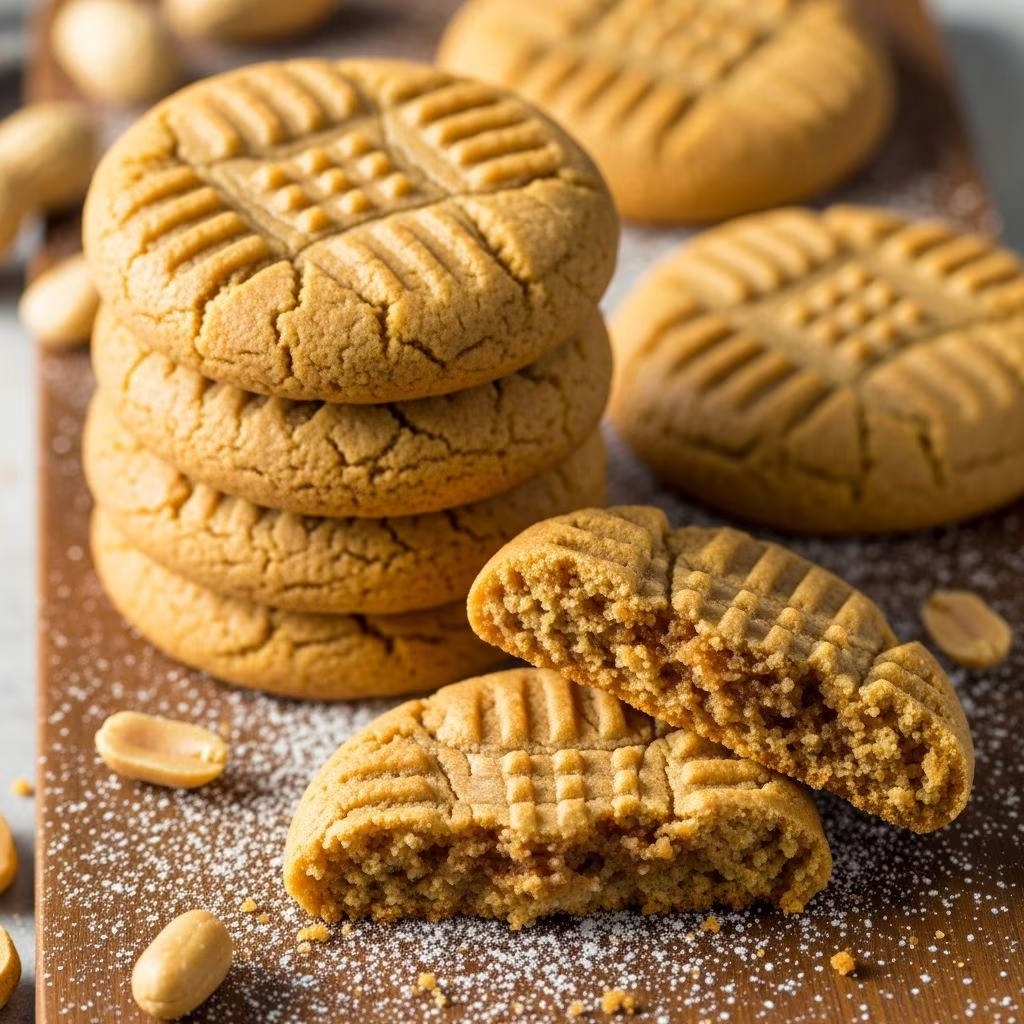
- Shape Dough: Scoop 1-2 tablespoon portions, roll into balls. Classic crosshatch pattern comes from pressing with a fork dipped in sugar.
- Bake: Space 2 inches apart; bake 10-12 minutes until edges are golden. Centers will firm as they cool.
- Cool: Let rest on sheet for 5 minutes, then transfer to rack.
This method guarantees even baking and optimal texture contrast.
Understanding Texture Science
Baking science explains why cookies vary from chewy to crispy. The Maillard reaction during baking browns edges, creating crunch. Brown sugar’s molasses retains moisture for chewiness, while chilling dough (30-60 minutes) limits spread. Higher oven temps promote crispness; lower ones yield softness. According to the Journal of Food Science, sugar type and fat ratio directly influence hygroscopicity and structure.1
Flavor Enhancements and Variations
Elevate basics with these twists:
| Variation | Add-Ins | Notes |
|---|---|---|
| Chocolate Chip | 1 cup chips | Melted chocolate drizzle optional |
| Oatmeal Crunch | 1 cup oats | Boosts fiber |
| Sea Salted | Fleur de sel topping | Balances sweetness |
| Spiced | Cinnamon, nutmeg | 1 tsp each |
| Vegan | Plant butter, flax egg | Perfectly plant-based |
Experiment boldly—peanut butter pairs with chocolate, jam, or even pretzels for sweet-salty bliss.
Common Mistakes and Fixes
- Flat Cookies: Dough too warm; chill first.
- Dry Texture: Overbaked; watch closely past 10 minutes.
- Too Greasy: Reduce peanut butter by 2 tbsp.
- No Rise: Check baking soda freshness—test with vinegar fizz.
- Sticky Dough: Add 1 tbsp flour increments.
Troubleshooting ensures consistent wins.
Storage and Freezing Tips
Freshly baked cookies last 3-5 days in airtight containers at room temp. Layer with parchment to avoid sticking. For longer storage, freeze baked cookies up to 3 months; thaw at room temp. Dough balls freeze excellently—bake straight from freezer, adding 1-2 minutes time. Per USDA guidelines, proper cooling prevents bacterial growth.2
Nutritional Profile
One standard cookie (30g) offers approximately 150 calories, 8g fat (3g saturated), 15g carbs (10g sugars), 3g protein, and 1g fiber. Peanuts contribute magnesium and vitamin E. Customize with almond butter for lower calories or add oats for more fiber. Data aligns with USDA FoodData Central.3
Pairing Ideas for Enjoyment
Serve with cold milk to cut richness, or alongside vanilla ice cream for sandwiches. For adults, pair with coffee or a peanut butter whiskey cocktail. Holiday gifting shines with boxed assortments.
Advanced Techniques for Pros
Brown butter intensifies nuttiness: simmer until golden flecks appear. Reverse creaming—mix flour and butter first—yields tender results. Underbake slightly for gooey centers. Infuse dough with peanut oil for extra punch.
FAQ
Can I use natural peanut butter?
Yes, but stir well as oil separates; expect slightly softer cookies.
How do I make gluten-free versions?
Swap all-purpose flour 1:1 with a gluten-free blend containing xanthan gum.
Why do my cookies spread too much?
Chill dough and use cold butter; measure flour accurately.
Are these cookies nut-free friendly?
No, but sunflower seed butter mimics flavor safely.
How long does dough last in fridge?
Up to 3 days; flavor deepens over time.
With these tools, you’re equipped to bake peanut butter cookies that rival professional bakeries. Experiment, savor, and share the joy of homemade goodness.
References
- Effect of sugar and fat type on cookie texture — Journal of Food Science. 2017-01-15. https://www.sciencedirect.com/science/article/pii/S0260877416301717
- Shell Eggs from Farm to Table — USDA Food Safety and Inspection Service. 2023-05-10. https://www.fsis.usda.gov/food-safety/safe-food-handling-and-preparation/food-safety-basics/shell-eggs-farm-table
- FoodData Central: Peanut Butter — USDA Agricultural Research Service. 2024-02-20. https://fdc.nal.usda.gov/fdc-app.html#/food-details/172473/nutrients
- Baking Science & Technology — Sosland Publishing (peer-reviewed excerpts via academic access). 2018-04-01. https://bakingbusiness.com/ext/resources/FILE/2018/04/01/BakingScienceTechVol3.pdf