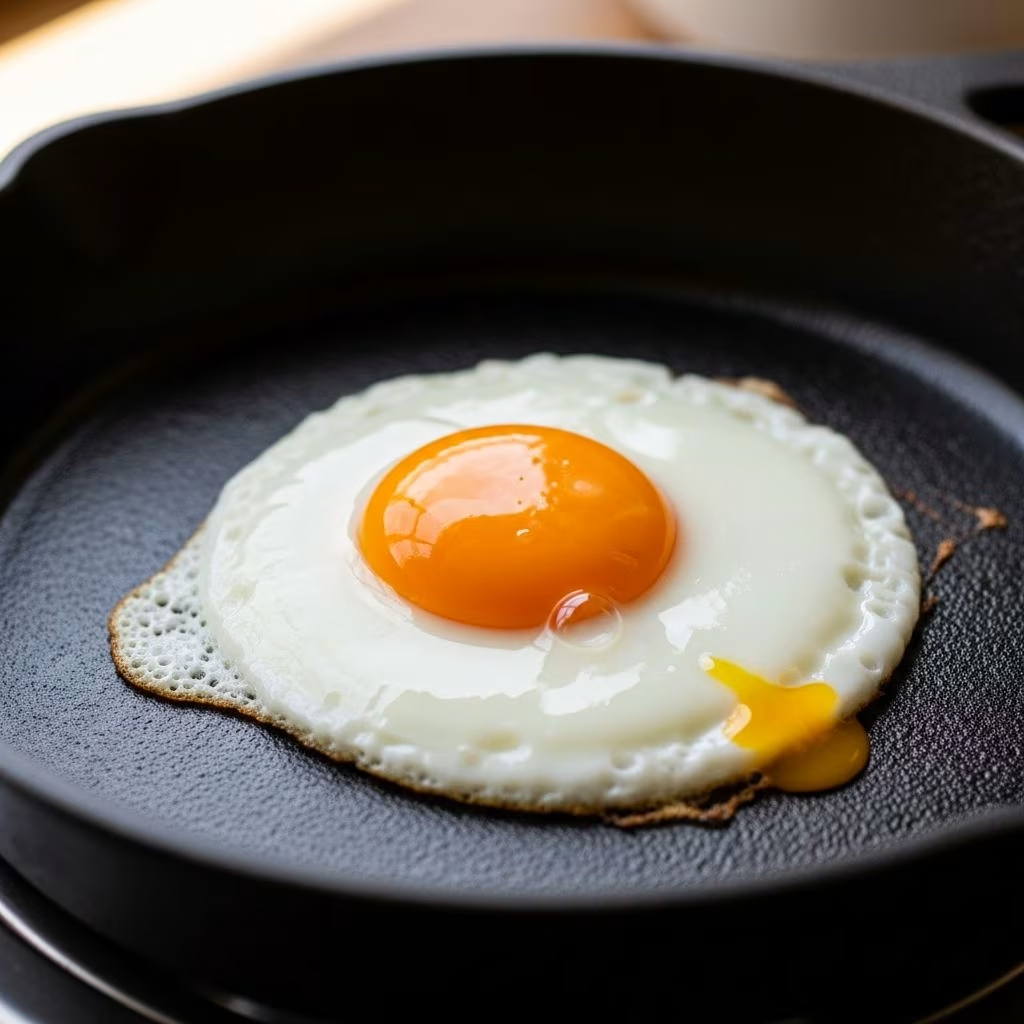
Over-easy eggs represent a culinary delight for many, combining the creamy richness of a runny yolk with the satisfying texture of fully cooked whites. This cooking style involves gently flipping the egg to cook both sides briefly, resulting in a tender bite that elevates any meal. Whether you’re a novice cook or refining your skills, mastering this technique ensures consistent results with everyday ingredients.
Understanding Over-Easy Eggs and Their Appeal
The charm of over-easy eggs lies in their simplicity and versatility. Unlike sunny-side-up eggs, which remain uncooked on top, over-easy eggs get a quick flip to set the whites completely while keeping the yolk liquid. This creates a balance of textures: crisp edges, soft whites, and a golden, oozing center that pairs beautifully with toast, salads, or burgers.
Nutritionally, a single large egg provides about 70 calories, 6 grams of protein, and essential vitamins like B12 and D. When cooked over-easy, it retains more nutrients compared to over-hard methods, as the brief cooking time preserves the yolk’s integrity. Their popularity stems from affordability and quick preparation—ideal for busy mornings.
Essential Ingredients for Success
Creating perfect over-easy eggs requires just a handful of basics:
- Fresh eggs: Large or extra-large work best; check for firm yolks by gently shaking—the rattle indicates staleness.
- Butter or oil: 1-1.5 tablespoons unsalted butter adds flavor; neutral oils like avocado prevent sticking.
- Salt and pepper: A pinch enhances taste; sea salt offers subtle crunch.
Opt for room-temperature eggs to prevent thermal shock in the pan, which can cause cracking. Freshness is key—the whites should spread minimally and hold the yolk securely.
Key Tools Every Home Cook Needs
Invest in reliable equipment to avoid common pitfalls like tearing or sticking:
| Tool | Purpose | Why It Matters |
|---|---|---|
| Nonstick skillet (8-10 inches) | Even heating | Prevents adhesion; cast iron alternative if seasoned well. |
| Thin, wide spatula | Flipping | Flexible edge slides under yolk without breaking it. |
| Tongs (optional) | Edge control | Assists in loosening for hesitant flips. |
| Lid or plate | Steaming aid | Sets top whites without full flip in advanced methods. |
A preheated pan is non-negotiable; cold starts lead to uneven cooking.
Step-by-Step Recipe for Flawless Results
Follow these instructions for 1-2 servings, ready in under 5 minutes.
- Preheat the pan: Place a nonstick skillet over low-medium heat for 2 minutes. Add butter and swirl until foamy—never let it brown.
- Crack the eggs: Tap each egg on a flat surface, not the pan edge, to avoid shell fragments. Gently release into the pan, spacing them apart. Season immediately.
- Cook the first side: Maintain low heat; whites will turn opaque in 1-2 minutes. Edges may bubble slightly— that’s ideal.
- Master the flip: Slide spatula under the entire egg, lifting smoothly. Flip confidently but gently; cook 30-60 seconds more for a set white and runny yolk.
- Serve promptly: Slide onto a plate; add pepper. The residual heat continues cooking the yolk slightly.
Total time: 4 minutes. Yield: 1-2 eggs. This method yields 240 calories per two-egg serving, with 21g fat and 13g protein.
Pro Tips for Professional-Quality Eggs
- Heat control: Medium-low prevents crispy whites; if too hot, the yolk overcooks during flip.
- No crowding: Cook one or two at a time for even heat distribution.
- Yolk protection: Crack into a bowl first if nervous about breaks.
- Butter swirl: Ensures full coverage, mimicking restaurant glide.
- Fresh test: Float eggs in water—sinkers are fresh.
For stainless steel pans, add water post-crack and cover to steam whites, reducing flip risk.
Common Mistakes and How to Fix Them
Even seasoned cooks slip up—here’s how to troubleshoot:
| Mistake | Cause | Fix |
|---|---|---|
| Sticking egg | Insufficient fat or cold pan | Increase butter; preheat longer. |
| Broken yolk | Rough flip or old eggs | Use thin spatula; buy fresh weekly. |
| Overcooked yolk | High heat or long cook | Lower to low; time strictly. |
| Runny whites | Too low heat | Bump to medium-low after adding eggs. |
| Shell bits | Pan cracking | Crack on counter; strain if needed. |
Practice on weekends builds confidence.
Creative Ways to Serve Over-Easy Eggs
Beyond plain, elevate your dish:
- Classic toast: Nestle on buttered sourdough; yolk soaks in perfectly.
- Breakfast sandwich: Stack with bacon, cheese, and English muffin.
- Salad topper: Drizzle over greens with vinaigrette for richness.
- Hash companion: Pair with potatoes and veggies for heartiness.
- Burger upgrade: Crown a patty for steakhouse vibes.
Experiment with herbs like chives or hot sauce for flair.
Variations for Every Preference
Tailor to tastes:
- Over-medium: Cook flipped side 1-2 minutes for jammy yolk.
- Basted style: Spoon hot fat over top instead of flipping.
- Vegan twist: Use tofu scramble with turmeric for yolk color.
- Multiple eggs: Fry two, fold into omelet shape post-flip.
- Oil swap: Olive oil for Mediterranean notes.
For sunny-side-up lovers, skip the flip and cover briefly.
Health Benefits and Nutritional Insights
Over-easy eggs deliver choline for brain health and lutein for eyes. The runny yolk maximizes absorption of fat-soluble vitamins A, D, E, and K. A two-egg serving offers sustained energy without blood sugar spikes, thanks to balanced macros. Consume in moderation if watching cholesterol, but recent studies affirm whole eggs’ heart benefits.
Frequently Asked Questions
What if my eggs stick despite nonstick pan?
Ensure ample butter and full white set before flipping. Wipe pan between batches.
Can I make over-easy eggs in microwave?
Not recommended—uneven cooking risks explosion. Stovetop is safest.
How do I know when to flip?
Whites fully opaque, edges lifting slightly—about 90 seconds.
Are over-easy eggs safe with runny yolks?
Pasteurized eggs minimize salmonella risk; cook whites fully.
Best pan size for multiple eggs?
10-inch for two; avoid overlap.
Storage and Make-Ahead Tips
Freshly cooked is best, but refrigerate leftovers up to 2 days in airtight container. Reheat gently in pan over low to restore texture. Freeze not advised—yolk firms irreversibly.
References
- Perfect Over Easy Eggs — Pam’s Daily Dish. 2023-05-15. https://pamsdailydish.com/perfect-over-easy-eggs/
- How to Make Perfect Over-Easy Eggs — Little Spoon Farm. 2024-02-10. https://littlespoonfarm.com/how-to-make-perfect-over-easy-eggs/
- How to Cook Over Easy Eggs — Beyond The Chicken Coop. 2023-11-20. https://www.beyondthechickencoop.com/over-easy-eggs/
- How to Make Over-Easy Eggs (Even In Stainless Steel Pans!) — She Made It She Might. 2024-01-05. https://shemadeitshemight.com/how-to-make-over-easy-eggs/
- How to Make Over Hard Eggs — Pancake Recipes. 2023-08-12. https://pancakerecipes.com/over-hard-eggs/