Few dishes capture the essence of comfort cooking quite like a perfectly constructed lasagna. This Italian classic has become a staple in kitchens worldwide, yet achieving that ideal combination of creamy, tangy, and savory layers remains elusive for many home cooks. The difference between an adequate lasagna and an exceptional one lies not in exotic ingredients, but rather in understanding the fundamental principles of composition, timing, and technique.
Understanding the Foundation: Core Components That Matter
Before assembling your masterpiece, it’s essential to recognize that lasagna comprises more than simply stacking sheets of pasta. Each component plays a distinct role in the final outcome. The structural foundation includes the pasta sheets themselves, a robust meat-based or vegetable sauce, a creamy binding layer, and a crowning cheese topping. However, the relationship between these elements determines whether your creation will be memorable or mediocre.
The meat sauce, often called ragù in Italian cooking, should be rich and deeply flavored, having simmered for an extended period to develop complexity. This isn’t a quick tomato sauce; it’s a foundation built through patience and proper technique. Simultaneously, a béchamel or ricotta-based layer provides moisture and prevents the dish from becoming dry during baking. Many amateur cooks underestimate this crucial element, leading to a dense, heavy final product.
Selecting and Preparing Your Pasta Sheets
The choice of pasta sheets influences both the construction process and the final texture. Traditional dried lasagna noodles require pre-boiling, which many cooks find cumbersome but necessary for proper cooking. Fresh sheets offer convenience but demand careful handling to prevent tearing. No-boil varieties present a middle ground, though they require adjustment to sauce consistency since they’ll absorb moisture during baking.
If you choose traditional dried sheets, slightly undercooking them during the initial boiling stage proves advantageous. This prevents mushiness after the extended baking time. The sheets should be flexible but retain a slight firmness, almost al dente. Lay them flat on parchment paper to prevent sticking before assembly begins. This preparation stage, often overlooked, eliminates frustration during the actual construction process.
Key Pasta Preparation Tips:
- If using dried pasta, cook to just below al dente consistency
- Fresh sheets should be handled with care to prevent tearing
- Lay cooked sheets flat on parchment to prevent adhesion
- Pat dry with paper towels if excess moisture is present
- Room temperature sheets are easier to manipulate than hot ones
Crafting a Flavorful Meat Sauce Foundation
The meat sauce represents the flavor backbone of your lasagna. This component demands attention to detail and time for proper development. Unlike quick weeknight sauces, a quality ragù benefits from extended simmering, allowing flavors to meld and deepen. The process begins with browning ground meat—traditionally a combination of beef and pork offers superior flavor to either variety alone—in a heavy-bottomed pot with aromatic vegetables.
The browning stage is critical. Rushing this step or using medium-high heat instead of high heat produces inferior results. Properly browned meat develops a complex, savory flavor through the Maillard reaction, a chemical process that occurs when amino acids and reducing sugars in food are exposed to high temperatures. This creates hundreds of new flavor compounds unavailable in meat that hasn’t been properly seared.
After browning, tomato paste enters the equation. Rather than adding it directly to the meat, many professional cooks recommend concentrating it in the rendered fat before introducing the meat back to the pot. This technique, called blooming, intensifies the tomato flavor significantly. Subsequent additions of crushed tomatoes, stock, and seasonings build layers of flavor that distinguish exceptional lasagna from ordinary versions.
Essential Sauce Development Steps:
- Use high heat to properly brown ground meat and develop complex flavors
- Include a mix of beef and pork for superior depth
- Bloom tomato paste in rendered fat before combining with meat
- Simmer sauce for minimum 30-45 minutes for flavor development
- Taste and adjust seasonings throughout cooking process
- Allow sauce to cool slightly before layering to prevent pasta sheets from becoming soggy
Mastering the Creamy Layer: Béchamel Versus Ricotta-Based Approaches
The creamy component serves multiple purposes: it adds moisture, provides richness, and creates a barrier that prevents direct contact between meat sauce and pasta, which can lead to a tough texture. Two primary approaches dominate lasagna construction, each offering distinct advantages and characteristics.
Béchamel, a French mother sauce made from butter, flour, and milk, creates a silky, refined layer that binds ingredients elegantly. Proper béchamel requires attention to prevent lumps—whisking the flour into melted butter before gradually introducing warm milk ensures smoothness. This classic approach yields a more refined texture and a lighter overall dish, as béchamel contains less fat than ricotta-based alternatives.
Ricotta-based layers, conversely, deliver a creamier, more indulgent experience. Ricotta mixed with egg, Parmesan, and seasonings creates a distinctive layer that some prefer for its richness and straightforward preparation. This method requires no sauce-making skills; simply combining and seasoning produces excellent results. However, the heavier nature of ricotta can make the overall dish feel more substantial, potentially overwhelming rather than complementing the other layers.
Comparison of Creamy Layer Methods:
| Method | Texture | Richness | Preparation Difficulty |
|---|---|---|---|
| Béchamel | Silky, refined | Moderate | Medium |
| Ricotta-Based | Creamy, dense | High | Easy |
The Art of Strategic Layering
Assembly represents where theory becomes practice. The sequence and proportions of layers determine whether sauce distributes evenly throughout the dish or collects in certain areas, creating dry and soggy sections. Professional construction follows a deliberate pattern that ensures moisture reaches every portion of the finished lasagna.
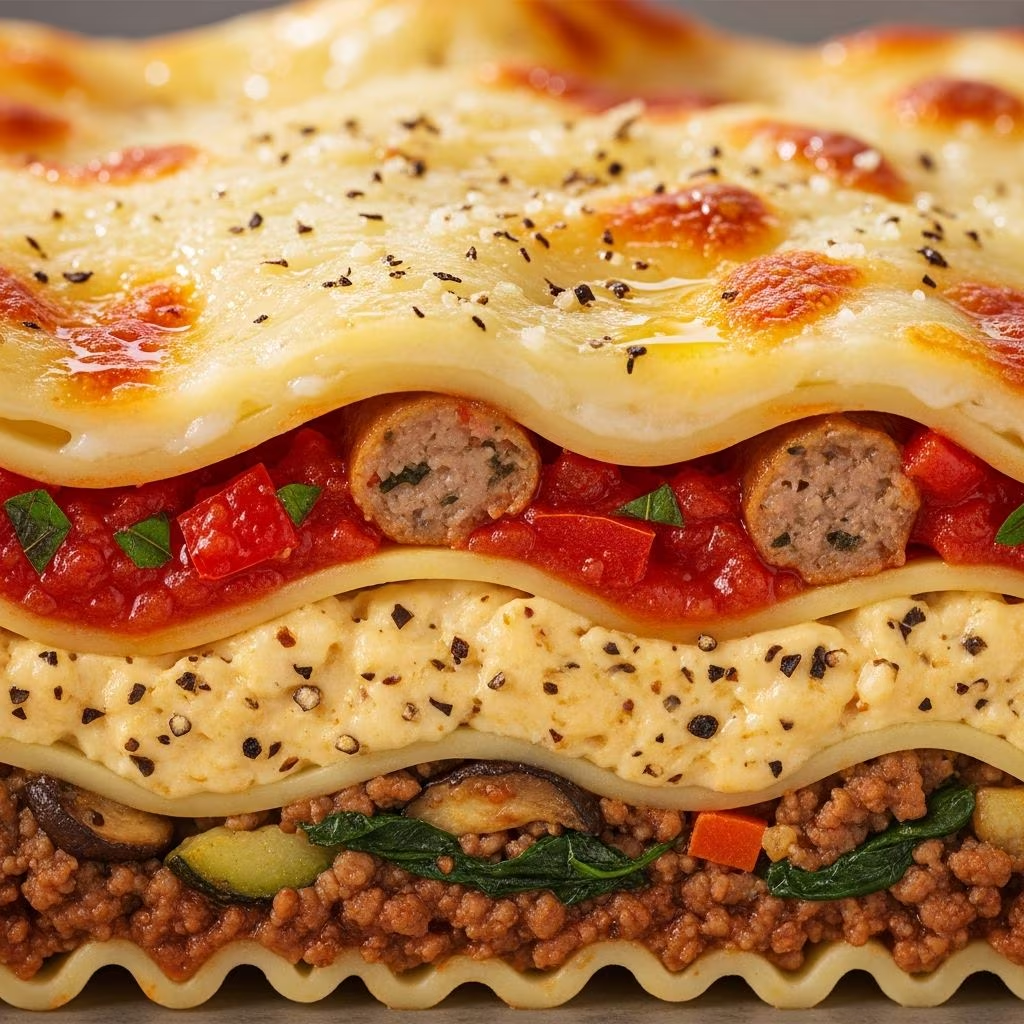
Beginning with a thin layer of meat sauce on the bottom prevents sticking and creates flavor immediately upon serving. Followed by pasta sheets, creamy layer, and more sauce, this cycle repeats until the dish is full. However, the final layers deserve special consideration. Ending with a creamy layer rather than meat sauce keeps the top moist and prevents burning. A generous layer of cheese crowns the entire construction, providing both visual appeal and a protective, golden surface after baking.
Understanding proportions prevents common pitfalls. Too much sauce creates a soupy lasagna; too little produces a dry, dense result. The ideal consistency should allow some sauce to pool slightly if a serving spoon is pressed into the center after cooking, but not so much that it runs across the plate. Temperature also matters—room temperature components layer more smoothly than cold ones straight from the refrigerator.
Recommended Layering Sequence:
- Base layer: thin spread of meat sauce
- Pasta sheet layer (slightly overlapping)
- Creamy layer (béchamel or ricotta mixture)
- Meat sauce layer
- Repeat pasta, creamy, sauce pattern until dish is nearly full
- Top layer: creamy component or thin sauce finish
- Final layer: generous cheese coating
Baking Methodology for Optimal Results
Baking transforms layered components into a cohesive whole, but this process requires careful attention. Temperature, duration, and coverage all influence the final outcome. Too-high heat browns the top before the interior reaches proper temperature; too-low heat requires excessive time, drying out the pasta and sauce.
Most lasagnas benefit from initial coverage with aluminum foil, which traps steam and keeps the top from browning too quickly. After approximately 25-30 minutes of covered baking, removing the foil allows the top to develop a golden crust while the interior finishes cooking. This two-stage approach prevents simultaneous browning of the top and undercooking of the center.
Resting the finished lasagna for 10-15 minutes after removal from the oven proves invaluable. This period allows the layers to set, preventing the first slice from collapsing or falling apart. During this resting phase, internal temperatures continue to redistribute evenly, ensuring consistent texture throughout.
Flavor Enhancement and Finishing Touches
Elevating lasagna beyond basic versions involves understanding complementary flavors and strategic additions. Fresh basil, added just before serving rather than during cooking, contributes bright, aromatic qualities that contrast beautifully with rich, simmered components. A drizzle of high-quality olive oil across the finished dish adds richness without heaviness.
Cheese selection significantly impacts the final flavor profile. While Parmesan provides sharpness and complexity, combining it with softer cheeses like fontina or a small proportion of fresh mozzarella creates dimensional flavor. The traditional Italian approach often includes all three, layered throughout rather than reserved exclusively for the top.
Troubleshooting Common Issues
Understanding why problems occur prevents repeating mistakes. A watery lasagna typically results from excessive sauce or moisture released from ingredients during baking. Using room-temperature components and slightly reducing sauce quantity addresses this issue. Conversely, dry lasagna suggests insufficient sauce, old pasta sheets that absorbed too much moisture during cooking, or excessive baking time.
Edges that overcook while the center remains underdone indicate oven temperature inconsistency or insufficient initial coverage. Positioning the dish on a lower oven rack and using foil strategically corrects this problem. Pasta sheets that split or tear during assembly suggest either cooking them too long initially or handling them too roughly. Patience and gentle movements prevent this frustration.
Make-Ahead Strategies and Storage
Lasagna’s forgiving nature makes it ideal for advance preparation. Assembled but unbaked lasagna can refrigerate for up to 24 hours before baking, often with improved flavor development as components meld. Fully cooked lasagna also freezes excellently, maintaining quality for up to three months when properly wrapped. Thawing overnight in the refrigerator before reheating gently preserves texture better than quick thawing methods.
Final Considerations for Consistency
Achieving exceptional lasagna repeatedly requires understanding that success relies on mastering fundamentals rather than pursuing exotic variations. Quality ingredients certainly help, but technique transforms ordinary components into extraordinary dishes. By respecting the building blocks—properly developed sauce, well-prepared pasta, adequate creamy layers, and strategic assembly—anyone can create lasagna worthy of serving to the most discerning guests.
References
- On Food and Cooking: The Science and Lore of the Kitchen — Harold McGee. Scribner, 2004. https://www.penguinrandomhouse.com/books/200519/on-food-and-cooking-by-harold-mcgee/
- The Art of Italian Cooking — Maria Pia Raventos. Phaidon Press, 2015. https://www.phaidon.com/store/food-drink/the-art-of-italian-cooking/
- Maillard Reaction: Mechanism, Control and Applications — Academic research. Journal of Food Biochemistry, 2020. https://onlinelibrary.wiley.com/journal/17454514