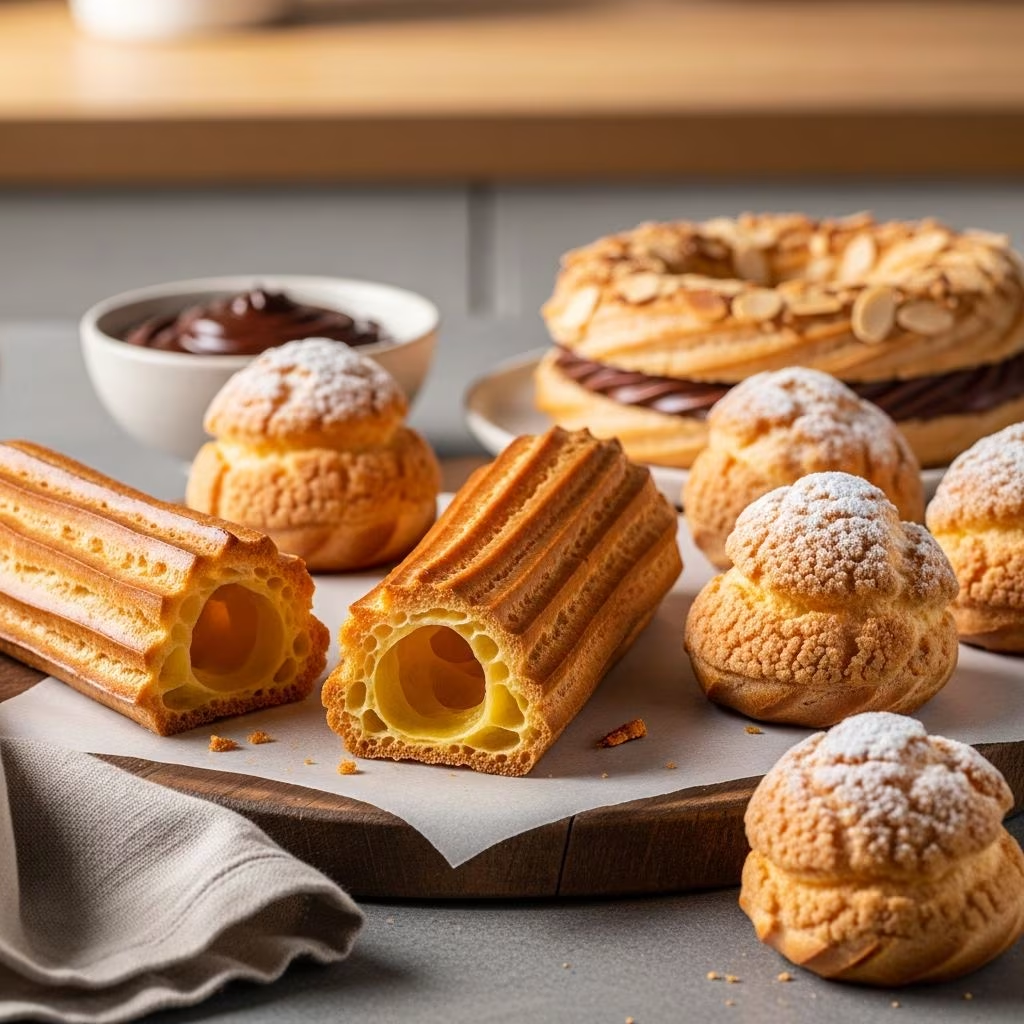
Pâte à choux, the foundational dough behind iconic pastries like cream puffs, éclairs, and profiteroles, relies on a simple blend of pantry staples transformed through precise technique. This versatile pastry expands dramatically in the oven due to steam, creating light, airy shells ideal for fillings. Whether you’re a novice baker or refining your skills, understanding the process ensures consistent success.
Understanding the Magic of Choux Pastry
Choux pastry stands out because it doesn’t use leavening agents like baking powder or yeast. Instead, the high moisture content—primarily from water or milk and eggs—turns to steam during baking, forcing the dough to puff up. The flour and butter create structure, while eggs provide elasticity and shine. A classic ratio by weight is 2:1:1:2 for liquid, butter, flour, and eggs, though slight adjustments yield optimal crispness.
This dough’s adaptability allows for both sweet and savory applications, from delicate dessert shells to gougères (cheese puffs). Mastering it opens doors to French patisserie classics.
Essential Ingredients for Success
With just five core components, quality matters. Here’s what you need:
- Water or milk: Provides steam for lift. Milk adds tenderness and subtle flavor.
- Unsalted butter: Ensures even melting and rich taste. Cut into pieces for quick incorporation.
- Salt: Enhances flavor; about ¼ teaspoon per cup of liquid.
- All-purpose flour: Sifted for lump-free dough; 1 cup (125g) typically.
- Eggs: Large eggs, beaten; 4 for standard batch, added gradually for proper emulsion.
Optional sugar (1 tbsp) sweetens for desserts. Weigh ingredients for precision, as volume measures can vary. Use room-temperature eggs to integrate smoothly.
Step-by-Step Guide to Making the Dough
Follow these stages meticulously for foolproof results.
1. Prepare the Panade Base
In a heavy-bottomed saucepan, combine 1 cup water (or half water, half milk), ½ cup butter (cubed), ¼ tsp salt, and optional 1 tbsp sugar. Heat over medium until the butter melts and the mixture reaches a rolling boil. This boils off excess water, concentrating the dough.
2. Incorporate the Flour
Remove from heat and dump in 1 cup sifted flour all at once. Stir vigorously with a wooden spoon until a smooth ball forms and pulls away from pan sides—no dry bits. Return to low heat for 1-3 minutes, stirring to dry the dough. It should leave a film on the pan bottom and hold a spoon upright.
3. Cool and Add Eggs
Transfer to a mixer bowl (or use hand mixer). Let cool 1-2 minutes until warm, not hot (about 140°F/60°C). Beat in eggs one at a time on low speed, fully incorporating each before the next. The dough will curdle initially but smooth into a glossy, pipeable paste that ribbons off the paddle. Stop when it holds shape yet flows slowly—use all or reserve a bit for egg wash.
Piping and Shaping Techniques
Fit a piping bag with a large round tip (Ateco 806 or Wilton 1A). Pipe 2-inch mounds for puffs or 4-inch lines for éclairs on parchment-lined sheets, spacing 2 inches apart. Dampen fingers to flatten peaks, preventing uneven baking. For uniformity, trace templates under parchment.
| Shape | Pipe Size | Bake Time | Yield (from 1 batch) |
|---|---|---|---|
| Cream Puffs | 2″ diameter x 1″ tall | 30-35 min | 12-16 |
| Éclairs | 4″ long x 1″ wide | 35-40 min | 10-12 |
| Profiteroles | 1.5″ mounds | 25-30 min | 20-24 |
Baking for Perfect Rise and Crispness
Preheat oven to 400°F (200°C). Bake in the center rack until deep golden and dry-looking, 30-35 minutes for puffs. Avoid opening the door early to trap steam. At the end, turn off oven, pierce shells with a paring knife to release steam, crack the door, and dry 10 minutes more. This prevents soggy interiors. Cool completely on racks.
Common Pitfalls and Fixes
Even pros face issues—here’s how to avoid them:
- Flat puffs: Underbaked or oven too cool. Ensure full golden color and steam venting.
- Cracked tops: Uneven flour addition or rapid cooling. Stir thoroughly off-heat first.
- Soggy centers: Insufficient drying. Extend oven time with door ajar.
- Too runny dough: Over-added eggs. Test consistency: it should pipe with a V-shape trail.
- Deflated shells: Removed too soon. Cool gradually in oven.
Mist trays lightly with water pre-piping for extra steam boost.
Storage and Freezing Tips
Baked, unfilled shells store airtight up to 2 days or freeze 3 months. Re-crisp in 350°F oven 5-10 minutes. Freeze piped dough on sheets, then bag; bake from frozen, adding 5 minutes. Fill just before serving to maintain crunch.
Delicious Filling Ideas
Choux shines with contrasts: crisp shell, creamy center.
- Classic Crème Pâtissière: Vanilla pastry cream, whipped for stability.
- Diplomat Cream: Pastry cream + whipped cream + gelatin.
- Chocolate Ganache: For éclairs; dip tops post-filling.
- Savory: Chicken salad, cheese, or mushroom duxelles for appetizers.
- Fruit: Lemon curd or stabilized whipped cream with berries.
Pipe fillings via bottom hole post-piercing. Dust with powdered sugar or glaze.
Advanced Variations
Craquelin Topping: Thin cookie dough disc atop piped choux for even, crackly domes. Blend ¼ cup brown sugar, ¼ cup butter, ⅓ cup flour; roll ⅛-inch thick, freeze, cut to fit.
Paris-Brest: Ring-shaped with praline filling for cyclists’ delight.
Gougères: Add grated Gruyère to dough; bake mini for hors d’oeuvres.
FAQ
Why does my choux pastry not puff? Likely due to insufficient steam or early oven peeking. Ensure boil stage and high initial heat.
Can I use a stand mixer? Yes, ideal for eggs. Hand stirring works but tiresome.
How do I know egg amount is right? Dough should be shiny, pipeable, forming a V when lifted.
Gluten-free version? Possible with 1:1 blends, but test hydration.
Vegan substitute? Aquafaba for eggs, plant butter, works with tweaks.
Troubleshooting Table
| Problem | Cause | Solution |
|---|---|---|
| No rise | Low heat/steam | High oven temp, full bake |
| Soggy | Steam trapped | Pierce & dry |
| Cracks | Lumpy flour | Sift & stir smooth |
| Runny | Too many eggs | Add gradually, test |
References
- How To Make Choux Pastry – Retro Recipe — Retro Recipes Kitchen. Accessed 2026. https://retrorecipeskitchen.com/how-to-make-choux-pastry/
- Choux Pastry (Pâte à Choux) — Sugar Spun Run. Accessed 2026. https://sugarspunrun.com/how-to-make-choux-pastry/
- How To Make Perfect Choux Pastry — The Flavor Bender. Accessed 2026. https://www.theflavorbender.com/how-to-make-perfect-choux-pastry/
- Choux Pastry (Pâte à Choux) — Sally’s Baking Addiction. Accessed 2026. https://www.sallysbakingaddiction.com/choux-pastry/