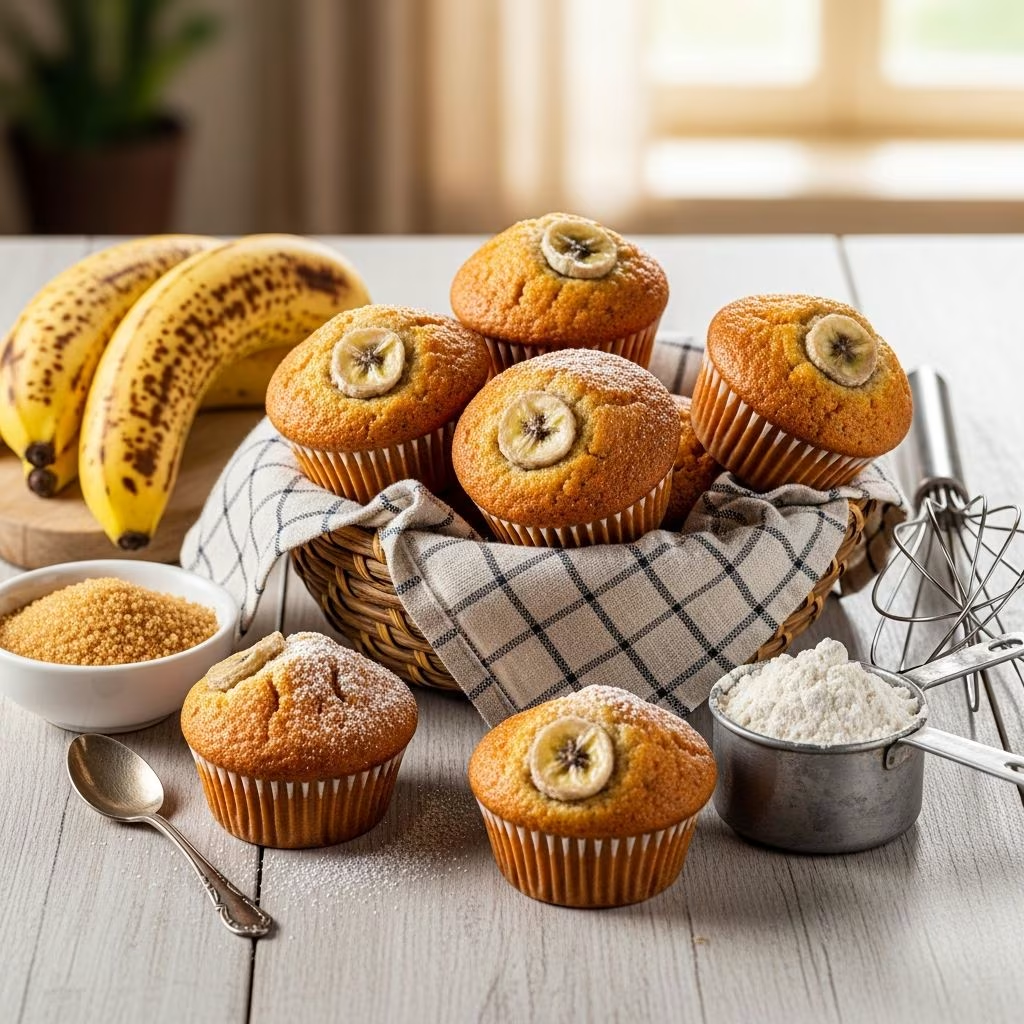
Banana muffins represent one of the most accessible and rewarding baking projects for both novice and experienced home bakers. Their straightforward preparation, combined with the natural sweetness and moisture that ripe bananas provide, makes them an ideal choice for weekday breakfasts, weekend brunch spreads, or convenient grab-and-go snacks. The appeal of banana muffins extends beyond their ease of preparation—they offer an excellent way to utilize overripe bananas that might otherwise go to waste, transforming them into something delightful and memorable.
Understanding Your Ingredient Foundation
The success of your banana muffins begins with understanding each ingredient’s role in the final product. Unlike some baking endeavors that demand precision down to the gram, banana muffin recipes offer flexibility while maintaining excellent results.
The Star Ingredient: Bananas
The quality and ripeness of your bananas directly impact the flavor and texture of your finished muffins. Ideally, select bananas that display brown spots or slight bruising on their skin—indicators that the starches have converted to sugars, providing maximum sweetness and deeper flavor profiles. For a standard batch, three large ripe bananas yield approximately one and a half cups of mashed fruit. The mashing process should create a uniform, slightly chunky consistency that incorporates throughout the batter without creating dense pockets.
If your bananas aren’t quite ripe enough, you can accelerate the process by placing them in a paper bag at room temperature for one to two days. Alternatively, freezing overripe bananas preserves them for future baking projects—simply thaw them before use, as the freezing process naturally softens the flesh, making mashing effortless.
Structural Components
All-purpose flour forms the structural backbone of your muffins, typically requiring one and a half to two cups depending on your recipe variation. The flour provides structure while allowing moisture to distribute evenly throughout the crumb. Some bakers incorporate whole wheat flour for added nutrition and nutty undertones, which complements banana’s natural sweetness beautifully.
Leavening agents—baking soda and baking powder—work in tandem to create the characteristic rise and tender crumb structure. Baking soda reacts immediately with acidic components, while baking powder provides extended lift during baking. A combination of one teaspoon baking soda and one teaspoon baking powder typically produces optimal results.
Wet Ingredients and Fat
Melted butter or oil contributes essential moisture while creating the tender, bakery-quality crumb that distinguishes excellent muffins from dense, disappointing versions. Approximately one-third to one-half cup of melted butter or neutral oil produces properly moist results. Some recipes employ both butter and oil for enhanced moisture combined with rich flavor.
One large egg binds the ingredients while contributing structure and creating the characteristic muffin texture. Sugar—typically one-half to three-quarter cup of white or brown sugar—provides sweetness and moisture. Alternatively, honey or maple syrup can replace granulated sugar, offering subtle flavor nuances alongside their inherent moisture content.
Flavor Enhancement Elements
Vanilla extract, cinnamon, and nutmeg form the traditional spice profile that enhances banana’s natural flavor without overwhelming it. One teaspoon vanilla extract, one teaspoon cinnamon, and one-half teaspoon nutmeg create a balanced, sophisticated flavor experience. Some bakers reduce nutmeg quantities to one-quarter teaspoon, as its earthy intensity can dominate if used excessively.
Salt—approximately one-half teaspoon—amplifies flavor perception and balances sweetness. This ingredient shouldn’t be overlooked despite its subtle presence in the final product.
Preparation Techniques for Optimal Results
Mashing and Mixing Methodology
Begin by mashing bananas in a large mixing bowl using a fork or potato masher. The goal involves creating a relatively uniform texture—some small banana chunks are acceptable and even desirable, as they provide pleasant texture variation. Avoid over-processing into an unpleasantly smooth puree.
Add your melted butter or oil to the mashed bananas and stir thoroughly to combine. This step ensures fat distributes evenly before adding remaining ingredients. Next, introduce sugar, stirring until the mixture becomes uniform. Add your egg and vanilla extract, stirring until everything combines smoothly.
In a separate bowl, combine all dry ingredients: flour, baking soda, baking powder, salt, cinnamon, and nutmeg. The critical step follows—introducing the dry mixture to the wet ingredients. Stir gently and deliberately only until the flour disappears into the batter. Overmixing develops gluten, resulting in dense, tough muffins rather than the tender crumb structure desired. The batter should appear slightly lumpy and underdeveloped.
Batter Distribution and Preparation
Line your muffin tin with paper liners or lightly oil the cups to prevent sticking. Most standard recipes yield ten to twelve muffins. Fill each cup approximately three-quarters full—this level allows proper rise without batter spilling over the edges during baking.
Baking Techniques and Temperature Control
Most banana muffin recipes call for baking at temperatures between 350°F and 425°F (175°C to 220°C), with variations depending on your specific recipe approach. Some recipes employ a two-temperature method: beginning at a higher temperature to promote rise and browning, then reducing heat to ensure thorough cooking without excessive top browning.
For standard methods, preheat your oven to 350°F to 375°F. Bake for approximately eighteen to twenty-five minutes until a toothpick inserted into the center emerges clean or with just a few moist crumbs. The muffin tops should display golden-brown coloring, and the muffins should spring back when gently pressed.
Oven variations significantly impact baking times, so begin checking muffins around the eighteen-minute mark. Underbaking results in gummy centers, while overbaking produces dry, crumbly texture. The difference between perfect and overdone muffins can be merely two to three minutes, so attentiveness during the final stages proves essential.
Creative Variations and Flavor Customization
While classic banana muffins offer satisfying simplicity, numerous variations expand their appeal and accommodate diverse preferences.
Popular Enhancement Options
- Chocolate Additions: Fold one-third to one-half cup of chocolate chips into the batter before portioning. Dark, milk, or semi-sweet varieties work equally well, offering different flavor profiles.
- Nutty Textures: Incorporate one-half cup chopped walnuts, pecans, or macadamia nuts for textural contrast and nutritional enhancement.
- Spiced Variations: Increase cinnamon and nutmeg quantities for more pronounced warming spice, or experiment with cardamom, ginger, or allspice for unexpected flavor dimensions.
- Streusel Topping: Sprinkle a cinnamon-sugar mixture or homemade streusel crumble over batter before baking for added texture and visual appeal.
- Peanut Butter Integration: Swirl two to three tablespoons peanut butter into the batter, creating marbled patterns and complementary flavor.
Healthier Adaptations
For nutritionally-conscious bakers, several modifications maintain delicious results while reducing refined ingredients. Replace all-purpose flour partially or entirely with whole wheat flour, offering increased fiber and complex carbohydrates. Substitute conventional sugar with honey, maple syrup, or coconut sugar, providing distinct flavor notes alongside their sweetening properties.
Incorporate Greek yogurt into the wet ingredients, replacing some liquid and adding protein while maintaining moisture. Reduce fat content by using applesauce or additional banana in place of some butter or oil. These modifications work well in combination or individually, depending on your nutritional priorities.
Troubleshooting Common Challenges
| Issue | Likely Cause | Solution |
|---|---|---|
| Dense, Heavy Crumb | Overmixing batter or too much flour | Mix only until flour disappears; spoon flour into measuring cups rather than scooping |
| Dry Muffins | Overbaking or insufficient fat content | Reduce baking time by 2-3 minutes; ensure adequate oil or butter |
| Tunneling (Large Holes) | Overmixing or oven too hot | Reduce mixing; lower oven temperature slightly |
| Sunken Centers | Underbaking or insufficient leavening | Extend baking time; verify baking soda and powder aren’t expired |
| Pale Tops | Oven temperature too low | Increase oven temperature by 25°F; ensure oven rack positioning in middle-to-upper third |
Storage, Freezing, and Make-Ahead Strategies
Freshly baked banana muffins remain at their best for two to three days when stored in an airtight container at room temperature. Individual muffins can be wrapped in plastic wrap or aluminum foil for convenient grab-and-go breakfasts.
For extended storage, frozen muffins maintain quality for up to three months. Allow muffins to cool completely before freezing in freezer bags or airtight containers. Thaw at room temperature for approximately one hour before serving, or microwave for thirty to forty-five seconds for warm muffins.
Alternatively, freeze batter in muffin liners for up to two months. Bake directly from frozen, adding approximately five additional minutes to the standard baking time. This approach enables fresh-baked muffins without the full baking commitment.
Frequently Asked Questions
Can I use underripe bananas for muffins?
While underripe bananas can technically work, they lack the sugar content and moisture that ripe bananas provide, resulting in less flavorful, potentially drier muffins. Plan ahead and allow bananas to ripen fully for optimal results.
What’s the difference between banana muffins and banana bread?
The primary difference lies in baking vessels and resulting texture. Banana muffins bake in individual muffin tins and develop crispy, caramelized exteriors, while banana bread bakes in a single loaf pan and develops denser, more uniform crumb.
Can I substitute milk in the recipe?
Yes, most milk varieties work interchangeably—dairy milk, almond milk, oat milk, or coconut milk all contribute the necessary moisture without significantly altering flavor.
How do I prevent muffin tops from browning too quickly?
Tent the muffin pan loosely with aluminum foil during baking, removing it during the final five minutes for browning. Alternatively, reduce oven temperature by 25°F.
Can I make mini or jumbo muffins using this recipe?
Yes, mini muffins bake in eight to twelve minutes while jumbo muffins require thirty-five to forty minutes. Adjust baking times accordingly while checking for doneness.
Conclusion: Mastering Your Banana Muffin Craft
Banana muffins offer bakers an excellent foundation for developing fundamental baking skills while producing reliably delicious results. Understanding your ingredients, respecting the mixing process, and paying attention during baking creates the difference between mediocre and exceptional muffins. Whether you prefer classic simplicity or creative variations, banana muffins adapt to your preferences and dietary needs while remaining remarkably forgiving compared to more temperamental baked goods. Begin with a foundational recipe, practice the techniques outlined above, and gradually experiment with variations as your confidence grows.
References
- Banana Muffin Variations and Techniques — Baking Mischief. 2024. https://bakingmischief.com/small-batch-banana-muffins/
- Healthy Banana Muffins Recipe — Love and Lemons. 2024. https://www.loveandlemons.com/healthy-banana-muffins/
- The Best Banana Muffin Recipe — Sugar Spun Run. 2024. https://sugarspunrun.com/the-best-banana-muffin-recipe/
- Quick & Easy Banana Muffins — Sally’s Baking Addiction. 2024. https://sallysbakingaddiction.com/banana-muffins/