Paneer, the versatile fresh cheese central to Indian cuisine, offers a mild flavor and firm yet tender texture that elevates curries, stir-fries, and appetizers. Making it at home surpasses store-bought versions in freshness and quality, requiring only two basic ingredients and minimal effort. This comprehensive guide walks you through the process, from selecting the right milk to pressing the curds, while sharing creative uses and expert techniques for consistent success.
Understanding Paneer: A Staple of Indian Vegetarian Cooking
Paneer stands out as a non-melting cheese made by curdling milk with an acid, resulting in solid curds separated from whey. Unlike aged cheeses, it retains a soft, crumbly consistency ideal for absorbing spices in dishes like palak paneer or paneer tikka. Its high protein and calcium content make it a favorite among vegetarians, providing a nutrient-dense alternative to meat.
Historically rooted in the Indian subcontinent, paneer traces back centuries, appearing in ancient texts and royal kitchens. Today, it’s a pantry essential for home cooks worldwide, praised for its simplicity and adaptability in both traditional and fusion recipes.
Essential Ingredients for Perfect Homemade Paneer
To achieve optimal results, focus on high-quality components. The process hinges on full-fat milk, which contains enough fat and proteins to form cohesive curds. Low-fat varieties fail to set properly, yielding watery results.
Key ingredients include:
- Full-fat milk: 2 liters (about 8 cups) yields roughly 400-500 grams of paneer. Cow’s milk works best; buffalo milk offers even richer yields.
- Acid agent: 3-4 tablespoons of lemon juice, white vinegar, or citric acid. Lemon provides a subtle freshness, while vinegar ensures quick curdling.
Optional additions like a pinch of salt can enhance flavor, but purists prefer plain paneer to let dish spices shine.
Step-by-Step Guide to Curdling and Forming Paneer
Creating paneer involves heating milk to separate curds from whey through coagulation. Follow these precise steps for foolproof results.
- Pour and heat the milk: In a large, heavy-bottomed pot, bring milk to a near-boil over medium heat. Watch for foaming at the edges and steam rising—this takes 10-15 minutes. Stir occasionally to prevent scorching.
- Introduce the acid: Remove from heat. Gradually add lemon juice or vinegar while stirring gently for 30-60 seconds. The milk will curdle, forming white clumps (curds) in a yellowish liquid (whey).
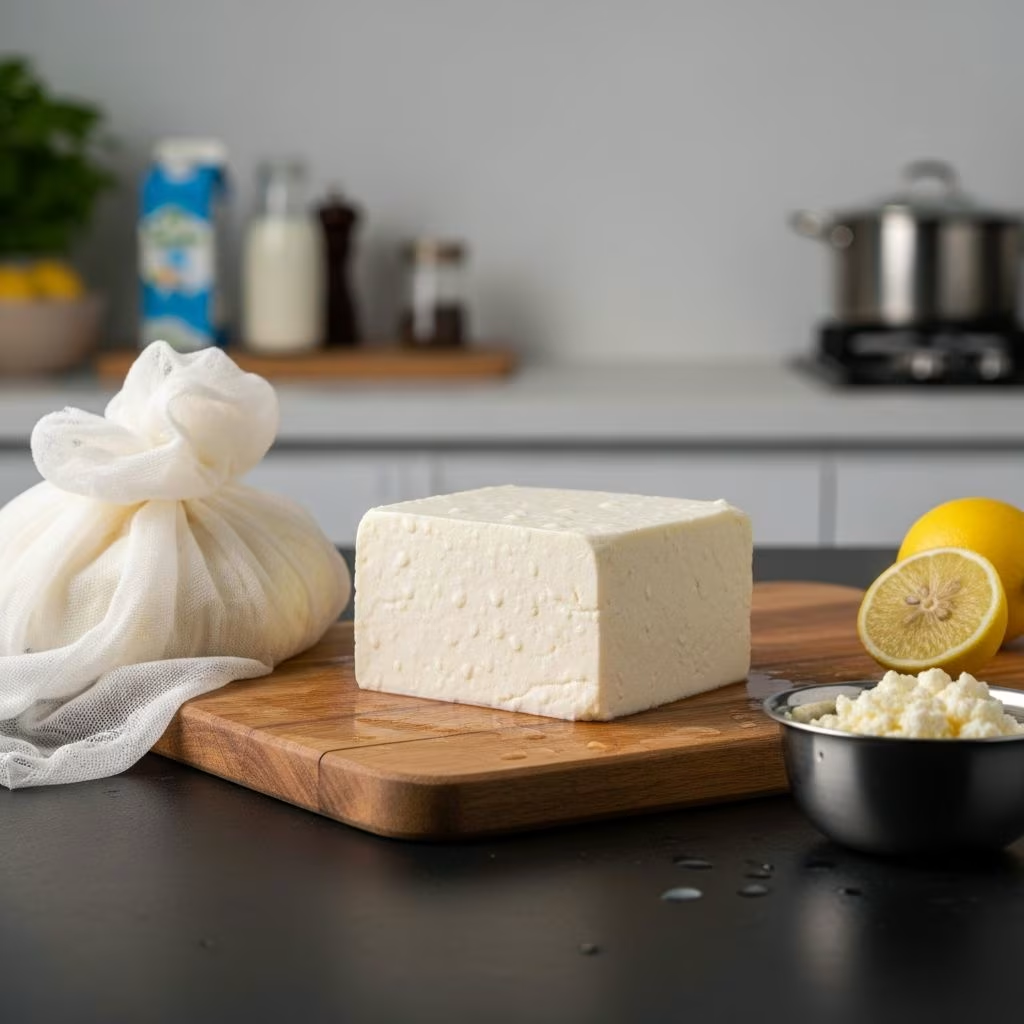
- Rest and strain: Let sit undisturbed for 5-10 minutes. Line a colander with cheesecloth or muslin over a sink or bowl, then pour in the mixture. Rinse curds under cool water to remove acid taste and firm them up.
- Press for shape: Gather cloth edges, twist to squeeze out whey, and place on a flat surface. Top with a heavy weight (like a pot of water) for 1-2 hours. The result: a firm block ready to cube.
This method produces about 14-18 ounces from 2 liters, with whey saved for kneading dough or soups.
Troubleshooting Common Paneer-Making Challenges
Even beginners encounter issues, but most are easily fixed. Use this table to diagnose and resolve:
| Issue | Cause | Solution |
|---|---|---|
| Loose, watery curds | Low-fat milk or insufficient acid | Use full-fat milk; add acid in stages until separation occurs |
| Grainy texture | Overheating or rapid stirring | Heat slowly; stir minimally after adding acid |
| Acid flavor lingers | Inadequate rinsing | Rinse curds thoroughly under cold water |
| Small yield | Milk quality or measurement error | Measure precisely; opt for freshest milk |
For softer paneer in desserts like ras malai, reduce pressing time to 30 minutes.
Storage and Shelf Life of Fresh Paneer
Fresh paneer lasts 3-5 days in the refrigerator, submerged in water to stay moist. Change water daily. For longer storage, freeze cubes for up to 3 months—thaw in fridge before use. Avoid plastic wrap; cheesecloth or airtight containers work best to prevent drying.
Creative Recipes Featuring Your Homemade Paneer
Homemade paneer shines in diverse dishes. Here are five beginner-friendly ideas:
- Paneer Stir-Fry: Cube and toss with garlic, bell peppers, soy sauce for a quick Indo-Chinese side.
- Creamy Spinach Curry: Simmer cubes in pureed spinach, tomatoes, and cream for palak paneer classic.
- Grilled Skewers: Marinate in yogurt, spices, grill for smoky tikka.
- Scrambled Bhurji: Crumble with onions, tomatoes, chilies for a spicy breakfast scramble.
- Butter Masala: Cook in rich tomato-cashew gravy for restaurant-style indulgence.
These recipes highlight paneer’s ability to soak up flavors while holding shape during cooking.
Advanced Techniques for Customized Paneer
Experiment beyond basics: Add herbs like cilantro during curdling for flavored varieties, or use yogurt for tangier results. For extra-firm grillers, press overnight. Scale up for parties by doubling milk quantities, ensuring your pot accommodates expansion.
Nutritional perks abound—100g provides 18g protein, 200mg calcium—making it a health boost in veggie-focused meals.
Frequently Asked Questions
What milk is best for paneer?
Full-fat cow’s or buffalo milk yields the creamiest, firmest paneer. Avoid ultra-pasteurized if possible for better curdling.
Can I use vinegar instead of lemon?
Yes, white vinegar works reliably and is cheaper, though lemon adds a fresher note.
How do I know when milk is ready to curdle?
Look for foamy surface and steam; it should be 190-200°F (88-93°C) without boiling over.
Is paneer suitable for vegans?
Traditional paneer uses dairy milk. For vegan alternatives, try tofu or cashew-based recipes.
Can I reuse the whey?
Absolutely—use in rice, breads, or smoothies for added nutrition.
Why Choose Homemade Over Store-Bought
Store paneer often feels rubbery due to preservatives and processing. Homemade versions boast superior softness, purity, and cost savings—under $5 per batch. Plus, the satisfaction of crafting from scratch enhances your cooking confidence.
Incorporate paneer into weekly meals for variety: weeknight curries, weekend grills, or salad toppers. Its mild profile pairs with bold spices, making it endlessly versatile.
References
- How to make Paneer (fresh Indian cheese) — RecipeTin Eats. 2019-05-15. https://www.recipetineats.com/how-to-make-paneer-fresh-indian-cheese/
- Paneer Recipes – Collection of 60 easy, amazing & delicious Indian paneer dishes — Swasthi’s Recipes (Indian Healthy Recipes). 2023-01-10. https://www.indianhealthyrecipes.com/paneer-recipes/
- How To Make Paneer | Indian Recipes — Maunika Gowardhan. 2022-08-20. https://maunikagowardhan.co.uk/cook-in-a-curry/how-to-make-paneer-homemade-indian-cottage-cheese/
- Paneer recipes — BBC Good Food. 2024-03-05. https://www.bbcgoodfood.com/recipes/collection/paneer-recipes