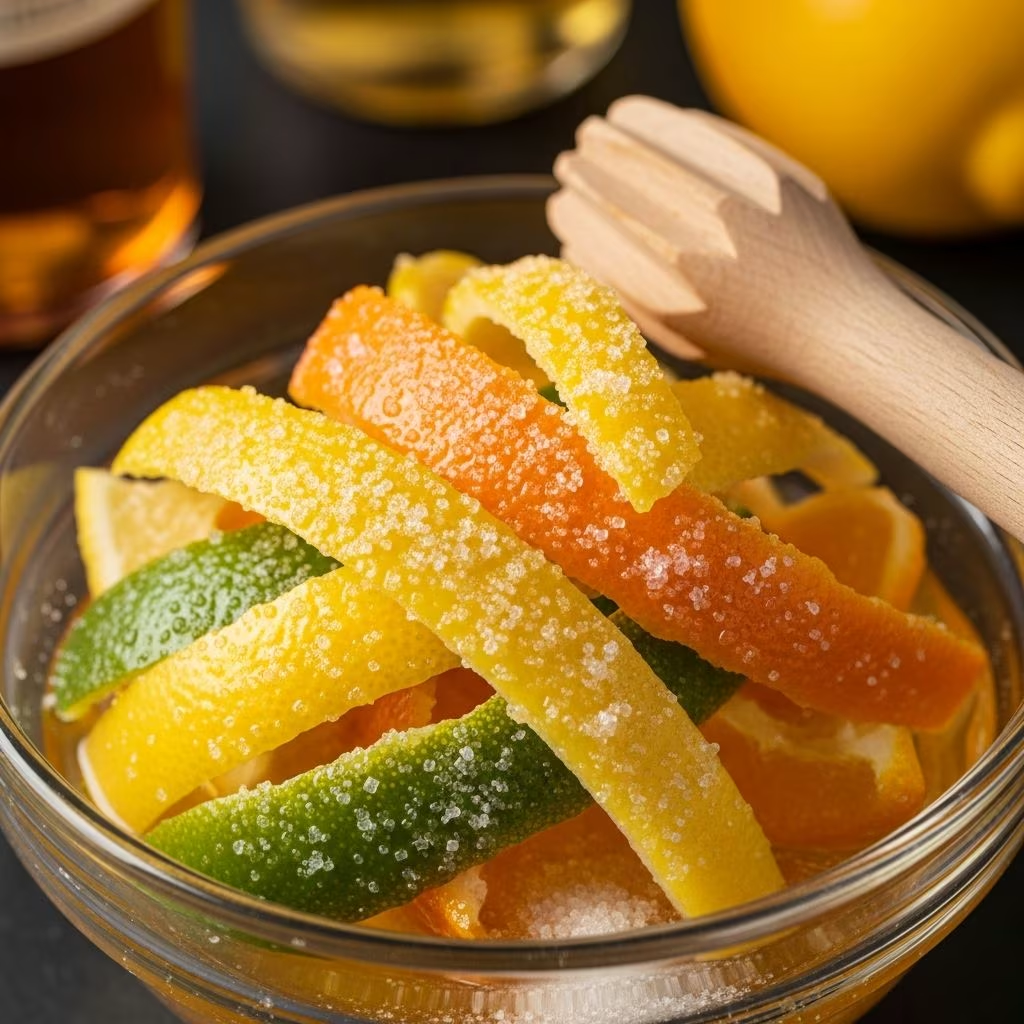
Oleo-saccharum stands as one of the most elegant yet underutilized tools in modern mixology. This ancient preparation method transforms simple citrus peels and sugar into a complex, aromatic syrup that captures the essence of citrus without the acidity of juice. Understanding how to craft this ingredient opens doors to creating sophisticated cocktails and traditional punch recipes that showcase layered, nuanced flavors.
Understanding the Foundation: What Is Oleo-Saccharum?
Oleo-saccharum derives from Latin origins, with “oleo” referring to oil and “saccharum” meaning sugar. The preparation represents a marriage of the essential oils from citrus rinds with granulated sugar, creating a concentrated syrup that has been used in professional beverage preparation for centuries. Unlike simple syrups that rely on water as a base, this technique requires no additional liquid—the natural oils from the citrus peel dissolve the sugar through osmosis and enzymatic breakdown.
The resulting product is fundamentally different from citrus juice or zest. While juice provides acidity and brightness, and zest offers texture, oleo-saccharum delivers pure aromatic concentration. A small quantity goes remarkably far, making it economical and allowing bartenders and home enthusiasts to add sophisticated citrus character without overwhelming a drink with excessive liquid or sugar.
Selecting and Preparing Your Citrus Foundation
The quality of your finished oleo-saccharum depends almost entirely on your starting materials. Citrus selection involves several important considerations that directly impact the final result.
Choosing the Right Citrus
While lemon remains the traditional choice, contemporary practitioners experiment with various citrus varieties. Blood oranges contribute deep, floral notes; regular oranges offer bright, sweet dimensions; grapefruit introduces assertive, slightly bitter complexity; and specialty varieties like Meyer lemons provide unique flavor profiles. The decision should align with your intended cocktail applications.
When selecting lemons or oranges, seek unwaxed, preferably organic specimens. Commercial wax coatings, while food-safe, create a barrier that impedes oil extraction and introduces unwanted compounds to your preparation. Organic fruit eliminates pesticide residues that could concentrate during the extraction process.
The Peel-to-Pith Balance
Proper peeling technique significantly influences flavor outcomes. The colored outer peel contains the essential oils responsible for the syrup’s aromatic character. The white pith underneath, however, carries bitter compounds that become more pronounced during extended maceration. Aim to remove the peel with minimal attached pith—a vegetable peeler or microplane removes the zest efficiently while a sharp knife can strip broader peel sections.
Thorough rinsing before peeling removes surface contaminants and loose debris. Many practitioners prefer to scrub gently under cool running water, which also helps loosen oils slightly, preparing them for extraction.
Sugar Selection and Measurement
Sugar selection influences both the dissolution speed and the final texture of your oleo-saccharum. Superfine sugar, sometimes labeled as “bar sugar” or “caster sugar,” dissolves more readily than standard granulated varieties because of its smaller crystal structure. This faster dissolution means you can complete the preparation more quickly while still achieving excellent extraction.
The ratio of sugar to citrus peel remains consistent across most professional methods: equal parts by weight. If you have 150 grams of citrus peel, you’ll use 150 grams of sugar. This proportion ensures adequate sugar to absorb the released oils while maximizing the syrup’s concentration. Some recipes suggest weighing citrus juice and using an equivalent sugar weight, which typically yields similar ratios since citrus peel and juice have comparable water content.
Traditional Maceration Method
The straightforward technique requires minimal equipment and produces excellent results through patient, passive extraction.
Step-by-Step Traditional Process
- Prepare your citrus by washing thoroughly and peeling carefully, minimizing pith attachment.
- Weigh the collected peels and measure an equivalent weight of superfine sugar.
- Combine peels and sugar in a glass jar or sealed container, using a muddler or wooden spoon to gently crush the peel into the sugar.
- Seal the container and place it at room temperature away from direct sunlight.
- Allow the mixture to macerate for 12 to 24 hours, stirring or shaking occasionally—approximately every 6 hours—to redistribute the sugar and encourage continued oil release.
- After the maceration period, strain the preparation through fine mesh, pressing gently on the peels to extract residual liquid without forcing through bitter pith material.
- Transfer the resulting syrup to a clean glass bottle for storage.
The beauty of this method lies in its simplicity and the superior flavor development that results from extended, gentle extraction. The slow dissolution allows complex aromatic compounds to fully transfer into the sugar base.
Accelerated Vacuum-Sealing Technique
For those with access to vacuum-sealing equipment, an alternative method dramatically reduces preparation time while maintaining quality.
Vacuum Method Instructions
- Prepare peels and measure sugar as described in the traditional method.
- Combine peels and sugar in a vacuum-seal bag.
- Remove air from the bag according to your vacuum sealer’s instructions and seal.
- Allow the sealed bag to rest at room temperature for a minimum of 4 hours, ideally 12 to 18 hours, to permit thorough extraction.
- Once extraction is complete, open the bag and strain the contents through fine mesh.
The vacuum removal creates a specialized environment where pressure differences enhance oil transfer. This method often produces noticeably faster results—sometimes yielding extraction quality equivalent to 24-hour traditional maceration in as little as 6 hours. Some practitioners report superior aromatic intensity using this approach, though both methods produce excellent final products.
Enhancing Your Base Oleo-Saccharum
Once you’ve extracted your initial oleo-saccharum, several techniques extend the yield and dissolve any remaining sugar crystals.
Adding Citrus Juice
The most common enhancement involves incorporating juice from the same citrus used for the peels. Add fresh juice in a volume equal to the weight of sugar used—if you started with 150 grams of sugar, add 150 milliliters of juice. This transforms your pure oleo-saccharum into what some practitioners call a “shrub” or citrus cordial, effectively doubling your yield while dissolving residual sugar and adding subtle complexity.
Stir or shake the mixture until all visible sugar crystals dissolve. At this stage, you can strain out the peels or leave them in place, depending on your preference and intended use.
Incorporating Warm Water
Some recipes suggest adding a small quantity of hot water—typically 50 to 75 grams—to further dissolve remaining sugar while gently warming the preparation. This technique works particularly well when you’ve extracted using longer maceration times, as maximum oil transfer has already occurred and additional liquid won’t diminish the aromatic concentration.
Storage, Shelf Life, and Practical Applications
Proper Storage Conditions
Refrigerated oleo-saccharum maintains quality for approximately 4 to 7 days when stored in sealed glass containers, though some recipes suggest preservation for up to 14 days. The exact longevity depends on several factors: whether you’ve removed the peels, whether you’ve added juice or water, the cleanliness of your equipment, and your refrigerator’s temperature consistency.
Store in clear glass bottles away from direct light. Amber or dark glass provides additional protection if you plan to keep your preparation for extended periods. Always ensure bottles are thoroughly clean and dry before filling to prevent mold or fermentation.
Cocktail Integration
The concentrated nature of oleo-saccharum means a little accomplishes a lot. A standard cocktail typically calls for 0.5 to 1 ounce of oleo-saccharum, compared to 0.75 to 1 ounce for standard simple syrup. This difference reflects the syrup’s superior aromatic intensity. When developing cocktail recipes, begin with conservative quantities and adjust upward based on taste preference.
Oleo-saccharum excels in spirit-forward drinks like old-fashioneds and stirred cocktails, where its subtle complexity doesn’t get overwhelmed. It transforms punch recipes, whether served hot or cold, by providing sophisticated citrus character without the dilution that fresh juice would introduce.
Comparative Methods and Techniques
| Method | Time Required | Equipment Needed | Best For |
|---|---|---|---|
| Traditional Maceration | 12-24 hours | Glass jar, muddler | Maximum aromatic development |
| Vacuum Sealing | 4-12 hours | Vacuum sealer, bags | Time-sensitive preparation |
| Grated Zest Method | 30 minutes to 2 hours | Microplane, small bowl | Quick cocktail adjustment |
| Hot Water Addition | 12-24 hours plus water step | Jar, kettle | Complete sugar dissolution |
Frequently Asked Questions
Can I use waxed citrus fruit for oleo-saccharum?
While waxed fruit is technically usable, unwaxed organic citrus produces superior results. The wax coating inhibits oil extraction and may introduce unwanted residues. If only waxed fruit is available, rinse under warm water and rub gently with a soft cloth to minimize wax presence before proceeding.
What should I do if my oleo-saccharum crystallizes during storage?
Crystallization occasionally occurs, particularly if some sugar failed to fully dissolve during preparation. Gently warm the bottle under warm running water or place in a warm water bath until crystals dissolve. Alternatively, add a small quantity of juice or hot water and stir until clear.
Can I prepare oleo-saccharum with multiple citrus varieties simultaneously?
Absolutely. Combining lemon, grapefruit, and orange peels creates complex flavor dimensions unavailable from single-fruit preparations. Maintain consistent weight ratios across all citrus and follow standard preparation methods. The resulting syrup develops layered aromatic character that elevates sophisticated cocktails and punches.
Does the type of sugar matter significantly?
Sugar type influences dissolution speed and final texture. Superfine sugar dissolves fastest, making it ideal for time-sensitive preparations. Demerara sugar imparts subtle molasses notes suitable for certain applications. Brown sugar introduces caramel complexity. While any sugar works, superfine remains preferred for traditional oleo-saccharum preparation.
How concentrated is the final product compared to fresh citrus juice?
Oleo-saccharum concentrates aromatic compounds significantly more than fresh juice while eliminating acidity entirely. This means a small quantity of oleo-saccharum provides citrus character comparable to substantially larger juice quantities without introducing excessive liquid or tartness to your drink.
Mastering Your Citrus Syrup Craft
Oleo-saccharum represents an accessible yet sophisticated preparation that elevates cocktail and punch experiences. Whether you employ traditional maceration or modern vacuum techniques, the fundamental principle remains unchanged: patient extraction of citrus oils into sugar creates an ingredient of remarkable potency and aromatic complexity.
Begin with quality, unwaxed citrus fruit, maintain precise measurements, and allow adequate extraction time. As you develop familiarity with this technique, experiment with different citrus varieties and applications. Each variation teaches valuable lessons about extraction dynamics and flavor integration. Your investment in mastering oleo-saccharum preparation immediately distinguishes your cocktails and distinguishes you as a practitioner who understands the nuances of thoughtful beverage creation.
References
- Oleo Saccharum — Difford’s Guide. Accessed April 2026. https://www.diffordsguide.com/encyclopedia/234/cocktails/oleo-saccharum
- How to Make a Grapefruit Oleo-Saccharum — Mad River Distillers. Accessed April 2026. https://www.madriverdistillers.com/news-blog/mrd-btv-blog-post/how-to-make-a-grapefruit-oleo-saccharum/
- Oleo Saccharum DIY Citrus Concentrate — Mother Would Know. Accessed April 2026. https://motherwouldknow.com/oleo-saccharum-diy-citrus-concentrate/
- Vacuum Seal Oleo Saccharum — Jeffrey Morgenthaler. Accessed April 2026. https://jeffreymorgenthaler.com/vacuum-seal-oleo-saccharum/
- How To Make Lemon Oleo Saccharum — Imbibe Magazine. Accessed April 2026. https://imbibemagazine.com/how-to-make-oleo-saccharum/