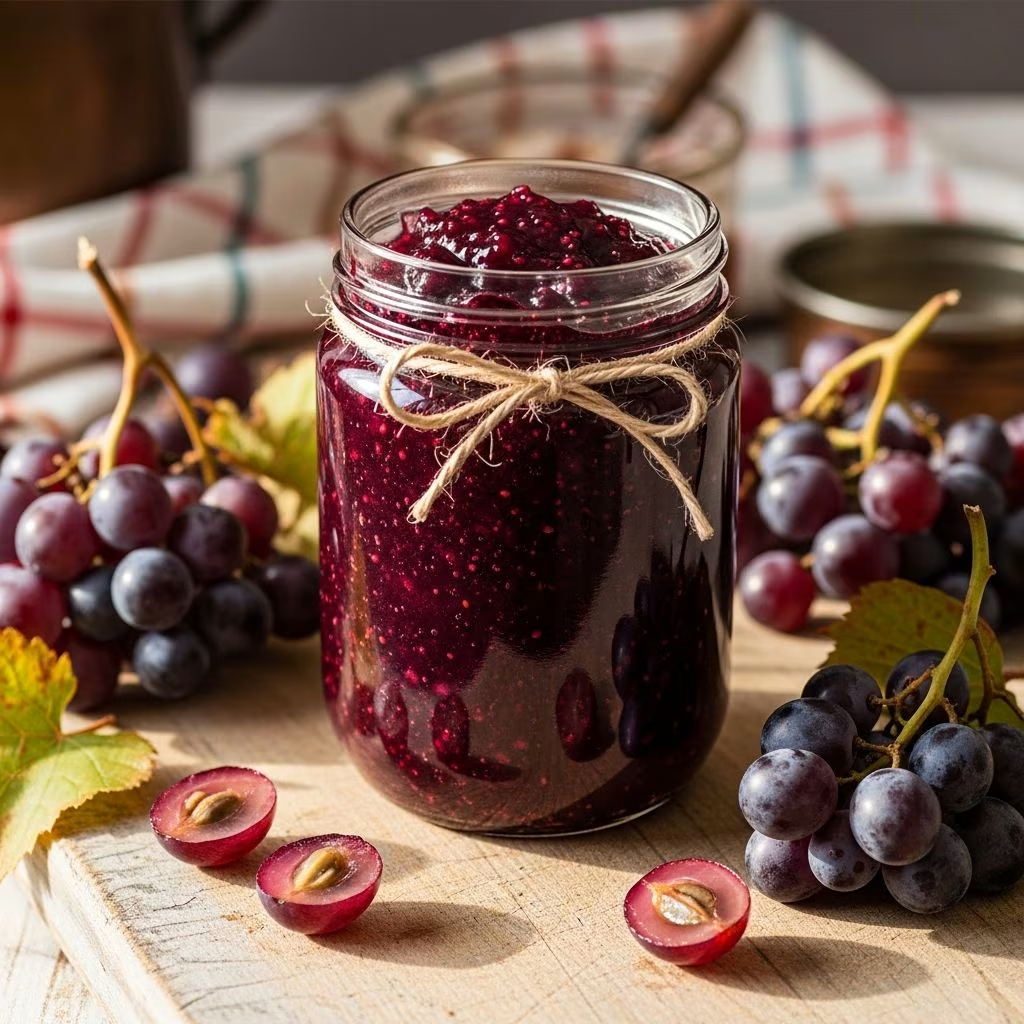
Native to the southeastern United States, muscadine grapes offer a robust, musky sweetness ideal for homemade preserves. This guide explores everything from grape selection to final storage, empowering you to create batches of jam that capture the essence of Southern summers.
Understanding Muscadine Grapes
Muscadines (Vitis rotundifolia) thrive in humid climates from Virginia to Florida and westward to Texas. Unlike thin-skinned table grapes, they feature thick, tough skins and large seeds, contributing to their high natural pectin content, which aids in jam setting without commercial thickeners.
Harvest season peaks from August to October. Look for plump, bronze, purple, or black grapes that detach easily from stems. Their flavor profile blends intense sweetness with tart undertones, distinguishing them from European varieties.
- Health perks: Packed with antioxidants like resveratrol, supporting heart health.
- Versatility: Skins and pulp both contribute to jam’s texture and taste.
- Yield estimate: About 5 pounds of grapes produce 6-8 half-pint jars.
Gathering and Preparing Your Grapes
Start with fresh, ripe muscadines. Rinse thoroughly under cool water to remove dirt and debris. Stem removal prevents bitterness.
To separate pulp from skins—a key step—gently squeeze each grape. The pulp pops out easily, leaving the hull intact. Work in batches to avoid fatigue.
| Step | Action | Time |
|---|---|---|
| 1. Rinse | Cool water wash | 5 min |
| 2. Destem | Remove stems | 10 min |
| 3. Separate | Squeeze pulp from skins | 20-30 min |
Reserve skins and pulp separately. Chop or blend skins finely for smoother jam.
Classic No-Pectin Muscadine Jam Recipe
This traditional method relies on the fruit’s natural pectin, yielding a rich, full-bodied spread. Yields approximately 7 half-pint jars.
Ingredients
- 5 pounds fresh muscadine grapes
- 6 cups granulated white sugar
- 1 medium lemon (juice and thinly sliced rind, seeds removed)
Equipment Needed
- Large stockpot and saucepan
- Blender or food processor
- Fine-mesh sieve or food mill
- Wooden spoon
- 7 sterilized half-pint jars with lids and bands
- Water bath canner or large pot with rack
- Candy thermometer (optional)
Step-by-Step Directions
- Cook the pulp: Place pulp (with seeds) in a stockpot. Bring to a boil over medium-high heat, then simmer 10-15 minutes until softened. Mash occasionally.
- Process the skins: Blend skins until finely chopped. Transfer to a saucepan, add a splash of water if needed, and simmer 10 minutes.
- Strain pulp: Pass cooked pulp through a sieve to remove seeds and tough fibers. Discard solids.
- Combine: Mix strained pulp, cooked skins, lemon juice, lemon rind, and sugar in a large pot. Stir over low heat until sugar dissolves.
- Simmer to set: Increase heat to medium-high, bring to a rolling boil, then reduce to a gentle simmer. Cook 1-2 hours, stirring frequently, until thickened. Test doneness (see below).
- Jar and process: Ladle hot jam into sterilized jars, leaving 1/4-inch headspace. Wipe rims, apply lids, and process in a boiling water bath for 10 minutes (adjust for altitude).
Pectin-Enhanced Quick Muscadine Jam
For faster results, use commercial pectin. This version sets in under 30 minutes. Yields 3 half-pint jars.
Ingredients
- 2 pounds muscadine grapes
- 3/4 cup granulated sugar
- 3 tablespoons lemon juice
- 3 tablespoons powdered pectin
Instructions
- Prepare grapes as above: separate, cook, and strain pulp; puree skins.
- Combine all in one pot with pectin and lemon juice. Bring to a hard boil (cannot be stirred down) for 1 minute.
- Stir in sugar, return to hard boil for 1 minute.
- Test and jar immediately.
This method suits smaller batches or when time is limited.
Testing for the Perfect Set
Achieving the right consistency prevents runny or rubbery jam.
- Cold plate method: Chill a plate in freezer. Drop jam on it; if it wrinkles when pushed after 1 minute, it’s ready.
- Sheeting test: Dip a cold spoon; jam sheets off in a cohesive drop.
- Temperature check: Aim for 220°F (104°C) on a candy thermometer— the gelling point.
Overcooking leads to tough jam; undercooking to syrup. If unset, re-boil in 5-minute increments.
Safe Canning and Storage Practices
Proper technique ensures shelf-stable jam lasting 1-2 years.
- Sterilization: Boil jars 10 minutes; keep hot until filled.
- Headspace: 1/4 inch for jam.
- Processing: 10 minutes in boiling water bath (add 5 min per 1,000 ft above sea level).
- Cooling: Let jars sit undisturbed 12-24 hours. Check seals: lids should not flex.
Store in a cool, dark place. Refrigerate after opening; use within 3 weeks.
Variations and Flavor Twists
Elevate your jam with creative additions.
| Variation | Additions | Notes |
|---|---|---|
| Spiced Muscadine | 1 tsp cinnamon, 1/2 tsp nutmeg | Add during final simmer. |
| Scuppernong Blend | Mix with bronze scuppernongs | Milder, golden hue. |
| Low-Sugar | Reduce sugar by half, add pectin | Use sugar substitutes cautiously. |
| Herbal Infusion | Steep then strain. |
Creative Uses for Muscadine Jam
Beyond toast, this jam shines in diverse applications.
- Glaze for grilled chicken or pork.
- Filling for thumbprint cookies or tarts.
- Base for barbecue sauce.
- Topping for cheesecake or ice cream.
- Pairing with cheese boards alongside cheddar or goat cheese.
Troubleshooting Common Issues
Encounter problems? Here’s how to fix them.
- Runny jam: Re-cook with lemon juice or pectin.
- Crystals on top: Undissolved sugar; stir thoroughly next time.
- Foam buildup: Skim or add butter (1 tsp).
- Cloudy jam: Over-mixing skins; blend less.
Nutritional Profile and Benefits
A half-pint serving offers vitamins C and K, fiber, and polyphenols. Low in fat, high in natural sugars from fruit.
Frequently Asked Questions
Can I use frozen muscadines?
Yes, thaw completely and drain excess liquid to maintain set.
Is muscadine jam freezer-safe?
Absolutely; freeze in plastic containers up to 1 year.
What if I lack a food mill?
A fine sieve and wooden spoon work fine for seed removal.
Are scuppernongs interchangeable?
Yes, they’re a bronze muscadine variety with similar results.
How do I know jars sealed properly?
Lids pop down with a ping; store-bought pingless lids are normal if vacuum-formed.
References
- Homemade Muscadine Jam Recipe (No Pectin) — Grumpy’s Honeybunch. 2023. https://grumpyshoneybunch.com/muscadine-jam/
- Recipe: Muscadine Jam — NC State University Small Fruits Research and Extension. 2020-06-01. https://smallfruits.cals.ncsu.edu/2020/06/recipe-muscadine-jam/
- Best Muscadine Jam Recipe — Food.com. Accessed 2026. https://www.food.com/recipe/best-muscadine-jam-487900
- Muscadine Jam — Creative Canning. Accessed 2026. https://creativecanning.com/muscadine-jam/