Meatloaf stands as one of America’s most beloved comfort foods, offering simplicity, affordability, and satisfying flavor in a single dish. Whether you’re preparing a weeknight dinner or seeking to impress guests with nostalgic cuisine, understanding the fundamentals of meatloaf preparation elevates your results from adequate to exceptional. This comprehensive guide explores every aspect of creating a moist, flavorful meatloaf that rivals family recipes passed down through generations.
Understanding the Foundation: Base Ingredients
The foundation of exceptional meatloaf begins with selecting appropriate ground beef. The fat-to-lean ratio significantly influences the final texture and moisture content of your finished dish. Ground beef labeled as 80/20 or 85/15 provides the optimal balance, delivering sufficient fat for juiciness while maintaining structural integrity during baking. Leaner options, such as 90% lean beef, still produce satisfactory results but require additional attention to prevent dryness.
Breadcrumbs serve a critical function beyond simple filler; they absorb moisture during cooking and create a tender crumb structure throughout the meatloaf. Regular, Italian, or panko breadcrumbs each offer distinct textural properties. Italian breadcrumbs contribute additional seasoning and subtle herbaceous notes, while panko varieties create a lighter, airier final product. The typical proportion ranges from half to one cup of breadcrumbs per pound of beef.
Eggs act as the binding agent that holds all components together, preventing the meatloaf from crumbling when sliced. Most recipes employ one to two eggs per pound of ground meat, depending on total mixture volume and desired density. Milk, typically added in quantities of one-third to one-half cup, further contributes to binding while promoting moisture retention and a more delicate texture than recipes omitting dairy.
Flavor Foundations Through Strategic Seasoning
Beyond salt and pepper, several seasonings and condiments define classic meatloaf’s distinctive taste profile. Worcestershire sauce introduces umami depth and subtle tanginess that enhances overall flavor complexity. Fresh or dried onions provide aromatic sweetness, though fresh diced onions deliver more pronounced flavor than their dehydrated counterparts. Garlic powder, dried parsley, and Italian seasoning round out the herbaceous elements that distinguish homemade meatloaf from commercial versions.
Some recipes incorporate ketchup directly into the meat mixture, ranging from two to three tablespoons, which imparts tomato flavor and slight sweetness while contributing additional moisture. This technique differs from traditional approaches that reserve ketchup exclusively for the glaze topping, creating a layered flavor experience.
Preparation Methodology
Success in meatloaf preparation hinges on proper mixing technique and ingredient sequencing. Begin by combining wet ingredients—eggs, milk, and Worcestershire sauce—in a separate bowl before introducing them to the meat mixture. This pre-mixing approach reduces overall mixing time for the ground beef itself, a crucial detail because overmixing ground meat develops gluten and toughens the final product.
Separately combine breadcrumbs with seasonings, then add both mixtures to the ground beef along with finely diced onions. Using your hands, gently incorporate all components until evenly distributed and just combined. The mixture should hold together when pressed but not appear dense or compacted.
Shaping the meatloaf requires careful consideration of pan selection and form. A loaf pan concentrates juices and creates a more compact structure, while a rimmed baking sheet allows for greater browning and crust development around all surfaces. Approximate dimensions of eight inches long, four inches wide, and two inches tall generally accommodate standard recipes and promote even cooking throughout the interior.
Glazing and Finishing Touches
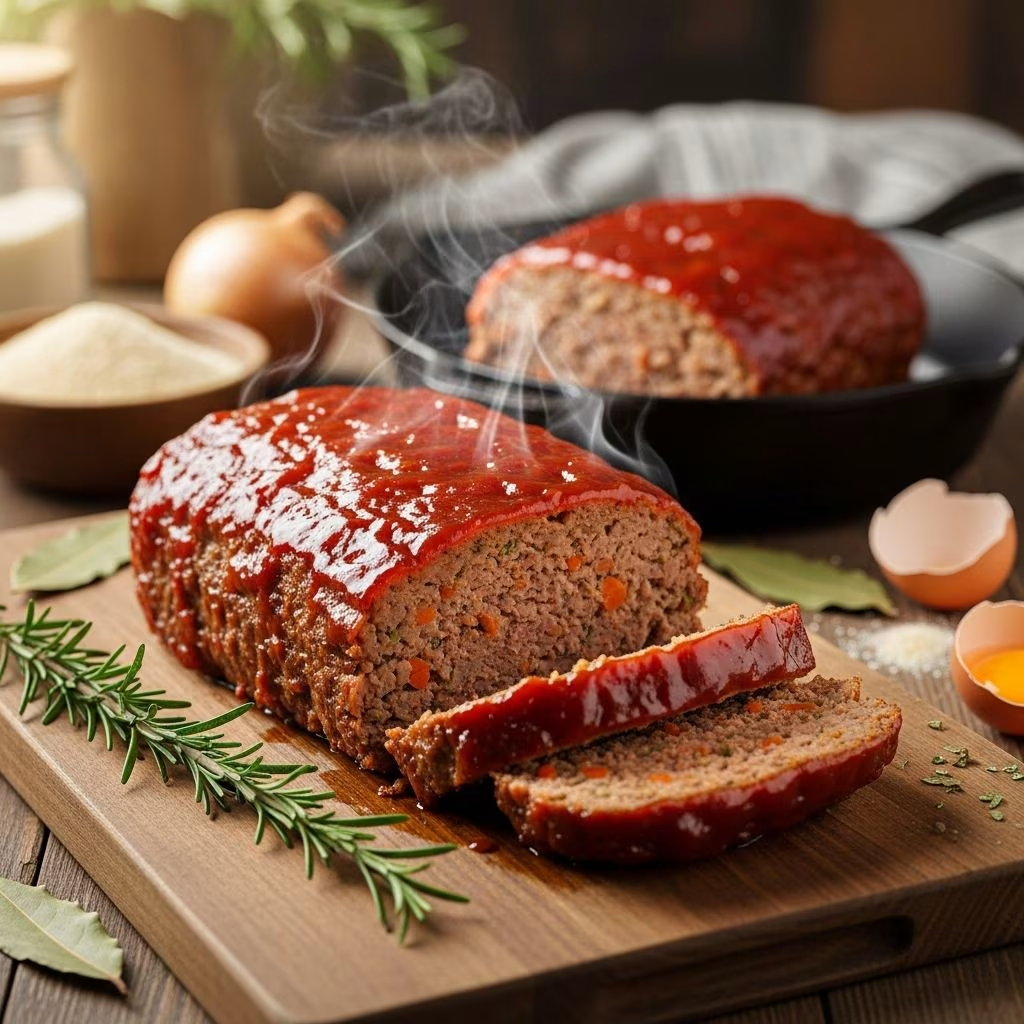
The glaze transforms meatloaf from plain to memorable, typically combining ketchup, brown sugar, and vinegar or mustard for balanced sweetness and acidity. Common proportions include one-quarter cup ketchup with two tablespoons packed brown sugar and one tablespoon red wine vinegar or yellow mustard. Some regional variations substitute barbecue sauce for traditional ketchup-based glazes, introducing smoky notes and additional complexity.
Apply the glaze after forming the meatloaf but before baking, spreading it evenly across the top and slightly down the sides. As the meatloaf bakes, the glaze caramelizes and develops deeper flavor, creating a flavorful crust that contrasts with the moist interior.
Cooking Parameters and Temperature Management
Most traditional meatloaf recipes call for oven temperatures between 350 and 375 degrees Fahrenheit, with cooking durations typically ranging from 55 minutes to one hour depending on oven calibration, meatloaf dimensions, and specific recipe variations. Baking uncovered allows maximum glaze caramelization and browning. Insert a meat thermometer into the center to verify doneness; meatloaf reaches food safety standards when the internal temperature reaches 160 degrees Fahrenheit.
After removing from the oven, allowing the meatloaf to rest for eight to ten minutes before slicing serves multiple purposes. The resting period permits internal juices to redistribute, reducing moisture loss when cutting. Additionally, the meatloaf firms slightly, preventing structural collapse when portioned.
Ingredient Variations and Regional Preferences
While classic meatloaf maintains consistent core elements across most American households, regional and family variations offer interesting alternatives. Some recipes incorporate finely diced bell peppers alongside onions for additional vegetable content and sweetness. Others add canned diced tomatoes or tomato paste to intensify tomato flavor throughout the meatloaf rather than relying solely on glaze applications.
Ground pork mixed with beef at ratios like 50/50 or 70/30 creates different flavor profiles and moisture levels. Adding small quantities of ground veal or turkey introduces poultry characteristics while maintaining familiar meatloaf structure. Vegetarian variations substitute lentils, mushrooms, or bean-based proteins for ground meat, requiring adjusted binding and moisture management strategies.
Serving Suggestions and Complementary Sides
Meatloaf pairs exceptionally well with creamy mashed potatoes, a pairing strengthened by drizzling meatloaf juices over the potatoes. Roasted or steamed vegetables such as broccoli, asparagus, or Brussels sprouts provide nutritional balance and textural contrast. Green bean casserole offers nostalgic comfort, while simple roasted root vegetables add earthy sweetness.
Leftovers transform into excellent sandwiches when sliced and served on bread with additional ketchup or mayonnaise-based spreads. Cold meatloaf slices also work well in lunch boxes, paired with cheese and mustard on crackers or bread.
Frequently Asked Questions
Why does my meatloaf turn out dry?
Dryness typically results from overmixing the meat mixture, which develops gluten and squeezes out moisture during cooking. Additionally, using excessively lean ground beef or overbaking past 160 degrees Fahrenheit contributes to dry results. Ensure adequate breadcrumb and milk content to maintain moisture.
Can I prepare meatloaf in advance?
Yes, you can form the meatloaf mixture up to 24 hours ahead and refrigerate it before baking. Alternatively, bake the meatloaf completely, refrigerate, and reheat at 350 degrees Fahrenheit for approximately 15 minutes until warmed through.
What grinding fat percentage works best?
Ground beef labeled 80/20 provides the ideal balance between flavor and juiciness for most meatloaf preparations. Leaner options like 90/10 produce acceptable results but require careful attention to prevent excessive dryness during baking.
Should I cover meatloaf while baking?
Leaving meatloaf uncovered promotes glaze caramelization and browning. However, if your meatloaf appears to be browning too quickly, you can loosely tent it with aluminum foil during the final 15 minutes of baking.
How do I know when meatloaf is fully cooked?
Use an instant-read thermometer inserted into the center of the meatloaf; it should register 160 degrees Fahrenheit. At this temperature, any harmful bacteria have been eliminated and the meatloaf is safe for consumption.
Storage and Reheating Guidelines
Properly stored meatloaf maintains quality for three to four days when refrigerated in an airtight container. Freezing extends storage life to three months, with best results achieved by wrapping individual slices in plastic wrap before placing them in a freezer-safe bag. Reheat refrigerated meatloaf at 350 degrees Fahrenheit for 15 minutes, or microwave individual slices on reduced power to prevent overdrying.
Final Considerations
Meatloaf preparation rewards attention to fundamental principles and ingredient quality while welcoming creative experimentation. Whether you adhere to traditional family recipes or incorporate modern variations, the combination of properly selected beef, quality binders, strategic seasoning, and caramelized glaze yields satisfying results that explain this dish’s enduring popularity across American households.
References
- Safe Minimum Internal Temperature Chart — United States Department of Agriculture Food Safety and Inspection Service. 2024. https://www.fsis.usda.gov/food-safety/safe-food-handling-and-preparation/food-safety-basics/safe-temperatures-internal-temps
- Ground Beef Selection and Storage Guidelines — National Cattlemen’s Beef Association. 2024. https://www.beefitswhatsfordinner.com/