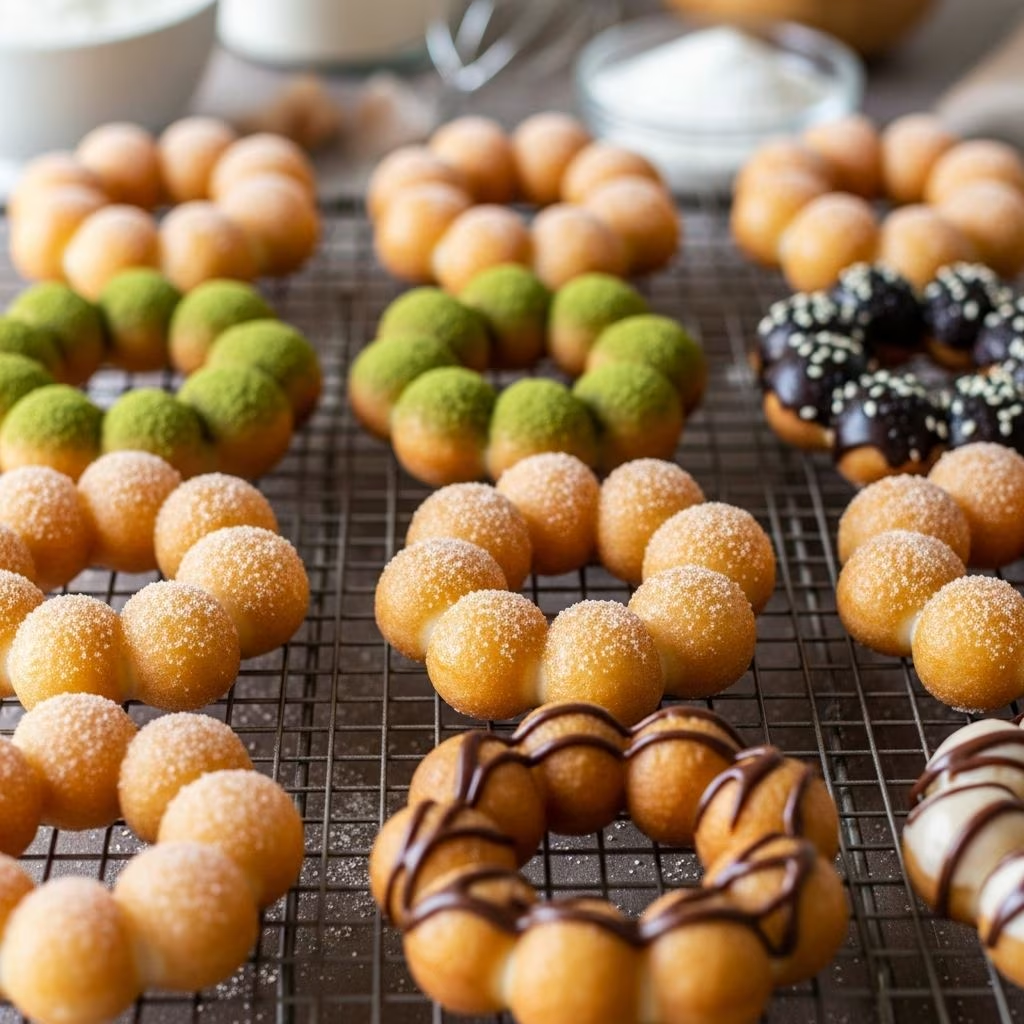
Mochi donuts, also known as pon de ring donuts, have become a beloved treat worldwide, combining the delicate chewiness of Japanese mochi with the indulgence of a traditional fried donut. Unlike conventional donuts, these pillowy creations feature a distinctive ring shape composed of eight connected spheres, each contributing to the unique texture that makes them irresistible. Creating these pastries at home requires understanding the fundamental differences in dough composition, handling techniques, and frying methodology compared to standard donut recipes.
Understanding Mochi Donut Fundamentals
The defining characteristic of mochi donuts lies in their textural composition—a delicate balance between a crispy exterior and an exceptionally tender, chewy interior. This unique quality emerges from the incorporation of glutinous rice flour, which fundamentally alters the dough’s molecular structure. The gluten-free nature of mochi flour creates a softer crumb matrix that yields to the bite while maintaining structural integrity during the frying process.
The dough consistency differs markedly from traditional yeast-based donuts. Rather than achieving a firm, elastic dough requiring extensive kneading, mochi donut dough maintains a considerably stickier, more delicate character. This tackiness is not a flaw but rather an essential component of the final product’s success. The elevated moisture content and unique flour blend create a batter-like consistency that demands specific handling protocols to prevent degradation.
Essential Ingredients and Their Functions
Creating authentic mochi donuts requires precision in ingredient selection and proportions. The foundation typically consists of glutinous rice flour combined with all-purpose or cake flour to achieve the desired texture balance. Glutinous rice flour, derived from sticky rice varieties, provides the characteristic chewiness and tender crumb that distinguishes mochi donuts from conventional varieties.
The leavening system employs either active dry yeast or baking powder, depending on the specific recipe methodology. Yeast-based approaches create a fermented dough that develops flavor complexity and creates a lighter crumb structure through gas production during proofing periods. Conversely, baking powder-based formulations offer streamlined preparation timelines while still delivering adequate lift during frying.
Hydration elements typically include milk, water, and sometimes yogurt or tofu, depending on the formula. These components don’t simply add moisture; they facilitate gluten-free flour hydration and create the appropriate viscosity for shaping operations. Fats, whether butter or shortening, contribute to the tender texture and assist in achieving the desired browning during frying.
Dough Development and Preparation Strategy
Proper dough development represents a critical phase in mochi donut creation. Begin by combining your liquid components—milk, water, and fats—at appropriate temperatures to activate yeast cultures if using a fermented dough approach. The incorporation of leavening agents must occur in a specific sequence to ensure even distribution throughout the mixture.
When incorporating dry ingredients, implement a staged addition process rather than combining everything simultaneously. This methodology allows the dry components to hydrate gradually and distribute evenly without creating lumps or dry pockets. Mixing should continue until the dough achieves a smooth, homogeneous texture—typically requiring 2-3 minutes at medium speed with electrical mixing equipment.
The resulting dough will feel noticeably tacky and adherent—resist the temptation to add supplemental flour. Excessive flour incorporation directly correlates with increased density in the finished product, undermining the light, tender characteristics that define quality mochi donuts. Instead, embrace the sticky nature and manage it through proper handling techniques and adequate surface preparation with tapioca starch.
Initial proofing proceeds in a lightly oiled bowl with the dough surface protected from dehydration through plastic covering. This fermentation phase develops flavor and allows gas production that creates the desired crumb structure. Depending on ambient temperature and yeast activity levels, this stage typically requires 45-60 minutes until the dough visibly increases in volume.
Shaping Techniques for Perfect Ring Formation
The distinctive ring shape of mochi donuts emerges through a specific assembly methodology. After the initial proof, divide the bulk dough into 12 equal portions by weight if precision equipment is available, or by visual estimation if working without scales. Each portion will subsequently become a completed ring donut.
From each of these 12 portions, create smaller spheres—typically six to eight pieces per ring—each approximately the size of a coin. This subdivision requires gentle handling to prevent overdeveloping the dough and creating toughness. Roll each small sphere between your palms with minimal pressure, maintaining a roughly round shape without excessive manipulation.
Arrange these individual spheres on parchment paper squares in a circular ring configuration, ensuring the balls touch one another but remain uncompressed. The contact points between adjacent spheres will fuse during both the proofing phase and the frying process, creating a unified structure. Some recipes recommend applying minute quantities of water between contact points to enhance adhesion and prevent splitting during frying.
An alternative methodology employed by some home bakers utilizes a piping bag approach with large-diameter tips, enabling direct deposit of dough onto parchment paper in ring formations. This technique eliminates the manual rolling process and creates more uniform sizing across multiple donuts. The dough consistency must achieve a “drop batter” texture—thick enough to maintain shape when lifted yet loose enough to extrude through piping equipment.
Secondary Proof and Temperature Optimization
After shaping, mochi donuts require a secondary fermentation period that develops additional gas and allows the ring structure to stabilize. This proofing phase typically extends 15-20 minutes, depending on ambient temperature and dough vitality. During this interval, cover the shaped donuts with plastic film to prevent surface dehydration while enabling continued expansion.
Temperature management during this phase significantly impacts final results. Ideally, maintain ambient conditions between 72-78°F for optimal yeast activity. Excessively warm environments accelerate fermentation and risk over-proofing, while cooler temperatures slow the process unnecessarily. The dough should increase visibly in volume without becoming so expanded that structural integrity becomes compromised.
Frying Methodology and Oil Temperature Control
Achieving the characteristic crispy exterior requires precise thermal management during frying operations. Prepare frying medium—typically vegetable oil or specialized frying shortening—in a heavy-bottomed pan with sufficient depth to accommodate donuts while maintaining safe oil levels. Use an accurate kitchen thermometer to monitor temperature continuously, as this represents the single most critical variable in successful mochi donut preparation.
Preheat the frying medium to 350°F (175°C). This temperature range represents the optimal balance—hot enough to create rapid exterior crisping and maillard reactions that develop flavor and color, yet not so intense that the exterior burns before the interior adequately cooks. Temperature fluctuations during frying significantly impact results; monitor continuously and adjust heat as necessary to maintain consistency.
Carefully transfer shaped donuts into preheated oil, using the parchment paper as a transfer mechanism if employing that shaping method. The parchment will briefly remain in the oil before naturally separating as the dough sets. Fry until the underside achieves golden-brown coloration, then carefully flip using a slotted spoon or turning fork. Continue frying until both sides achieve the desired color, typically requiring 1-2 minutes per side depending on donut size and oil temperature accuracy.
Remove finished donuts using a slotted spoon and transfer to a paper towel-lined plate to drain excess oil. The residual heat will continue cooking the interior slightly while the oil drains away. Timing at this stage is crucial—remove donuts promptly to prevent excessive oil absorption while allowing the structure to set adequately.
Glazing and Flavor Variations
Plain mochi donuts offer exceptional versatility for glaze applications. Traditional options include simple sugar glazes combining powdered sugar with milk or water, achieving various consistency levels depending on liquid proportions. These basic glazes provide neutral canvases for flavor infusions through natural or artificial flavorings, food colorings, or spice additions.
Specialty glazes expand creative possibilities—matcha-infused options bring subtle earthiness, while fruit-based glazes incorporating strawberry, raspberry, or passion fruit purees create vibrant, tangy coatings. Chocolate glazes ranging from milk chocolate to dark varieties offer rich indulgence. Cinnamon-sugar coatings applied while donuts remain warm deliver nostalgic, warming spice profiles.
Apply glazes while donuts are still warm but not actively steaming, as surface moisture affects glaze adhesion. Dip each donut halfway into prepared glaze or drizzle using a fork, allowing excess to drain. Alternatively, brush glazes onto surfaces using culinary brushes for precise control. Set glazed donuts on parchment paper or wire racks to allow glazes to set before serving.
Critical Success Factors and Common Pitfalls
Several key practices distinguish successful mochi donut preparation from disappointing attempts. Resist the impulse to incorporate supplemental flour into the dough—the sticky consistency is intentional and necessary. Adding flour creates denser, less tender results that undermine the fundamental appeal of these pastries.
Invest in reliable thermometer equipment and use it scrupulously during frying. Temperature variations represent the most common source of mochi donut failures, producing either insufficiently cooked interiors with raw centers or exteriors that brown too rapidly while interiors remain undercooked.
Employ adequate kneading time during the initial dough development phase. Three minutes of mechanical mixing at appropriate speeds ensures proper gluten development in hybrid flour blends and creates the necessary elasticity for expansion during fermentation and frying. Under-kneaded doughs often collapse during frying or produce dense, gummy results.
Maintain proper hydration balance when formulating recipes. While the dough should feel sticky, excessively wet mixtures become difficult to shape and produce undesirably dense results after frying. Conversely, insufficiently hydrated doughs create dry, crumbly textures lacking the characteristic chewiness. The target “drop batter” consistency represents the ideal balance.
Frequently Asked Questions
Can mochi donuts be made without yeast?
Yes, alternative formulations employing baking powder as the sole leavening agent successfully produce quality mochi donuts. These recipes sacrifice the flavor complexity and subtle tang that fermentation develops but offer significantly reduced preparation times. Baking powder-based donuts can be completed within hours rather than requiring overnight fermentation periods.
How should mochi donuts be stored?
Fresh mochi donuts maintain optimal texture for approximately 24 hours when stored in airtight containers at room temperature. Beyond this period, they gradually lose the textural distinction and chewiness that characterizes superior examples. Refrigeration accelerates staleness and is generally not recommended. Freezing is possible for extended storage but typically results in textural degradation upon thawing.
What causes donuts to split during frying?
Splitting during frying typically results from inadequate fusion between individual dough spheres or excessive gas production creating internal pressure that the dough structure cannot contain. Applying moisture between contact points during shaping promotes adhesion. Additionally, avoiding over-proofing and maintaining precise oil temperatures prevents excessive interior gas production.
Can different flours be substituted in mochi donut recipes?
While experimentation with alternative flours is possible, glutinous rice flour is fundamentally necessary for achieving authentic mochi donut characteristics. All-purpose flour substitutions for other components are more flexible, though cake flour produces superior tenderness. Completely replacing glutinous rice flour with non-glutinous alternatives fundamentally alters the product and negates the mochi element that defines this category.
What accounts for the difference between homemade and commercial versions?
Commercial mochi donut producers typically employ automated extrusion equipment and precisely formulated mixes optimized for consistency at scale. Home preparation requires more manual intervention and cannot achieve the exact uniformity of industrial production. However, fresh homemade versions often surpass commercial alternatives in flavor intensity and textural quality due to superior ingredient freshness and customizable glycing applications.
References
- SugarYums: Easy Mochi Donuts (Mochinut Copycat) — SugarYums. 2024. https://sugaryums.com/mochi-donuts/
- Hungry Huy: Mochi Donut Recipe (Crispy & Chewy Pon de Ring Donuts) — Hungry Huy. 2024. https://www.hungryhuy.com/mochi-donut-recipe/
- Mochi Foods: Mochi Donut Recipe — Mochi Foods. 2024. https://mochifoods.com/blogs/recipes/mochi-donut-recipe
- Honest Food Talks: Easy Mochi Donuts Recipe with/without Tofu — Honest Food Talks. 2024. https://www.youtube.com/watch?v=n1KC7VyXoa0