Frozen hash browns represent one of the most versatile and underutilized ingredients in modern kitchens. While many people view them as a simple side dish or breakfast staple, these convenient potato products can become the foundation for sophisticated, restaurant-quality meals when paired with thoughtful ingredient combinations. The beauty of working with frozen hash browns lies in their inherent simplicity—they require minimal preparation while offering tremendous potential for creative culinary expression. By understanding how to properly prepare them and complement them with strategic toppings and mix-ins, home cooks can transform these humble ingredients into memorable dishes that impress family and guests alike.
Understanding Your Base: The Foundation of Every Great Hash Brown Dish
Before diving into specific recipes and techniques, it’s essential to understand the different varieties of frozen hash browns available to consumers. The most common forms include shredded hash browns, patties, and diced varieties. Each type brings unique textural qualities and cooking characteristics to the table. Patties provide a pre-formed structure that crisps beautifully on the exterior while maintaining a tender interior. Shredded varieties offer flexibility for casseroles and skillet preparations, while diced options work exceptionally well in baked dishes where they blend seamlessly with binding ingredients.
The cooking method significantly influences the final texture and flavor development of your hash brown creation. Air frying has emerged as a popular contemporary approach, producing exceptionally crispy results with minimal oil. Traditional oven baking offers reliable outcomes and accommodates larger quantities. Stovetop preparation in cast iron or heavy-bottomed skillets provides immediate feedback and the opportunity for controlled browning. Each method produces distinct textural outcomes—crispy exteriors with tender interiors represent the gold standard that most home cooks aim to achieve.
The Five-Ingredient Philosophy: Simplicity Meets Sophistication
Constraining yourself to five essential ingredients might seem limiting, but this restriction actually encourages creative thinking and intentional ingredient selection. The first ingredient, naturally, is the hash brown base. The remaining four ingredients should work in concert to create balanced flavor profiles and appealing textural contrasts. A winning combination typically includes a protein element, a dairy component that adds richness, a vegetable or herb for brightness and visual appeal, and a seasoning or finishing touch that brings everything into focus.
Consider this framework: a crispy potato foundation benefits immensely from umami-rich proteins like bacon or sausage, creamy dairy elements such as sour cream or Greek yogurt, aromatic vegetables like scallions or fresh chives, and bold seasonings that might include sharp cheddar cheese or specialized spice blends. This simple architecture creates dishes with multiple flavor dimensions and interesting contrasts between crispy and creamy, savory and bright, rich and herbaceous.
Protein Integration: Building Substance and Satisfaction
The protein component of your hash brown creation serves multiple purposes beyond simple nutrition. It provides textural contrast, adds savory depth, and creates a psychologically satisfying eating experience. Bacon remains the classic choice—its smoky, salty character complements the mild potato base beautifully. The crispy texture of properly cooked bacon offers excellent contrast to the tender hash brown interior and creamy toppings.
Ground sausage offers an alternative protein pathway, particularly when creating casserole-style preparations. The spiced nature of breakfast sausage adds complexity without requiring additional seasoning additions. For those seeking leaner options, ground turkey or plant-based protein alternatives can substitute without significantly compromising the dish’s appeal. The key consideration involves ensuring your protein is fully cooked and any excess moisture removed before combining with other ingredients.
Dairy Elements: Creating Creamy, Luxurious Texture
Dairy products provide the creamy counterbalance to crispy hash brown exteriors. Traditional sour cream offers tangy richness that enhances potato flavor while adding visual interest through its bright white color. Greek yogurt presents a protein-rich alternative with slightly different textural properties—it’s denser and tangier than conventional yogurt but less caloric than full-fat sour cream. Shredded cheese, particularly sharp cheddar varieties, melts beautifully over warm hash browns, creating a gooey texture that binds the components together while adding pronounced savory depth.
The selection between cream-based toppings and melted cheese frequently depends on the cooking method and desired final presentation. Cheese works exceptionally well when applied before a final oven warming period, allowing it to melt into the hash brown surface. Creamy garnishes like sour cream or yogurt typically apply after cooking, preserving their bright, tangy character while creating visual contrast.
Vegetable and Herb Considerations: Adding Brightness and Complexity
While potatoes provide substantial flavor and satisfaction, incorporating fresh vegetables and herbs elevates the sensory experience considerably. Scallions, whether raw or lightly cooked, impart mild onion notes with slight sweetness and visual appeal through their green coloring. Fresh chives offer more delicate onion flavor and sophisticated appearance. For those preferring more pronounced vegetable presence, diced onions sautéed until golden brown contribute caramelized sweetness that pairs beautifully with potatoes and cheese.
Fresh herbs like parsley, dill, or cilantro can transform an ordinary hash brown dish into something memorable. Herbs applied fresh after cooking preserve their aromatic qualities, while those incorporated during preparation mellow slightly but distribute more evenly throughout the dish. The choice between fresh and dried herbs matters significantly—fresh herbs provide brightness that dried varieties cannot match, though dried options offer intensity and convenience.
Seasoning Strategy: Building Balanced, Complex Flavors
Salt and black pepper represent the baseline seasonings for any potato dish. However, thoughtful cooks can venture beyond these fundamentals to create more nuanced flavor profiles. Smoked paprika adds depth and subtle warmth without heat. Garlic powder provides savory intensity without the texture of fresh garlic. Cayenne pepper introduces gentle heat for those who enjoy spicy breakfast foods. Even simple additions like a small amount of hot sauce or a sprinkle of everything bagel seasoning can significantly elevate the final result.
The timing of seasoning application matters significantly. Seasoning added before cooking gets absorbed and integrated into the hash brown structure, while toppings and garnishes applied afterward provide bright, distinct flavor notes. This layering approach creates more complex and interesting taste experiences than uniform seasoning throughout.
Preparation Methods Compared: Air Fryer Versus Traditional Baking
| Method | Temperature | Time | Results | Best For |
|---|---|---|---|---|
| Air Fryer | 400°F | 8-10 minutes | Exceptionally crispy exterior, tender interior | Individual patties, quick preparation |
| Conventional Oven | 425°F | 15-20 minutes | Evenly browned, reliable results | Larger quantities, batch cooking |
| Stovetop Skillet | Medium-high heat | 10-15 minutes | Variable crispness, controllable browning | Small batches, immediate service |
Air fryer technology has revolutionized hash brown preparation by producing restaurant-quality crispness with minimal oil. The circulating hot air creates exceptional browning through a process called the Maillard reaction, developing complex flavors while maintaining moisture within. Traditional oven baking offers consistency and accommodates larger quantities, making it ideal for family breakfasts or meal prep. Stovetop methods provide immediate control and faster results but require active monitoring to prevent burning.
Step-by-Step Preparation Guide: From Frozen to Finished
Preparation Phase: Begin by preheating your chosen cooking vessel to the appropriate temperature. If using an oven, allocate ten minutes for proper heat distribution. Prepare your baking surface with appropriate lining—aluminum foil, parchment paper, or nonstick spray all work effectively. Remove your frozen hash browns from packaging and arrange them in a single layer, ensuring they don’t overlap, which prevents even cooking.
Initial Cooking: Place prepared hash browns into your preheated environment. For air fryer preparation, set the temperature to 400 degrees Fahrenheit and cook for eight to ten minutes, checking halfway through for even browning. Conventional ovens should be set to 425 degrees Fahrenheit for fifteen to twenty minutes. The hash browns are ready when their exteriors turn deep golden brown and feel crispy to the touch.
Topping Application: Remove partially cooked hash browns from heat and add your cheese layer, returning them to the heat for an additional one to two minutes. This brief cooking period allows cheese to melt fully and adhere to the potato surface. If cheese begins smoking, it indicates excessive heat—reduce temperature slightly for future batches.
Final Assembly: Transfer finished hash browns to serving plates and apply delicate toppings like sour cream, fresh herbs, and protein elements. This final-stage application preserves the visual appeal of fresh toppings while ensuring proper temperature and texture for all components.
Recipe Variations: Building Your Hash Brown Repertoire
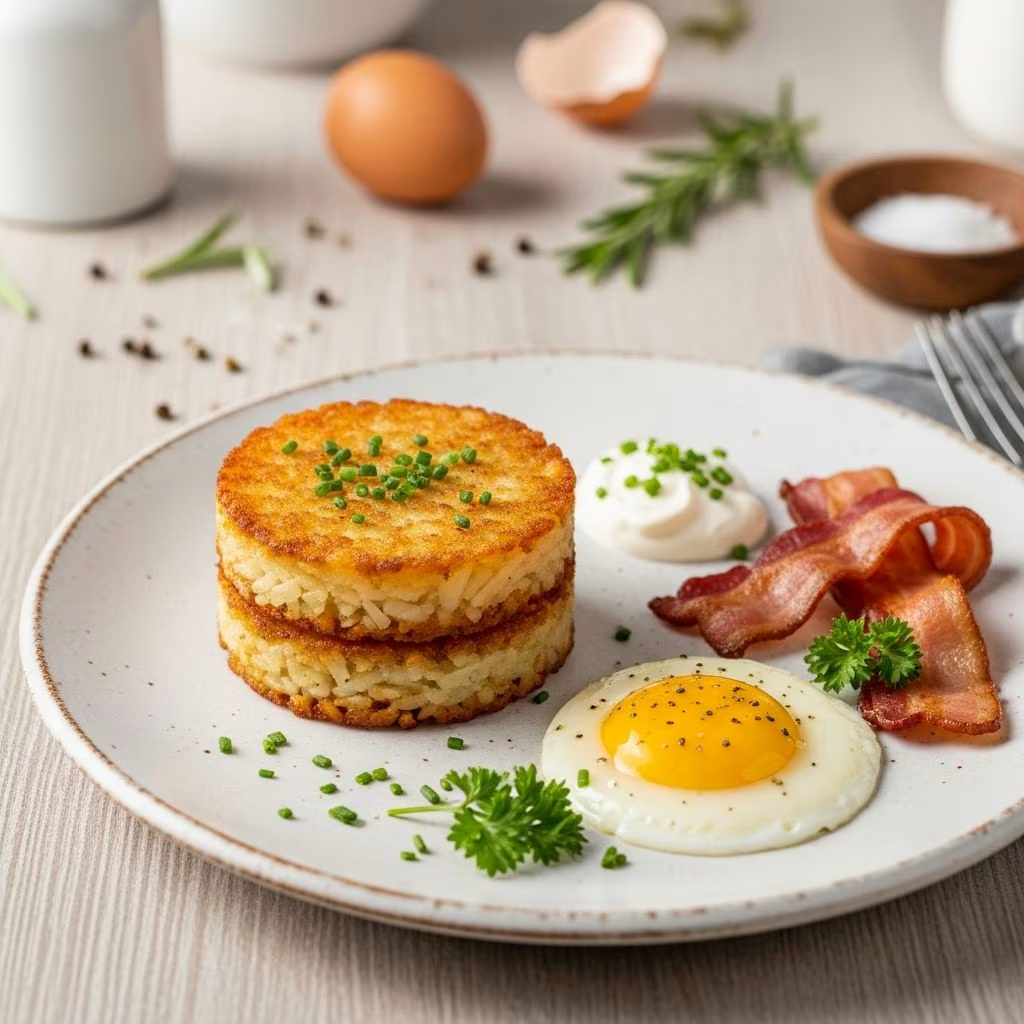
Classic Breakfast Stack: Crispy hash brown patty topped with sharp cheddar cheese, crumbled bacon, sour cream, and fresh scallions. This combination delivers familiar flavors that consistently satisfy. The sharp cheddar provides bold cheese flavor while bacon adds smoky depth. Sour cream’s tanginess balances rich elements, and scallions introduce fresh vegetable brightness.
Southwestern Fusion: Replace traditional cheddar with pepper jack cheese for added heat and complexity. Incorporate cooked chorizo instead of bacon for spiced sausage character. Add a dollop of Greek yogurt mixed with lime juice for tang and brightness. Finish with fresh cilantro and a pinch of cayenne for cohesive southwestern seasoning. This variation appeals to adventurous eaters seeking bolder flavor profiles.
Elegant Brunch Presentation: Layer hash browns with gruyere cheese for sophisticated nuttiness. Top with carefully arranged smoked salmon and crème fraîche for luxurious appeal. Finish with fresh dill and capers for brightness and complexity. This preparation elevates hash browns to restaurant-quality brunch territory, appropriate for entertaining guests or special morning celebrations.
Casserole Adaptations: Scaling Up for Larger Groups
When preparing breakfast for multiple people, casserole approaches offer significant advantages over individual preparations. Diced frozen hash browns work particularly well in these applications, though shredded varieties also perform admirably. Layer thawed, drained hash browns with browned ground sausage, beaten eggs combined with milk, and shredded cheese. The egg mixture binds components together while cooking, creating coherent texture throughout.
For a streamlined five-ingredient casserole, combine diced frozen hash browns with cream of chicken soup, sour cream, melted butter, and sharp cheddar cheese. This simplified approach produces creamy, comforting results with minimal preparation complexity. Season generously with salt and pepper, then bake at 375 degrees Fahrenheit for forty-five to fifty minutes until the center sets and the top achieves light golden browning.
Storage and Make-Ahead Strategies
Hash brown preparations adapt well to make-ahead cooking, making them excellent candidates for meal prep activities. Fully cooked hash browns store in refrigerated containers for up to four days. Casserole-style preparations actually improve slightly as they sit, allowing flavors to meld and components to fuse more completely. Reheat gently in a 325-degree oven for ten to fifteen minutes, covering loosely with foil to prevent over-browning.
Thawing frozen hash browns in advance speeds preparation time but requires careful moisture management. Place frozen hash browns in sealed plastic bags and allow them to sit at room temperature for fifteen to thirty minutes. Once partially thawed, separate the pieces and cook immediately. This approach accelerates cooking time compared to cooking from frozen, though some people prefer maintaining the frozen state for optimal crispness.
Troubleshooting Common Hash Brown Challenges
Soggy Results: Excessive moisture causes soggy, unappealing textures. Ensure frozen hash browns achieve complete thawing and moisture removal before cooking. Pat thawed potatoes dry with paper towels, pressing gently to remove trapped water. When using diced hash browns in casseroles, wrap thawed potatoes in kitchen towels and squeeze gently to extract excess moisture.
Uneven Browning: Arrange hash browns in single layers without overlapping to ensure consistent heat exposure. Avoid cramping too many items into your cooking vessel—this restricts air circulation and creates hot spots. Rotate trays halfway through cooking when using conventional ovens.
Cheese Not Melting: Insufficient heat or timing prevents cheese from melting completely. Ensure your cooking temperature is adequately high and allow sufficient time for cheese to reach melting point. Finely shredded cheese melts faster than coarsely shredded varieties. When cheese fails to melt despite adequate cooking, increase heat briefly for one to two minutes, watching carefully to prevent burning.
Nutritional Considerations and Dietary Modifications
Traditional loaded hash browns provide satisfying comfort food experiences but contain substantial calories and fat. For health-conscious preparations, substitute full-fat sour cream with Greek yogurt, which offers similar creamy texture with higher protein content and fewer calories. Use reduced-fat cheese varieties or apply cheese more sparingly. Turkey sausage or plant-based proteins reduce saturated fat content while maintaining protein density and satisfaction.
Those avoiding dairy can create delicious preparations using dairy-free alternatives. Coconut cream offers richness similar to sour cream, though with distinct flavor characteristics. Nutritional yeast provides savory depth reminiscent of cheese without actual dairy content. Olive oil drizzled over finished dishes adds richness and carries fat-soluble flavors effectively.
Frequently Asked Questions
Can I prepare these in advance for entertaining? Yes, hash browns adapt well to make-ahead preparation. Assemble casserole-style dishes the night before, covering and refrigerating until ready to bake. Individual preparations are best cooked fresh, though cooked components can be prepared in advance and quickly reheated.
What’s the best way to ensure crispy results? Use air fryer methods for maximum crispness, or bake at sufficiently high temperatures (425°F) in conventional ovens. Ensure adequate spacing between items to allow proper air circulation. Avoid overcrowding your cooking vessel.
Are frozen hash browns nutritionally comparable to fresh potatoes? Frozen hash browns typically contain added preservatives and sometimes small amounts of added fat, but nutritional profiles remain similar to fresh potatoes. Check packaging for specific ingredient listings if this concerns you.
How do I fix oversalted dishes? Add additional unseasoned hash browns, sour cream, or other neutral components to dilute excessive saltiness. Going forward, season conservatively and taste before adding more.
Can I use different cheeses? Absolutely. Pepper jack adds heat and complexity, gruyere provides sophisticated nuttiness, and sharp cheddar delivers bold flavor. Experiment with various cheeses to discover personal preferences.
References
- Recipe Diaries – Loaded Hash Browns (Viral TikTok Recipe) — Recipe Diaries. Accessed April 2026. https://www.recipe-diaries.com/loaded-hash-browns/
- Chicken Scratch Diaries – 5 Ingredient Breakfast Casserole — Chicken Scratch Diaries. Accessed April 2026. https://www.chickenscratchdiaries.com/5-ingredient-breakfast-casserole/
- Pudge Factor – Ultimate Loaded Hash Brown Patties — Pudge Factor. Accessed April 2026. https://pudgefactor.com/ultimate-loaded-hash-brown-patties-easy-delicious/
- The Typical Mom – 5 Ingredient Hash Brown Casserole Recipe — Temecula Blogs. Accessed April 2026. https://temeculablogs.com/5-ingredient-hash-brown-casserole/