Creating stunning layer cakes doesn’t require multiple round pans or expensive tools. By baking batter in a simple sheet pan, home bakers can produce even layers, minimize waste through creative scraps, and assemble bakery-style desserts efficiently. This method ensures uniform baking, reduces doming issues, and allows flexibility in cake sizes.
Why Choose Sheet Pans for Layer Cakes?
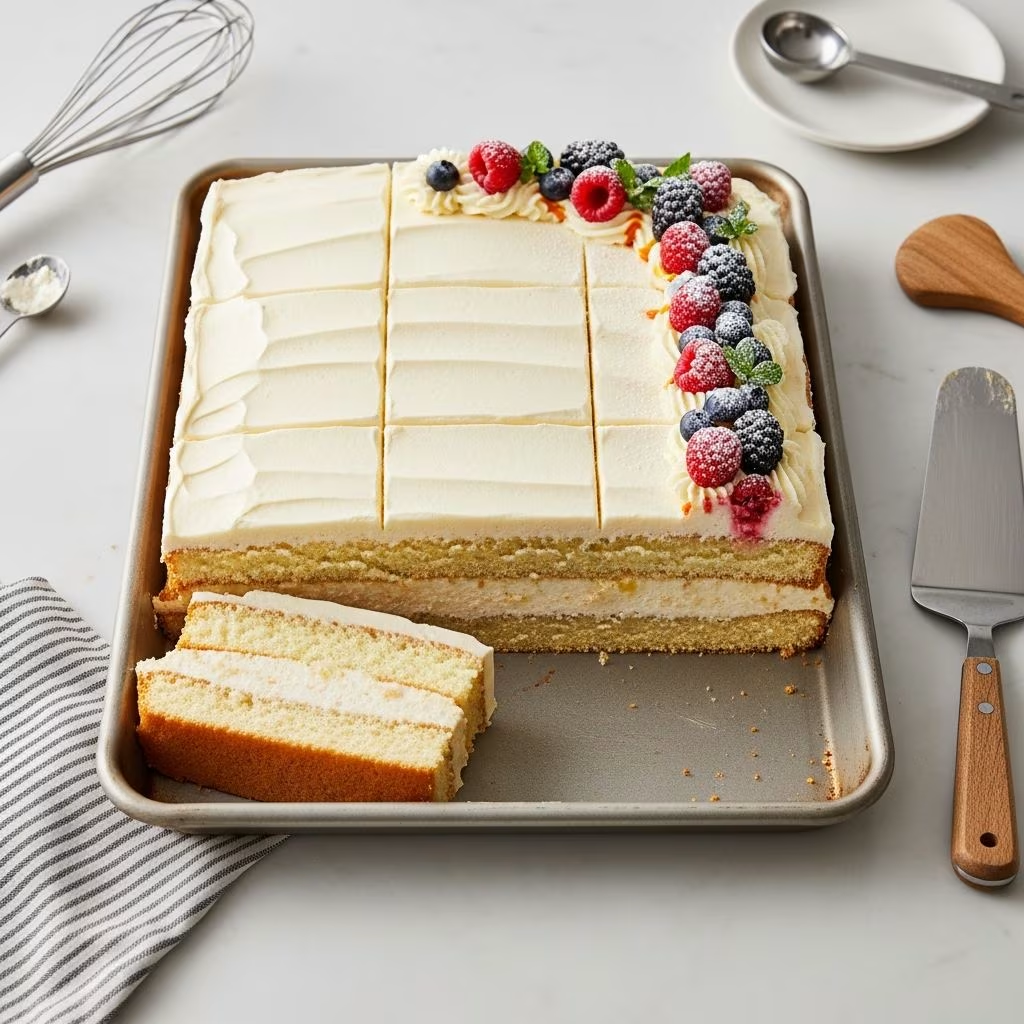
Sheet pan baking transforms standard cake recipes into versatile layers. Unlike traditional round pans where batter depth causes uneven rising or sinking centers, sheet pans spread batter thinly for consistent heat distribution and flat tops. This approach saves time—no dividing batter evenly across pans or scrubbing multiple dirty dishes afterward.
Key advantages include:
- Even baking: Shallower batter prevents dense centers or over-browned edges.
- Custom sizes: Cut rounds or rectangles post-bake to fit any cake diameter.
- Bonus scraps: Leftover edges become truffles, parfaits, or mini treats.
- Fewer tools: One pan yields multiple layers, ideal for 6-inch to 10-inch cakes.
Professional bakers favor this for its reliability, especially with moist recipes prone to sinking in deeper pans.
Selecting the Ideal Sheet Pan
Not all sheet pans perform equally. Opt for a **half-sheet pan** (13×18 inches, 1-inch deep) for most recipes yielding two 8-inch rounds’ worth of batter, about 6 cups. Quarter-sheet pans (roughly 9×13 inches) suit smaller batches or mini cakes.
| Pan Type | Dimensions | Best For | Yields |
|---|---|---|---|
| Half-Sheet | 13x18x1 inch | 8-inch 3-layer, two 6-inch 3-layer | 5-6 full layers |
| Quarter-Sheet | 9x13x1 inch | 6-inch 3-layer, cakelets | 2-3 full layers |
Choose aluminum over dark nonstick for lighter browning and even heat. Avoid shallow pans under 1 inch deep to prevent overflow. Line with parchment after greasing for easy release.
Perfecting Your Cake Batter for Sheet Pans
Adapt any two-layer round cake recipe (6 cups batter) directly to a half-sheet pan. Preheat to 350°F (175°C) for 18-20 minutes until a toothpick tests clean and edges are lightly golden.
Vanilla Sponge Example: Sift flour, baking powder, salt. Beat yolks with sugar to ribbon stage, add milk and vanilla, fold in dry ingredients. Whip whites to soft peaks and fold in for airy texture. Spread evenly and bake.
- Room temperature ingredients ensure smooth mixing.
- Fold gently to retain air bubbles.
- Avoid overbaking—check at 18 minutes.
For flat layers, consider fabric strips soaked in water around pan edges (if adapting round methods), though sheet pans naturally minimize doming.
Cooling and Freezing for Precision Cuts
Post-bake, cool completely on a wire rack to avoid sogginess. For clean cuts, freeze the cake: wrap the pan in plastic (bottom included) and chill 2-4 hours until firm but not rock-hard.
Freezing firms the crumb, preventing tearing during slicing. Use a fan for faster cooling if rushed—position pan on a rack over chairs with airflow underneath.
Mastering the Cut: From Sheet to Layers
Unmold by running a knife around edges, invert onto a board, and peel parchment. Trim crusty edges for snacks, then slice into rectangles or use rings for rounds.
Cake Ring Method (Pro Tip): Press 6-, 8-, or larger rings into frozen cake for perfect circles. One half-sheet yields:
- One 8-inch 3-layer (two full, one pieced).
- Two 6-inch 3-layer cakes.
Serrated knife for rectangles: halve into 12×8-inch pieces. Bench scraper refines edges. Keep frozen layers separate until stacking.
Stacking Layers Like a Professional
Build on a turntable or upside-down sheet pan for stability. Pipe a buttercream ‘dam’ on the first layer to contain fillings, add jam or curd, then top with next layer. Repeat, piecing scraps if needed for even height.
Chill stacked cake 30 minutes between additions to set. Level any wobbles with scraps underneath.
Frosting and Finishing Touches
Apply crumb coat: thin buttercream layer, chill 15 minutes, then final smooth coat with offset spatula. Scrape excess for sharp edges.
- Tools: Turntable, bench scraper, piping bags.
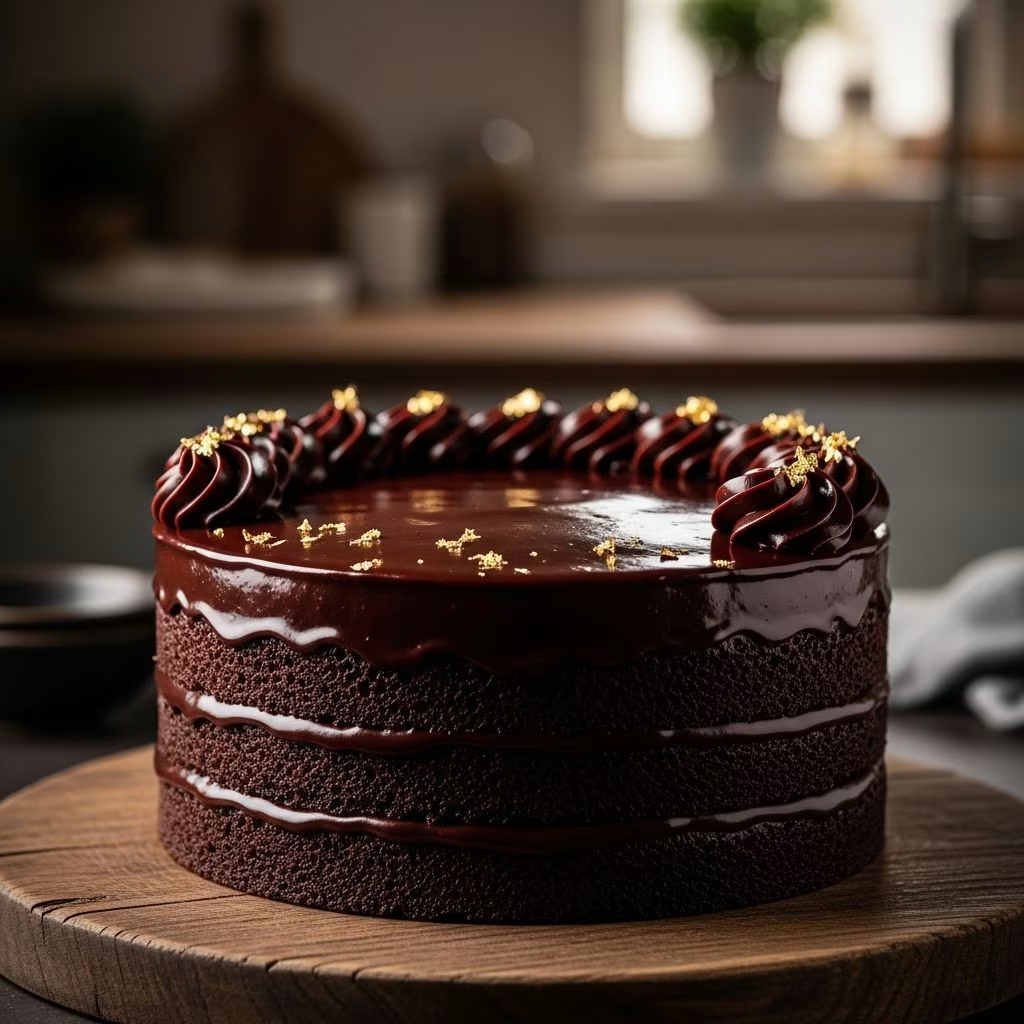
- Flavor pairs: Vanilla with berry filling, chocolate with ganache.
For clean trays, build on parchment, pull away after crumb coat.
Troubleshooting Common Issues
| Problem | Cause | Solution |
|---|---|---|
| Domed top | Deep batter/uneven oven | Sheet pan method + rotate midway |
| Torn layers | Soft cake when cutting | Freeze fully |
| Sinking center | Too much batter | Use exact recipe yield |
| Sticky release | No parchment | Grease + line always |
Recipe Yields and Scaling
Scale batter precisely:
- 1x batch: Quarter-sheet for 6-inch cake.
- 2x batch: Half-sheet for 8-inch or multiples.
Larger cakes (10-inch) need multiple pans: two half + one quarter.
Creative Variations and Uses
Beyond rounds, stack rectangles for sheet-style layers or cut cakelets with small cutters for cupcakes-alternatives. Scraps mix into truffles: blend with frosting, chill, dip in chocolate.
Experiment with flavors—vegan options bake similarly at 350°F under 20 minutes.
FAQs
Can any cake recipe work in a sheet pan?
Yes, if it yields 6 cups for half-sheet. Adjust bake time to 18-20 minutes.
Why freeze before cutting?
Firm crumb prevents crumbling; allows precise shapes with rings.
How do I store assembled cake?
Chill frosted cake; room temp up to 2 days, freeze slices wrapped tightly.
What’s the best pan material?
Aluminum half-sheet, 1-inch deep, for even baking without excess browning.
Can I make gluten-free or vegan versions?
Absolutely—substitutes work, maintaining thin batter spread.
References
- Easy, Versatile Layered Sheet Cake — Food Nouveau. 2023. https://foodnouveau.com/layered-sheet-cake/
- How to Bake and Layer Cakes Like a Pro: 5 Easy Steps — AmyCakes Bakes. 2023. https://amycakesbakes.com/how-to-bake-and-layer-cakes-like-a-pro/
- How To Bake Flat Cake Layers — Preppy Kitchen. 2023. https://preppykitchen.com/how-to-get-perfect-flat-cake-layers/
- How to make a bakery SHEET CAKE only on Gretchen’s… — YouTube (Gretchen’s). 2023. https://www.youtube.com/watch?v=YD3plnm4uzU