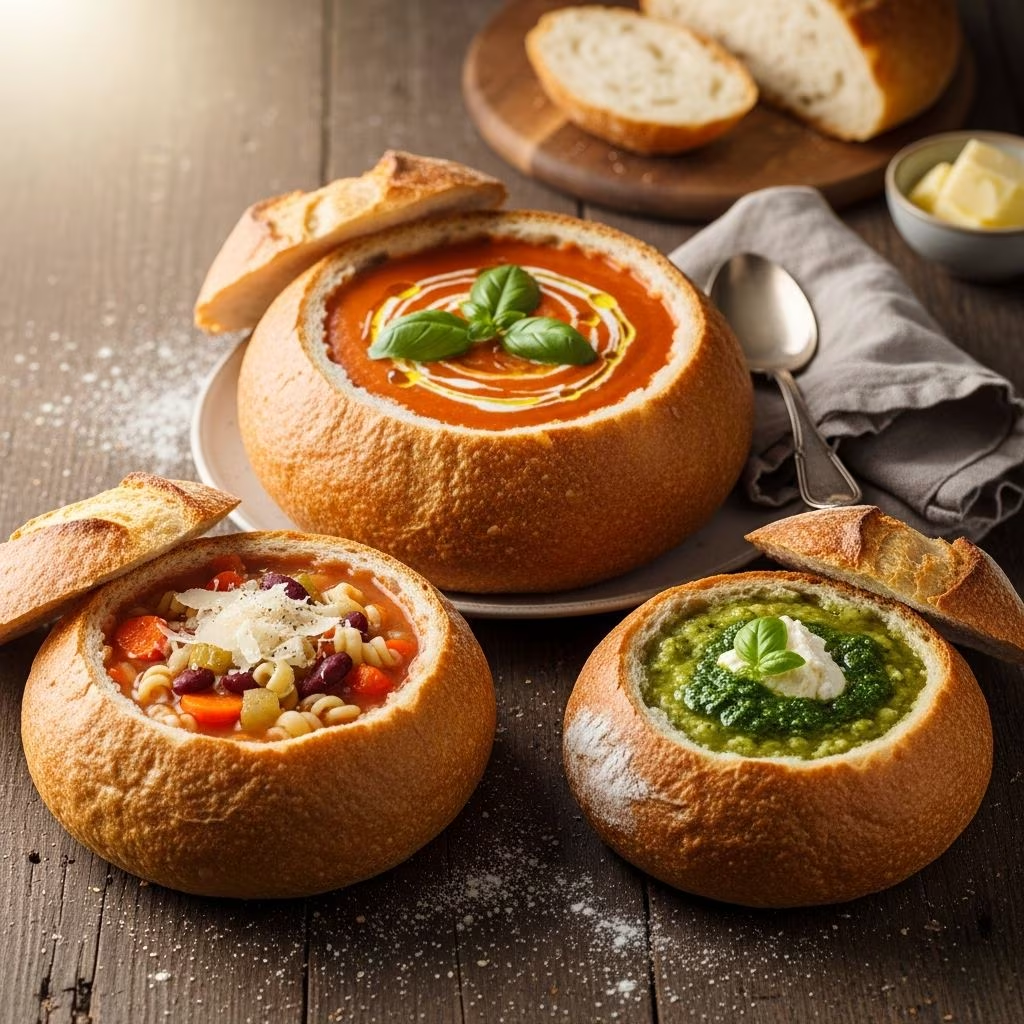
Crusty on the outside, soft and chewy within, **Italian bread bowls** transform ordinary meals into memorable feasts. These versatile creations serve as edible containers for thick soups, creamy chowders, zesty dips, or even pasta dishes, combining convenience with irresistible flavor. Making them at home allows full control over ingredients, ensuring fresh, additive-free results that rival bakery versions.
The Allure of Italian Bread Bowls in Modern Kitchens
Originating from rustic Italian traditions where bread was a staple, these bowls have evolved into global favorites. Their thick walls hold heat exceptionally well, keeping contents warm while diners enjoy the bread itself as part of the meal. Unlike disposable bowls, they minimize waste and add a tactile, satisfying element to eating. Home bakers appreciate their relative simplicity—requiring basic pantry staples—and the wow factor they bring to gatherings.
Whether hosting a cozy family dinner or a casual party, bread bowls encourage interactive dining. Guests can tear into the crusty exterior, scooping out bread to pair with fillings. This guide draws from proven recipes to deliver foolproof methods, ingredient variations, and creative uses, empowering you to bake with confidence.
Essential Ingredients for Authentic Flavor and Texture
Great bread bowls start with quality components. Bread flour provides the high protein content needed for structure and chewiness, while active dry yeast ensures reliable rise. Here’s a breakdown of core elements:
- Flour: 6-7 cups bread or all-purpose flour for gluten development and sturdy bowls that won’t collapse.
- Yeast: 1.5-2 tablespoons active dry or instant yeast to activate fermentation.
- Liquids: 2-2.5 cups warm water (around 110°F) for hydration without killing yeast.
- Fat: 2 tablespoons olive or vegetable oil for tenderness and subtle richness.
- Seasoning: 2 teaspoons salt; optional sugar (1 tablespoon) to feed yeast.
- Egg Wash: 1 egg white + 1 tablespoon water for golden, shiny crusts.
- Cornmeal: For dusting baking sheets to prevent sticking.
Variations like adding garlic powder, dried Italian herbs, or whole wheat flour customize flavor profiles. For instance, herb-infused dough enhances savory fillings.
Step-by-Step Recipe for Classic Italian Bread Bowls
This yields 8 medium bowls (4-5 inches diameter). Total time: about 2.5 hours, including rise.
Prepare the Dough
- Dissolve yeast and sugar in warm water. Let sit 5-10 minutes until foamy, confirming viability.
- In a stand mixer with dough hook (or large bowl), combine 4 cups flour and salt. Add yeast mixture and oil; mix on low.
- Incorporate remaining flour gradually (up to 7 cups total) until dough pulls away from sides—firm but not sticky. Knead 8-10 minutes by machine or 10-12 by hand.
First Rise and Shaping
- Place dough in oiled bowl, cover with damp cloth. Rise in warm spot 1 hour or until doubled.
- Punch down, divide into 8 equal portions (about 8 oz each). Roll into tight balls on floured surface.
- Place on cornmeal-dusted baking sheets, 4 per sheet. Cover loosely; rise 30-40 minutes until puffy.
Baking to Golden Perfection
- Preheat oven to 400°F. Score tops lightly (1/4-inch deep) with sharp knife for expansion.
- Brush with egg wash. Bake 15 minutes, re-brush, then 10-15 more until deep golden (internal temp 200°F).
- Cool on racks 20 minutes. Cut circle from top; hollow out centers, leaving 3/4-inch walls. Save innards for croutons.
Pro tip: For extra crunch, add steam by placing ice cubes in a hot pan below racks during first 10 minutes.
Ingredient Variations for Every Palate
Adapt the base for dietary needs or tastes:
| Variation | Key Additions/Substitutions | Best Pairings |
|---|---|---|
| Herb-Infused | 1.5 tbsp Italian seasoning, 1 tsp garlic powder | Minestrone, meatball marinara |
| Whole Grain | 3 cups white whole wheat flour | Vegetable chili, lentil soup |
| Sweet Twist | 1 tbsp honey instead of sugar | Butternut squash bisque |
| Gluten-Free | GF flour blend + xanthan gum | Creamy dips (test small batch) |
These tweaks maintain structure while boosting nutrition or flavor.
Perfect Fillings: From Soups to Surprises
Bread bowls shine with thick, hearty contents that soak into the bread without sogginess. Classics include:
- Soups & Stews: Clam chowder, beef stew, broccoli cheddar—anything spoonable.
- Dips: Spinach artichoke, buffalo chicken; bake briefly to meld flavors.
- Creative Mains: Pasta with meat sauce, topped with cheese and broiled; or meatballs in marinara.
- Salads: Chopped Greek or Cobb for lighter fare.
Fill just before serving; brush interiors with oil to repel excess moisture. For parties, prep bowls ahead and store lids separately.
Troubleshooting Common Baking Issues
Even pros face hiccups—here’s how to fix them:
- Flat Bowls: Dough too wet or under-kneaded. Use less water next time; ensure full gluten development.
- Pale Crust: Low oven temp or skipped egg wash. Verify preheat; apply twice.
- Dense Texture: Old yeast or rushed rise. Proof yeast first; allow full doubling.
- Soggy After Filling: Thin walls or watery fillings. Leave thicker shells; drain soups well.
Experiment with small batches to dial in your oven’s quirks.
Storage, Freezing, and Make-Ahead Strategies
Baked bowls store at room temp in airtight bags up to 2 days; refresh in 350°F oven 5 minutes. Freeze whole up to 3 months—thaw, crisp, then hollow. Unbaked shaped dough freezes well too: rise once, freeze on sheet, bag, then bake from frozen (add 5 minutes).
For efficiency, double recipe and freeze halves. This makes weeknight soup nights effortless.
Scaling Up for Crowds and Special Occasions
Double ingredients for 16 bowls; use two sheets and rotate midway for even baking. Mini versions (golf ball-sized) suit appetizers like fondue. Giant family-style bowls (double portions) wow at holidays—extend bake by 5-10 minutes.
Pair with thematic menus: Italian night with lasagna soup, or game day with chili and dips.
Nutrition and Pairing Insights
One bowl (without filling): ~250 calories, 5g protein, 1g fat, 50g carbs. High in fiber if whole grain. Serve with crisp salads or charcuterie to balance richness.
Frequently Asked Questions
Can I use instant yeast instead of active dry?
Yes—reduce to 1 tablespoon and mix directly with flour. No proofing needed.
How do I know when dough has risen enough?
Poke gently; if it springs back slowly, it’s ready. Doubled volume is key.
Are bread bowls suitable for sweet fillings?
Best for savory due to salt, but sweetened dough works for pudding or ice cream.
What’s the best flour for chewy texture?
Bread flour (12-14% protein) over all-purpose for superior gluten.
Can vegans make these?
Skip egg wash (use aquafaba or oil); aquafaba mimics shine.
References
- Italian Bread Bowls – Baked by Rachel — Baked by Rachel. Accessed 2026. https://www.bakedbyrachel.com/italian-bread-bowls/
- Homemade Italian Bread Bowls – Mel’s Kitchen Cafe — Mel’s Kitchen Cafe. Accessed 2026. https://www.melskitchencafe.com/my-favorite-bread-bowls/
- Italian Bread Bowls – Bunny’s Warm Oven — Bunny’s Warm Oven. Accessed 2026. https://bunnyswarmoven.net/italian-bread-bowls-use-them-for-soups-salads-or-dips/
- Italian Herb Bread Bowls | Slim Pickin’s Kitchen — Slim Pickin’s Kitchen. Accessed 2026. https://slimpickinskitchen.com/italian-herb-bread-bowls/
- Making Bread Bowls with Italian Bread — Bread Experience. Accessed 2026. https://www.breadexperience.com/making-bread-bowls/