Irish soda bread holds a special place in culinary traditions, representing centuries of resourcefulness and cultural heritage. Unlike many breads that depend on yeast fermentation and extended rising times, this distinctive loaf relies on a chemical leavening agent to achieve its characteristic crumb and texture. The bread emerged from practical necessity, becoming an iconic staple that remains beloved across Ireland and beyond. Understanding the fundamentals of creating this bread opens doors to enjoying fresh, homemade loaves that rival commercial bakeries.
Understanding the Foundation: Core Ingredients Explained
The beauty of Irish soda bread lies in its simplicity. Most versions contain only four to five essential components, making it an accessible baking project for beginners and experienced bakers alike. Each ingredient plays a crucial role in determining the final product’s texture, flavor, and appearance.
The Flour Base
All-purpose flour serves as the primary ingredient in traditional recipes. When measuring flour, proper technique matters significantly. Using a spoon-and-level method prevents excess flour from compacting into your measuring cup, which can result in a denser, drier loaf than intended. For those who prefer precision, 4 cups of all-purpose flour typically equals approximately 510 grams by weight. Some bakers experiment with whole wheat varieties or incorporate wheat germ for additional nutritional value and earthier flavors, though these variations require adjusted proportions to maintain proper dough consistency.
The Leavening Agent: Baking Soda
The defining characteristic of soda bread is its reliance on baking soda rather than commercial yeast. Baking soda requires an acidic component to activate properly, which is why buttermilk becomes indispensable. When baking soda contacts the acidity in buttermilk, an immediate chemical reaction generates carbon dioxide gas, creating the lift and rise that makes the bread light and airy. Typically, one teaspoon of baking soda suffices for a standard loaf, though some enriched variations incorporate both baking soda and baking powder to achieve additional lift and tenderness.
The Acidic Catalyst: Buttermilk
Buttermilk serves double duty in this recipe. Beyond providing moisture to the dough, its acidity is absolutely crucial for activating the baking soda. This acidic quality ensures proper chemical leavening, allowing the bread to rise adequately in the oven. The amount typically ranges from one to two cups, depending on the flour quantity and desired dough consistency. Cold buttermilk or kefir can be used interchangeably, offering similar acidic properties.
Supporting Players: Salt, Sugar, and Fat
Sea salt or kosher salt enhances flavor and provides essential seasoning, with approximately one to two teaspoons being standard. Sugar, typically one to two tablespoons of granulated cane sugar, adds subtle sweetness and slight browning during baking. Cold unsalted butter, ranging from three to six tablespoons depending on the recipe variation, contributes richness and creates a desirable flaky or scone-like texture when worked into the dry ingredients.
Optional Enhancements
Dried currants, raisins, or cranberries are traditional additions that provide natural sweetness and textural interest. Many contemporary recipes include these optional ingredients, while purists might omit them for a more austere, traditional loaf. An egg occasionally appears in some variations, adding richness and contributing to an improved rise and more tender crumb.
The Science Behind the Simple Method
What makes Irish soda bread remarkable is the speed and simplicity of its preparation. Traditional dough comes together in approximately five to ten minutes of hands-on time, with no proofing or extensive kneading required. This stands in stark contrast to yeast-based breads, which demand hours of fermentation and rising.
The rapid assembly works because baking soda’s leavening action occurs immediately upon mixing with acidic buttermilk. The dough needs minimal handling to form, and over-mixing actually proves detrimental, potentially leading to toughness. The dough typically exhibits a somewhat sticky, shaggy consistency that seems counterintuitive to experienced bread makers but yields superior results in this context.
Step-by-Step Assembly Process
Preparation and Oven Setup
Begin by preheating your oven to between 375 and 425 degrees Fahrenheit, depending on your specific recipe and oven characteristics. Position your racks appropriately and prepare your baking vessel—a cast-iron skillet, baking sheet lined with parchment paper, or round cake pan all work effectively. Lightly grease whichever vessel you select with butter or oil to prevent sticking.
Combining Dry Components
In a large mixing bowl, whisk together all dry ingredients: flour, baking soda, salt, sugar, and any optional dried fruit. Whisking aerates the mixture and ensures even distribution of the baking soda throughout the flour, which promotes uniform rising. This step only takes a minute or two but significantly impacts consistency.
Incorporating Fat and Wet Elements
If using cold butter, cut it into small cubes and work it into the dry mixture using your fingertips, a fork, or a pastry cutter. This step mimics pie crust and scone preparation, creating tiny pockets of butter throughout the dough. These pockets eventually steam during baking, contributing to flakiness and a more refined crumb structure. In a separate bowl, whisk together buttermilk and any egg, creating the wet mixture. Some recipes call for melted butter in the liquid components rather than cold butter in the dry mixture—both approaches yield satisfactory results with slightly different textural outcomes.
Bringing It Together
Pour the wet ingredients into the dry mixture and stir gently with a rubber spatula or wooden spoon until just combined. The resulting dough will appear shaggy and somewhat sticky—this is precisely the desired consistency. Resist the urge to overwork the dough, as excessive mixing toughens the crumb and reduces tenderness.
Shaping and Scoring
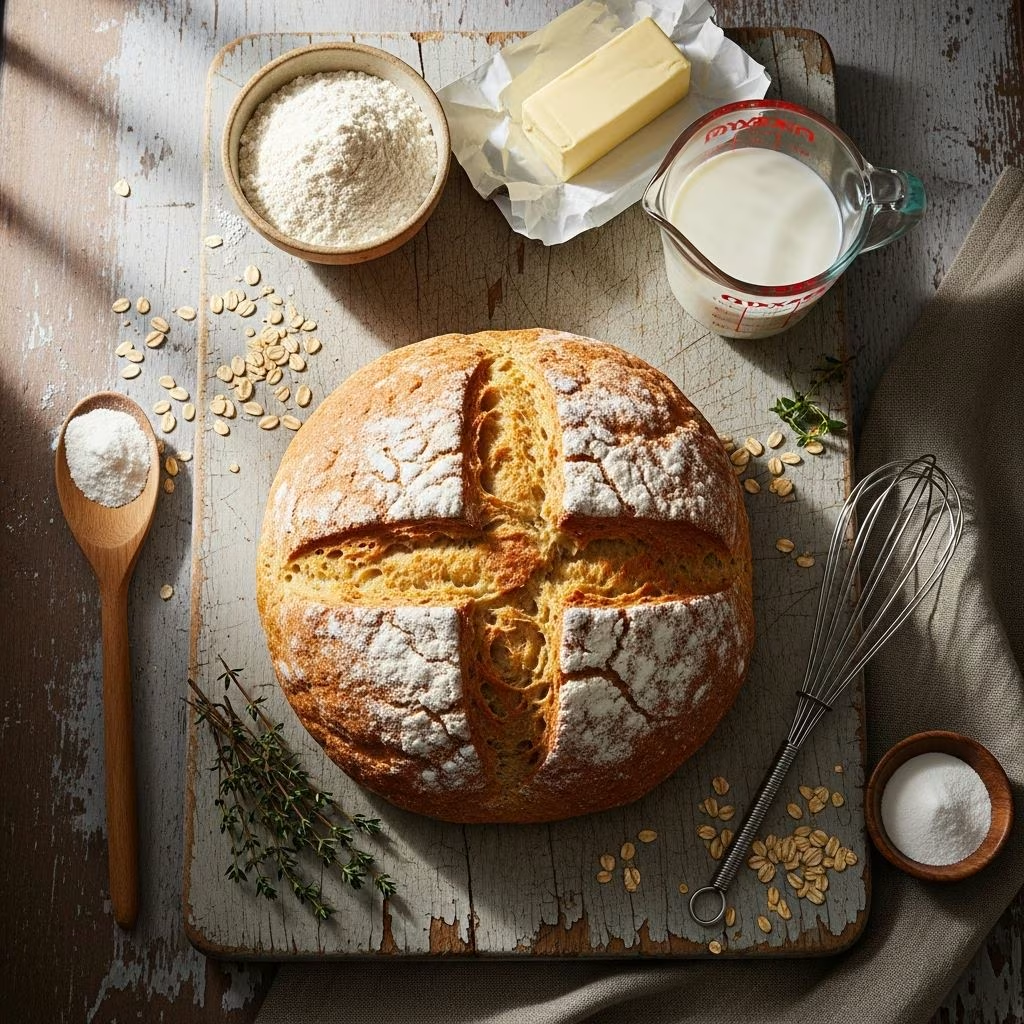
Transfer the dough to a lightly floured surface and gently bring it together into a rough ball shape using floured hands. Place it into your prepared pan, where it should form a disk-like shape that fills the pan reasonably well. Using a sharp knife, score a cross pattern into the top surface—a traditional practice that serves both aesthetic and functional purposes, promoting even baking and creating an attractive presentation.
Baking to Golden Perfection
Bake for approximately 35 to 45 minutes, depending on your oven and loaf size, until the exterior achieves a beautiful golden-brown color. The bread is finished when a knife inserted into the center comes out relatively clean, with just a few moist crumbs clinging to it. Transfer the finished loaf to a wire cooling rack, though it’s best enjoyed while still warm.
Texture and Flavor Profile Comparison
| Recipe Variation | Key Characteristics | Best Uses |
|---|---|---|
| Traditional Plain | Dense, robust crumb; simple flavor; crispy crust | Pairing with soups and stews; supporting Irish meals |
| Sweetened with Fruit | Tender crumb; subtle sweetness; chewy texture from dried fruit | Breakfast servings; tea time; light snacking |
| Whole Wheat Version | Earthy flavor; nuttier taste; slightly denser structure | Health-conscious preparations; hearty meals |
| Egg-Enriched | Softer crumb; richer taste; improved keeping qualities | Special occasions; extended storage needs |
Troubleshooting Common Challenges
Dense, Heavy Crumb
This typically results from overmixing the dough or packing flour too tightly into measuring cups. Ensure proper measuring technique and mix only until ingredients are barely combined.
Insufficient Rise
Verify that your baking soda hasn’t expired, as its potency diminishes over time. Additionally, confirm that your buttermilk is sufficiently acidic for proper chemical activation. Allow adequate oven preheating to ensure the bread begins rising immediately upon entering the hot environment.
Overly Dry Interior
This can indicate either too much flour or insufficient buttermilk. Check your measuring technique and ensure you’re using the correct ingredient quantities. Lower baking temperatures and extended baking times can also dry out the crumb.
Serving Suggestions and Accompaniments
Irish soda bread’s versatility makes it suitable for numerous occasions and meal pairings. Serve it warm with generous applications of butter, allowing the heat of the bread to soften the butter into every crevice. Traditional Irish meals featuring hearty stews and soups benefit tremendously from this bread’s texture and neutral flavor. For breakfast applications, toast slices and top with preserves, honey, or cheese. Some creative preparations involve transforming soda bread into breakfast bakes by adding egg mixtures and roasted vegetables, essentially creating a savory bread pudding-style dish.
Storage and Keeping Quality
Fresh soda bread maintains optimal quality for one to two days when stored in a breathable container at room temperature. The bread’s crust will gradually soften during storage, though some prefer this texture. For extended storage, wrap cooled bread tightly in plastic wrap or aluminum foil and refrigerate for up to five days. Soda bread also freezes remarkably well for up to three months when properly wrapped, allowing you to enjoy homemade bread well beyond baking day.
Frequently Asked Questions
Can I substitute regular milk for buttermilk?
Not directly, as the acid content is essential for leavening. However, you can create a buttermilk substitute by adding one tablespoon of lemon juice or white vinegar to one cup of regular milk and letting it sit for five minutes before using.
Is kneading necessary for this bread?
Extensive kneading is unnecessary and actually counterproductive. Gentle handling is preferable, as it preserves the tender crumb and prevents toughness that results from overdeveloping gluten.
What’s the difference between soda bread and regular bread?
The primary distinction lies in leavening. Soda bread uses baking soda activated by acid (buttermilk), while conventional bread typically relies on yeast fermentation. This means soda bread requires no rising time and bakes much more quickly.
Can I add different mix-ins like chocolate chips or nuts?
Yes, though this deviates from traditional recipes. Fold in additions gently after combining wet and dry ingredients. Popular options include walnuts, pecans, chocolate chips, or additional dried fruits beyond the traditional currants.
How do I know when the bread is fully baked?
The bread should be deep golden brown on the exterior. A knife or skewer inserted into the center should emerge with only minimal moist crumbs, not wet batter. The bottom should sound slightly hollow when tapped.
Conclusion
Irish soda bread represents an uncomplicated yet deeply satisfying baking experience. Its reliance on basic pantry staples and straightforward techniques makes it accessible to bakers of all skill levels. Whether you seek a traditional version to accompany hearty meals or prefer contemporary variations with sweetened additions, this versatile bread rewards patience and proper technique with exceptional results. The combination of chemical simplicity and flavor complexity makes Irish soda bread a timeless addition to any baker’s repertoire.
References
- Irish Soda Bread Recipe — Love and Lemons. Accessed April 2026. https://www.loveandlemons.com/irish-soda-bread/
- Irish Soda Bread Recipe — Natasha’s Kitchen. Accessed April 2026. https://natashaskitchen.com/irish-soda-bread/
- Super Simple Irish Soda Bread — Alexandra’s Kitchen. March 11, 2016. https://alexandracooks.com/2016/03/11/irish-soda-bread-two-ways/
- Grandma’s Irish Soda Bread — Sally’s Baking Addiction. Accessed April 2026. https://sallysbakingaddiction.com/grandmas-irish-soda-bread/
- Grandma’s Sweet Irish Soda Bread Recipe — Sugar Geek Show. Accessed April 2026. https://sugargeekshow.com/grandmas-sweet-irish-soda-bread-recipe/
- Traditional Irish Soda Bread — Let’s Dish Recipes. Accessed April 2026. https://letsdishrecipes.com/traditional-irish-soda-bread/
- Easy Irish Soda Bread — Sprinkle Bakes. February 2024. https://www.sprinklebakes.com/2024/02/easy-irish-soda-bread.html
- How to Serve Irish Soda Bread – 7 Easy Ideas — The Irishman’s Wife. Accessed April 2026. https://www.theirishmanswife.com/how-to-serve-soda-bread/