Homemade vanilla extract offers a depth of flavor unmatched by most commercial bottles, transforming ordinary recipes into extraordinary treats. By infusing vanilla beans in high-proof alcohol, you capture hundreds of natural compounds that define true vanilla essence. This process, rooted in simple maceration, yields a versatile ingredient perfect for cakes, cookies, and custards.
Why Choose Homemade Over Store-Bought
Commercial vanilla extracts often rely on synthetic vanillin or diluted real extracts, compromising taste and aroma. In contrast, a home version uses whole beans, delivering robust, complex notes of caramel, fruit, and spice. Beyond superior quality, crafting your own saves money long-term—especially with rising bean prices—and allows customization with different spirits for unique profiles.
- Cost Efficiency: One batch covers months of baking at a fraction of retail prices.
- Purity Control: No artificial additives or preservatives.
- Gift Appeal: Beautifully bottled extract makes thoughtful, personalized presents.
Understanding Vanilla Beans: Grades and Varieties
Vanilla beans come from the orchid Vanilla planifolia, primarily grown in Madagascar, Mexico, and Tahiti. Select **Grade B** beans for extract-making, as they are drier and more concentrated in flavor compounds, ideal for infusion despite their less flexible texture.
| Variety | Flavor Profile | Best For |
|---|---|---|
| Madagascar Bourbon | Creamy, rich, woody | Classic baking |
| Mexican | Bold, spicy, cherry-like | Cocktails, chocolates |
| Tahitian | Floral, fruity, cherry | Light desserts |
Aim for 1 ounce (about 6-8 plump beans) per 8 ounces of alcohol to meet commercial strength standards. Source organic, fair-trade beans to ensure ethical harvesting and peak freshness.
Selecting the Perfect Alcohol Base
Alcohol serves as the solvent, extracting vanillin and over 200 other compounds from the beans. Opt for neutral **80-proof vodka** (40% ABV) as a starter—its clean profile lets vanilla shine without overpowering. For adventurous twists:
- Bourbon or Rum: Adds warm caramel and oak notes, ideal for spiced baked goods.
- Brandy: Imparts subtle fruitiness, enhancing fruit-based desserts.
- Everclear (if legal): Higher proof (95% ABV) speeds extraction but requires dilution for safety.
Any spirit at 35-50% ABV works; avoid flavored liquors that muddy the extract.
Step-by-Step Guide to Preparation
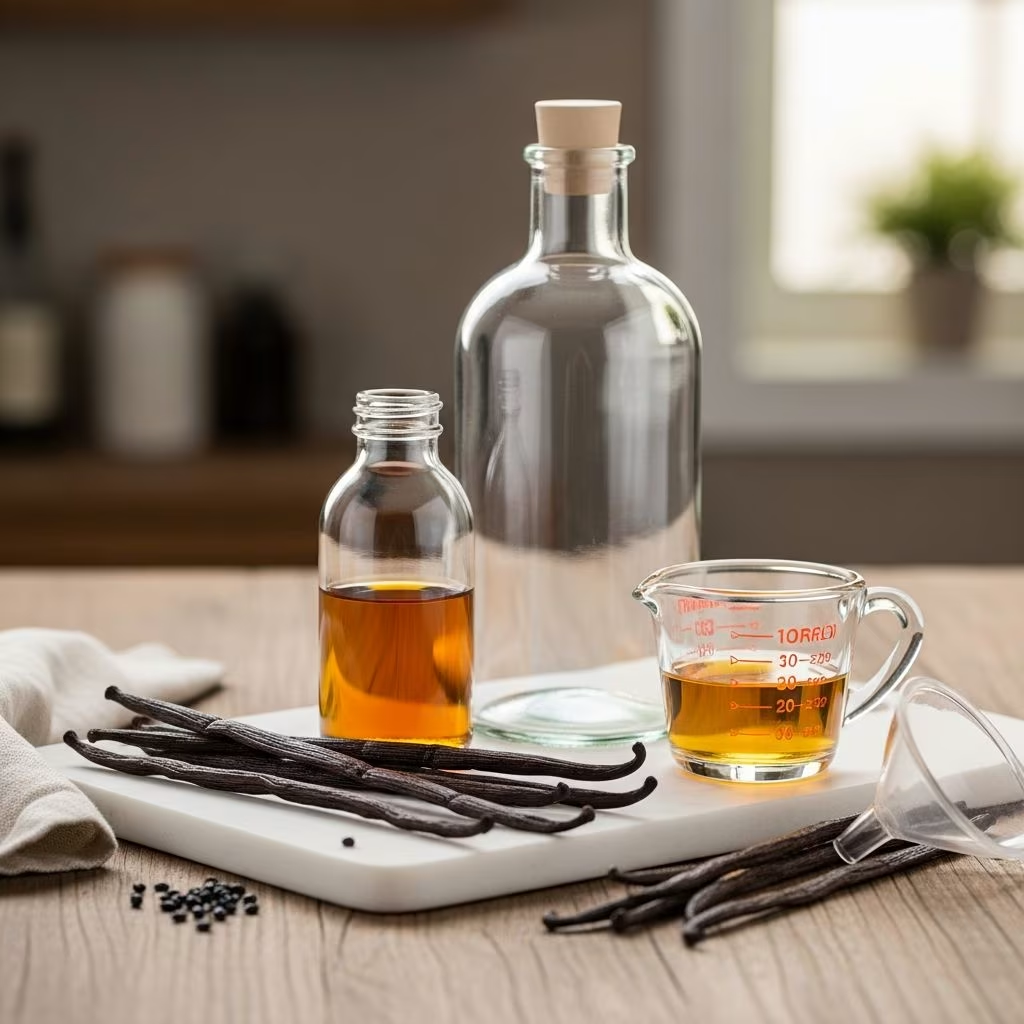
Assembling your extract takes under 10 minutes, followed by patient aging. You’ll need a clean glass jar with a tight-sealing lid (8-16 oz size), sharp knife or scissors, and a funnel.
- Prepare Beans: Trim beans to fit your jar if needed. Slice lengthwise from one end, leaving the tip intact to keep seeds contained. Scrape out the tiny black seeds (caviar) if desired for faster infusion.
- Pack the Jar: Place 6-10 split beans inside, ensuring they stand upright or are fully submerged later.
- Add Alcohol: Pour vodka or chosen spirit over beans until covered by at least 1 inch. Use a funnel to avoid spills.
- Seal and Shake: Close tightly and shake vigorously to distribute seeds and initiate extraction.
Label with date and contents. Store in a cool, dark place like a pantry.
The Aging Process: Patience Yields Perfection
Infusion begins immediately but peaks over months. Shake the jar weekly to agitate seeds and enhance flavor release.
- Weeks 1-2: Liquid turns golden; subtle aroma emerges.
- Weeks 3-6: Amber hue develops; usable for mild recipes.
- Months 2-6: Deep mahogany color, rich bouquet—commercial quality achieved.
- 6-12 Months: Peak intensity; single beans reusable for subsequent batches.
For quicker results, chop beans into smaller pieces or use warmer storage (not exceeding 80°F). Full strength requires at least 8 weeks, per FDA guidelines for pure extract.
Troubleshooting Common Issues
Even simple recipes can encounter hiccups. Here’s how to fix them:
| Problem | Cause | Solution |
|---|---|---|
| Cloudy Extract | Seeds or pulp residue | Strain through cheesecloth after 6 months |
| Weak Flavor | Insufficient beans or short aging | Add more beans; extend infusion time |
| Mold Growth | Improper seal or low alcohol | Discard; ensure full submersion and airtight lid |
| Off Smell | Poor-quality beans | Start fresh with premium sources |
Maintain submersion by topping off alcohol if evaporation occurs. If beans dry out pre-use, briefly soak in warm alcohol.
Infinite Ways to Use Your Creation
Once ready, this extract shines in any recipe calling for its store-bought counterpart. Its potency means using the standard 1-2 teaspoons per batch.
- Baking Staples: Enhance chocolate chip cookies, cheesecakes, or Madeleine cakes.
- No-Bake Treats: Stir into pudding, ice cream bases, or whipped cream.
- Beverages: Elevate coffee, hot chocolate, or homemade liqueurs.
- Savory Twists: A dash in creamy sauces or mashed potatoes adds surprising depth.
Experiment with **vanilla sugar** by burying spent beans in granulated sugar for 2 weeks, or infuse milk for custards.
Scaling Up for Gifts and Stockpiling
Multiply the recipe effortlessly: 4 beans per cup of alcohol scales to gallons. For holiday gifting:
- Sterilize 4-oz swing-top bottles.
- Fill with 2 split beans each.
- Add alcohol, age 2-3 months, then decorate with custom labels noting start date and variety.
Large mason jars work for personal bulk batches, yielding extract for a year’s baking. Reinfuse spent beans in fresh alcohol for double duty.
Health and Storage Considerations
Homemade extract is all-natural, alcohol-preserved indefinitely if stored properly. Keep at room temperature away from light and heat; potency lasts years. Alcohol content makes it unsuitable for children or non-alcoholic recipes—evaporate gently for concentrates if needed.
Nutritionally, it’s calorie-dense from alcohol (about 12 kcal/teaspoon) but used sparingly.
Frequently Asked Questions
Can I use rum instead of vodka?
Yes, rum adds molasses undertones, pairing well with tropical desserts. Ensure it’s at least 80 proof.
How do I know when it’s ready?
Taste after 6 weeks: it should be boldly aromatic and flavorful. Dark color indicates readiness.
What if my beans are too tough to split?
Snip into 1-inch pieces with scissors; this exposes more surface area.
Is homemade extract as strong as store-bought?
Often stronger—dilute if needed, but proper ratios match single-fold extract.
Can I make alcohol-free vanilla extract?
Use glycerin instead of alcohol for a shelf-stable, vegan option, though flavor extraction is slower.
References
- Easy Homemade Vanilla Extract Recipe — Mountain Rose Herbs Blog. 2023-05-15. https://blog.mountainroseherbs.com/easy-homemade-vanilla-extract-recipe
- How to Make Homemade Vanilla Extract — Preppy Kitchen (YouTube). 2022-11-10. https://www.youtube.com/watch?v=sgCytb1Mhys
- How to Make Homemade Vanilla Extract — ZoëBakes. 2025-01-06. https://zoebakes.com/2025/01/06/homemade-vanilla-extract/
- Homemade Vanilla Extract — The View from Great Island. 2023-08-20. https://theviewfromgreatisland.com/homemade-vanilla-extract/
- Homemade Vanilla Extract — Melissa K. Norris. 2024-02-14. https://melissaknorris.com/homemade-vanilla-extract/