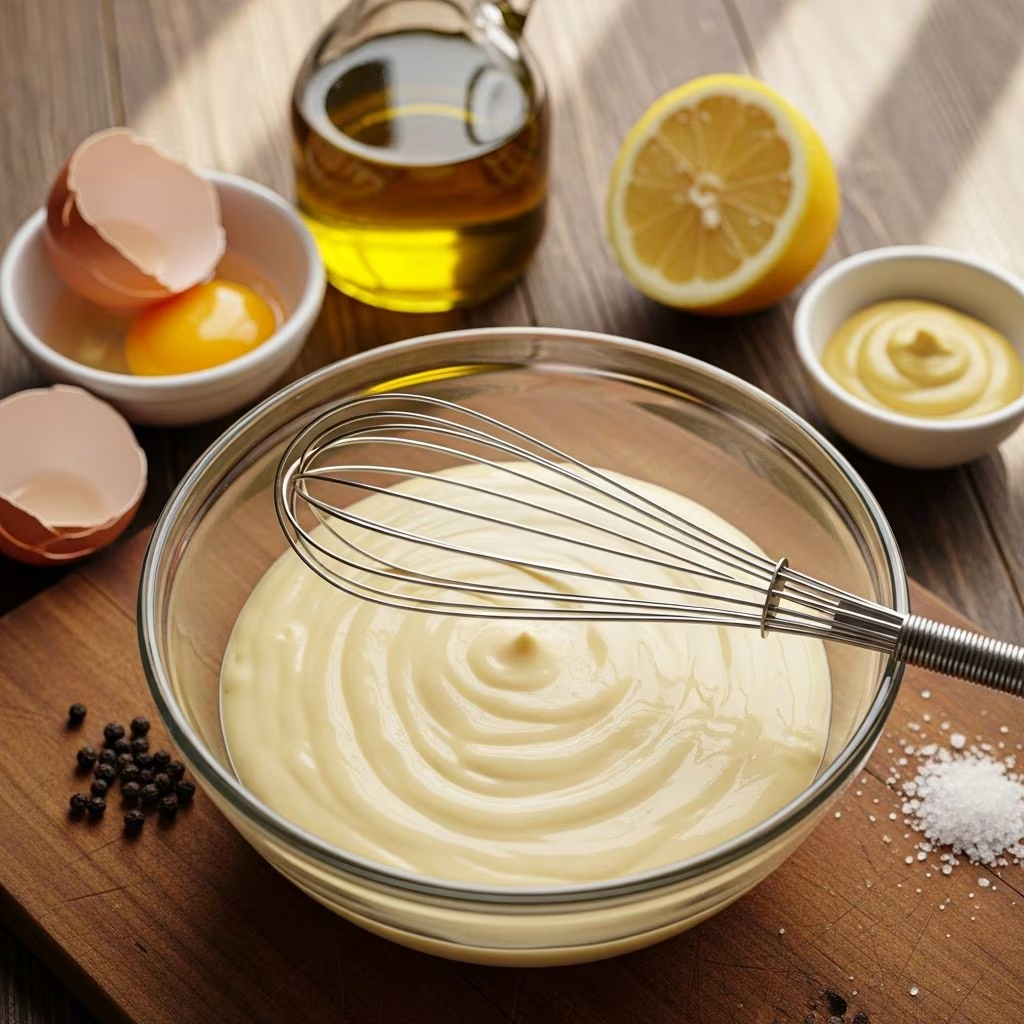
Creamy, tangy, and versatile, **homemade mayonnaise** elevates everyday meals from basic sandwiches to gourmet salads. Unlike commercial versions loaded with preservatives, this DIY approach uses fresh ingredients for superior taste and texture. With just a few pantry staples and an immersion blender, you can create a batch in under two minutes. This guide covers everything from the science behind the emulsion to troubleshooting tips and delicious recipe ideas.
Why Choose Homemade Over Store-Bought?
Store-bought mayonnaise often contains additives like sugar, thickeners, and artificial flavors that dilute its natural richness. Homemade versions shine with customizable acidity, freshness, and purity. You control the oil type for health benefits—opt for avocado or light olive oil for heart-healthy fats—and adjust seasonings to perfection. Plus, it’s cost-effective: a single batch rivals premium jars at a fraction of the price.
The emulsion process, where oil droplets bind with egg yolk via lecithin (a natural emulsifier), creates that signature silky texture. Understanding this makes success foolproof, even for beginners.
Essential Ingredients for Perfect Mayo
Gather these simple components for about 1 cup of mayonnaise, enough for 12-20 servings:
- 1 large egg (room temperature for best emulsification; provides structure and creaminess)
- 1-2 tsp Dijon mustard (adds tang and stabilizes the mixture)
- 1 Tbsp acid (lemon juice, white vinegar, or a mix for brightness)
- ¼-½ tsp salt (fine sea salt enhances flavors; adjust to taste)
- ¾-1 cup neutral oil (avocado, light olive, canola, or sunflower—avoid extra-virgin olive for milder taste)
- Optional: ½ tsp sugar (balances acidity)
Pro tip: Room-temperature ingredients prevent separation. Use pasteurized eggs if concerned about raw egg safety, especially for vulnerable groups.
Step-by-Step Instructions: Immersion Blender Method
This one-minute technique revolutionized mayo-making. No whisking marathons required.
- Prep the jar: Use a tall, narrow container like a mason jar or the blender’s attachment cup. Add egg, mustard, acid, salt, and optional sugar.
- Layer the oil: Pour oil slowly over the top without stirring. Let it settle for 15-30 seconds.
- Blender dive: Place immersion blender at the jar’s bottom, covering the egg yolk completely. Turn on high speed and hold steady for 10-20 seconds until the base turns pale and thickens—this kickstarts emulsification.
- Incorporate fully: Slowly tilt and lift the blender in upward strokes, blending until all oil integrates into a creamy emulsion (total time: 1-2 minutes).
- Taste and adjust: Add more lemon, salt, or garlic for flavor twists. Refrigerate immediately.
The result? A thick, glossy mayonnaise ready for use. It firms up further in the fridge.
Alternative Methods If You Lack a Stick Blender
No immersion blender? No problem. Adapt with common tools:
| Method | Tools Needed | Time | Tips |
|---|---|---|---|
| Food Processor | Small bowl attachment | 2-3 minutes | Pulse wet ingredients 10-15 seconds, then drizzle oil via feed tube with motor running. |
| Blender | Standard blender | 3-5 minutes | Start with drops of oil, then steady stream to avoid splatter. |
| Whisk (Traditional) | Bowl and whisk | 10-15 minutes | Drizzle oil drop-by-drop initially; arm workout guaranteed. |
These yield similar results but demand more patience to prevent breaking.
Mastering the Emulsion: Common Pitfalls and Fixes
Broken mayo looks curdled and oily. Causes include cold ingredients, over-blending, or rushed oil addition. Prevention:
- Always start with yolks submerged.
- Use neutral-temperature components.
- Blend steadily, not frantically.
Fix a broken batch: In a clean jar, add a fresh egg yolk, mustard, and acid. Slowly blend in the broken mayo as if it were oil. It rescues most mishaps.
Flavor Variations to Elevate Your Mayo
Basic mayo is a canvas. Experiment with these infusions:
- Garlic Aioli: Blend in 2 minced roasted garlic cloves.
- Herb Garden: Stir in chopped dill, chives, or basil post-blending.
- Spicy Sriracha: Add 1-2 tsp sriracha or chipotle for heat.
- Lemon-Herb: Extra lemon zest and parsley for Mediterranean flair.
- Curry Twist: ½ tsp curry powder for exotic sandwiches.
Infuse oils beforehand (e.g., chili oil) for subtle depth.
Storage, Shelf Life, and Food Safety
Store in an airtight glass jar in the fridge for up to 1 week. It thickens overnight. Freeze in ice cube trays for 3 months (thaw slowly). Discard if it smells off, molds, or separates irreversibly.
Safety note: Raw eggs carry salmonella risk (1 in 20,000 chance per USDA). Pasteurized eggs or aquafaba (chickpea liquid) offer vegan, safer alternatives.
Creative Uses in Everyday Cooking
Beyond sandwiches, mayo stars in:
- Salad Dressings: Mix with yogurt and herbs for coleslaw.
- Marinades: Tenderizes chicken (mayo-baked is juicy).
- Sauces: Base for thousand island or remoulade.
- Baking: Adds moisture to cakes or brownies.
- Fries Dipper: Garlic or truffle versions beat ketchup.
Incorporate into potato salad, deviled eggs, or as a burger topper for next-level flavor.
Nutrition Breakdown and Health Perks
Per 1 Tbsp (using avocado oil): ~100 calories, 11g fat (healthy monounsaturated), 0g carbs, 0g sugar, 70mg cholesterol. Rich in vitamin E and omega-9s. Skip sugar-laden store mayo for cleaner eating.
Frequently Asked Questions (FAQs)
What if my mayo doesn’t thicken?
Hold the blender at the bottom longer (20-30 seconds) until you see whitening. Add another yolk if needed.
Can I use olive oil?
Yes, light olive oil works best; extra-virgin imparts bitterness.
Is it safe for pregnant women?
Use pasteurized eggs to minimize risks.
How do I make it vegan?
Swap egg for 3 Tbsp aquafaba; blend similarly.
Why is my mayo oily?
Oil added too fast—next time, drizzle gradually.
With practice, homemade mayo becomes a kitchen staple. Its freshness transforms meals effortlessly.
References
- Code of Federal Regulations Title 21 — U.S. Food and Drug Administration. 2023-10-01. https://www.accessdata.fda.gov/scripts/cdrh/cfdocs/cfcfr/CFRSearch.cfm?fr=169.140
- Salmonella Risk Assessment — U.S. Department of Agriculture Food Safety and Inspection Service. 2022-05-15. https://www.fsis.usda.gov/sites/default/files/media_file/2021-02/Risk-Assessment-Shell-Eggs.pdf
- Emulsifiers in Food Science — Institute of Food Technologists. 2024-01-20. https://www.ift.org/news-and-publications/food-technology-magazine/issues/2024/january/columns/food-chemistry