Creating your own coffee liqueur at home is an achievable endeavor that yields impressive results without requiring specialized equipment or extensive culinary expertise. Whether you’re seeking a cost-effective alternative to commercial coffee liqueurs or looking for a personalized gift option, mastering this craft opens up numerous possibilities for customization and experimentation.
Understanding Coffee Liqueur Fundamentals
Coffee liqueur represents a delightful intersection of coffee culture and spirit craftsmanship. Unlike instant mixes or commercial versions, homemade varieties allow you to control sweetness levels, coffee intensity, and alcohol content. The basic premise involves combining coffee with a high-proof spirit, then mellowing the mixture with a sugar syrup that balances flavors and adds body to the final product.
The beauty of this beverage lies in its versatility. You can sip it neat as an after-dinner drink, incorporate it into classic cocktails, use it as a dessert ingredient, or package it as an elegant holiday gift. The flavor profile you achieve depends largely on your ingredient choices and infusion methodology.
Essential Ingredients for Your Coffee Liqueur Base
While coffee liqueur recipes vary, the core components remain consistent. Understanding each ingredient’s role helps you make informed substitutions and achieve your desired flavor outcome.
Coffee Selection and Preparation
The coffee you choose significantly impacts your final product’s character. For traditional methods, freshly ground medium to coarse coffee works best, as it provides robust flavor without over-extracting into bitter compounds. Medium-roasted beans deliver a balanced profile that’s neither too acidic nor too dark, though you can experiment with darker roasts for deeper, more assertive flavors.
Some recipes call for whole beans combined with alcohol, allowing the infusion process to extract flavor gradually. Others use brewed coffee as the foundation, which offers more immediate flavor integration and eliminates the need for extended steeping periods.
Spirit Base Options
Your choice of alcohol dramatically influences the final taste:
- Vodka – Provides a clean slate for coffee and vanilla flavors to shine, allowing the liqueur’s true taste profile to dominate without competing spirit notes
- Rum – Adds subtle caramel and molasses undertones that complement coffee’s natural bitterness and create depth
- Whiskey or Bourbon – Introduces woody, spiced notes that create a more complex, sophisticated flavor experience
Select spirits between 40-50% alcohol by volume (ABV) for optimal extraction and balance. Lower proof options won’t extract flavors efficiently, while higher proofs may produce harsh results.
Sweetening Elements
Sugar serves dual purposes: it balances coffee’s bitterness and creates the syrup that gives your liqueur its characteristic body and mouthfeel. You have two primary options:
- White granulated sugar – Produces a clean, neutral sweetness without additional flavor notes
- Brown sugar – Imparts caramel, molasses undertones that add complexity and depth to your liqueur
The ratio of sugar to liquid typically ranges from 1:1 to 1:3, depending on your preference for sweetness levels.
Vanilla Enhancement
Vanilla serves as the critical bridge between coffee and sweetness. You can use either whole vanilla beans (which require longer extraction) or pure vanilla extract (which offers immediate flavor). Vanilla’s subtle sweetness and aromatic qualities round out the liqueur’s flavor profile, creating a more sophisticated, polished taste.
Ingredient Ratios and Recipe Variations
Different methods produce different results. Here are three proven approaches:
| Method | Coffee | Spirit | Sugar | Vanilla | Time to Completion |
|---|---|---|---|---|---|
| Quick Brew Method | 2 cups fresh brewed | 2 cups vodka or rum | 2 cups | 1 tbsp extract | 30 minutes |
| Whole Bean Infusion | ½ cup ground beans | 500 ml rum or vodka | 200g white sugar | ⅓ bean | 8+ hours |
| Cold Brew Alternative | Cold brew concentrate | 750 ml vodka | 3 cups | 3 tbsp extract | 1+ day |
Step-by-Step Preparation Techniques
The Quick Brew Approach
This method requires minimal waiting and uses immediately drinkable components. Begin by brewing strong coffee—either espresso or concentrated drip coffee works well. While the coffee remains hot, add your measured sugar and stir vigorously until it completely dissolves. This heat accelerates sugar breakdown and ensures even distribution.
Once the mixture cools to room temperature, combine it with your chosen spirit and vanilla extract. Stir thoroughly and transfer to clean bottles. This approach yields drinkable liqueur within hours rather than days.
The Whole Bean Infusion Method
For deeper, more nuanced coffee character, combine ground coffee beans and vanilla bean with your chosen spirit in a clean glass jar with an airtight lid. Allow this mixture to steep for at least 8 hours, preferably 24-48 hours, shaking occasionally to ensure even extraction.
After infusion completes, strain the mixture through a fine mesh strainer or coffee filter, pressing gently to extract residual liquid without forcing grounds through. Meanwhile, create a simple syrup by heating water and sugar together until the sugar dissolves. Once both components cool, combine them and adjust sweetness to your preference.
The Cold Brew Strategy
This method uses cold brew coffee concentrate, which offers a smoother, less acidic base than hot-brewed coffee. Prepare cold brew by steeping coarse grounds in cold water for 12-24 hours. Strain thoroughly and use this concentrate as your coffee foundation. The rest of the process follows standard procedures: combine with spirit, create a sugar syrup, and blend components together.
Flavor Customization and Experimentation
Once you master basic preparation, experimentation becomes possible. Consider these enhancements:
- Spice Integration – A pinch of cinnamon or nutmeg adds warmth and complexity without overwhelming coffee’s primary flavor
- Chocolate Notes – Adding small amounts of cocoa powder or chocolate liqueur creates richness and depth
- Alcohol Adjustments – Varying spirit types or blending different spirits creates unique flavor combinations
- Extract Variations – Beyond vanilla, almond or hazelnut extracts offer alternative flavor directions
Storage and Preservation Guidelines
Properly stored homemade coffee liqueur maintains quality for extended periods. Use clean, airtight glass bottles kept in cool, dark locations away from direct sunlight. The high sugar and alcohol content naturally preserves your liqueur, but proper storage maximizes shelf life and prevents flavor degradation.
Stored correctly, your homemade coffee liqueur remains drinkable for 6-12 months or longer. Some flavors actually improve with age as components mellow and integrate more thoroughly.
Cocktail Applications and Serving Suggestions
Your homemade coffee liqueur shines in numerous cocktail applications. The espresso martini combines vodka, coffee liqueur, and fresh espresso, creating a sophisticated after-dinner drink. White Russians blend vodka, coffee liqueur, and cream for a smooth, dessert-like experience. For simpler service, sip your liqueur neat as an digestif or serve over ice cream for an instant affogato-style dessert.
Frequently Asked Questions
Can I use instant coffee instead of whole beans or fresh brewed coffee?
Yes, instant coffee works as a substitute, though it may produce less nuanced flavors than whole bean or freshly brewed options. Use approximately 2-3 tablespoons of instant coffee dissolved in hot water to replace one cup of brewed coffee.
How do I know when my infusion has completed?
After 8-48 hours, taste the mixture. It should exhibit rich coffee flavor with minimal harshness. If it tastes too weak, allow additional steeping time. If it tastes bitter or overly harsh, strain immediately to prevent further extraction.
What happens if my liqueur turns out too sweet or too bitter?
For overly sweet results, add more of your base spirit to dilute sweetness. For bitter outcomes, increase the sugar syrup quantity or add additional vanilla extract to balance flavors.
Can I give homemade coffee liqueur as gifts?
Absolutely. Homemade liqueurs make elegant, personalized gifts when packaged in attractive bottles with custom labels indicating ingredients and preparation date. Recipients appreciate the personal effort and craftsmanship involved.
Do I need special equipment to make coffee liqueur?
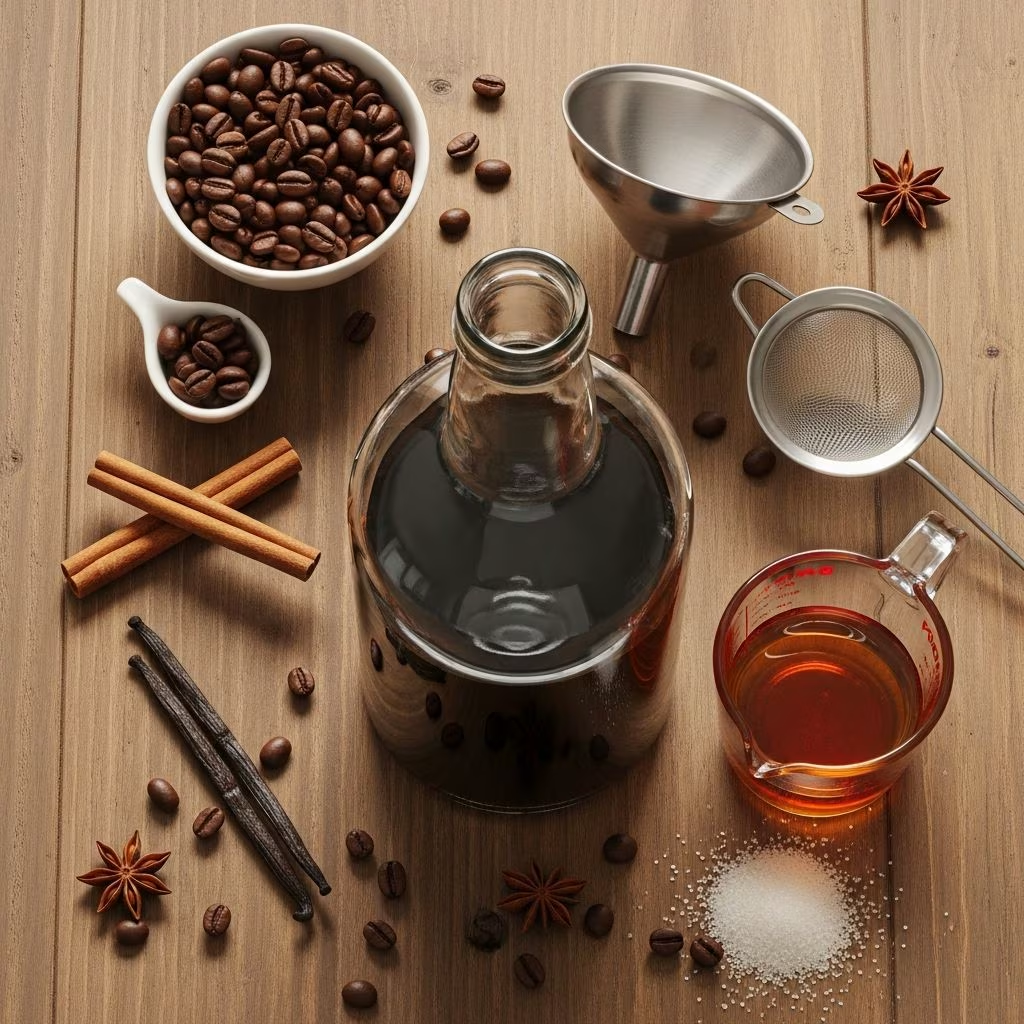
No. You need only basic kitchen items: a saucepan, mixing bowl, strainer or coffee filter, glass jar, and clean bottles. This accessibility makes coffee liqueur production feasible for any home enthusiast.
Troubleshooting Common Issues
If your liqueur develops off-flavors or unusual appearance, possible causes include contaminated ingredients, improper storage, or extended infusion beyond optimal times. Always use clean equipment sterilized with hot water before preparation. Ensure all ingredients are fresh, and store finished liqueur away from temperature fluctuations and direct light exposure.
Crystallization sometimes occurs if sugar concentrations are too high. Gently warming the bottle in warm (not hot) water typically resolves this without compromising flavor.
Comparing Homemade to Commercial Options
Commercial coffee liqueurs cost significantly more per volume than homemade versions while offering less customization potential. Your homemade version provides control over sweetness levels, alcohol content, and flavor intensity. Additionally, you know exactly which ingredients go into your liqueur, eliminating concerns about additives or preservatives found in some commercial products.
References
- Homemade Coffee Liqueur Recipes — Days of Jay, Combine Good Flavors, Smelling Salts Journal, and Vegan in the Freezer. 2024-2025. https://daysofjay.com/homemade-coffee-liqueur/
- Coffee Bean Selection and Spirit Infusion Methods — Combine Good Flavors. 2024. https://combinegoodflavors.com/coffee-liqueur-recipe/