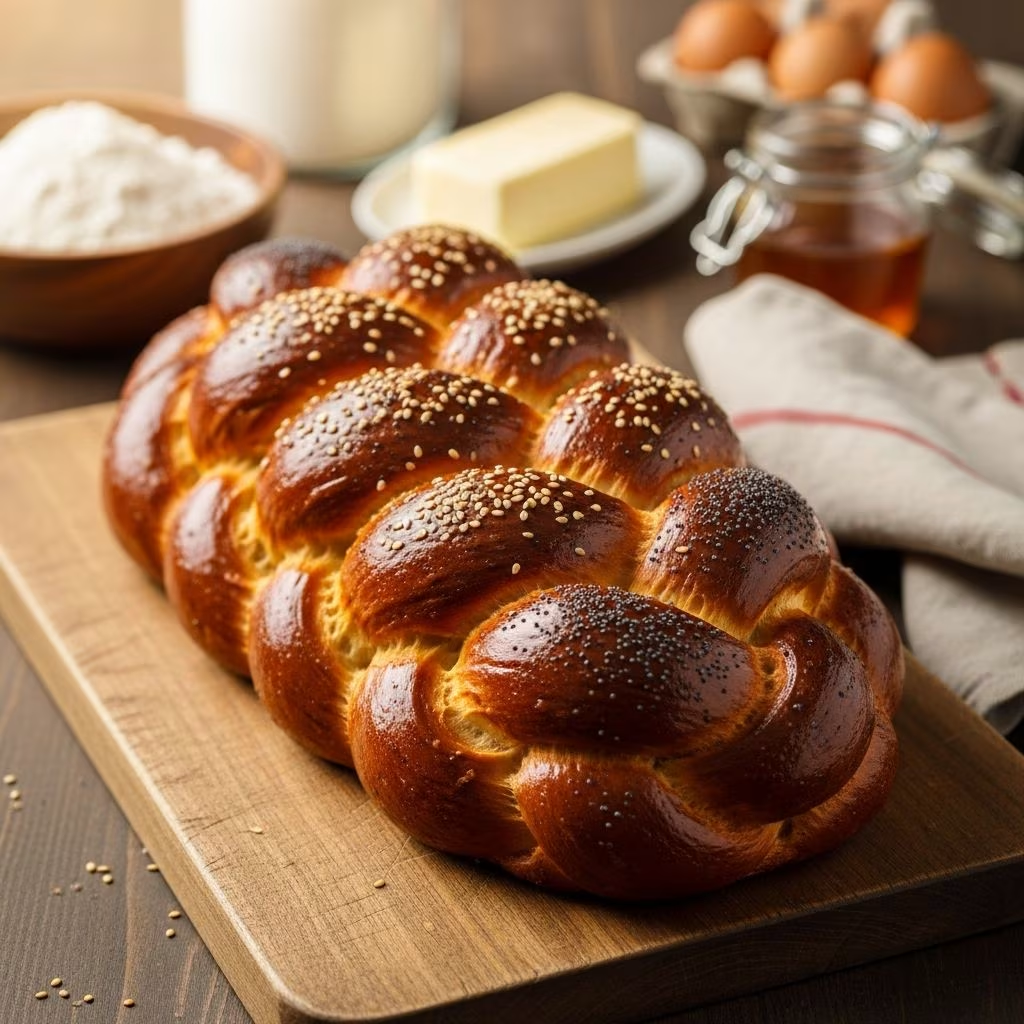
Challah bread stands as a cornerstone of Jewish culinary tradition, prized for its soft, airy crumb and glossy, golden crust. This enriched dough, woven into intricate braids, graces Shabbat tables and holiday feasts, symbolizing abundance and blessing. Baking challah at home allows you to infuse personal touches while honoring centuries-old methods. This guide draws from reliable recipes to equip you with everything needed for success, from dough preparation to creative adaptations.
The Essence of Challah: History and Significance
Challah originates from ancient Jewish practices, where two portions of dough were set aside as an offering, evolving into the single braided loaf we know today. Served during Shabbat and festivals, it represents the manna provided to the Israelites in the desert. Its name derives from the Hebrew word for ‘draw’ or ‘portion,’ reflecting this ritual. Unlike everyday breads, challah incorporates eggs, oil, and sweeteners, yielding a tender, slightly sweet profile akin to brioche but with distinct cultural roots.
Modern bakers appreciate challah’s versatility. Its richness makes it ideal for sandwiches, toast, or desserts, extending its appeal beyond religious contexts. Families often pass down recipes, tweaking them for preferences like added seeds or fruits.
Essential Ingredients for Authentic Challah
High-quality components ensure challah’s signature fluffiness and flavor. Core elements include:
- Flour: All-purpose or bread flour provides structure; 4-5 cups typically suffice for two loaves.
- Yeast: Instant or active dry (about 2¼ teaspoons) activates the rise.
- Liquids: Lukewarm water (1-1¾ cups) hydrates the dough; some recipes mix boiling and cold water for optimal temperature.
- Sweeteners: Honey or sugar (¼-½ cup) adds subtle sweetness and aids browning.
- Fats: Neutral oils like safflower or vegetable (½ cup) keep the crumb soft without butter, adhering to kosher rules.
- Eggs: 2-5 large eggs enrich the dough and contribute to rise; reserve one for egg wash.
- Salt: 1 tablespoon balances flavors.
Optional toppings like sesame or poppy seeds enhance texture and tradition. Measurements vary slightly across recipes, but precision in yeast activation and hydration is key.
Step-by-Step Challah Baking Process
Creating challah involves several stages: sponge formation, mixing, rising, shaping, and baking. Patience yields superior results.
1. Preparing the Yeast Sponge
Begin with a sponge for better flavor development. Whisk 1 cup flour with yeast, then stir in lukewarm water until smooth. Cover and let it puff up for 45 minutes, becoming bubbly. This pre-ferment strengthens gluten and yeast activity.
2. Mixing and Kneading the Dough
Incorporate salt, honey, oil, and eggs into the sponge. Gradually add remaining flour (3 cups initially), stirring to form a shaggy mass. Knead briefly in the bowl, then on a floured surface for 1-2 minutes until smooth and elastic. Avoid over-kneading to prevent toughness.
Alternative methods proof yeast in warm water with sugar first, foaming for 5 minutes before adding other wet ingredients.
3. First Rise
Place dough in an oiled bowl, cover, and let rise in a warm spot until doubled, about 1-2 hours. For overnight flavor, refrigerate after initial rise.
4. Dividing and Braiding
Punch down dough, divide into portions for two loaves. For a classic 6-strand braid:
- Roll each portion into 6 equal ropes.
- Pinch tops together, then braid by crossing strands alternately (e.g., 1 over 2, 3 over 1, etc.).
- Tuck ends under for a neat finish.
Practice simpler 3- or 4-strand versions first.
5. Second Rise and Egg Wash
Cover braids on parchment-lined sheets; rise 45-60 minutes until puffy. Brush with beaten egg (add water for shine) and sprinkle seeds.
6. Baking to Perfection
Preheat oven to 375°F. Bake 30-35 minutes until deep golden and internal temperature hits 190°F. Cool on racks.
Perfecting Your Challah: Troubleshooting Tips
Common issues have straightforward fixes:
| Problem | Cause | Solution |
|---|---|---|
| Dense loaf | Under-kneaded or insufficient rise | Knead until windowpane test passes; ensure warm, draft-free rising spot. |
| Pale crust | Weak egg wash or low oven temp | Apply multiple washes; bake longer if needed. |
| Dry texture | Too much flour | Weigh ingredients; add dough gradually. |
| Uneven braid | Inconsistent rope sizes | Measure precisely; use ruler for uniformity. |
For high-altitude baking, reduce yeast slightly and increase liquid. Vegan versions swap eggs for yogurt or aquafaba.
Creative Variations on Classic Challah
Elevate challah with flavors:
- Sweet: Mix in raisins, chocolate chips, or cinnamon swirl.
- Savory: Stuff with herbs, cheese, or garlic.
- Seasonal: Round shapes for Rosh Hashanah with honey glaze; ladder braids for Shavuot.
- Gluten-Free: Use specialty blends, though texture differs.
Overnight refrigeration enhances taste via slow fermentation.
Beyond the Loaf: Delicious Challah Repurposings
Leftovers shine in second-life dishes:
- French Toast Casserole: Cube and soak in egg-milk mixture overnight; bake with toppings.
- Bread Pudding: Combine with custard, fruits, and spices for dessert.
- Monte Cristo Sandwiches: Fry with ham, cheese, and powdered sugar.
- Croutons: Cube, season, and toast for salads.
Its eggy richness absorbs custards beautifully.
Challah for Every Occasion
From Shabbat dinners to brunches, challah adapts seamlessly. Bake larger 6-pound versions for crowds, stuffing sections differently. Pair with butter, dips, or soups. Its versatility makes it a year-round staple.
Frequently Asked Questions
Can I make challah without a stand mixer?
Yes, hand-kneading works perfectly; just a few minutes suffice.
How long does challah keep?
2-3 days at room temperature in a bag; freeze slices up to 3 months.
Why is my challah sticky?
Dough should be tacky; add flour sparingly to avoid density.
Is bread flour necessary?
All-purpose yields great results; bread flour boosts chew.
Can I use butter instead of oil?
For non-kosher, yes; oil keeps it pareve (neutral).
References
- Holly’s Challah Recipe — Alexandra’s Kitchen. 2014-12-16. https://alexandracooks.com/2014/12/16/hollys-challah/
- Challah Bread Recipe — House of Nash Eats. Accessed 2026. https://houseofnasheats.com/best-challah-bread/
- Our Favorite Challah Recipes — Jewish Food Society. Accessed 2026. https://www.jewishfoodsociety.org/collections/favorite-challah-recipes
- All Things Challah: 14 Recipes — Reform Judaism. Accessed 2026. https://reformjudaism.org/jewish-holidays/shabbat/all-things-challah-14-recipes-sweeten-shabbat
- Challah Week: 8 Ways to Repurpose — Kosher.com. Accessed 2026. https://www.kosher.com/article/ways-to-repurpose-challah-for-sunday-brunch-1998/
- 20 Ways To Stuff a Challah — Jamie Geller. Accessed 2026. https://jamiegeller.com/recipes/20-stuffed-challah-recipes/