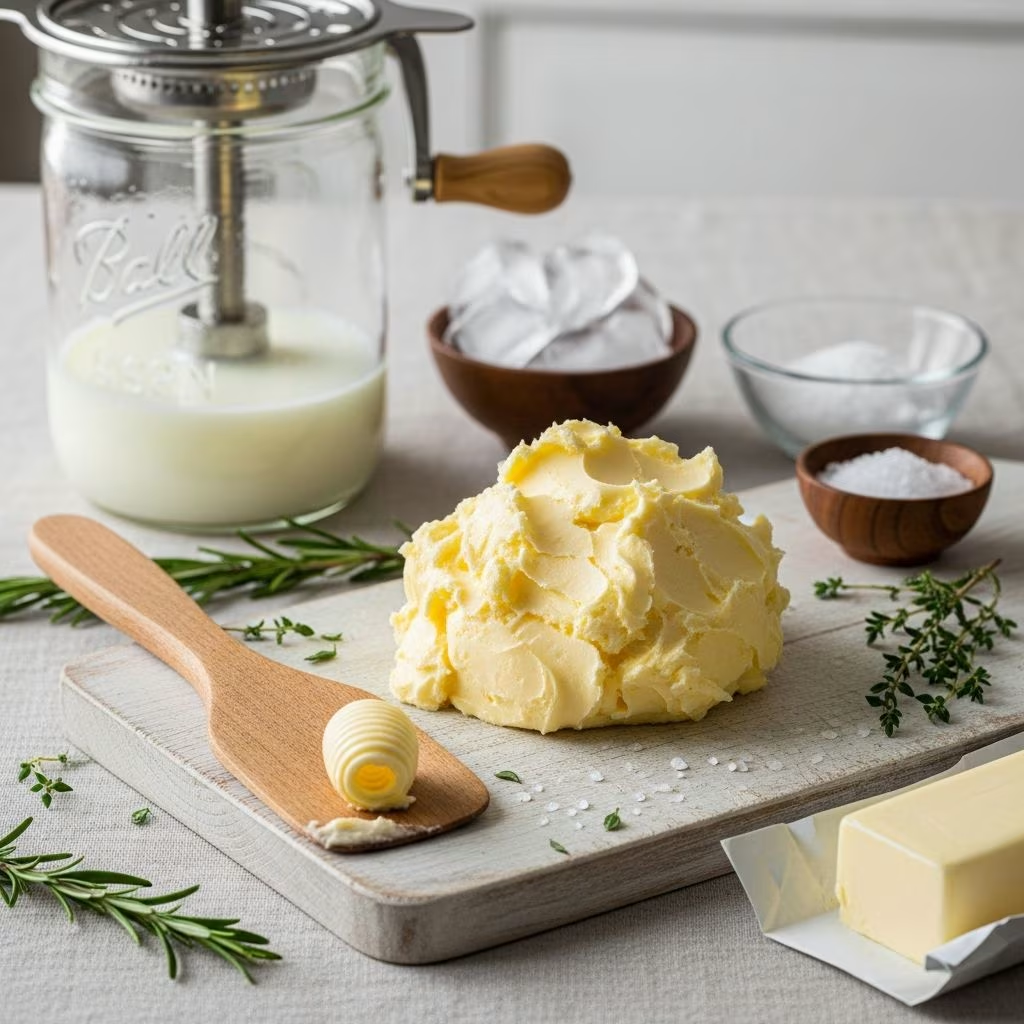
Transforming heavy cream into smooth, flavorful butter is a straightforward process that elevates everyday cooking and baking. With just one primary ingredient and basic equipment, anyone can produce butter that’s fresher and more customizable than store-bought versions. This guide explores multiple techniques, essential steps for purity and longevity, inventive flavor additions, and practical applications for both the butter and the nutritious byproduct, buttermilk.
Why Choose Homemade Butter?
Store-bought butter often contains additives and undergoes processing that diminishes its natural taste. Homemade versions allow control over salt content, enabling unsalted options for baking or salted for spreading. The process also yields buttermilk, a tangy liquid ideal for pancakes or marinades. Nutritionally, fresh butter retains more natural fats and flavors, while being cost-effective—often cheaper per batch when buying cream in bulk.
Butter’s core composition is fat globules from cream that clump together when agitated, separating from the liquid whey. This agitation breaks the fat membranes, a principle used since ancient times but simplified today with modern tools.
Essential Ingredients and Tools
The beauty of homemade butter lies in its minimalism. Key requirements include:
- Heavy cream: Use cold heavy whipping cream with at least 36% fat content for optimal yield. One pint (about 2 cups) produces roughly 8 ounces of butter.
- Ice water: For rinsing to remove residual buttermilk, extending shelf life.
- Salt: Optional, about 1/2 teaspoon per pound for salted butter.
Tools vary by method but commonly include a stand mixer, food processor, handheld mixer, blender, or even a jar for manual shaking. A fine-mesh strainer, bowl, and spatula are also handy for finishing.
Step-by-Step Methods for Making Butter
Several approaches suit different kitchens. Each takes 5-20 minutes of active time, with machine methods being quickest.
Stand Mixer Technique
This reliable method uses the flat beater attachment. Pour 16 ounces of chilled cream into the bowl. Start on medium speed for 1 minute until it thickens, then increase to medium-high. After 4-5 minutes, separation occurs—buttermilk splashes, so cover with a towel. Stop once solids form clearly.
- Strain the mixture, collecting buttermilk.
- Knead butter solids in ice water to expel remaining liquid.
- Pat dry and mix in salt or flavors.
Food Processor Approach
Ideal for small batches. Add cream to the processor with metal blade. Pulse on high until splattering signals separation, about 4 minutes. Scrape sides if needed. The result is slightly creamier due to retained buttermilk.
Handheld Mixer Option
Pour cream into a deep bowl to contain splashes. Beat on medium-high with beaters (not whisk) for 5-7 minutes, progressing from whipped to broken stages. Towel coverage prevents mess.
Blender Method
Blend on high for 6 minutes or until separated. Yields softer butter; rinse thoroughly for firmness.
manual Jar Shaking
Fill a pint jar halfway with cream, seal tightly, and shake vigorously for 15-20 minutes. Fun for groups, but labor-intensive. Butter will be softer.
| Method | Time | Texture | Best For |
|---|---|---|---|
| Stand Mixer | 4-5 min | Firm | Large batches |
| Food Processor | 4 min | Creamy | Quick small batches |
| Handheld Mixer | 5-7 min | Firm | No stand mixer |
| Blender | 6 min | Soft | Minimal tools |
| Jar Shake | 15-20 min | Soft | Activity/fun |
Finishing and Purification Steps
Post-separation, strain solids from buttermilk using a sieve. Rinse under cold water, kneading to wash out buttermilk—this prevents spoilage by reducing water content. Squeeze with clean hands or a cloth until water runs clear. Dry on parchment; the drier, the longer it lasts (up to 2-3 weeks refrigerated).
Yield tip: 1 pint cream makes 1-2 sticks butter plus 1/2 cup buttermilk.
Flavor Enhancements
Plain butter shines, but infusions add excitement:
- Herb butter: Mix in chopped garlic, chives, or rosemary.
- Honey variant: Stir in 1 tablespoon honey for sweet spreads.
- Spicy kick: Add chili flakes or smoked paprika.
- Citrus zest: Lemon or orange for baking.
Incorporate flavors post-rinsing while butter is soft. Chill to set.
Storage and Shelf Life
Shape into logs or blocks, wrap in parchment, and refrigerate for 2-3 weeks. Freeze up to 6 months. Buttermilk keeps 1 week in the fridge. Label with dates for freshness.
Creative Uses for Homemade Butter
In Baking: Yields superior pie crusts, cookies, and cakes due to purity.
Cooking: Sauté vegetables or sear meats for richer taste.
Spreads: Top breads, or compound butters for steaks.
Buttermilk shines in:
- Biscuits and pancakes.
- Brines for juicy chicken.
- Smoothies or dressings.
Troubleshooting Common Issues
- No separation: Ensure cream is cold and high-fat; continue whipping.
- Grainy texture: Over-whipped—rinse well.
- Quick spoilage: Insufficient rinsing; use ice water next time.
- Low yield: Use fresher cream.
Nutritional Insights
Homemade butter is nearly pure fat (80-82%), providing vitamins A, E, and K. Buttermilk adds probiotics if cultured further, though fresh is sweet and low-fat.
Scaling Up for Gifts or Events
Double recipes for parties. Package flavored logs in wax paper with ribbons—perfect edible gifts. Calculate: 1 quart cream yields about 1 pound butter.
Frequently Asked Questions
Can I use light cream?
No, it lacks sufficient fat; stick to heavy cream.
Is homemade buttermilk the same as cultured?
No, it’s sweet and fresh—use as milk substitute, not in recipes calling for tangy buttermilk.
How do I know when it’s done separating?
Look for yellow clumps in cloudy liquid.
Vegetarian or vegan options?
Cream is dairy; for vegan, use coconut cream alternatives, though results vary.
Can I make flavored ghee?
Clarify butter further by heating to remove milk solids, then infuse.
References
- How to Make Homemade Butter — Bigger Bolder Baking. 2023. https://www.biggerbolderbaking.com/homemade-butter/
- Homemade Butter — Happy Foods Tube. 2022-10-15. https://www.happyfoodstube.com/homemade-butter/
- How to make butter at home — just one ingredient required — King Arthur Baking. 2022-04-08. https://www.kingarthurbaking.com/blog/2022/04/08/how-to-make-butter
- Homemade Butter — Justine Snacks. 2023. https://justinesnacks.com/homemade-butter/