Creating homemade amaretto allows you to capture the essence of this iconic Italian liqueur right in your kitchen. With its signature almond-like flavor, subtle sweetness, and versatility in cocktails, amaretto has captivated drinkers for centuries. This comprehensive guide walks you through the process of making it from basic pantry staples, explores its rich history, offers recipe variations, and shares cocktail ideas to showcase your creation.
The Allure and Origins of Amaretto
Amaretto’s story begins in the picturesque town of Saronno, Italy, around 1525. Legend ties it to a local innkeeper who crafted the liqueur as a gift for a visiting artist, using apricot kernels to mimic almond notes due to scarcity. Today, true amaretto relies on these kernels from apricots or almonds, imparting a marzipan depth that’s both sweet and slightly bitter.
Unlike commercial versions loaded with artificial flavors, homemade amaretto lets you control the intensity. Neutral spirits like vodka serve as the base, infused with extracts, fruits, or spices for authenticity. This DIY approach not only saves money but also yields a fresher, more nuanced product perfect for sipping neat or mixing.
Essential Ingredients for Authentic Flavor
To build a robust amaretto, focus on high-quality components that balance sweetness, nuttiness, and alcohol. Here’s a breakdown:
- Base Spirits: Vodka provides neutrality, while brandy adds warmth and fruitiness. A 1:1.5 vodka-to-brandy ratio works well.
- Nutty Elements: Almond extract delivers instant marzipan taste; for complexity, use apricot kernels or mahlab (ground cherry pits) for a bitter almond edge.
- Sweeteners: Brown sugar creates caramel depth, paired with white sugar for clarity. Simple syrup ensures smooth integration.
- Aromatics: Vanilla beans or extract enhance creaminess; optional fruits like apricots infuse natural sweetness.
These ingredients steep together, melding flavors over days or weeks. Start with small batches to experiment.
Step-by-Step Recipe for Classic Homemade Amaretto
This straightforward method yields about 2 cups of liqueur, ready in 2-3 weeks. It’s forgiving for beginners yet sophisticated enough for pros.
Ingredients (Makes ~2 Cups)
| Ingredient | Quantity |
|---|---|
| Vodka | ½ cup |
| Brandy | ¾ cup |
| Brown sugar (packed) | ¾ cup |
| Granulated sugar | ½ cup |
| Water | 1 cup |
| Almond extract | 1-2 tablespoons (adjust for intensity) |
| Vanilla extract | 2 teaspoons |
| Optional: 6 chopped apricots or 1 tsp toasted mahlab | For infusion |
Instructions
Prepare the Syrup: In a saucepan, combine sugars and water. Bring to a boil over medium heat, stirring until fully dissolved (about 5 minutes). Cool completely to room temperature.
Infuse the Spirits (Optional for Depth): Toast mahlab at 350°F for 10 minutes if using. Steep in vodka for 1-2 weeks in a sealed jar, shaking daily. Chop apricots and vanilla pod, infuse in brandy for 8 hours or overnight, then strain.
Combine: Mix cooled syrup with infused (or plain) vodka/brandy, almond extract, and vanilla. Stir thoroughly. Bottle in a glass container.
Age: Store in a cool, dark place for 1-2 weeks. Shake periodically. Taste and adjust sweetness or nuttiness if needed.
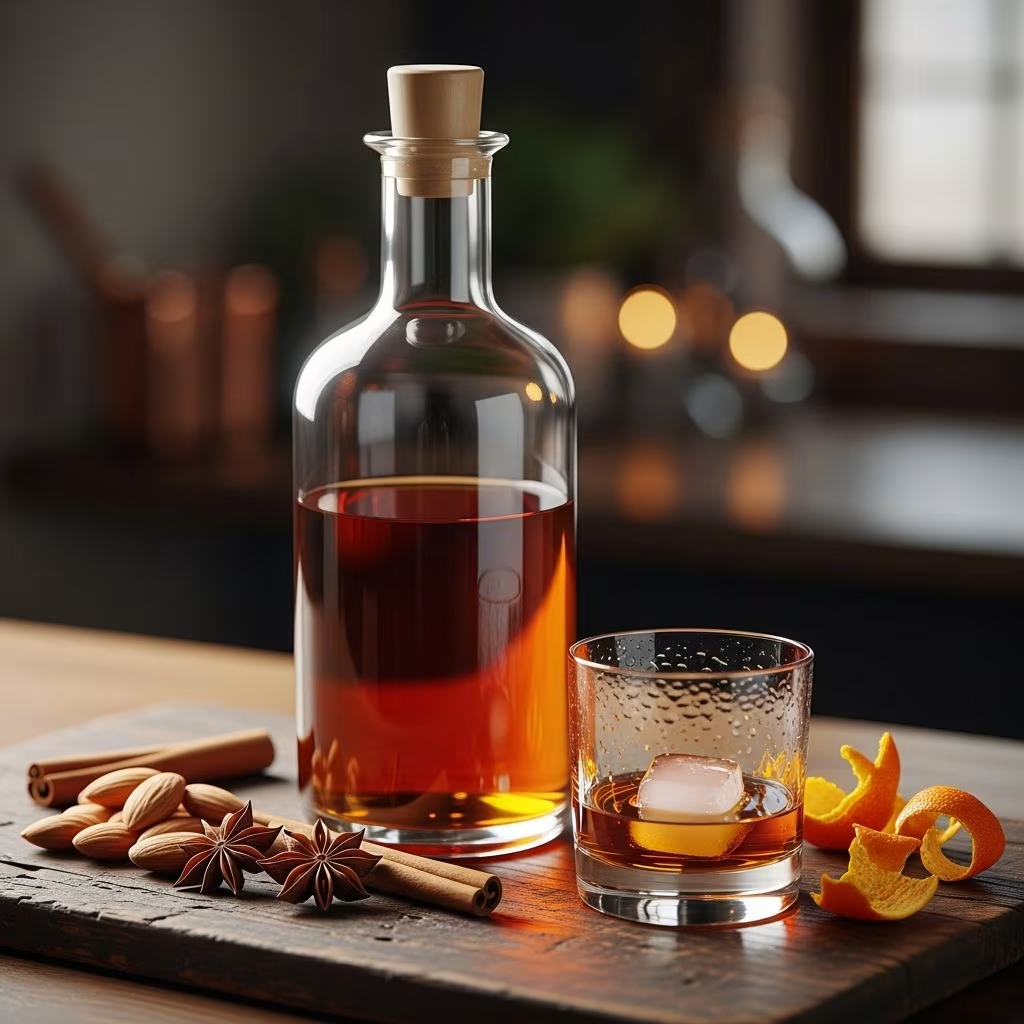
The result is a golden, velvety liqueur with 20-25% ABV, ideal for immediate use or longer aging up to months for smoother profile.
Variations to Customize Your Amaretto
Experiment to match your palate:
- Quick Version: Skip infusions; use extracts only for same-day results.
- Fruity Twist: Add dried apricots or cherries during brandy steep for stone fruit notes.
- Spiced Profile: Incorporate cinnamon sticks or orange peel for holiday warmth.
- Low-Sugar Option: Reduce sugars by half, relying on fruit for natural sweetness.
- Vegan Adaptation: All base recipes are naturally vegan; avoid honey alternatives.
One user doubled almond extract accidentally and loved the bold result, proving flexibility.
Signature Cocktails Featuring Homemade Amaretto
Homemade amaretto shines in classics and twists. Here are five must-tries:
1. Amaretto Sour
A frothy favorite: 1½ oz amaretto, ¾ oz bourbon, 1 oz lemon juice, 1 tsp simple syrup, ½ oz egg white. Shake dry, then with ice; strain over rocks. Bourbon adds backbone.
2. Amaretto Old Fashioned
Elevate with cherry-almond ice: Muddle sugar cube with bitters, add 1 oz bourbon, ½ oz amaretto, and special ice cubes (cherries infused with almond extract water).
3. Godfather
Simple duo: 1½ oz scotch, ½ oz amaretto over ice. Nutty smoke perfection.
4. French Connection
1½ oz cognac, ¾ oz amaretto. Stirred, sophisticated sipper.
5. Mai Tai Variation
Float amaretto atop rum, lime, orgeat, and orange curacao for tiki flair.
These drinks highlight amaretto’s sweet-bitter balance, transforming your homemade batch into bar stars.
Storage, Shelf Life, and Troubleshooting
Store in airtight glass bottles away from light; it lasts 6-12 months unrefrigerated, longer chilled. Cloudiness from infusions clears with time. If too sweet, dilute with neutral spirit; too bitter, add syrup.
Common issues:
- Weak Flavor: Increase extract or extend infusion.
- Overly Harsh: Age longer or use higher-proof vodka.
- Separation: Normal; shake before use.
Beyond Cocktails: Cooking with Homemade Amaretto
Versatility extends to the kitchen. Drizzle over vanilla ice cream, stir into coffee, or bake into almond cakes. Reduce with cream for a sauce on poached pears. In desserts, it pairs with chocolate or stone fruits, amplifying nutty profiles.
Frequently Asked Questions (FAQs)
What alcohol is best for homemade amaretto?
Vodka for neutrality, brandy for fruitiness. Avoid flavored spirits.
Can I make it without alcohol?
Yes, use syrup and extracts for a non-alcoholic version, but flavor differs.
How long does homemade amaretto last?
Up to a year if stored properly.
Is mahlab necessary?
No, but it adds authentic bitter almond from cherry pits.
Can I use Everclear?
Yes, for higher proof, but dilute to taste.
Perfecting Your Batch: Pro Tips
– Use room-temperature ingredients for even mixing.
– Glass jars prevent plastic leaching.
– Taste weekly during aging.
– Scale up for gifting in decorative bottles.
Mastering homemade amaretto opens a world of mixology creativity. With minimal equipment—a saucepan, jars, strainer—you’ll produce a superior liqueur rivaling store-bought. Whether muddling into sours or savoring solo, this craft embodies Italian tradition in every sip.
References
- Homemade Amaretto – The Wee Pearl — The Wee Pearl. Accessed 2026. https://www.theweepearl.com/recipes/homemade-amaretto
- Homemade Amaretto – Simple Joy — Simple Joy. Accessed 2026. https://www.simplejoy.com/amaretto/
- Amaretto Old Fashioned with Almond-Cherry Ice — Slumber and Scones. Accessed 2026. https://www.slumberandscones.com/amaretto-old-fashioned-with-almond-cherry-ice/
- I Make the Best Amaretto Sour in The World — Jeffrey Morgenthaler. Accessed 2026. https://jeffreymorgenthaler.com/i-make-the-best-amaretto-sour-in-the-world/
- 20 best Amaretto cocktails — Difford’s Guide. Accessed 2026. https://www.diffordsguide.com/encyclopedia/1228/cocktails/20-best-amaretto-cocktails
- Elements: Amaretto — Imbibe Magazine. Accessed 2026. https://imbibemagazine.com/elements-amaretto/