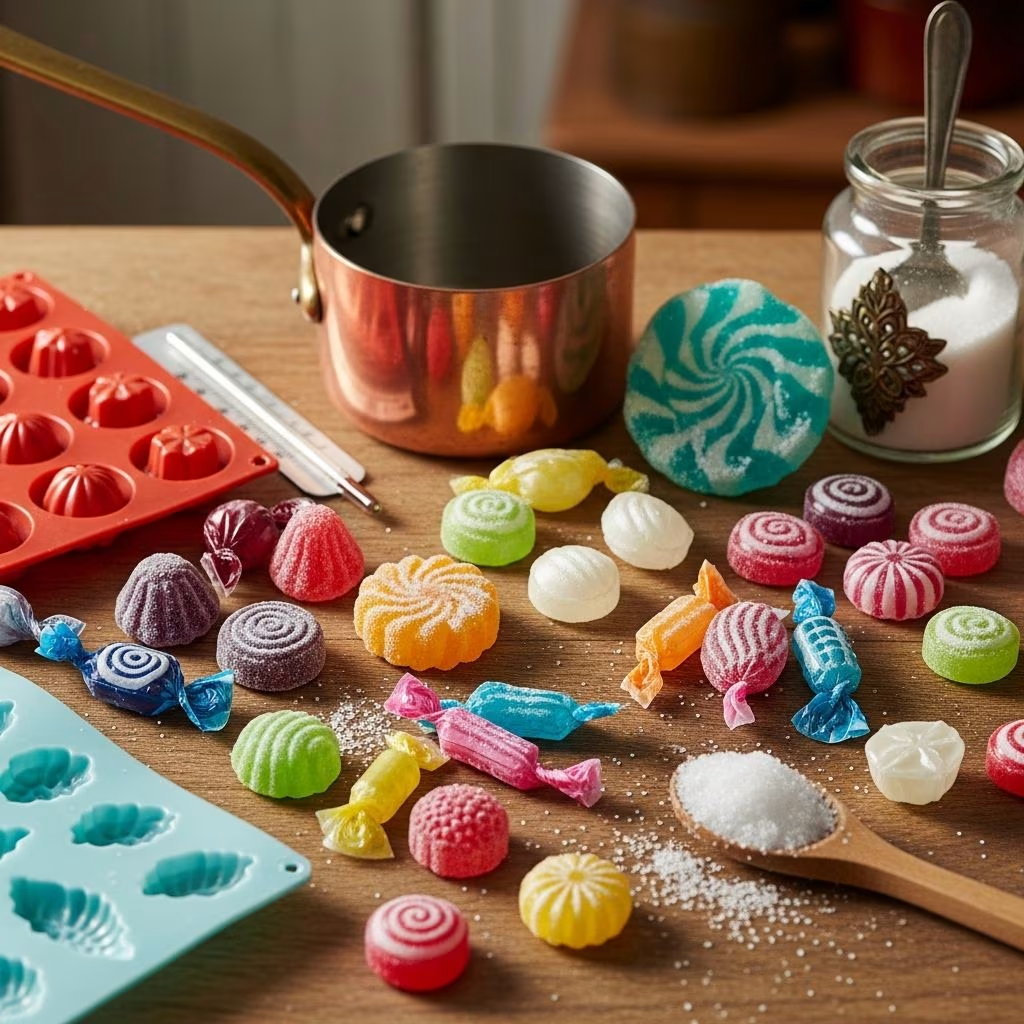
Creating **hard candy** at home transforms simple ingredients like sugar, corn syrup, and water into glossy, shatteringly crisp treats that rival store-bought versions. This guide draws from time-tested recipes to provide everything you need: from basic recipes to advanced techniques, flavor variations, and safety tips for perfect results every time.
Why Make Hard Candy at Home?
Homemade hard candy offers unmatched freshness, customization, and cost savings. You control the flavors—from classic peppermint to exotic fruit blends—and avoid preservatives found in commercial products. It’s ideal for holiday gifting, party favors, or stocking a candy dish with vibrant, jewel-like pieces that impress guests.
The process involves cooking sugar to the ‘hard crack’ stage, around 300-310°F, where it solidifies into a glassy texture upon cooling. With practice, you’ll produce batches that sparkle and snap satisfyingly.
Essential Ingredients for Success
The core formula is straightforward, but quality matters. Here’s what you’ll need:
- Granulated Sugar: Provides the structure and sweetness; use pure cane sugar for best clarity.
- Light Corn Syrup: Prevents crystallization for a smooth, transparent finish. Brands like Karo are staples.
- Water: Dissolves the sugar initially; distilled water minimizes impurities.
- Flavoring Oils: Super-concentrated oils (e.g., LorAnn brand) withstand high heat better than extracts.
- Food Coloring: Liquid or gel types for vivid hues without altering texture.
- Confectioners’ Sugar: For dusting to prevent sticking during cooling and breaking.
Variations in ratios affect yield and hardness. A standard batch uses about 2 cups sugar, 2/3-3/4 cup corn syrup, and 3/4-1 cup water, yielding 1-2 pounds of candy.
| Recipe Variation | Sugar | Corn Syrup | Water | Yield |
|---|---|---|---|---|
| Basic | 2 cups | 2/3 cup | 3/4 cup | 1 lb |
| Large Batch | 3 3/4 cups | 1 1/2 cups | 1 cup | 2 lbs |
| Small Test | 1 cup | 1/4 cup | 1/2 cup | 1/2 lb |
Tools You’ll Need
Invest in reliable equipment to ensure safety and precision:
- Candy Thermometer: Clip-on style for accurate readings; digital models offer alerts.
- Heavy-Bottomed Saucepan: Deep sides prevent boil-overs; 2-3 quart size for standard batches.
- Baking Sheets: Lined with parchment or foil for pouring hot candy.
- Heatproof Spatula or Scraper: Silicone withstands high heat.
- Storage Bags or Molds: Optional for lollipops or wrapped candies.
Prepare a ‘powdered sugar bed’ on sheets by sprinkling generously to catch drips and ease breaking.
Step-by-Step Recipe for Classic Hard Candy
This foolproof method produces about 1 pound of candy. Scale up as needed.
Ingredients (for 1 lb batch)
- 2 cups granulated sugar
- 2/3 cup light corn syrup
- 3/4 cup water
- 1 tsp (1 dram) flavoring oil (e.g., peppermint, cinnamon)
- Gel food coloring (3-5 drops)
- 1-2 cups confectioners’ sugar
Instructions
- Prep Workspace: Line a rimmed baking sheet with parchment. Dust heavily with confectioners’ sugar, creating an even layer. Set aside. Have flavoring and coloring measured.
- Combine Base: In a heavy saucepan, mix sugar, corn syrup, and water. Stir over medium heat until sugar dissolves completely (about 5 minutes). Stop stirring once boiling begins.
- Cook to Hard Crack: Attach thermometer to pan side (not touching bottom). Boil undisturbed until 300-310°F (15-25 minutes). Test by dropping a bit in cold water; it should form hard, brittle threads.
- Add Flavor: Remove from heat. Let bubbling subside (1 minute). Stir in flavoring and coloring quickly but gently.
- Pour and Cool: Pour onto prepared sheet. Let cool until warm (10-15 minutes), not hot. Score with a pizza cutter or knife for even breaks.
- Break and Dust: Once fully hardened (30-45 minutes), break into pieces. Toss in more confectioners’ sugar to coat. Store airtight.
**Pro Tip:** Work in a cool kitchen; humidity can cause stickiness. Total time: 45-60 minutes active, plus cooling.
Flavor and Color Combinations
Experiment boldly! Oils allow intense taste without dilution.
- Winter Classics: Peppermint (red/green), cinnamon (red).
- Fruity: Cherry (red), lemon (yellow), orange (orange).
- Exotic: Root beer (brown), coffee (gel black), lavender (purple).
- Mixed Batch: Pour stripes of different flavors side-by-side for swirled effects.
Use 1/2-1 tsp oil per batch; start low to avoid overpowering. Gel colors yield brighter results than liquid.
| Flavor | Color Pairing | Notes |
|---|---|---|
| Peppermint | Red or Green | Refreshing, holiday favorite |
| Cinnamon | Red | Spicy warmth; use less oil |
| Lemon | Yellow | Tart and bright |
| Root Beer | Brown | Nostalgic soda taste |
Safety First: Handling Hot Sugar
Sugar at 300°F causes severe burns. Key precautions:
- Wear oven mitts and long sleeves.
- Keep a bowl of ice water nearby for spills.
- Never leave boiling sugar unattended.
- Use a wooden spoon for stirring post-heat to avoid shattering glass.
- Supervise children; involve them only in coating/breaking.
If crystallization occurs (gritty texture), add a pinch of cream of tartar next time or ensure no stirring after boiling.
Advanced Techniques and Variations
Lollipops
Pour small circles onto oiled parchment, insert sticks immediately. Dust lightly.
Layered Candy
Pour thin layers of different colors/flavors sequentially, allowing partial cooling between pours.
Filled Hard Candy
Once scored but soft, pipe jam or chocolate into cuts before full hardening.
**Storage:** Airtight containers in cool, dry place last 2-4 weeks. Freeze for months.
Troubleshooting Common Issues
| Problem | Cause | Solution |
|---|---|---|
| Sticky Candy | Humidity or undercooking | Cook to 310°F; extra powdered sugar coat |
| Cloudy/Grainy | Crystallization | No stirring post-dissolve; fresh corn syrup |
| Too Soft | Low temp | Recook small pieces or verify thermometer |
| Burnt Taste | Overcook | Remove at exact temp; clean pot immediately |
Scaling Up for Gifts and Events
Double batches easily, but cook in shifts to maintain control. Package in cellophane bags with ribbons. Yield calculator: 1 cup sugar ≈ 1/2 lb candy. Perfect for 50-100 pieces per batch.
Nutritional Notes
Hard candy is pure indulgence: ~100 calories per ounce, all from sugar. Enjoy sparingly; not suitable for diabetics without sugar substitutes (experimental).
Frequently Asked Questions (FAQs)
Can I use extracts instead of oils?
Extracts lose potency in heat; oils are essential for bold flavor.
What’s the hard crack stage?
300-310°F; syrup forms rigid threads in cold water.
How do I clean the pot?
Fill with hot water, boil, scrape residue while warm.
Vegan-friendly?
Yes, with confirmed vegan corn syrup.
Make sugar-free?
Possible with isomalt, but technique differs—research separately.
References
- Aunt Maggie’s Hard Tack Candy Recipe — Inspired By Charm. 2023-12-01. https://inspiredbycharm.com/hard-tack-candy/
- Easy Homemade Hard Candy Recipe — It’s Always Autumn. 2022-11-15. https://www.itsalwaysautumn.com/easy-homemade-hard-candy-recipe.html
- Hard Candy and Lollipop Recipe — LorAnn Oils. 2024-01-10. https://www.lorannoils.com/products/recipe/candy/hard-candy-and-lollipops
- Old Fashioned Hard Candy — My Country Table. 2023-05-20. https://mycountrytable.com/old-fashioned-hard-candy/
- Easy Homemade Hard Candy — Persnickety Plates. 2023-08-12. https://www.persnicketyplates.com/homemade-hard-candy/