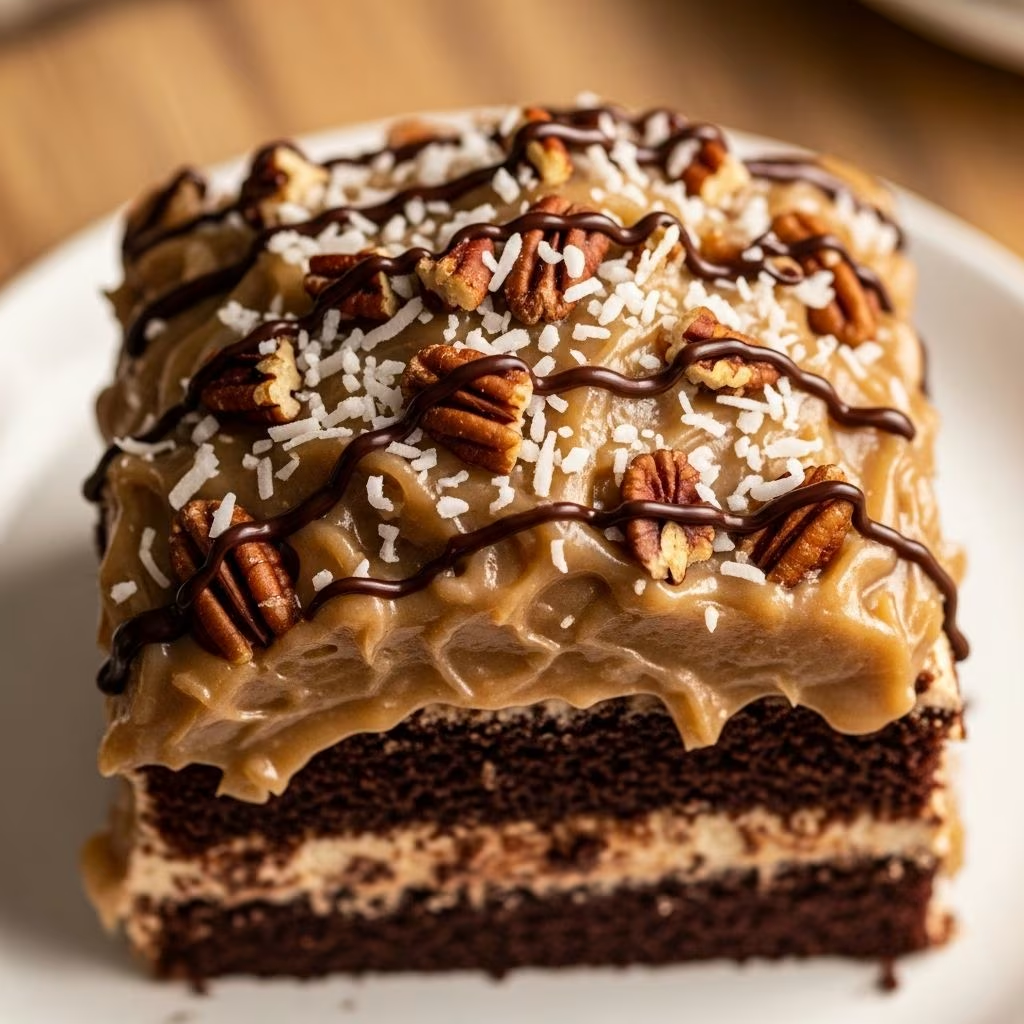
German chocolate cake has become an iconic American dessert, beloved for its layers of moist chocolate cake paired with a distinctive coconut-pecan frosting that sets it apart from other chocolate cakes. The frosting itself is the star of this classic dessert—a rich, caramel-colored topping that balances sweetness with nutty and tropical flavors. Understanding how to create this frosting properly requires knowledge of ingredients, technique, and timing.
Understanding the History and Components of This Classic Frosting
Contrary to its name, German chocolate cake was not created in Germany but rather in Dallas, Texas. The cake takes its name from German’s Sweet Chocolate, a specific variety of chocolate created by Sam German in 1852. This chocolate blend became the foundation for the cake, while the frosting recipe itself emerged from a recipe published in the Dallas Morning Star newspaper in 1957. The frosting became synonymous with the dessert, combining the rich heritage of American baking with unique flavor combinations that weren’t traditionally paired together.
The frosting differs fundamentally from traditional buttercream or fondant frostings. Rather than simply mixing butter with powdered sugar, this frosting incorporates evaporated milk, eggs, butter, sugar, coconut, and pecans that are cooked together to create a thick, spreadable topping. This cooking process transforms the ingredients into something closer to a custard-based frosting that cools to the perfect consistency for spreading on cake layers.
Essential Ingredients and Their Roles
Creating authentic German chocolate cake frosting requires understanding each ingredient’s contribution to the final product:
- Evaporated Milk: This concentrated milk product provides a creamy base and helps achieve the proper texture. Using evaporated milk rather than regular milk creates a richer, more condensed result that holds up better during spreading and storage.
- Granulated Sugar: The sweetener that balances the richness of the butter and provides structure to the frosting as it cools. Most recipes call for 1.5 to 2 cups of sugar per batch.
- Unsalted Butter: Adds richness and helps create the smooth, spreadable consistency. Using 0.75 to 1 cup of butter is standard, though some recipes vary slightly.
- Egg Yolks: These emulsify the mixture and create a smooth, custard-like texture. Typically, 4 to 6 egg yolks are used, providing both structure and richness without the toughness that whole eggs might introduce.
- Vanilla Extract: Enhances flavor complexity and adds depth to the overall taste profile. Between 1 to 2 teaspoons creates the proper flavoring without overpowering other ingredients.
- Sweetened Shredded Coconut: Provides texture and tropical flavor. Most recipes use between 2.5 to 4 cups of coconut, though some prefer toasting it first for deeper flavor.
- Chopped Pecans: Adds nutty flavor and textural contrast. Approximately 1.5 to 2.5 cups of finely chopped or toasted pecans creates the ideal distribution throughout the frosting.
- Salt: A small amount—typically 0.25 to 1 teaspoon—balances sweetness and enhances all flavors.
Step-by-Step Frosting Preparation Method
Proper technique is essential when preparing this frosting, as the cooking process cannot be rushed:
Combining the Wet Ingredients
Begin by gathering all ingredients in a medium saucepan. Add the evaporated milk, granulated sugar, butter, egg yolks, vanilla extract, and salt to the pan. Whisk these components together until they are well combined, ensuring that no clumps of egg yolk remain. This initial mixing is crucial for achieving a smooth, uniform frosting.
Cooking Process
Place the saucepan over medium heat and stir occasionally as the mixture begins to warm. As the butter melts, continue stirring to prevent sticking and ensure even heat distribution. The mixture will gradually transform from pale yellow to a deeper golden color. Cook for approximately 12 minutes, stirring constantly once the mixture begins to thicken. The goal is to reach a point where the frosting has thickened noticeably but still pours easily from a spoon.
The cooking process serves multiple purposes: it dissolves the sugar completely, cooks the eggs safely to temperature, and creates a custard-like consistency that allows the frosting to set properly as it cools. The mixture should reach a consistency where it coats the back of a spoon and leaves a clear trail when you run your finger across it.
Adding Texture Components
Remove the saucepan from heat once the mixture has reached proper thickness and golden color. Place the coconut and pecans into a large mixing bowl. Pour the hot cooked mixture over the coconut and pecans, then stir thoroughly to distribute the ingredients evenly. This step should be done while the frosting is still warm, as this helps the coconut and pecans absorb some of the moisture and flavor from the cooked base.
Cooling and Setting
Allow the frosting to cool to room temperature before applying it to the cake. This cooling period is essential—applying hot frosting to cake layers will melt the crumb structure and create a soggy mess. As the frosting cools, it will gradually thicken to the ideal spreading consistency. The texture should be thick enough to hold together but still spreadable with a spatula or knife.
Ingredient Variations and Quality Considerations
| Ingredient | Standard Amount | Variations | Impact on Frosting |
|---|---|---|---|
| Evaporated Milk | 12-16 oz (1.5-2 cups) | Can use 1.5 cups heavy cream for richer version | Affects moisture and richness level |
| Pecans | 1.5-2.5 cups chopped | Can toast first; adjust amount to preference | Toasting enhances nutty flavor |
| Coconut | 2.5-4 cups shredded | Toasting creates deeper flavor; unsweetened option available | More coconut = stronger tropical flavor |
| Butter | 0.75-1 cup | Use unsalted for better control of salt | More butter = richer, creamier frosting |
Selecting quality ingredients significantly impacts the final frosting. Choose fresh pecans that haven’t developed an off flavor from oxidation. Sweetened shredded coconut is traditional, though some bakers prefer toasting it first to develop deeper caramel notes. Using unsalted butter allows better control over the final salt level, ensuring proper flavor balance.
Troubleshooting Common Frosting Issues
Frosting Too Thin
If the frosting remains too loose after cooling, it may not have been cooked long enough. The mixture should have reached a noticeably thickened state before removing from heat. If this occurs, return the frosting to medium heat and cook for an additional 3-5 minutes while stirring constantly, then cool again.
Frosting Too Thick
Over-cooking can create frosting that’s too stiff to spread. If this happens, stir in small amounts of warm evaporated milk, one tablespoon at a time, until reaching the desired consistency. This allows you to salvage the frosting without starting over.
Grainy Texture
Graininess typically results from sugar that hasn’t dissolved completely. Ensure thorough stirring during the cooking process. If the sugar crystallizes, gently reheat the frosting while stirring to redissolve the crystals.
Separated or Curdled Appearance
This can occur if the frosting was cooked at too high a temperature or if the eggs were added while the other ingredients were too hot. Using medium heat and ensuring all ingredients are well combined before cooking helps prevent this issue.
Timing and Storage Guidelines
German chocolate cake frosting can be prepared in advance, which makes it convenient for busy bakers. The frosting can be stored in an airtight container in the refrigerator for up to one week. Before using refrigerated frosting, allow it to come to room temperature, then stir well to restore its spreading consistency. If the frosting becomes too firm, gently warm it by stirring over low heat or placing the container in warm water.
For optimal results, prepare the frosting no more than a few hours before assembling the cake. Spread it on cooled cake layers while the frosting is still at room temperature for easiest application.
Application Techniques for Perfect Results
Applying frosting properly ensures an attractive finished cake. Start by placing the first cake layer on your serving plate or cake board. Use an offset spatula or butter knife to spread an even layer of frosting across the top of the first layer, working from the center outward. Repeat this process for each additional layer. For the top and sides of the cake, spread the remaining frosting in generous portions, allowing some to cascade over the edges for a rustic, homemade appearance.
The frosting should be thick enough that it doesn’t slide off the layers but spreadable enough to work with easily. If the frosting becomes too firm while you’re working, let it sit at room temperature for a few minutes to soften slightly.
Frequently Asked Questions
Can I use pasteurized eggs instead of raw eggs in the frosting?
Yes, pasteurized eggs are an excellent choice for food safety. They can be used in the same proportions as regular eggs. Some bakers also use pasteurized egg yolks specifically, which are available in some grocery stores.
What’s the difference between German’s Sweet Chocolate and regular chocolate?
German’s Sweet Chocolate contains approximately 48% cacao, making it sweeter and milder than semi-sweet chocolate. This sweetness influences the overall flavor profile of the cake and frosting pairing.
Can I make this frosting without coconut or pecans?
While traditional frosting includes both, some variations omit one or both ingredients. Omitting either will create a different flavor profile but the frosting can still be prepared following the same cooking technique. Some bakers substitute other nuts like walnuts or add different mix-ins.
How long does this frosting keep after the cake is assembled?
A frosted cake can be stored at room temperature for one day or refrigerated for up to three days covered. Protect it from absorbing odors and moisture in the refrigerator by covering it with a cake dome or large bowl.
Can I double the frosting recipe?
Yes, the recipe doubles easily. Simply multiply all ingredients by two and extend the cooking time by a few minutes, stirring frequently to ensure even cooking throughout the larger batch.
Comparison with Other Frosting Styles
German chocolate cake frosting stands apart from other frosting varieties in several important ways. Unlike traditional American buttercream, which consists primarily of butter and powdered sugar, this frosting incorporates eggs and milk to create a custard-like texture. This makes it richer and more complex in flavor. The inclusion of coconut and pecans creates texture variation that buttercream lacks. Additionally, because this frosting is cooked rather than simply mixed, it has different stability characteristics and shelf-life considerations than uncooked frostings.
Professional Baking Tips
Professional bakers often toast coconut and pecans before adding them to enhance their flavors. This extra step develops deeper, more complex notes that elevate the final product. To toast coconut, spread it on a baking sheet and bake at 325°F for 5-10 minutes, stirring occasionally until golden. Toast pecans similarly until fragrant, then chop as needed.
Another professional technique involves chilling the frosting briefly before application. A frosting that’s perfectly cool spreads more smoothly and creates cleaner lines than frosting that’s slightly warm.
Conclusion: Mastering This Essential Dessert Component
German chocolate cake frosting represents a unique approach to cake decoration that transforms simple ingredients into something extraordinary through proper technique and timing. By understanding each ingredient’s role, following proper cooking procedures, and applying troubleshooting knowledge when needed, any baker can create this classic frosting successfully. The result—a frosting that’s rich, nutty, coconut-filled, and perfectly balanced—makes any German chocolate cake a memorable dessert worth the effort.
References
- Original Recipe for German Chocolate Cake — Just A Pinch Recipes. Accessed April 2026. https://www.justapinch.com/recipes/dessert/cake/original-recipe-for-german-chocolate-cake.html
- Traditional German Chocolate Cake — Salt & Baker. Accessed April 2026. https://saltandbaker.com/german-chocolate-cake-recipe/
- Authentic German’s Chocolate Cake — My Country Table. Accessed April 2026. https://mycountrytable.com/authentic-germans-chocolate-cake/
- Classic German Chocolate Cake Recipe — Sprinkle Bakes. February 2024. https://www.sprinklebakes.com/2024/02/classic-german-chocolate-cake-recipe.html
- Baker’s Original German Sweet Chocolate Cake Recipe — Food.com. Accessed April 2026. https://www.food.com/recipe/bakers-original-german-sweet-chocolate-cake-170846
- Grandma’s German Chocolate Cake — With the Woodruffs. Accessed April 2026. https://withthewoodruffs.com/grandmas-german-chocolate-cake/