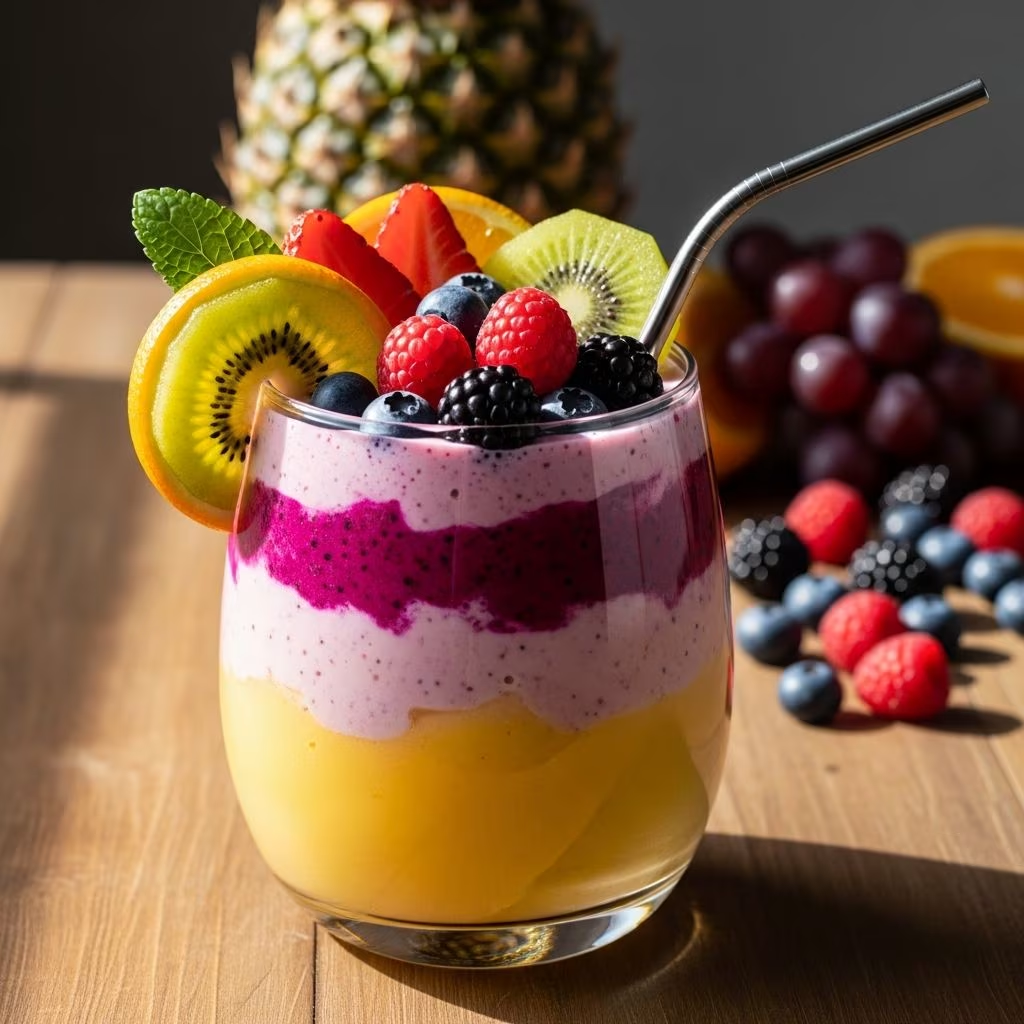
Fruit smoothies offer a quick way to pack nutrients into your day using everyday ingredients like frozen fruits, yogurt, and a splash of liquid. These blended drinks are versatile for breakfast, snacks, or post-workout refreshment, delivering vitamins, fiber, and natural sweetness without added sugars.
Why Fruit Smoothies Are a Smart Choice
Smoothies combine whole fruits for sustained energy and better digestion compared to juices, as they retain fiber that slows sugar absorption. A basic recipe typically includes frozen fruit for creaminess, a creamy base like yogurt for protein, and liquid for blending ease. This setup yields a thick, satisfying texture in under five minutes.
Health authorities highlight smoothies’ role in increasing fruit intake. For instance, blending frozen produce preserves antioxidants while eliminating the need for ice, which can dilute flavor. Customize with greens or nuts for balanced macros, making them suitable for all ages and dietary needs.
Essential Ingredients for Success
Start with high-quality basics to build flavorful smoothies. Focus on frozen fruits as the star—they provide chill and body without watering down the mix.
- Frozen Fruits: Berries, mangoes, peaches, or mixed bags work best. One cup delivers intense flavor and natural thickness.
- Creamy Base: Yogurt (plain or Greek) adds protein and tang; ½ cup per serving is ideal. Alternatives include milk, plant-based options like soy or almond.
- Liquid: Water, milk, or juice (½ cup) helps blades move. Start low to control consistency.
- Boosters: Banana for creaminess, spinach for nutrients, or a touch of honey if needed.
| Ingredient Type | Examples | Amount (1 Serving) | Benefits |
|---|---|---|---|
| Frozen Fruit | Berries, pineapple, mango | 1-2 cups | Texture, vitamins A/C |
| Yogurt/Milk | Greek yogurt, soy milk | ½ cup | Protein, probiotics |
| Liquid | Water, juice | ½ cup | Blendability |
| Add-ins | Banana, spinach | 1 small or ½ cup | Fiber, extra nutrients |
Blending Techniques for Perfect Results
Order matters for smooth results without chunks. Add liquids first, then soft items like yogurt or fresh fruit, followed by frozen pieces last. This prevents blade strain and ensures even mixing.
- Pour ½ cup liquid into the blender.
- Add yogurt and fresh fruits or boosters.
- Top with 1-2 cups frozen fruit.
- Blend on high for 30-60 seconds, using a tamper if available.
- Adjust with more liquid for thinner consistency.
For personal blenders, reverse the order: frozen first for quick spins. High-speed models like Vitamix handle tough fibers effortlessly.
Classic Recipes to Get Started
Berry Blast Smoothie
This vibrant mix uses mixed frozen berries for antioxidant power. Serves 1.
- 1 cup frozen mixed berries
- ½ cup Greek yogurt
- ½ cup water or milk
- 1 banana (optional for sweetness)
Blend as directed. Enjoy chilled for a 200-calorie breakfast packed with vitamin C.
Tropical Pineapple Delight
Pineapple and banana evoke vacation vibes with natural enzymes aiding digestion.
- 1 cup frozen pineapple chunks
- 1 small banana
- ½ cup soy milk
- ¼ cup yogurt
Blend until creamy. About 250 calories, rich in manganese for bone health.
Watermelon Strawberry Refresher
Juicy and light, perfect for summer. Use frozen strawberries to balance watermelon’s hydration.
- 1 cup frozen strawberries
- 1 cup fresh watermelon (cubed)
- ½ cup yogurt
- ¼ cup water
Blend for a hydrating, low-calorie sip under 150 calories.
Creative Variations and Flavor Twists
Experiment beyond basics for endless options. Swap fruits seasonally: peaches in summer, apples in fall.
- Green Boost: Add handful spinach—tasteless but nutrient-dense.
- Chocolate Indulgence: Blend with cocoa powder and banana for a healthy dessert.
- Protein Power: Stir in powder post-blend for gym fuel.
- Exotic Mix: Mango, orange, and coconut water for tropics.
Layer ingredients for rainbow effects in clear glasses, ideal for kids.
Nutrition Breakdown and Health Perks
A standard fruit smoothie provides 200-400 calories, 5-15g protein, and 30-50g carbs from natural sources. Key benefits include:
- Improved hydration from high water content in fruits.
- Fiber for gut health (5-10g per serving).
- Vitamins: Berries offer 50-100% daily vitamin C.
Studies from health organizations note smoothies aid weight management by curbing hunger. Opt for unsweetened yogurt to keep sugars low.
| Smoothie Type | Calories | Protein (g) | Fiber (g) |
|---|---|---|---|
| Berry Blast | 220 | 12 | 7 |
| Tropical | 260 | 8 | 5 |
| Watermelon | 140 | 6 | 4 |
Common Mistakes and Fixes
Avoid soupy results by measuring frozen fruit generously. If too thick, add liquid gradually. Over-blending warms the mix, so pulse if needed.
- Problem: Chunky texture – Solution: More liquid or thaw frozen fruit 5-10 min.
- Bitter taste – Solution: Balance with banana or sweetener.
- Blender jams – Solution: Layer properly and use tamper.
Storage and Make-Ahead Tips
Blend fresh for best taste, but freeze in portions for up to 24 hours. Pour into jars, leaving space for expansion. Thaw and re-blend as needed. Batch-prep smoothie packs: bag frozen fruits ahead for grab-and-go.
Best Tools for Smoothie Making
Invest in a reliable blender. High-speed models excel with fibrous fruits. Personal cups suit singles; full-size pitchers for families.
Frequently Asked Questions
Can I make smoothies without a fancy blender?
Yes, standard blenders work if you chop fruits small and add liquid first.
Are frozen fruits as nutritious as fresh?
Absolutely—often more so, as they’re frozen at peak ripeness, locking in nutrients.
How do I make dairy-free smoothies?
Use plant milks like soy, almond, or coconut water. Silken tofu mimics yogurt’s creaminess.
What’s the best liquid for smoothies?
Milk for creaminess, water for lightness, juice for sweetness—experiment based on fruit.
Can kids eat smoothies daily?
Yes, they’re a fun way to meet fruit goals. Limit added sugars.
References
- Easy Fruit Smoothie Recipe — Eating on a Dime. 2023. https://www.eatingonadime.com/basic-fruit-smoothie-recipe/
- Make a Fruit Smoothie — Instructables. 2023. https://www.instructables.com/Make-a-Fruit-Smoothie/
- Basic Smoothie Recipe — Eating on a Dime (YouTube). 2023. https://www.youtube.com/watch?v=dawJRoWwjN0
- How to Make a Fruit Smoothie — Evolving Table. 2023. https://www.evolvingtable.com/how-to-make-fruit-smoothie/
- Basic Fruit Smoothie — Vitamix. 2023. https://www.vitamix.com/us/en_us/recipes/basic-fruit-smoothie
- 5 Easy Smoothie Recipes — YouTube. 2023. https://www.youtube.com/watch?v=yFhu3dm0224
- 30 Best Fruit Smoothie Recipes — A Couple Cooks. 2023. https://www.acouplecooks.com/fruit-smoothie-recipes/