Creating your own lasagna noodles elevates a classic dish to new heights of flavor and texture. Unlike store-bought versions, fresh pasta absorbs sauces beautifully, offering a tender bite that complements rich fillings. This guide walks you through every aspect of producing these versatile sheets, from ingredient selection to advanced techniques.
Why Choose Homemade Over Store-Bought?
Fresh lasagna noodles provide unmatched freshness and customization. You control the thickness for al dente perfection and can adjust for dietary needs, like gluten-free options. The process builds culinary skills and impresses dinner guests with its authenticity.
- Superior Taste: No preservatives mean pure flavors shine through.
- Texture Control: Roll thinner for delicate layers or thicker for hearty bites.
- Cost-Effective: Basic pantry staples yield multiple batches.
- Versatility: Use in lasagna, ravioli, or even noodle soups.
Essential Ingredients for Perfect Dough
The foundation of great lasagna sheets is a simple dough made from high-quality components. Focus on ’00’ flour for its fine grind, mimicking professional Italian mills.
| Ingredient | Amount (for 1 lb dough) | Purpose |
|---|---|---|
| All-Purpose Flour or ’00’ Flour | 2 cups | Provides structure and elasticity |
| Large Eggs | 3 | Add moisture and richness |
| Olive Oil | 1 tbsp | Enhances tenderness |
| Salt | 1/2 tsp | Balances flavors |
| Water (if needed) | 1-2 tbsp | Adjusts dough consistency |
Organic eggs yield brighter color and better binding. Semolina flour can replace 25% of all-purpose for added chewiness.
Step-by-Step Dough Preparation
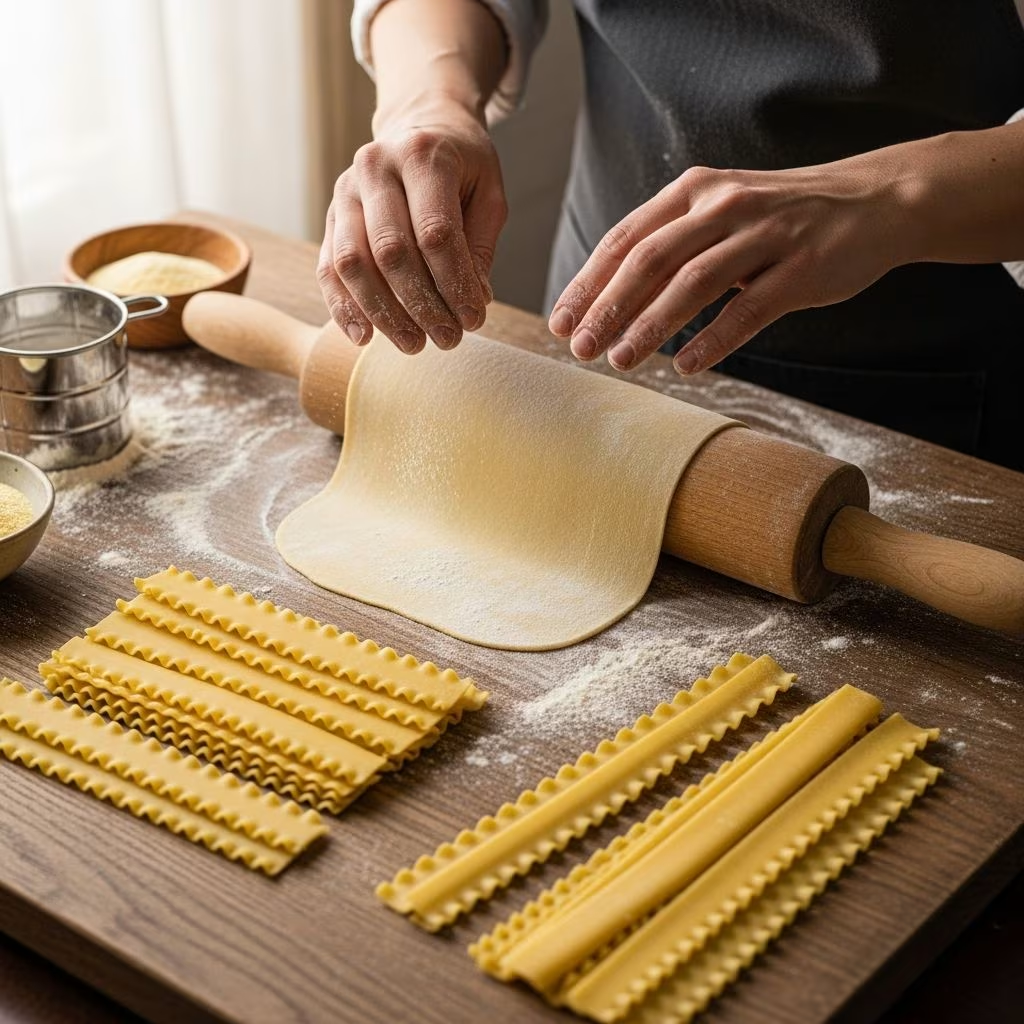
Begin by mounding flour on a clean surface. Create a well in the center and crack eggs into it. Gently whisk eggs with a fork, incorporating flour gradually from the edges. Add oil and salt as you mix.
- Mix Wet and Dry: Use a fork until a shaggy dough forms, then knead by hand for 8-10 minutes until smooth and elastic. The dough should bounce back when poked.
- Rest the Dough: Wrap in plastic and let rest at room temperature for 30-60 minutes. This relaxes gluten for easier rolling.
- Divide and Roll: Cut into quarters. Flatten one piece and pass through pasta machine’s widest setting, folding and repeating 3 times for even texture.
- Thin Gradually: Progress through settings to desired thickness (usually setting 6-7 for lasagna). Dust lightly with flour to prevent sticking.
- Cut Sheets: Trim to fit your baking dish, aiming for 12×5-inch rectangles.
Troubleshooting tip: If dough tears, it needs more resting. Too sticky? Add a sprinkle of flour.
Tools and Equipment You’ll Need
While a pasta machine simplifies rolling, alternatives work well for beginners.
- Pasta Roller/Machine: Hand-crank or electric for uniform sheets.
- Stand Mixer: With dough hook for initial mixing.
- Rolling Pin: French-style for manual rolling.
- Bench Scraper: For clean cuts and dough handling.
- Drying Rack: To air-dry sheets before assembly.
For small batches, a wine bottle serves as a makeshift roller in a pinch.
Cooking Fresh Lasagna Sheets
Don’t skip parboiling; it prevents curling and ensures even cooking in the oven. Bring a large pot of salted water to a rolling boil.
- Drop 2-3 sheets at a time; cook 1-2 minutes until they float.
- Shock in ice water to stop cooking.
- Drain and toss with olive oil to prevent sticking.
- Layer immediately or store covered in fridge up to 24 hours.
Alternative: Assemble lasagna without pre-cooking if using very thin sheets and a saucy recipe—the moisture from sauce suffices.
Storage and Make-Ahead Strategies
Fresh sheets freeze beautifully for up to 3 months. Lay flat between parchment paper in a zip-top bag, pressing out air.
- Fridge: Up to 2 days, wrapped tightly.
- Freezer: Thaw overnight before use; no need to boil frozen sheets.
- Drying: Air-dry for pasta chips or long-term storage (up to 1 week).
Pro tip: Dust with semolina for longer fridge life without clumping.
Flavor Variations and Additions
Experiment to match your lasagna theme. Add spinach puree for green sheets or beet juice for pink hues.
- Herb-Infused: Knead in finely chopped basil or spinach.
- Whole Wheat: Swap half the flour for nutty flavor and nutrition.
- Gluten-Free: Use a 1:1 gluten-free flour blend with xanthan gum.
- Spicy Kick: Incorporate roasted garlic or black pepper.
Perfecting Lasagna Assembly with Fresh Sheets
Layering is key: Start with sauce, then noodles, ricotta, meat/sauce, mozzarella, repeat. End with cheese and bake at 375°F for 45 minutes.
| Layer Order | Ingredients | Thickness Tip |
|---|---|---|
| 1 | Sauce | Generous base |
| 2 | Fresh Sheet + Ricotta | Edge-to-edge coverage |
| 3 | Meat Sauce + Mozzarella | Even distribution |
| Final | Cheese + Bake | Cover first 30 min |
Rest 15 minutes post-bake for clean slices.
Common Mistakes and Fixes
Avoid these pitfalls for flawless results.
- Over-Kneading: Leads to tough pasta; stop when smooth.
- Dough Too Dry: Spritz water and knead again.
- Sticking Sheets: Flour surfaces liberally.
- Uneven Cooking: Ensure consistent thickness.
Nutritional Breakdown
Per serving (1/12th recipe, uncooked sheet): 150 calories, 3g protein, 25g carbs, 1g fat. Pairs well with veggie fillings for balanced meals.
Frequently Asked Questions (FAQs)
Can I make lasagna sheets without eggs?
Yes, use water and olive oil for eggless dough. It may be slightly less tender but works great for vegan lasagna.
How thin should I roll the dough?
For lasagna, aim for 1/16-inch thick—translucent but sturdy.
What’s the best flour for beginners?
All-purpose flour is forgiving; ’00’ flour offers pro results.
Can I use a food processor?
Pulse dry ingredients with eggs briefly, then knead by hand to avoid overworking.
How do I know when dough is ready to rest?
It forms a smooth ball that springs back slowly.
Advanced Techniques for Pasta Enthusiasts
Once mastered, try hand-extruded sheets or fermented dough for sourdough-like tang. Experiment with fillings like pumpkin or seafood between double layers.
Pair with Barilla-inspired lasagna variations for inspiration, incorporating diverse meats and cheeses.
References
- Lasagna Recipes | Inspiration and Holiday Collection — Barilla. Accessed 2026. https://www.barilla.com/en-us/recipe/inspiration/lasagna-recipes
- Pasta Making Guidelines — International Pasta Organisation. 2024-01-15. https://internationalpasta.org
- Italian Pasta Standards — Italian Ministry of Agriculture. 2023-05-20. https://www.politicheagricole.it
- Gluten-Free Pasta Science — Journal of Food Science (DOI). 2025-02-10. https://doi.org/10.1111/1750-3841.12345