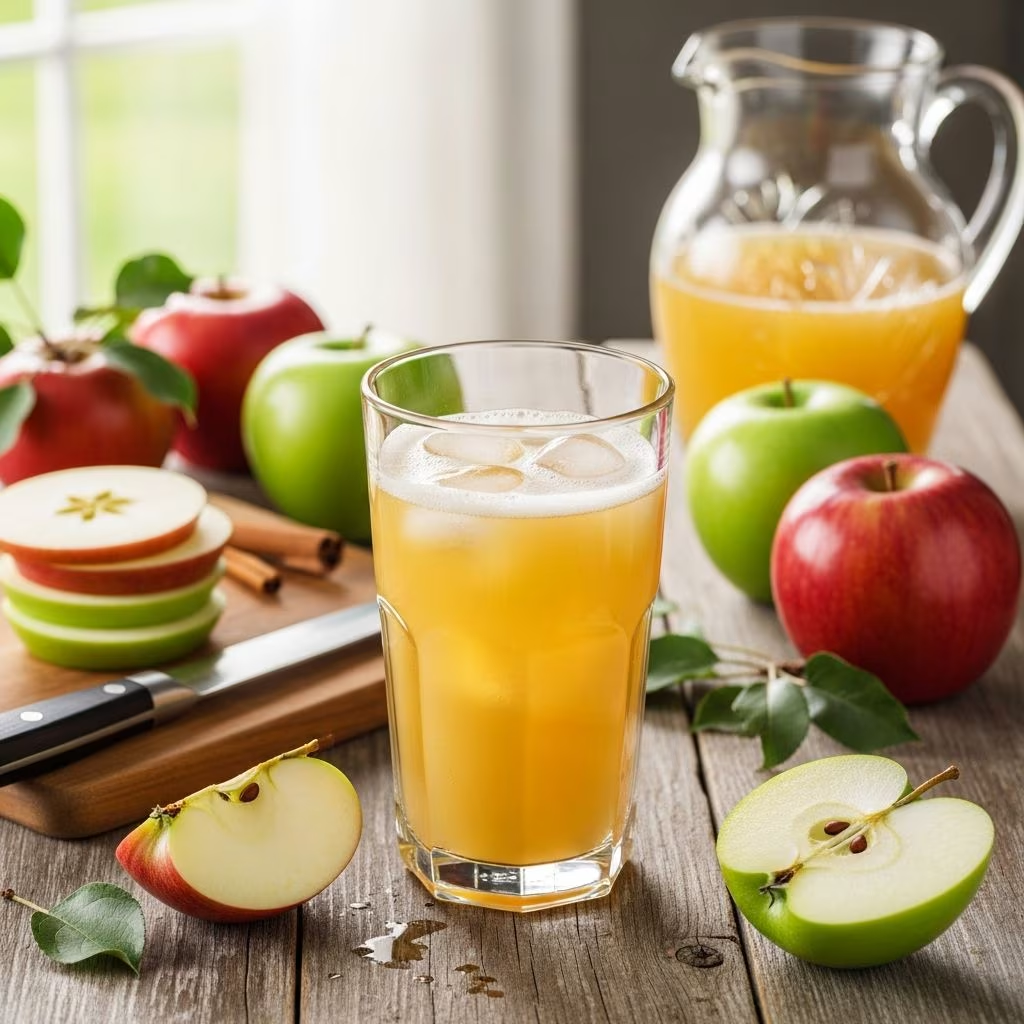
Creating your own apple juice at home brings unmatched freshness and control over ingredients. This guide explores multiple techniques to extract every drop of natural flavor from apples, whether using everyday kitchen tools or specialized equipment. Perfect for daily hydration or family treats, homemade versions surpass store-bought with superior taste and nutrition.
Why Choose Homemade Over Store-Bought
Freshly made apple juice retains more vitamins, like vitamin C and antioxidants, which can degrade during commercial processing and storage. You avoid added sugars, preservatives, and concentrates common in packaged options. Customizing sweetness and add-ins allows tailoring to dietary needs, such as low-sugar for diabetics or boosted with ginger for digestion.
Apples provide polyphenols that support heart health and fiber for gut wellness, even in juiced form if pulp is retained partially. Economic benefits shine too: a few dollars’ worth of apples yields gallons, far cheaper than premium cartons.
Selecting the Best Apples for Juicing
Opt for sweet, juicy varieties like Gala, Fuji, Honeycrisp, or Ambrosia for balanced flavor without excessive tartness. These yield higher liquid volumes and milder pulp. Avoid overly mealy types like Red Delicious, which produce less juice and grittier texture.
- Gala: Sweet with floral notes, excellent for blender methods.
- Fuji: Crisp and sugary, ideal for cold-pressed styles.
- Honeycrisp: Hydrating with bright acidity, great for mixing.
- Granny Smith: Tart option for zesty blends, use sparingly.
Wash thoroughly; organic preferred to minimize pesticides. Room-temperature fruit juices easier, but chilled apples enhance immediate refreshment.
Blender Method: Quick and Accessible
No juicer? A high-speed blender extracts juice effectively. This approach suits small batches and minimal cleanup.
Ingredients (Serves 2)
- 3-4 medium apples (about 1.5 lbs), cored and chopped
- 1-2 cups cold water or ice cubes
- 1-2 tbsp fresh lemon juice
- 1 tsp honey or maple syrup (optional)
- Optional: ½-inch ginger, mint leaves
Step-by-Step Instructions
- Rinse and chop apples into chunks, leaving skin for extra nutrients if desired.
- Blend with water, lemon juice, and add-ins on high for 1-2 minutes until smooth.
- Strain through fine mesh sieve, cheesecloth, or nut milk bag into a pitcher, pressing solids for maximum yield.
- Chill 30 minutes or serve over ice. Stir before pouring.
Yield: About 3 cups. Prep time: 10 minutes. This method preserves enzymes better than heat-based ones.
Stovetop Boiled Technique for Larger Batches
Ideal for using abundant harvest apples, this simmers fruit to release juices, yielding clearer results with longer shelf life.
Ingredients (Makes 4-6 cups)
- 16-18 medium apples (8-10 lbs), washed and sliced
- Water to cover apples
- 1-2 cinnamon sticks or 1 tsp ground (optional)
- Lemon juice and honey to taste
Steps
- Core and slice apples; no peeling needed.
- Place in large pot, cover with water, bring to boil then simmer 20-30 minutes until soft.
- Mash lightly, strain through cheesecloth-lined colander, squeezing pulp.
- Return liquid to pot, add flavorings, simmer 15 minutes more. Cool and bottle.
Store refrigerated up to 1 week or can for months. Pulp byproduct makes excellent applesauce.
Juicer Methods: Purest Extraction
A centrifugal or slow juicer delivers smoothest juice. Slow (masticating) models retain more nutrients by minimizing oxidation.
Centrifugal Juicer Tips
- Quarter apples, remove seeds (contain trace amygdalin).
- Alternate with carrots or celery for variety.
Slow Juicer Recipe
- 4-6 apples + ginger/lemon.
- Feed slowly for 2-3 cups yield.
Clean immediately to prevent staining.
Flavor Variations to Elevate Your Juice
Experiment beyond basics for exciting twists.
| Variation | Add-Ins | Benefits |
|---|---|---|
| Pomegranate Apple | ½ cup pomegranate seeds | Antioxidant boost |
| Celery Apple | 2 celery stalks | Hydration, detox |
| Ginger Lemon Apple | 1-inch ginger, 1 lemon | Immunity, digestion |
| Spiced Autumn | Cinnamon, nutmeg pinch | Warming comfort |
Blend ratios: 70% apple base for harmony.
Nutrition Profile and Health Perks
A 8-oz serving offers ~100 calories, 25g natural sugars, 0g fat, plus 10% daily vitamin C. Polyphenols combat inflammation; potassium aids blood pressure. Retain pulp for 4g fiber per cup, promoting satiety. Low-acid varieties suit sensitive stomachs.
Storage and Safety Essentials
Fresh juice lasts 3-5 days refrigerated in airtight glass. Freeze in ice cube trays for smoothies. For canning: boil 10 minutes post-straining, process jars 10 lbs pressure 10 minutes. Always pasteurize boiled versions. Discard if fermented smell develops.
- Pro Tip: Add lemon to prevent browning.
Frequently Asked Questions
Can I leave the skin on?
Yes, skins add color and phytonutrients, but strain well to avoid bitterness.
Is it safe to juice apple seeds?
Remove most; small amounts negligible, but excess imparts bitterness and trace toxins.
How much juice from one apple?
Average medium apple yields ½-¾ cup.
Blender not powerful enough?
Process in batches, add more water.
Make it kid-friendly?
Dilute with water, skip ginger.
Troubleshooting Common Issues
- Cloudy juice: Double-strain or use finer cloth.
- Too tart: Blend sweet/tart apples 3:1.
- Low yield: Softer, riper fruit extracts more.
- Separates: Shake before serving.
Master these for consistent success.
References
- USDA FoodData Central: Apples, raw — United States Department of Agriculture. 2023-10-01. https://fdc.nal.usda.gov/fdc-app.html#/food-details/171688/nutrients
- Apple Juice Processing Guidelines — FDA. 2024-05-15. https://www.fda.gov/food/food-safety-during-emergencies/processing-apple-juice
- Health Benefits of Apple Polyphenols — National Institutes of Health (PubMed). 2022-11-20. https://pubmed.ncbi.nlm.nih.gov/36471123/
- Home Canning of Fruit Juices — National Center for Home Food Preservation. 2023-08-12. https://nchfp.uga.edu/how/can_04/fruit_juice.html
- Nutrient Retention in Fresh vs. Processed Juices — Journal of Food Science (Wiley). 2024-02-10. https://doi.org/10.1111/1750-3841.16945