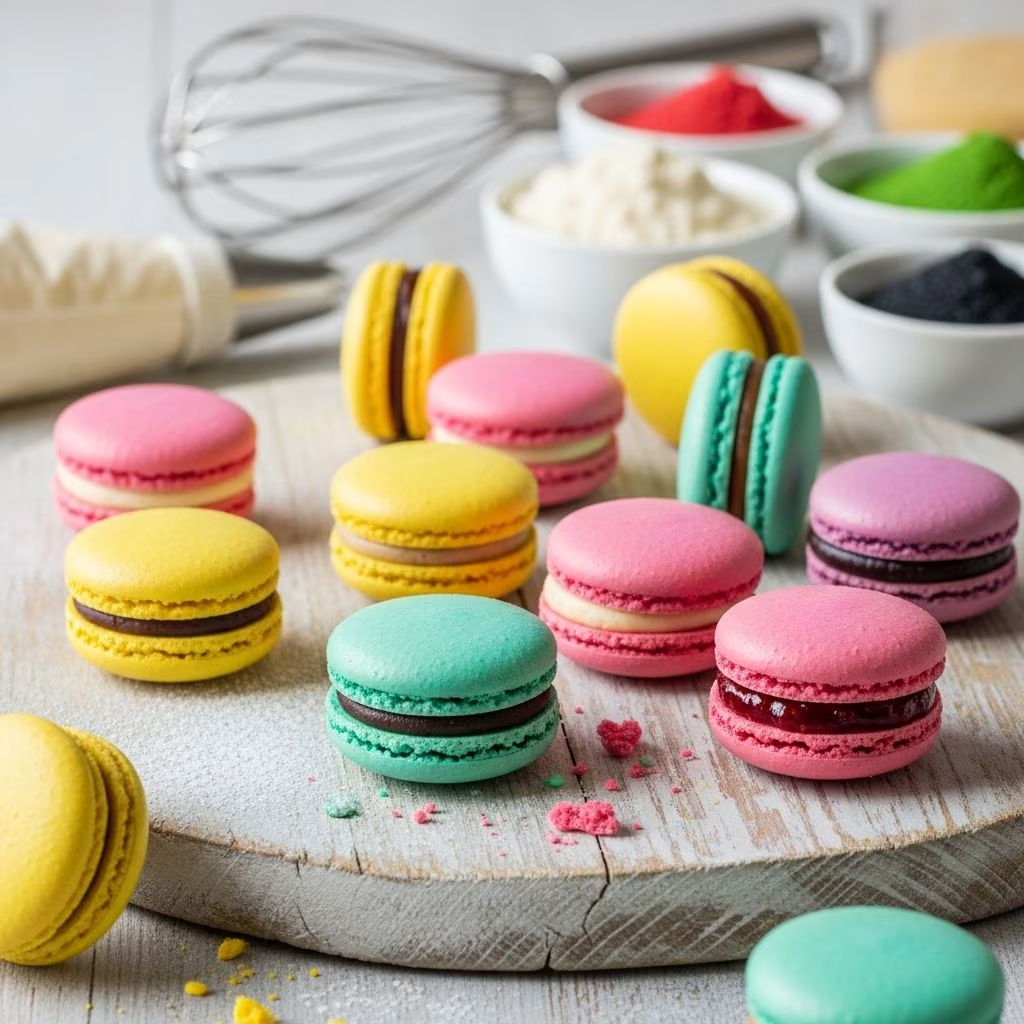
French macarons are delicate almond-meringue sandwich cookies renowned for their smooth domes, ruffled feet, and endless flavor possibilities. Achieving success requires precision in measurements, technique, and patience, but the reward is a professional-quality treat you can customize endlessly.
Understanding the Magic of Macarons
At their core, macarons consist of two almond-based shells bonded with a creamy filling. The shells form through a process called macaronage, where meringue meets finely ground almond flour and sugar, creating a batter that pipes smoothly and bakes into crisp yet chewy disks. Key to perfection is the balance of air incorporation during whipping and gentle deflation during folding.
Unlike macaroons, which are denser coconut cookies, macarons demand exact gram weights—bakers use scales for accuracy since volume measures vary. Egg whites, aged for stability, whip into a glossy meringue that supports the batter structure. Oven temperature and humidity play crucial roles, often requiring experimentation based on your kitchen environment.
Essential Ingredients for Flawless Shells
Selecting high-quality components sets the foundation. Here’s a breakdown:
- Almond flour: Finely ground blanched almonds (about 150-170g per batch) provide structure and nutty flavor. Sift to remove lumps.
- Powdered sugar: 120-160g sweetens and stabilizes; process with almond flour for ultra-fine texture.
- Egg whites: 90-100g (3 large), room temperature or aged 24 hours in fridge for better volume.
- Granulated sugar: 50-100g, added gradually to meringue for stiff peaks.
- Cream of tartar or meringue powder (optional): Stabilizes whites, preventing overbeating.
A standard batch yields 30-40 macarons. For colored shells, use gel food coloring to avoid altering batter consistency.
Tools You’ll Need for Success
Invest in these for reliable results:
- Digital scale for gram precision.
- Stand mixer or hand mixer with whisk attachment.
- Fine mesh sieve and food processor.
- Piping bags with round tips (e.g., 1/2-inch or Wilton 1A).
- Silicone mats or parchment templates with 1.5-inch circles.
- Oven thermometer to verify accurate temperature.
These ensure consistency, as even slight deviations can cause failures.
Step-by-Step Guide to Perfect Shells
Follow these stages meticulously for domed tops and frilly feet.
Prepare Dry Mix
Pulse almond flour and powdered sugar in a food processor 2-3 times, then sift into a bowl. Discard large bits—repeat sifting if needed for smoothness. This creates an even base that integrates seamlessly.
Whip the Meringue
Beat egg whites with cream of tartar until foamy, then gradually add granulated sugar. Whip to stiff peaks: glossy, holding shape when bowl is inverted. Add vanilla or gel color last. Expect 6-8 minutes on medium-high speed.
Master the Macaronage
Fold dry mix into meringue in thirds using a spatula. Employ the ‘J’ motion: scrape from bottom, up sides, over top, rotating bowl. Continue until batter ribbons off spatula in a figure-8, settling slowly (lava-like flow). Overmixing deflates; undermixing yields peaked shells. Test: Pipe a dot; it should smooth in 10-20 seconds.
Pipe and Rest
Transfer to piping bag. Pipe 1.5-inch circles on prepared sheets, using templates. Bang trays 3-5 times to release bubbles, then pop surface bubbles with a toothpick. Rest 15-60 minutes until dry to touch—forms pellicle for feet development.
Bake Precisely
Preheat to 290-300°F. Bake 10-18 minutes, rotating halfway. Feet appear first; tops dull when done. Test: tops shouldn’t shift from bases. Cool fully before peeling.
Crafting Irresistible Fillings
Fillings elevate macarons. Whip these classics:
| Filling Type | Key Ingredients | Prep Time |
|---|---|---|
| Buttercream | Butter, powdered sugar, vanilla | 5 mins |
| Swiss Meringue | Egg whites, sugar, butter; cook syrup to 240°F | 15 mins |
| Ganache | Chocolate, cream | 10 mins |
| Raspberry | Puree, butter, sugar | 8 mins |
Basic Buttercream: Beat 1 cup softened butter with 2 cups powdered sugar, 1 tsp vanilla until fluffy. Pipe onto shells, sandwich gently.
Swiss Meringue Buttercream: Heat sugar-water syrup to 244°F, drizzle into whipped yolks, then emulsify butter. Silky and stable.
Match flavors: chocolate shells with ganache, pink with raspberry.
Troubleshooting Common Issues
Even pros face hiccups. Here’s how to fix:
- No feet: Weak meringue or insufficient rest. Whip longer, dry 30+ mins.
- Cracked tops: Too hot oven or no banging. Lower temp, rotate pans.
- Sticky undersides: Underbaked. Extend time 2-3 mins.
- Pointy nipples: Undermixed batter. Fold more for flow.
- Hollow shells: Overmixed or high humidity. Use AC, precise weights.
Track variables in a baking journal for refinement.
Flavor Variations and Pairings
Experiment beyond basics:
- Citrus: Lemon zest in shells, curd filling.
- Pistachio: Sub 20% almond flour with pistachio.
- Salted Caramel: Dulce de leche buttercream.
- Matcha: Powder in dry mix, white chocolate ganache.
- Seasonal: Pumpkin spice or peppermint for holidays.
Store assembled macarons in airtight container 24 hours for flavors to meld, refrigerate up to a week, freeze 1 month.
Advanced Techniques for Pros
Once basics click, try Italian meringue: Cook sugar syrup to 118°C, pour into whipping whites for ultra-stable shells. Ombre effects via layered piping or embeds like chocolate chips pre-bake. For humidity woes, use silica packs during rest.
Scaling up? Double ingredients but whip in stable mixer. Professional bakers sift multiple times and age whites 48 hours.
Nutrition and Storage Tips
One macaron: ~70 calories, mostly from almonds and sugar. Gluten-free, nut-allergy alternative uses pumpkin seed flour. Freeze shells unfilled for months; thaw, fill fresh.
Frequently Asked Questions
Why do my macarons crack?
Commonly from oven too hot, no steam release, or rapid temp change. Bake lower and slower.
Can I make macarons vegan?
Yes, aquafaba replaces egg whites; follow same ratios.
How long to rest before baking?
15-60 mins until dry to touch; humid days need longer.
Best oven settings?
290-300°F convection if available; test small batch.
Storage life?
Room temp 2 days, fridge 1 week, freezer 1 month.
Practice yields mastery—start small, iterate boldly.
References
- Foolproof Macaron Recipe (Step by Step!) — Broma Bakery. 2023. https://bromabakery.com/foolproof-macaron-recipe-step-by-step/
- The BEST-EVER Raspberry Macarons Recipe — YouTube (Sugar Geek Show). 2022-10-15. https://www.youtube.com/watch?v=fN0klLj4hb4
- French Macaron Recipe For Beginners — Sugar Geek Show. 2023. https://sugargeekshow.com/french-almond-macaron-recipe/
- How To Make Perfect Macarons — Preppy Kitchen. 2024-01-12. https://preppykitchen.com/french-macarons/
- How to Make French Macarons, Seriously — Edible Times. 2023-05-20. https://edibletimes.com/how-to-make-macarons/
- Beginner’s Guide to French Macarons — Sally’s Baking Addiction. 2024. https://sallysbakingaddiction.com/french-macarons/