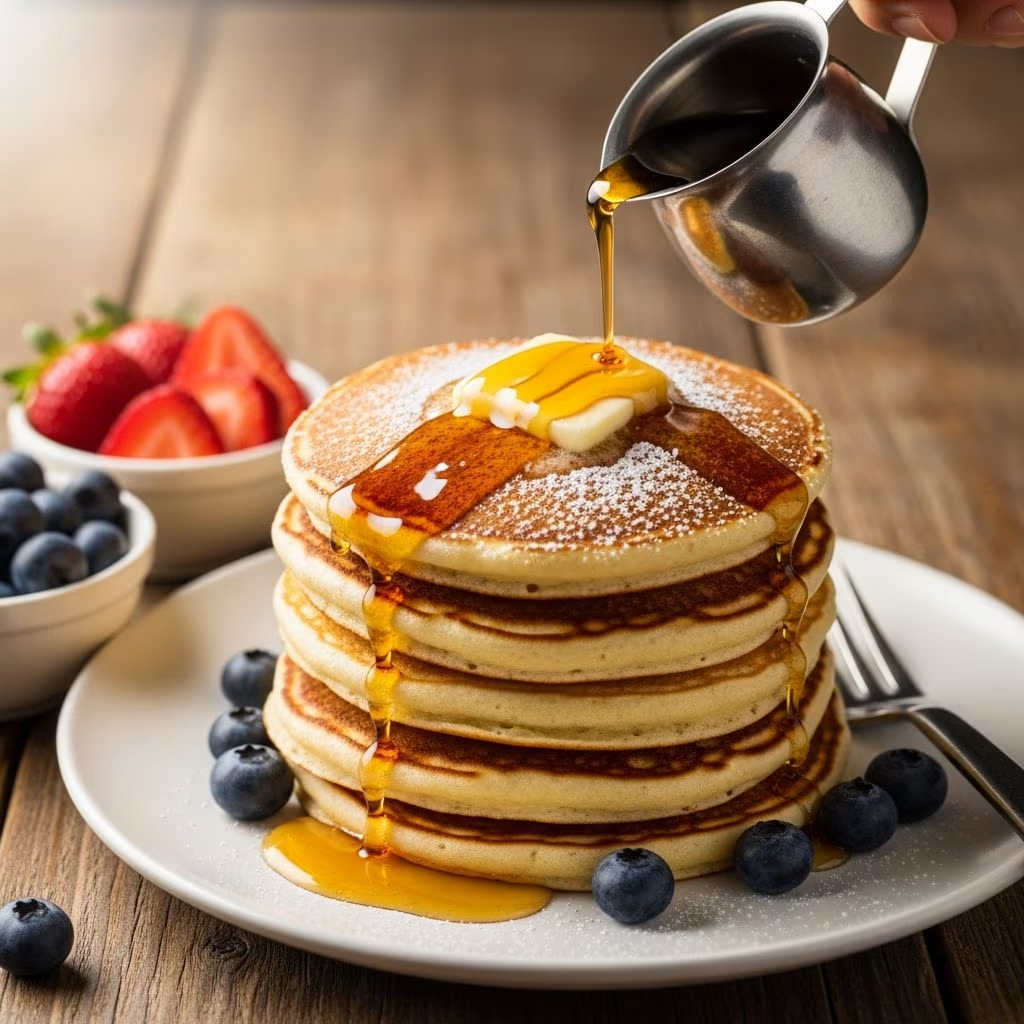
Creating pancakes from scratch delivers a remarkably superior result compared to using prepared mixes or shortcuts. The process requires minimal ingredients, most of which are likely already in your pantry, yet the outcome justifies the modest effort involved. Understanding the fundamental techniques and components transforms pancake-making from a simple breakfast task into a culinary skill that yields consistently excellent results.
Essential Ingredients and Their Functions
The foundation of exceptional pancakes rests on selecting the right ingredients and understanding how each contributes to the final product. While the ingredient list appears straightforward, the proportions and quality of each component significantly influence texture, flavor, and appearance.
Dry Ingredients: The Structure
All-purpose flour serves as the primary dry ingredient, providing the structural framework for your pancakes. A standard recipe typically calls for approximately 360 grams of flour, which creates the base matrix that captures moisture and air. The flour’s protein content directly affects gluten development, which influences the tender yet stable crumb structure desired in quality pancakes.
Sugar, measuring around 50 grams per batch, contributes more than sweetness alone. Sugar promotes browning through the Maillard reaction, enhancing the golden exterior and adding subtle caramelized notes to the flavor profile. This ingredient also hygroscopically attracts moisture, contributing to the soft interior texture.
Salt, approximately 10 grams, amplifies flavor perception and strengthens gluten networks. Even small quantities of salt noticeably enhance the overall taste experience without creating an overtly salty product.
The leavening agents—baking powder and baking soda—represent the critical distinction between flat, dense pancakes and fluffy, airy ones. Approximately 11 grams of baking powder and 5-6 grams of baking soda create the chemical reactions necessary for rise and bubble formation. Baking powder contains both an acid and a base component activated by liquid, while baking soda requires acidic ingredients in the batter to function effectively. These agents must be thoroughly incorporated into the dry mixture to ensure even distribution and consistent leavening throughout each pancake.
Wet Ingredients: Binding and Richness
Eggs contribute multiple functions beyond simple binding. The yolks provide fat and emulsification, creating a tender crumb and contributing to browning. The whites incorporate air when beaten, adding additional lift and structure. Thorough mixing of eggs ensures their components are fully distributed throughout the wet mixture.
Butter adds richness and distinctive flavor while also contributing to browning. Beyond the butter incorporated into the batter, additional butter used for cooking dramatically influences the final pancake’s character, creating crispy, flavorful edges while infusing the entire pancake with buttery notes.
The Mixing Methodology
Proper mixing technique represents one of the most critical yet frequently misunderstood aspects of pancake preparation. The approach differs substantially from standard baking methods, prioritizing specific textural outcomes.
Combining Dry Components
Begin by whisking together all dry ingredients in a single bowl. This step ensures thorough and even distribution of leavening agents throughout the flour mixture, preventing pockets where these active ingredients might be concentrated or absent. Whisking for 30-60 seconds typically suffices to accomplish complete integration. Uneven distribution of baking powder or baking soda results in inconsistent rise, creating some pancakes that are exceptionally fluffy while others remain disappointingly dense.
Preparing Wet Components
In a separate vessel, combine eggs, milk, and melted butter. Whisk vigorously until the mixture is thoroughly combined and uniform in appearance. This step ensures that egg yolks are completely broken down and distributed, preventing streaks of concentrated yolk or white in the final batter. The vigorous mixing also begins incorporating air, which contributes to the leavening process.
The Final Combination: The Critical Step
This stage demands restraint and discipline. Pour the wet ingredients into the dry ingredients and stir until just combined. The resulting batter should appear slightly lumpy with visible flour streaks—not smooth and homogeneous. Overmixing develops gluten networks excessively, resulting in tough, dense pancakes with a chewy rather than tender texture. The lumpy appearance should not trigger an urge to achieve perfect uniformity. These remaining flour particles will hydrate during cooking, so slight lumpiness is desirable. Mixing should require fewer than 15 strokes, stopping as soon as dry flour is no longer visible.
Selecting and Preparing Cooking Equipment
The cooking surface dramatically influences pancake quality and preparation efficiency. Different equipment options present various advantages and limitations.
Equipment Comparison
| Equipment Type | Advantages | Disadvantages |
|---|---|---|
| Electric Griddle | Large cooking surface; consistent temperature; simultaneous cooking of multiple pancakes | Requires counter space; specialized equipment |
| Cast Iron Griddle | Excellent heat retention; versatile; durable; stovetop usable | Requires seasoning maintenance; heavier; uneven heat distribution on some stovetops |
| Non-Stick Skillet | Accessible; compact; easy cleanup; gentle on non-stick coating | Limited cooking surface; requires careful temperature management; non-stick coating deteriorates over time |
| Standard Sauté Pan | Versatile; standard kitchen equipment; good heat distribution | Food may stick; requires more fat; limited cooking area |
An electric griddle maximizes efficiency, accommodating approximately ten pancakes simultaneously, enabling rapid feeding of larger groups. Cast iron griddles placed across stovetop burners provide similar benefits with less dependency on specialized equipment. Standard non-stick skillets or sauté pans function adequately for smaller batches, though they require more frequent cooking cycles.
Temperature Control and Fat Selection
Maintaining appropriate temperature prevents burning while ensuring adequate browning. The cooking surface should be preheated to approximately 350-375°F (175-190°C), achievable by preheating for several minutes or testing with a water droplet that should sizzle and evaporate quickly.
Butter selection influences both flavor and texture. Salted butter contributes subtle saltiness and enhanced browning, while unsalted butter provides cleaner flavor that places pancake taste foremost. Whipped butter spreads more easily and incorporates air, distributing more evenly across the cooking surface. Generously applying butter creates intentionally crispy, golden edges that absorb butter flavor, creating a textural contrast between these edges and the tender interior.
The Cooking Process: From Batter to Plate
Executing the cooking phase successfully requires attention to timing, temperature, and visual cues rather than arbitrary time measurements.
Initiating the Cook
Once the griddle reaches proper temperature and butter is distributed across the surface (allowing slight browning that imparts additional depth to flavor), pour approximately 1/4 cup of batter onto the hot surface for each pancake. The batter should sizzle immediately upon contact, indicating adequate temperature. Resist the urge to stir or spread the batter—allow it to spread naturally. The batter’s edges will begin setting while the interior remains malleable, and the butter will infuse around the perimeter, creating those desirable crispy edges.
Recognizing the Flip Point
Visual observation determines optimal flipping timing more accurately than clock-watching. Bubbles will form across the pancake’s surface as water from the batter evaporates and gas from leavening agents expands. When these bubbles reach the surface and begin popping, creating small visible holes, the bottom has set sufficiently for flipping. Additionally, the edges of the pancake will appear slightly dry and set compared to the glossy, wet center. This typically requires 2-3 minutes depending on heat intensity.
The Second Side
Flip the pancake with a swift, confident motion. The second side cooks more quickly than the first—approximately 60-90 seconds—because the bottom remains insulated from direct heat by the already-cooked top. The pancake is finished when pressing gently on the surface produces an immediate spring-back response, indicating the interior is fully set and aerated with countless small bubbles. Pressing a finished pancake with your finger should cause immediate resistance and rebound, not collapse or the appearance of wet batter.
Optimizing Texture and Flavor
Several factors collectively determine whether the final pancake achieves desired characteristics of tenderness, moistness, and flavor complexity.
Achieving Ideal Fluffiness
The presence of bubbles throughout the pancake structure creates the characteristic light texture. Proper leavening agent ratios and timing are essential—baking soda reacts immediately with acidic ingredients, while baking powder typically contains delayed-release components. Using the batter relatively quickly after combining wet and dry ingredients preserves the leavening gases before they escape. Cooking on adequately preheated surfaces ensures the exterior sets rapidly, trapping interior steam and gas that maintain bubbles throughout the cooking process.
Enhancing Flavor Complexity
Butter, particularly if allowed to brown slightly, adds nutty, caramelized notes. Eggs contribute richness and support browning through their lecithin content. Even minimal salt significantly amplifies perceived sweetness and depth. These fundamental flavors create a neutral canvas supporting various toppings and accompaniments.
Frequently Asked Questions
- Can pancake batter be prepared in advance?
- Mixing batter up to one hour before cooking is acceptable, though freshly prepared batter yields superior results. The leavening agents begin reacting upon contact with wet ingredients, so delayed cooking results in diminished rise. If preparing batter earlier, reserve the wet and dry ingredients separately, combining them just before cooking.
- What causes pancakes to be rubbery or tough?
- Overmixing the batter develops excessive gluten, creating a dense, chewy texture. Additionally, cooking at inadequate temperatures causes the exterior to set before the interior fully cooks, trapping moisture that creates rubberiness.
- Why do some pancakes brown excessively while others remain pale?
- Temperature fluctuations across the cooking surface create this disparity. Adequate griddle size and even heat distribution prevent this issue. Additionally, sugar content and butter application influence browning rates.
- How should leftover batter be stored?
- Store unused batter in an airtight container refrigerated for up to 24 hours. Stir briefly before using, as some separation may occur. The batter may require slight thinning with additional milk if thickening occurs during storage.
- Can alternative flours be substituted?
- Specialty flours produce different results. Whole wheat flour creates denser, nuttier pancakes with reduced rise. Gluten-free flour blends produce acceptable results when combined with xanthan gum for structure. Experiment with small batches before committing to full recipes.
Serving Suggestions and Accompaniments
While pancakes taste exceptional with minimal accompaniments, thoughtful selection of toppings enhances the overall experience. Fresh berries provide tartness contrasting sweetness, while pure maple syrup delivers traditional richness. Greek yogurt adds creaminess and protein, while nuts introduce textural complexity. Citrus zest or vanilla extract in whipped cream provides sophisticated flavor notes.
References
- Food Safety Guidelines for Cooking with Eggs — U.S. Department of Agriculture Food Safety and Inspection Service. 2024. https://www.fsis.usda.gov/food-safety/safe-food-handling-and-preparation/eggs-and-egg-products
- Leavening Agents in Baking: Chemistry and Application — King Arthur Baking Company (official recipe resource). 2023. https://www.kingarthurbaking.com/learn/article/baking-soda-vs-baking-powder
- Protein Development and Gluten Formation in Flour — Michigan State University Extension. 2022. https://www.canr.msu.edu/news/the-role-of-protein-in-baked-products
- Maillard Reaction and Browning in Cooking — American Chemical Society. 2023. https://www.acs.org/
- Butter Composition and Its Role in Baking — U.S. Dairy Export Council. 2023. https://www.usdec.org/