Creating a pie crust that shatters into golden, tender flakes is one of baking’s greatest rewards. Lard, a rendered pork fat, has been the gold standard for generations because it produces layers of lightness unmatched by modern substitutes. This guide dives deep into the craft, offering precise techniques, variations, and pro tips to elevate your pies from good to unforgettable.
Why Lard Delivers Superior Flakiness
Lard excels in pie dough due to its unique properties. Unlike butter, which contains water that can lead to tougher results, lard is nearly 100% fat with a higher melting point. This allows it to stay solid longer during mixing and rolling, creating distinct fat pockets that steam and separate layers upon baking.
Historical bakers prized lard for its neutral flavor, letting fruit or savory fillings shine. Today, high-quality leaf lard—rendered from around the kidneys—yields the purest taste and texture. Rendered lard from butchers or specialty stores works well too, but avoid shelf-stable versions with additives, as they compromise flakiness.
Essential Ingredients for Perfect Dough
A classic lard pie crust relies on simplicity: flour, salt, fat, and minimal liquid. Here’s a foundational recipe scaled for a double-crust 9-inch pie, drawing from time-tested proportions.
| Ingredient | Amount | Purpose |
|---|---|---|
| All-purpose flour | 2½ cups | Structure and tenderness |
| Salt | 1 tsp | Flavor enhancement |
| Cold lard | ¾–1 cup (cut into small cubes) | Flakiness and richness |
| Ice water or vinegar mixture | 6–8 tbsp | Binding without toughness |
Pro Tip: For sweet pies, add 1–2 tbsp sugar to the flour. Opt for unbleached all-purpose flour to preserve gluten development control.
Step-by-Step Dough Preparation
Success starts with chill: keep everything below 68°F (20°C) to prevent fat from softening prematurely.
Combine Dry Ingredients: Whisk flour and salt in a large bowl. This ensures even distribution and aerates the flour slightly.
- Incorporate Lard: Add cubed, ice-cold lard. Use a pastry blender, two knives, or fingertips to cut it in until the mixture resembles coarse cornmeal with pea-sized fat bits. Overworking here melts the fat, leading to dense dough.
- Add Liquid Gradually: Drizzle in ice water (or a mix of 1 tbsp vinegar + water for tenderness) one tablespoon at a time. Stir with a fork until the dough just clumps—shaggy is ideal, not smooth.
- Form and Chill: Gather into two discs, wrap tightly in plastic, and refrigerate 1–2 hours (or overnight). Resting hydrates the flour evenly and firms the fat.
Mastering the Roll-Out and Shaping
Room-temperature dough (45 minutes out of fridge) rolls easiest without cracking.
- Flour your surface, pin, and hands lightly—excess toughens the crust.
- Roll from center outward, rotating 90° quarterly for evenness. Aim for ⅛-inch thickness and 2 inches larger than your pie plate.
- Drape bottom crust gently, trim overhang to ½-inch, add filling, then top with second crust. Crimp edges by pressing thumb and fingers for a classic flute.
For lattice tops, cut strips ½-inch wide, weave over filling, and seal edges. Brush with egg wash (1 egg + 1 tbsp water) for shine, avoiding over-brushing to prevent sogginess.
Baking Techniques for Golden Perfection
Preheat oven to 425°F (220°C) for the first 15 minutes to set structure, then reduce to 375°F (190°C).
| Pie Type | Blind Bake Time | Filled Bake Time |
|---|---|---|
| Custard (e.g., pumpkin) | 15–20 min at 425°F | 45–60 min at 350°F |
| Fruit Double-Crust | N/A | 50–60 min at 425°F then 375°F |
| Savory (e.g., pot pie) | 10–15 min | 35–45 min |
Blind Baking: Prick bottom with fork, line with parchment and pie weights/beans. Bake until edges brown, remove weights, bake 5–10 more minutes. Cool on wire rack to prevent cracking.
Variations to Suit Every Pie
Adapt the base for endless options:
- Butter-Lard Hybrid: Swap half lard for cold butter for flavor depth. Increases water content slightly, so add 1 extra tbsp liquid.
- Vegan Lard Substitute: Use chilled coconut oil, though flakiness dips—chill aggressively.
- Savory Herb Crust: Mix in 1 tbsp dried thyme or rosemary with flour.
- Sweet Shortcrust: Add 2 tbsp powdered sugar and 1 tsp vanilla for tarts.
Scale up for multiple pies: double ingredients yield two double-crusts.
Troubleshooting Common Pitfalls
Even pros face issues—here’s how to fix them:
- Tough Crust: Caused by overmixing or warm fat. Solution: Handle minimally, chill thoroughly.
- Soggy Bottom: Steam from juicy fillings. Solution: Cornstarch-thickened fillings, elevated oven rack, or cornstarch sprinkle on bottom crust.
- Shrinking: Excess gluten activation. Solution: Chill shaped crust 30 min pre-bake; avoid stretching dough.
- Cracks on Roll: Insufficient hydration or over-chill. Solution: Let rest 10 min; add water if too dry.
Storage and Make-Ahead Strategies
Dough freezes beautifully: wrap discs airtight up to 3 months. Thaw overnight in fridge. Par-baked crusts freeze too—fill straight from freezer.
Baked pies keep 2–3 days at room temp or 5 days chilled. Re-crisp slices at 350°F for 10 minutes.
Pairing with Iconic Fillings
Lard crust elevates classics:
- Apple Pie: 3 lbs tart apples, cinnamon, lemon—bake until bubbly.
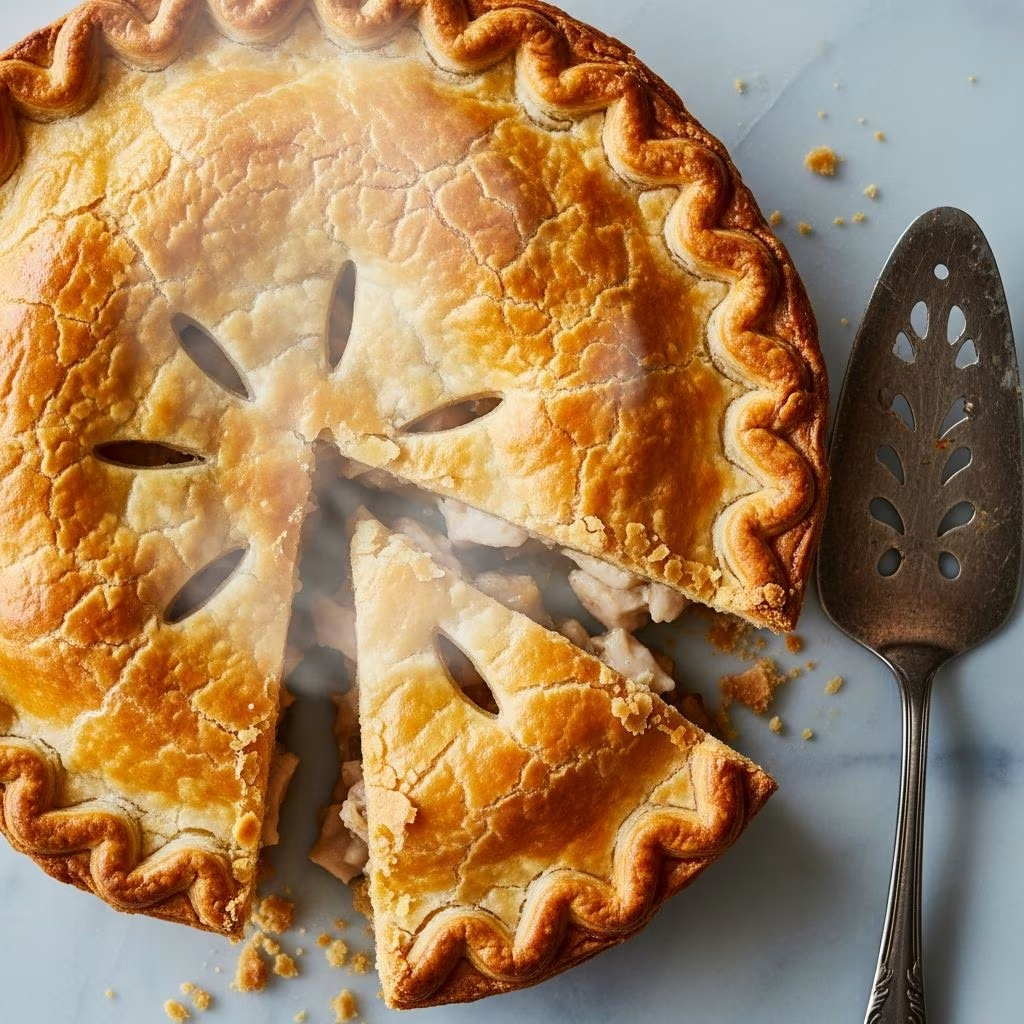
- Chicken Pot Pie: Shredded chicken, veggies, cream sauce—no sugar in dough.
- Pecan: Corn syrup base for glossy finish.
Frequently Asked Questions
Is lard pie crust healthier than butter?
Lard has more monounsaturated fats than butter and no dairy allergens, but use in moderation as it’s calorie-dense.
Where to source quality lard?
Butcher shops for leaf lard; online from farms. Avoid hydrogenated supermarket lard.
Can I make this gluten-free?
Substitute 1:1 gluten-free flour blend + ½ tsp xanthan gum. Add extra 1–2 tbsp water.
How long does dough last in fridge?
Up to 3 days tightly wrapped; beyond that, freeze.
Why vinegar in some recipes?
It inhibits gluten for tenderness without souring.
Advanced Tips from Seasoned Bakers
– Grate frozen lard for ultra-fine incorporation.
– Use vodka (neutral, evaporates) instead of water for extra tenderness.
– For mile-high fruit pies, pre-cook filling to reduce juices.
– Invest in a marble rolling board—stays coldest.
Mastering lard pie crust transforms you from home cook to pastry artisan. With practice, you’ll produce crusts that flake like museum-quality museum pieces, drawing oohs at every gathering. Experiment boldly—your perfect pie awaits.
References
- Double Pie Crust (with lard) — Well Rooted Farms. Accessed 2026. https://wellrootedfarms.co/blogs/well-rooted-recipes/double-pie-crust-with-lard
- Great Grandmother’s Lard Pie Crust — The Farmwife Feeds. Accessed 2026. https://www.farmwifefeeds.com/great-grandmothers-lard-pie-crust/
- Pie Crust Recipe (with Lard) — Stir Taste Smile. Accessed 2026. https://stirtastesmile.com/pie-crust-with-lard/
- Great Grandma’s Lard Pie Crust — Cooking With Carlee. Accessed 2026. https://cookingwithcarlee.com/great-grandmas-lard-pie-crust/
- Old-Fashioned Apple Pie with Flaky Lard Crust — Edible Boston. Accessed 2026. https://www.edibleboston.com/blog/3253
- Classic Butter and Lard Pie Crust — Little Home in the Making. Accessed 2026. https://www.littlehomeinthemaking.com/classic-butter-and-lard-pie-crust/