Creating egg rolls for a large gathering requires more than simply repeating a single-batch recipe multiple times. When preparing dozens of these beloved appetizers, successful execution depends on understanding workflow optimization, ingredient preparation, and strategic cooking methods. This comprehensive guide walks you through the process of transforming your kitchen into an efficient egg roll production station, whether you’re catering an event, preparing for meal prep, or simply wanting to stock your freezer with homemade options.
Understanding the Foundation of Large-Batch Production
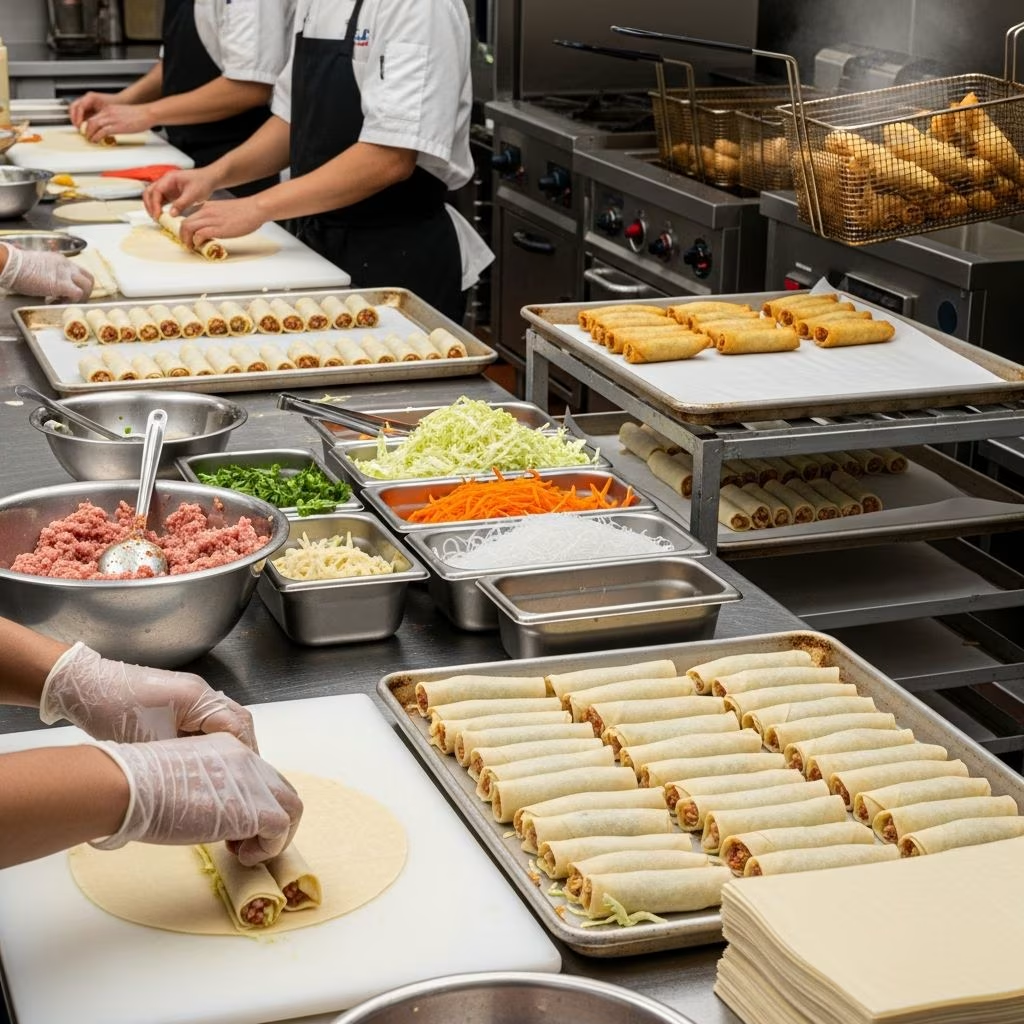
The key to successful bulk preparation lies in breaking the process into distinct phases: ingredient preparation, filling creation, assembly, and cooking. Rather than completing individual rolls from start to finish, professional and home cooks alike adopt an assembly-line approach where each stage is completed for all rolls before moving to the next step. This method dramatically increases efficiency and maintains consistency throughout your batch.
Before beginning any preparation, calculate your exact quantity needs. A standard egg roll wrapper contains approximately 2-3 tablespoons of filling, and each wrapper produces one finished roll. If you’re planning to feed 20 people with three rolls per person, you’ll need 60 wrappers. Understanding this math upfront prevents the frustration of running short or having excess filling when your production is underway.
Strategic Ingredient Sourcing and Prep Work
The foundation of quality egg rolls begins long before assembly. When working with large quantities, invest time in proper ingredient preparation, which becomes exponentially more important as your volume increases.
Choosing Your Protein Base
Ground pork and ground beef are the most common proteins for batch egg roll production. Ground pork offers a traditional flavor profile and works well with most seasoning combinations, while ground beef provides a heartier option suitable for fusion variations. For large batches, purchase your protein from warehouse retailers or ask your butcher about bulk discounts. A typical large batch of 50-60 egg rolls requires 3-4 pounds of ground protein.
Brown your entire protein quantity in the largest available pot or use multiple pans simultaneously. Season generously with aromatics like minced garlic, ginger, and diced onions. The protein should be fully cooked and cooled to room temperature before mixing with other filling ingredients—this prevents the wrapper from becoming soggy or tearing during assembly.
Preparing Fresh Vegetables
Shredded cabbage forms the backbone of most egg roll fillings, providing texture and bulk without excessive calories. For large batches, purchase pre-shredded coleslaw mix or cabbage from the produce section, which saves considerable preparation time compared to hand-shredding. Calculate approximately 3-4 cups of shredded cabbage per pound of protein. Similarly, shredded carrots, whether pre-cut or hand-prepared, should comprise about 1 cup for each batch of 12-15 rolls.
Additional vegetables that enhance large-batch preparations include finely diced green onions, minced fresh ginger, and diced mushrooms. The critical step involves cooking these vegetables until any excess moisture evaporates. Wet vegetables create soggy fillings and weak wrapper seals. After cooking your vegetable mixture, spread it on sheet pans and allow it to cool completely before combining with your cooked protein.
Creating the Perfect Filling Consistency
The filling represents the heart of your egg rolls, and achieving the correct moisture level separates amateur attempts from restaurant-quality results. Too-wet filling causes wrappers to tear or become translucent and greasy, while overly dry filling produces disappointing bites.
Begin by combining your cooled protein with prepared vegetables in a large mixing bowl. Add seasoning components such as soy sauce, sesame oil, oyster sauce, and white pepper. Mix thoroughly but gently—aggressive mixing can break down vegetable pieces and create an undesirable texture. For every 4 pounds of filling, use approximately 4-6 tablespoons of soy sauce, 2-3 tablespoons of sesame oil, and 1 tablespoon each of sugar and chicken bouillon for balanced flavor.
After mixing, allow the filling to rest for 15-20 minutes, then blot any accumulated liquid with paper towels. This resting period lets flavors meld while excess moisture rises to the surface, making it easy to remove. This step is often overlooked but proves invaluable for maintaining wrapper integrity during frying.
Assembly Line Techniques for Efficiency
With your filling prepared and cooled, organize your workspace for maximum efficiency. Arrange all components in a logical sequence: egg roll wrappers in a stack, filling in a bowl with a scoop, water in a small dish for sealing, and a baking sheet lined with parchment paper for finished rolls awaiting cooking.
The Wrapping Process
Position each wrapper in a diamond orientation with one corner pointing toward you. Place approximately 2-3 tablespoons of filling slightly below the center. Fold the bottom corner up over the filling, tuck the sides inward, and roll tightly toward the top corner. Before sealing the final edge, moisten it lightly with water to activate the wrapper’s adhesive properties. Press firmly to ensure a complete seal.
Maintain consistent filling quantities throughout your batch—this ensures uniform cooking times and professional presentation. Overstuffed rolls may burst during frying, while underfilled rolls cook unevenly and lack substance. Practice the first 10-15 rolls to establish your ideal filling volume, then maintain that standard for remaining rolls.
As you complete each roll, place it seam-side down on your prepared baking sheet. If you’re preparing rolls in advance, cover them with plastic wrap or parchment paper to prevent drying. Prepared rolls can be refrigerated for up to 24 hours or frozen for several months—freezing actually makes frying easier as the frozen exterior holds its shape exceptionally well.
Cooking Methods for Large Quantities
Multiple cooking approaches work well for batch preparations, each offering distinct advantages depending on your available equipment and preferences.
Traditional Deep-Frying
Deep-frying produces the crispiest results and remains the preferred method for serving immediately. Use a heavy-bottomed pot or wok filled with 3-4 inches of neutral cooking oil. Heat the oil to exactly 350°F—use a thermometer rather than guessing, as temperature directly affects the final texture. Oil that’s too cool produces greasy rolls, while excessively hot oil burns the exterior before cooking the interior.
Fry rolls in small batches of 4-6 at a time to maintain oil temperature and prevent overcrowding. Gently slide rolls into the hot oil and turn occasionally using tongs or chopsticks. Rolls typically reach golden-brown perfection in 2-3 minutes. Remove them with a slotted spoon and drain on paper towels. Allow 30 seconds between batches for the oil to return to temperature.
Oven-Baking for Lighter Results
For health-conscious diners or when feeding large crowds with limited stovetop space, oven-baking offers a practical alternative. Brush your prepared rolls lightly on all sides with vegetable or avocado oil, then arrange them on sheet pans fitted with wire racks. Bake at 400°F for 12-15 minutes, rotating the pans halfway through cooking and turning each roll to ensure even browning. While oven-baked rolls won’t achieve the same extreme crispiness as fried versions, they remain quite crunchy and contain significantly less oil.
Air-Fryer Cooking
Air fryers have revolutionized batch cooking by offering crispy results comparable to deep-frying without the oil volume or mess. Arrange rolls in a single layer in your air fryer basket without overcrowding. Cook at 380°F for 8-10 minutes, shaking the basket halfway through to ensure even cooking. Depending on your air fryer’s capacity, you may need to work in multiple batches, but the convenience often outweighs traditional frying methods.
Make-Ahead Strategies and Storage
One of the greatest advantages of batch preparation is the ability to create rolls well in advance of serving. Raw assembled rolls freeze beautifully for up to three months. Simply freeze them individually on a baking sheet before transferring to freezer bags—this prevents them from sticking together and allows you to cook exactly the quantity needed.
Cooking frozen rolls requires no thawing. Add 1-2 minutes to your cooking time whether frying, baking, or air-frying. Alternatively, some cooks prefer partially cooking rolls before freezing, then finishing them fresh on serving day. Partially cooked rolls achieve slightly better texture, though the extra step requires more immediate planning.
Cooked rolls maintain their quality in the refrigerator for 3-4 days. Reheat them briefly in a 350°F oven for 5-7 minutes to restore crispiness, or use an air fryer for 3-4 minutes. Avoid microwave reheating, which produces a rubbery texture rather than the desired crispiness.
Scaling Your Recipe Successfully
| Quantity | Protein | Cabbage | Carrots | Wrappers | Cooking Time |
|---|---|---|---|---|---|
| 12 rolls | 12 oz | 3 cups | 1/2 cup | 12 | 2-3 min |
| 24 rolls | 1.5 lbs | 6 cups | 1 cup | 24 | 2-3 min |
| 50 rolls | 3 lbs | 12 cups | 2 cups | 50 | 2-3 min |
| 100 rolls | 6 lbs | 24 cups | 4 cups | 100 | 2-3 min |
Complementary Dipping Sauces
While egg rolls excel as standalone appetizers, dipping sauces elevate the experience. Prepare sauces well in advance—most improve with resting time. Sweet and sour sauce provides the classic complement, while spicy mustard offers pungent contrast. Duck sauce delivers subtle sweetness, and a simple mixture of equal parts soy sauce and rice vinegar creates an umami-rich option. For batch preparation, prepare sauces in larger quantities, storing them in quart-size containers for convenient service.
Troubleshooting Common Batch-Preparation Issues
Despite careful planning, batch preparations sometimes present challenges. Wrappers that tear during rolling typically indicate either excessive filling quantities or filling that’s too wet—spread remaining filling on a sheet pan for additional drying. Rolls that burst during cooking suggest oil temperature that’s too high or wrapper seals that weren’t sufficiently moistened. If rolls absorb excessive oil during frying, your temperature is too low; increase the heat slightly for subsequent batches.
Filling that separates or becomes greasy during storage indicates insufficient vegetable moisture removal. For future batches, extend your blotting time with paper towels. If you discover this issue during active preparation, drain your prepared filling through cheesecloth or a fine-mesh strainer to remove excess liquid before assembly.
Frequently Asked Questions
Can I prepare egg rolls the day before serving?
Yes. Assemble and refrigerate rolls up to 24 hours in advance, or freeze them for several months. This flexibility makes batch preparation ideal for entertaining.
What’s the best oil for frying large batches?
Neutral oils with high smoke points work best—vegetable oil, canola oil, or avocado oil all perform well. Avoid olive oil, which burns at frying temperatures.
How do I prevent my filling from becoming watery?
Cook vegetables thoroughly to evaporate their moisture, then blot the cooled filling with paper towels before assembly. This extra step proves invaluable for batch preparations.
Can I make egg rolls vegetarian?
Absolutely. Replace meat with additional shredded vegetables, mushrooms, glass noodles, or tofu. Maintain the same filling volume and preparation techniques.
What’s the ideal serving size per person?
Plan approximately 2-3 egg rolls per person for appetizer service or 3-4 for main course portions. This guides your initial quantity calculations.
References
- Chinese Egg Rolls Recipe — Steamy Kitchen. Accessed April 2026. https://steamykitchen.com/13029-chinese-egg-rolls-recipe.html
- Homemade Egg Rolls — Dinner at the Zoo. Accessed April 2026. https://www.dinneratthezoo.com/homemade-egg-rolls/
- Homemade Egg Rolls — Feast and Farm. Accessed April 2026. https://feastandfarm.com/homemade-egg-rolls/
- Egg Rolls: Real Chinese Takeout Recipe — The Woks of Life. Accessed April 2026. https://thewoksoflife.com/takeout-egg-rolls/
- Big Mac Egg Rolls — Fed by Sab. Accessed April 2026. https://fedbysab.com/big-mac-egg-rolls/