Buffalo-style chicken wings have become a staple of American cuisine, gracing the tables of sports bars, restaurants, and home gatherings alike. The combination of crispy, golden-brown skin and tangy, spicy sauce creates an irresistible flavor profile that keeps people coming back for more. While many assume that achieving restaurant-quality results requires professional equipment and years of culinary training, the truth is that anyone can master this dish in their own kitchen with the right techniques and ingredients.
The beauty of preparing buffalo wings at home lies in the simplicity of the process combined with the impressive results. Whether you prefer deep-fried wings with their traditional crunch or are looking for a lighter baked alternative, the fundamental principles remain the same: proper preparation, careful cooking, and a well-balanced sauce that ties everything together.
Understanding the Foundation of Buffalo Wing Preparation
Before diving into the cooking process, it’s important to understand what makes buffalo wings special. The dish originated in Buffalo, New York, and has evolved into various regional interpretations. However, the core elements remain consistent: chicken wings, hot sauce, butter, and a satisfying crunch that contrasts with the tender meat inside.
The journey to perfect buffalo wings begins with selecting quality chicken wings. You’ll want to start with fresh or properly thawed wings, as this affects both texture and flavor absorption. Most recipes call for whole wings that are then separated into three distinct parts: drumettes (the portion resembling a drumstick), wingettes (sometimes called flats, containing two bones), and wing tips (which are typically discarded or reserved for making stock).
Temperature control plays a crucial role in achieving optimal results. Whether frying or baking, maintaining consistent heat ensures even cooking and proper browning. Too low a temperature results in greasy, soggy wings, while excessive heat can burn the exterior before the interior cooks through.
The Crispy Exterior: Coating and Cooking Methods
The hallmark of exceptional buffalo wings is their crispy exterior that yields to tender, juicy meat when you bite into them. Several methods can achieve this desirable texture, each with its own advantages.
Traditional Deep-Frying Approach
The classic method involves coating prepared wings in seasoned flour and deep-frying them until golden brown. This approach delivers reliable crispiness due to the dry heat and oil contact on all sides of the wing. The flour coating, typically seasoned with salt and black pepper, creates a flavorful crust that complements the buffalo sauce.
When using this method, maintain oil temperature between 350-375°F for optimal results. Overcrowding the pan lowers the oil temperature, resulting in greasy wings, so work in batches if necessary. Frying time typically ranges from 8-10 minutes, depending on wing size and oil temperature.
Modern Baking Techniques
For those seeking a lighter preparation method without sacrificing crispiness, baking offers an excellent alternative. Several strategies have emerged in recent years that produce wings nearly indistinguishable from their fried counterparts.
One particularly effective technique involves incorporating baking powder into the seasoning mixture. This seemingly unusual ingredient actually draws moisture to the surface of the chicken skin, promoting browning and crispiness during baking. The baking powder is completely undetectable in the final product, adding no flavor while significantly improving texture.
Another successful baking strategy employs a two-temperature approach: starting at a lower temperature (around 300°F) to render the fat under the skin, then increasing to a higher temperature (400-425°F) to crisp the exterior. This method requires more time overall—approximately 50-55 minutes—but delivers exceptional crispiness throughout.
Proper placement within the oven matters significantly. Using a wire cooling rack elevated above the baking sheet allows air circulation on all sides of each wing, promoting even browning. Spacing wings apart rather than crowding them ensures exposure to direct heat.
Crafting the Perfect Buffalo Sauce
The sauce transforms cooked chicken into authentic buffalo wings. This component requires only a few ingredients, yet the ratios and preparation method significantly impact the final result.
Essential Sauce Components
The traditional buffalo sauce consists of four primary elements: butter, hot sauce (Frank’s Red Hot is the classic choice), Worcestershire sauce for depth, and garlic powder for aromatic complexity. Some variations incorporate honey or brown sugar for subtle sweetness that balances the heat, while apple cider vinegar adds tang and helps cut through the richness of butter.
The butter serves multiple purposes: it adds richness, helps emulsify the sauce, and provides the foundation for even coating. Using real butter rather than substitutes ensures proper adhesion to the cooked wings and superior flavor development.
Sauce Preparation and Temperature Control
Properly preparing the sauce requires attention to heat management. Begin by melting butter over medium heat, then add remaining ingredients while stirring frequently. The sauce should reach a gentle simmer, allowing flavors to meld and marry together. This simmering process typically requires 5-10 minutes, during which you should whisk occasionally to maintain emulsification.
Temperature control proves critical when applying sauce to cooked wings. An excessively hot sauce can break or separate, resulting in an oily, unappealing coating. Conversely, a cooler sauce—still warm but not actively bubbling—clings to wings more effectively, creating an even, flavorful layer.
The Cooking Process: Step-by-Step Execution
Successful buffalo wings depend on executing each step with precision and attention to detail.
Preparation Phase
- Remove wings from refrigeration 30 minutes before cooking to allow them to approach room temperature, promoting even cooking
- Pat wings completely dry using paper towels, as moisture inhibits browning
- Separate wings into drumettes and wingettes, discarding tips or reserving them for broth
- For baked wings, prepare the seasoning mixture by combining cornstarch, paprika, garlic powder, onion powder, cayenne pepper, salt, and black pepper
- For fried wings, combine flour with salt and black pepper in a separate bowl
Coating Application
For baked wings using the cornstarch method, place dried wings in a large bowl, drizzle lightly with cooking oil, then add the seasoning mixture. Toss thoroughly to ensure even coating, using your hands or shaking in a sealed plastic bag for thorough distribution.
For fried wings, dredge each piece in the seasoned flour mixture, shaking off excess. This prevents clumping and ensures a light, crispy coating rather than a thick crust.
Cooking Execution
When baking at a single temperature, preheat the oven to 400°F and arrange wings on an oiled wire rack placed over a foil-lined baking sheet. Bake for 30 minutes, flip each wing, then continue baking for an additional 20-25 minutes until golden brown.
For the two-temperature method, begin at 300°F for 30 minutes on the lower oven shelf, then increase temperature to 425°F and continue baking for 15-20 minutes until the exterior achieves desired crispiness.
When deep-frying, heat oil to 350-375°F in a heavy-bottomed pot or deep fryer. Working in batches to maintain oil temperature, carefully place floured wings into hot oil. Fry for approximately 4-5 minutes per side, turning once halfway through, until deep golden brown. Remove with a slotted spoon and drain on paper towels or a wire rack.
The Final Step: Sauce Application and Serving
Once wings have finished cooking, the final assembly proves just as important as earlier steps. Transfer hot cooked wings to a large bowl, pour warm (not hot) buffalo sauce over them, and toss gently but thoroughly to ensure every piece receives an even coating.
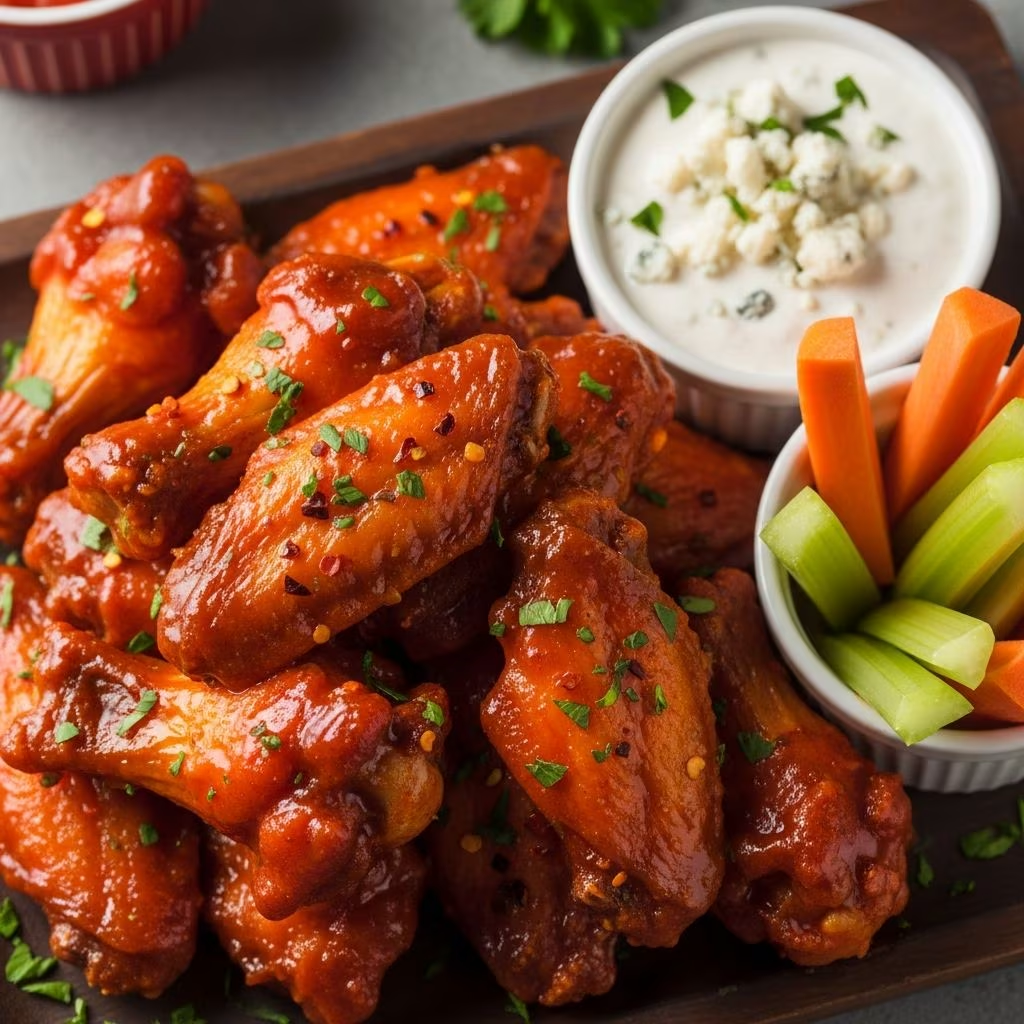
Traditional accompaniments enhance the buffalo wing experience. Serve with celery sticks, which provide a cool, crisp contrast to the spicy sauce, and creamy dipping options such as ranch dressing or blue cheese sauce. These cooling elements balance the heat and provide palate relief between bites.
Helpful Troubleshooting Guide
| Issue | Cause | Solution |
|---|---|---|
| Greasy, soggy wings | Oil temperature too low or wings overcrowded | Maintain proper temperature and fry in smaller batches; ensure wire racks allow air circulation for baked wings |
| Burnt exterior, undercooked interior | Oven temperature too high or wings too large | Use medium-sized wings and adjust temperature; consider two-stage baking method |
| Sauce separates or becomes oily | Sauce applied while too hot | Allow sauce to cool slightly and always whisk during preparation to maintain emulsification |
| Uneven browning | Crowded cooking surface or inconsistent heat | Space wings adequately and flip halfway through cooking; rotate baking sheet if oven has hot spots |
Frequently Asked Questions
Can I prepare buffalo wings ahead of time?
Cooked buffalo wings are best served immediately after sauce application for optimal crispiness. However, you can cook wings several hours in advance and refrigerate them, then reheat in a 350°F oven for 10-15 minutes before tossing with sauce.
What hot sauce works best for buffalo wings?
Frank’s Red Hot Original Cayenne Sauce is the traditional choice and delivers authentic buffalo flavor. Other cayenne-based hot sauces produce similar results. Avoid vinegar-forward sauces that lack the characteristic buffalo taste profile.
How do I adjust the spice level?
Simply increase or decrease the amount of hot sauce in your buffalo sauce recipe. For milder wings, use less hot sauce and incorporate more butter and honey. For extra spicy wings, add more hot sauce or incorporate cayenne pepper into the seasoning mixture.
Are there vegetarian alternatives?
The buffalo sauce recipe remains identical for vegetarian preparations. Substitute chicken wings with cauliflower florets or mushrooms, using identical cooking methods and sauce application.
What’s the best storage method?
Store leftover cooked wings in an airtight container in the refrigerator for up to three days. Reheat gently in a low oven to preserve crispiness rather than using a microwave, which can make them soggy.
Elevating Your Buffalo Wing Game
Once you’ve mastered the basic technique, numerous variations and enhancements await exploration. Consider infusing your sauce with honey for sweetness, adding apple cider vinegar for complexity, or incorporating Worcestershire sauce for umami depth. Experimenting with different hot sauce brands introduces subtle flavor variations while maintaining the essential buffalo character.
Seasoning variations before cooking also offer creative opportunities. Smoked paprika adds depth, while different spice combinations appeal to various palates. The fundamental cooking principles remain constant regardless of flavor modifications.
Making restaurant-quality buffalo chicken wings at home is entirely achievable through understanding proper techniques, maintaining temperature control, and respecting ingredient ratios. Whether you choose traditional deep-frying or modern baking methods, the result—crispy exterior, tender interior, and perfectly balanced sauce—will rival any establishment. With practice and experimentation, you’ll develop preferences and refinements that make your preparation uniquely yours.
References
- Buffalo Chicken Wings Recipe — The Black Peppercorn. 2024. https://www.theblackpeppercorn.com/buffalo-chicken-wings/
- Delicious Buffalo Wings Recipe — Budget Bytes. 2024. https://www.budgetbytes.com/buffalo-wings/
- Restaurant-Style Buffalo Wings and Sauce — The Spice House. 2024. https://www.thespicehouse.com/blogs/recipes/restaurant-style-buffalo-wings
- Best Buffalo Chicken Wings — Ask Chef Dennis. 2024. https://www.askchefdennis.com/the-best-buffalo-chicken-wings-youll-ever-have/
- Baked Buffalo Wings – ULTRA CRISPY!! — RecipeTin Eats. 2024. https://www.recipetineats.com/truly-crispy-oven-baked-buffalo-wings-my-wings-cookbook/