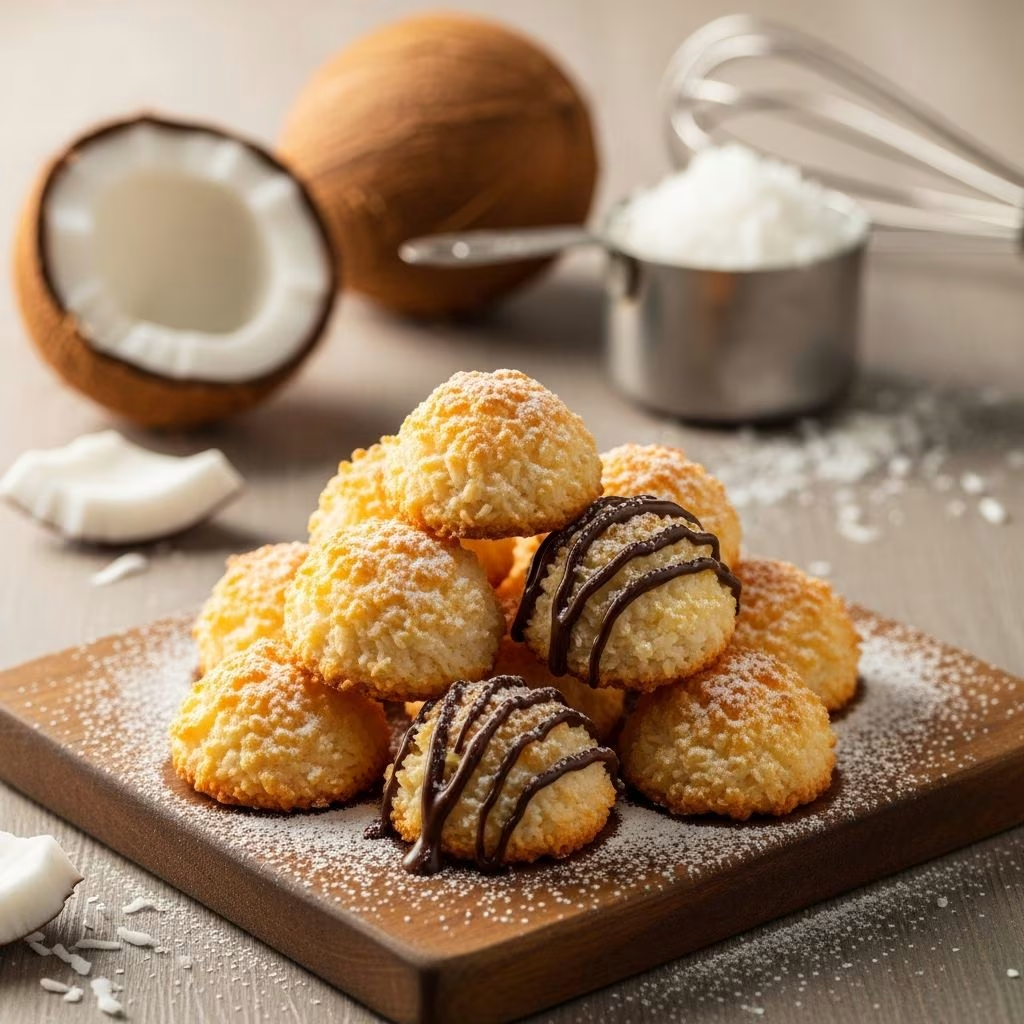
Coconut macaroons represent one of the most accessible and satisfying homemade treats you can prepare in your kitchen. These naturally chewy, subtly sweet confections require minimal ingredients yet deliver maximum flavor and texture satisfaction. Whether you’re seeking a straightforward dessert for weeknight indulgence or an impressive addition to holiday cookie platters, mastering coconut macaroons opens up endless creative possibilities.
Understanding the Fundamentals of Coconut Macaroon Baking
Before diving into the preparation process, it’s important to understand what makes these treats distinctive. Coconut macaroons differ fundamentally from French macarons—they contain no almond flour and require no complicated piping or meringue techniques. Instead, these confections rely on shredded coconut as the primary structural ingredient, combined with a binding agent to create their characteristic chewy interior and slightly crisp exterior.
The beauty of this recipe lies in its simplicity and reliability. The base formula involves three essential components: sweetened shredded coconut, egg whites, and a sweetener. This straightforward combination transforms into an elegant dessert through proper mixing and baking methodology. Understanding how these ingredients interact helps you troubleshoot potential issues and achieve consistent results across multiple batches.
Essential Ingredients and Quality Selection
Success with coconut macaroons begins with careful ingredient selection. Each component contributes meaningfully to the final product’s texture and flavor profile.
Coconut Considerations
Sweetened shredded coconut forms the foundation of your macaroons. This ingredient is typically pre-sweetened during processing, which influences your final sweetness level. The texture of your shredded coconut matters—finely shredded varieties create denser, more uniform macaroons, while medium shreds produce slightly more textured results. Many bakers prefer medium-cut coconut for its ability to maintain structural integrity while providing pleasant mouthfeel.
When purchasing coconut, check packaging dates and storage conditions. Fresh coconut produces superior results compared to product stored in warm environments for extended periods. Store unopened packages in a cool, dark location, and transfer opened portions to airtight containers where they’ll remain fresh for several months.
Egg Whites and Their Function
Egg whites serve as the binding agent that transforms loose coconut into cohesive macaroons. Room temperature egg whites incorporate more efficiently and create better structural matrices than cold eggs. The proteins in egg whites denature during baking, creating a network that holds the coconut particles together while allowing moisture to escape gradually.
For best results, separate eggs carefully, ensuring no yolk contaminates the whites. Even trace amounts of fat prevent proper incorporation and can compromise your results. If you prefer to avoid raw eggs, pasteurized eggs provide equivalent functionality while eliminating food safety concerns.
Sweetening Options
While granulated sugar remains the traditional sweetener, you have flexibility in this component. Vanilla extract complements the coconut flavor beautifully and requires minimal addition—typically one-half to one teaspoon per batch. Almond extract offers an interesting flavor dimension if you prefer subtle variation from the standard preparation.
Step-by-Step Preparation and Baking Instructions
Preparation Phase
Begin by preheating your oven to 325°F. Line baking sheets with parchment paper, which prevents sticking and ensures even browning. This temperature proves gentler than higher settings, allowing macaroons to develop their characteristic texture without burning the exterior before the interior sets.
In a mixing bowl, combine egg whites with a pinch of salt. Using an electric mixer on medium speed, whip the egg whites until soft peaks form—about one to two minutes. This initial mixing incorporates air and begins the protein denaturation process. Gradually add granulated sugar while continuing to beat, increasing speed to medium-high. Continue mixing until stiff peaks form and the mixture becomes glossy and smooth.
The properly whipped egg white mixture should hold peaks when you lift the beaters, and the sugar should be fully dissolved. This stage typically requires three to five minutes of beating. Gently fold in the shredded coconut using a rubber spatula, preserving as much airiness as possible while ensuring even distribution throughout the mixture.
Shaping and Baking
Using either a small ice cream scoop or two teaspoons, create uniform mounds on your prepared baking sheets. Consistency in size ensures even baking—macaroons should be roughly one and one-half inches in diameter. If you prefer more defined shapes, you can gently compress each mound with the back of a damp spoon, creating a slight dome.
Bake for eighteen to twenty-two minutes, until the macaroons achieve pale golden coloring. The exact timing depends on your oven’s characteristics and the humidity level in your kitchen. Remove the baking sheet and allow macaroons to cool for five minutes before transferring them to a wire rack for complete cooling.
Flavor Variations and Creative Additions
Chocolate Integration
Dipping cooled macaroons in melted chocolate creates an elegant contrast between the dark coating and coconut interior. Melt chocolate in a double boiler or microwave in thirty-second intervals, stirring between each pulse. Dip the bottom half of each macaroon into the melted chocolate, then place on parchment paper to set. Allow at least thirty minutes for the chocolate to firm before serving or storing.
Tropical Flavor Enhancements
Consider incorporating dried fruits or extracts to expand your macaroon repertoire. Finely chopped dried mango or pineapple adds unexpected sweetness and texture. Substitute one-quarter teaspoon of vanilla extract with coconut extract for intensified coconut flavor. Lime zest brings bright acidity that complements the coconut’s natural richness.
Spiced Variations
A pinch of cardamom or a light dusting of cinnamon introduces warming spice notes. These additions work particularly well when combined with chocolate coating or during holiday seasons when warmer flavor profiles appeal to broader palates.
Troubleshooting Common Macaroon Challenges
| Problem | Likely Cause | Solution |
|---|---|---|
| Macaroons spread excessively | Insufficient egg white volume or over-beaten mixture | Ensure proper meringue formation; avoid over-mixing after coconut addition |
| Dense, hard texture throughout | Over-baking or incorrect coconut variety | Reduce baking time by two minutes; verify coconut size consistency |
| Interior remains too moist | Under-baking or high humidity environment | Extend baking time by three to five minutes; bake on lower oven rack |
| Macaroons brown too quickly | Oven temperature too high | Reduce oven temperature to 300°F; position rack in middle position |
| Flat macaroons without volume | Under-whipped egg whites | Beat egg whites longer until stiff peaks form consistently |
Storage and Shelf Life Considerations
Properly stored macaroons maintain quality for up to one week in an airtight container at room temperature. The chewy texture gradually becomes firmer as macaroons age, which many people find preferable to the initial freshly-baked consistency. If you prefer maintaining softer texture throughout the storage period, place a slice of bread or apple wedge in the container—these items release moisture that keeps macaroons tender.
For extended storage, freeze macaroons for up to three months. Place cooled macaroons in a freezer-safe container with parchment between layers to prevent sticking. Thaw at room temperature for approximately one hour before serving. Chocolate-dipped macaroons store equally well using the same methodology.
Nutritional Profile and Dietary Adaptations
Standard coconut macaroons contain roughly sixty to eighty calories per piece, depending on size and preparation method. They provide moderate amounts of coconut fiber and contain no flour, making them suitable for gluten-free diets. However, they do contain eggs and are not vegan in traditional preparation.
Vegan bakers can substitute egg whites with aquafaba—the liquid from canned chickpeas—using three tablespoons per egg white equivalent. This substitution produces similarly textured macaroons, though slight consistency variations occur due to aquafaba’s different protein composition.
Serving Suggestions and Presentation Ideas
Coconut macaroons work beautifully as standalone desserts or as components in more elaborate presentations. Arrange them on tiered cake stands for holiday gatherings, or package them in decorative boxes as homemade gifts. Serve with coffee or tea as an afternoon indulgence, or incorporate them into dessert cheese boards alongside other confections and fresh fruit.
Frequently Asked Questions
Can I make macaroons without eggs?
Yes, aquafaba or other plant-based egg replacers work effectively. Use three tablespoons aquafaba per egg white, though you may need to add an extra tablespoon for optimal binding. Follow the same mixing and baking instructions.
Why did my macaroons collapse during baking?
Collapsed macaroons typically result from insufficient meringue formation or opening the oven door repeatedly during baking. Ensure egg whites reach stiff peak stage before folding in coconut, and maintain steady oven temperature throughout the baking period.
Can I prepare the mixture ahead of time?
Prepare the mixture up to two hours in advance, storing it in an airtight container at room temperature. Avoid refrigerating, as this causes the mixture to become dense and difficult to scoop.
What’s the difference between sweetened and unsweetened coconut?
Sweetened coconut contains added sugar, affecting the final sweetness level. Unsweetened varieties require additional sugar addition. Most traditional macaroon recipes rely on sweetened coconut for optimal texture and flavor balance.
Can I use coconut oil instead of fresh eggs?
Coconut oil cannot replace eggs, as it doesn’t provide the binding function necessary for structural integrity. Egg whites are essential for proper texture development.
Mastering Your Macaroon-Making Skills
Creating homemade coconut macaroons represents an achievable goal for bakers of all skill levels. The combination of simple ingredients, straightforward techniques, and forgiving nature of the recipe makes it ideal for beginners seeking confidence-building baking projects. Simultaneously, the recipe’s flexibility allows experienced bakers to explore creative variations and refine their technique toward personal preferences.
Each batch you prepare builds familiarity with your equipment, oven characteristics, and ingredient interactions. Over time, you’ll develop intuition about adjusting recipes based on humidity, ingredient variations, and seasonal factors. This accumulated knowledge transforms basic recipe-following into intuitive recipe-creating, allowing you to develop signature variations that reflect your personal taste preferences and creative vision.
References
- The Kitchn: Ultimate Guide to Coconut Macaroons — The Kitchn (Trusted Food Media). 2024. https://www.thekitchn.com/how-to-make-coconut-macaroons-recipe-22951
- USDA Food Data Central: Coconut Products — United States Department of Agriculture. 2024. https://fdc.nal.usda.gov/fdc-app.html#/
- Food Network: Baking Basics and Egg White Science — Food Network (Major Media Publisher). 2023. https://www.foodnetwork.com/
- Serious Eats: Meringue Techniques and Baking Science — Serious Eats (Food Science Authority). 2024. https://www.seriouseats.com/