Creating an exceptional clam sauce requires understanding the delicate balance between briny seafood flavors, aromatic ingredients, and proper cooking technique. This Italian-inspired dish has become a beloved staple in home kitchens and fine dining establishments alike, celebrated for its ability to transform simple ingredients into something truly memorable. Whether you’re a seasoned cook or venturing into seafood cooking for the first time, this comprehensive guide will walk you through every aspect of preparing outstanding clam sauce.
Understanding Your Ingredient Choices
The foundation of any successful clam sauce begins with selecting the right clams and complementary ingredients. Your choice between fresh and canned clams will significantly influence both the preparation time and the final flavor profile of your dish.
Fresh clams deliver an unparalleled briny sweetness and tender texture that many enthusiasts prefer. Littleneck clams are the traditional choice for this preparation, as they maintain their structural integrity during cooking and provide a satisfying bite. Before cooking, fresh clams require thorough rinsing under cold running water and gentle scrubbing to remove any sand or debris. It’s important to discard any clams that fail to open during the cooking process, as they may be unsafe to consume.
Canned clams offer convenience and consistency, making them an excellent option for busy cooks or when fresh clams aren’t available. These come in two textures: whole clams and chopped varieties. Using a combination of both types creates a more interesting sauce with varied textures. The juice from canned clams is equally valuable, as it contributes concentrated briny flavor to your sauce base.
Beyond clams themselves, several supporting ingredients create the aromatic foundation:
- Premium extra-virgin olive oil provides fruity undertones and carries flavoring compounds
- Garlic and shallots deliver pungent aromatics when gently sautéed
- Dry white wine adds acidity and complexity, helping to deglaze the cooking vessel
- Fresh parsley contributes brightness and visual appeal to the finished sauce
- Butter enriches the sauce and creates a silky mouthfeel
- Lemon juice brightens flavors and prevents the sauce from becoming heavy
Foundational Technique: Building Layers of Flavor
Professional cooks understand that great sauces develop through a series of deliberate steps rather than simply combining ingredients. Each stage builds upon the previous one, creating depth and complexity.
The initial aromatic foundation sets the tone for your entire sauce. Heat olive oil in a large skillet over medium heat, then add minced garlic and finely diced shallots. Cook gently for two to three minutes, stirring frequently to ensure even cooking and prevent the garlic from browning. This brief cooking time is crucial—you’re aiming for fragrant and softened aromatics, not caramelized or burnt ones. The gentle heat coaxes out the natural sugars and volatile compounds that create the sauce’s characteristic flavor.
The deglazing phase introduces acidity and helps lift flavorful browned bits from the pan’s surface. Pour in your dry white wine and increase the heat to medium-high. Allow the mixture to bubble vigorously for several minutes as the alcohol cooks off, reducing the liquid volume by approximately half. This reduction concentrates flavors and mellows the wine’s sharpness. If using fresh clams, this is the ideal moment to add them, covering the pan and allowing them to steam until their shells open.
The clam addition and simmering stage introduces the star ingredient while the reserved clam juice continues building complexity. Once your fresh clams have opened or you’re using canned varieties, add them along with their juice. Bring the mixture back to a gentle simmer and maintain this temperature for ten minutes, allowing all the flavors to meld and mellow.
Two Approaches to Clam Sauce Preparation
| Preparation Style | Best For | Cooking Time | Key Characteristics |
|---|---|---|---|
| White Wine-Based Sauce | Showcasing pure clam flavor | 20-25 minutes | Light, briny, oil-forward, enhanced with wine and butter |
| Cream-Enhanced Sauce | Creating richness and comfort | 25-30 minutes | Luxurious mouthfeel, slightly heavier, butter and cream combined |
| Tomato-Accented Sauce | Those preferring slight acidity | 30-35 minutes | Deeper color, balanced acidity, moderate body |
The white wine approach represents the traditional Italian method, emphasizing the natural briny character of clams. After the initial simmering phase, finish by stirring in fresh parsley, a squeeze of lemon juice, and additional butter if desired. This style celebrates simplicity and allows the clam flavor to dominate.
The cream-enriched variation offers a more luxurious dining experience. Following the simmering stage, reduce heat to low and stir in heavy cream gradually, stirring constantly. The cream coats the palate and creates a silkier texture. Add the fresh parsley at the very end to preserve its bright green color and fresh taste. This approach works particularly well for those who enjoy comfort food or prefer a less intensely briny flavor.
The tomato-based option introduces Mediterranean complexity by incorporating crushed tomatoes. After sautéing the aromatics and adding wine, incorporate a large can of quality crushed tomatoes. Allow this mixture to simmer for ten minutes before adding your clams. The tomatoes’ acidity provides balance and creates a sauce that works beautifully with both linguine and heartier pasta shapes.
Pairing with Pasta: Selection and Preparation Matters
Your pasta choice influences how the sauce coats and combines with each bite. Traditionally, thin, delicate shapes work best with clam sauce because they allow the sauce to cling to the pasta’s surface without overwhelming it.
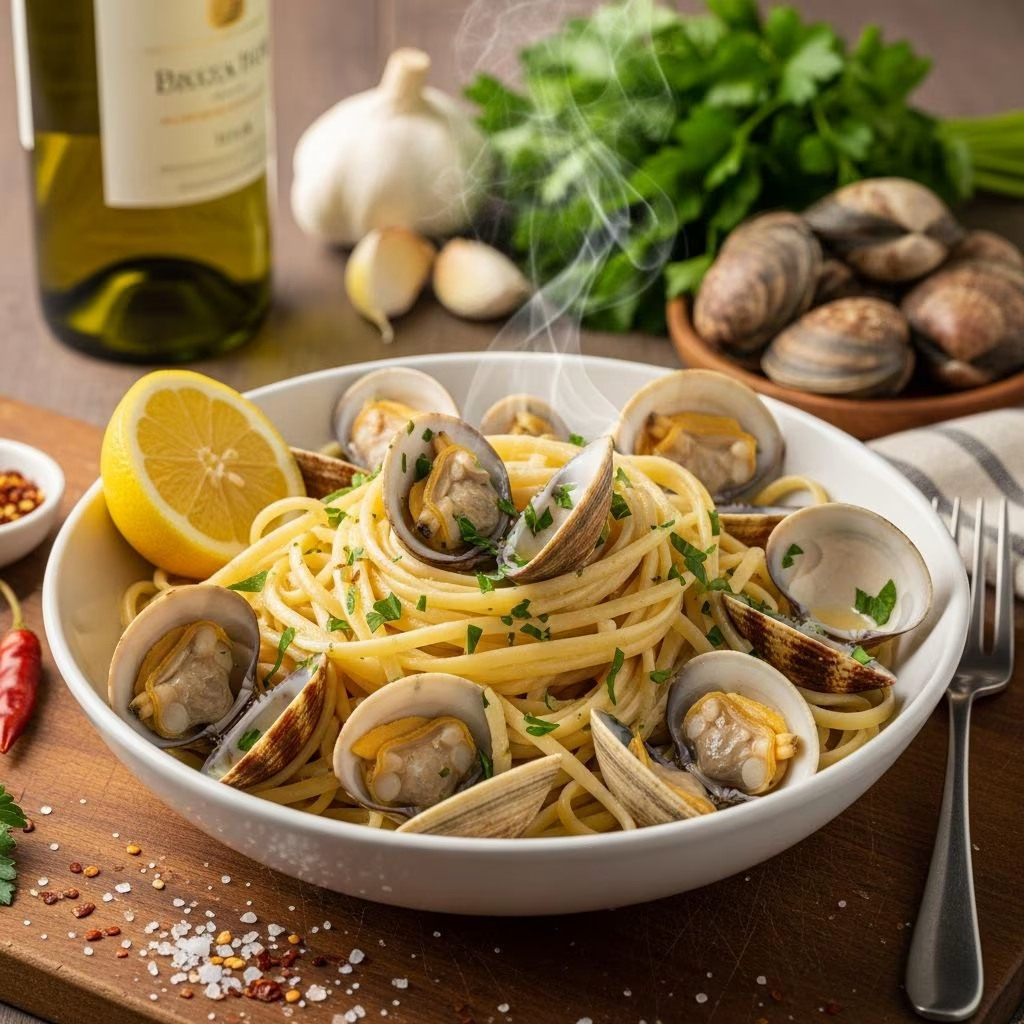
Spaghetti, linguine, and bucatini all represent excellent choices, each offering slight variations in how they interact with your sauce. Linguine’s slightly flattened profile helps trap sauce in its grooves, while spaghetti’s uniform roundness creates a different textural experience. Bucatini, with its hollow center, absorbs sauce in a unique way that many cooks find particularly satisfying.
Proper pasta preparation ensures optimal results. Cook your pasta in generously salted boiling water, following package instructions but aiming to remove it while still slightly firm—what Italians call al dente. Reserve at least one cup of the starchy pasta cooking water before draining. This starchy liquid becomes invaluable when combining pasta and sauce, as it helps create a cohesive dish where the sauce bonds with the pasta rather than simply sitting atop it.
The Final Assembly Process
Combining pasta and sauce requires attention and care to achieve proper integration rather than separation. Place your finished sauce in a large bowl or return it to the skillet. Add your drained pasta directly to the sauce, then add a splash of reserved pasta water. Toss gently but thoroughly for one to two minutes, allowing the starch to hydrate and help the sauce coat each strand. If the mixture appears too thick, continue adding pasta water in small amounts until you achieve the desired consistency.
The finished dish should glisten with sauce but not appear soupy or swimming in liquid. Each strand of pasta should be visibly coated while maintaining its distinct texture. Top individual servings with fresh parsley and, if desired, a sprinkle of Pecorino Romano or Parmigiano-Reggiano cheese.
Common Pitfalls and Solutions
- Overcooked or rubbery clams: Limit cooking time once clams are added; they require only gentle heating through. Remove from heat as soon as fresh clams open.
- Excessively salty sauce: The clam juice and reserved pasta water both contain salt; taste before adding additional salt, as the flavors concentrate during reduction.
- Broken or curdled cream: If using cream, ensure the sauce temperature remains below boiling and add cream gradually while stirring constantly.
- Separated or greasy sauce: Maintain gentle heat throughout cooking; high temperatures can break emulsions and cause separation.
- Bland or underdeveloped flavor: Allow adequate time for the wine to reduce and flavors to meld; rushing this stage results in a flat-tasting final product.
Frequently Asked Questions About Clam Sauce
Can I prepare clam sauce in advance? You can prepare the sauce base through the simmering stage and refrigerate it for up to two days. Reheat gently before adding fresh parsley and serving with freshly cooked pasta.
What should I do with clams that don’t open? Discard any clams that fail to open during cooking, as opened shells indicate the clam is alive and safe to consume, while those that remain closed may indicate spoilage.
Is bottled clam juice acceptable as a substitute? Bottled clam juice can work in a pinch and provides the necessary briny flavor, though fresh clam juice from canned clams typically offers superior taste and quality.
Can I freeze clam sauce? While freezing is possible, the texture of any fresh clams may become tough after thawing. Freeze the sauce base without clams for better results, then add fresh or canned clams after reheating.
What wines pair best with clam sauce? Crisp, dry white wines such as Pinot Grigio, Sauvignon Blanc, or Vermentino work beautifully, their acidity complementing both the sauce and the finished dish.
Elevating Your Clam Sauce Beyond the Basics
Once you’ve mastered the fundamental technique, several approaches allow creative exploration. A splash of heavy cream transforms the sauce into something richer, while the addition of crushed red pepper flakes adds subtle heat. Some cooks incorporate sun-dried tomatoes or fresh fennel for additional complexity. Experimenting with these additions helps develop your personal signature version while maintaining the dish’s essential character.
Understanding the principles behind clam sauce preparation—building aromatic foundations, allowing adequate time for flavors to develop, and respecting the delicate nature of your primary ingredient—enables you to create restaurant-quality results in your own kitchen. Each time you prepare this dish, you’ll refine your technique and develop greater intuition about timing, seasoning, and the perfect moment to combine all elements for maximum impact.
References
- Linguine with White Clam Sauce Recipe — The View from Great Island. Accessed April 2026. https://theviewfromgreatisland.com/clam-sauce-recipe/
- Red Clam Sauce Recipe — The Life Jolie. Accessed April 2026. https://www.thelifejolie.com/linguine-with-clam-sauce/
- Best Linguine with Clam Sauce Recipe — The Pioneer Woman. Accessed April 2026. https://www.thepioneerwoman.com/food-cooking/recipes/a63786538/linguine-with-clam-sauce-recipe/