Chocolate mousse represents one of the most elegant yet surprisingly accessible desserts you can prepare in your own kitchen. The beauty of this French classic lies not in complicated procedures or obscure ingredients, but rather in understanding fundamental techniques and respecting the quality of your components. Whether you’re preparing a dinner party dessert or satisfying an afternoon chocolate craving, mastering mousse preparation opens doors to countless variations and presentations.
Understanding What Makes Mousse Distinctive
At its core, mousse distinguishes itself through its characteristic airy texture—a light, cloud-like consistency that melts smoothly on the palate. This distinctive quality emerges from the interplay between two primary components: melted chocolate and whipped cream or beaten egg whites. The incorporation of air through whipping creates the signature foam structure that defines authentic mousse. This textural contrast between rich chocolate and ethereal airiness explains the dessert’s enduring popularity across cultures and culinary traditions.
The magic happens when you understand that mousse isn’t about complexity but about respecting proportions and technique. The balance between solid ingredients and air creates the final product’s personality, making it simultaneously decadent and remarkably light on the palate.
Selecting Your Ingredients Strategically
Chocolate Selection and Quality
The chocolate you choose fundamentally determines your mousse’s character. Bittersweet chocolate (typically containing 60-70% cocoa solids) provides depth and sophistication, while semisweet varieties offer a more approachable sweetness. The distinction matters significantly—higher cocoa percentages create more intense, complex flavors, while lower percentages appeal to those preferring sweeter profiles.
Purchase chocolate in bars or large chunks rather than chocolate chips when possible. Chips contain stabilizers that prevent optimal melting and can create a slightly grainy texture. Chopping your chocolate into uniform pieces ensures even melting and smoother integration with other ingredients.
Cream and Dairy Components
Heavy whipping cream—specifically products containing at least 36% butterfat—whips to greater volume and creates superior structure compared to lighter cream varieties. The fat content directly correlates with your ability to achieve stiff peaks and maintain them during folding. Always verify your cream’s temperature; cold cream whips faster and more efficiently than room-temperature alternatives.
Some recipes incorporate both heavy cream and egg whites for additional airiness and protein structure. When combining these elements, sequence matters—typically, you’ll whip them separately before folding them together to maintain maximum volume.
Flavor Enhancers and Complementary Ingredients
Vanilla extract adds subtle sweetness and depth without overwhelming chocolate’s primary flavors. Espresso powder or instant coffee intensifies chocolate’s inherent complexity, creating complexity that registers as “more chocolate-like” even though the coffee flavor itself remains subtle. Sea salt provides contrast that heightens chocolate perception—just a pinch transforms the flavor profile significantly.
Beyond these foundations, you might incorporate cocoa powder for intensity, liqueurs like Kahlúa for sophistication, or complementary flavors like orange or mint extracts for variation.
Core Preparation Methods
The Melting Process
Chocolate requires gentle, controlled heating to melt evenly without becoming grainy or developing that undesirable thick, glossy coating that forms when overheated. Two primary methods work effectively: the double boiler approach (placing chocolate over simmering water in a heatproof bowl) and the microwave method using short bursts (20-30 seconds) with thorough stirring between intervals.
The double boiler provides more control and prevents accidental overheating, making it preferable for beginners. The microwave offers speed for experienced cooks who monitor carefully. Regardless of method, chocolate should reach a smooth, pourable consistency without appearing oily or separated.
Incorporating Warm Cream
Adding heated cream to chocolate serves multiple purposes: it reduces temperature shock, helps incorporate air as you blend, and creates emulsification that develops satiny texture. Streaming the warm cream gradually while blending prevents temperature fluctuations and ensures homogeneous incorporation. This step transforms separate components into a unified, glossy chocolate foundation.
Whipping and Folding Techniques
Electric mixers—whether stand-mounted or handheld varieties—efficiently incorporate air into cream or egg whites. The transformation from liquid to soft peaks takes roughly 2-3 minutes with cold cream; continuing to stiff peaks typically requires another 1-2 minutes. Understanding peak stages proves crucial:
- Soft peaks: Cream holds gentle waves that collapse back onto themselves
- Medium peaks: Cream forms gentle mounds with slightly defined tops
- Stiff peaks: Cream holds sharp, defined peaks without collapsing
Folding—combining the whipped cream or egg whites with chocolate without deflating achieved volume—requires patience and technique. Use a rubber spatula to gently cut down through the center, sweep along the bowl’s bottom, then lift upward and over, rotating the bowl 90 degrees with each motion. Continue until no distinct white streaks remain, typically 8-12 folds.
Two Fundamental Approaches
Egg-Free Method
Modern home cooks frequently prefer the egg-free approach, which eliminates food safety concerns while simplifying preparation. This method relies entirely on whipped cream for structure and airiness, creating a lighter, airier result. The process involves melting chocolate with minimal cream, cooling it to room temperature, then folding in separately whipped cream seasoned with powdered sugar and vanilla.
This approach typically yields a mousse requiring 2-3 hours refrigeration before achieving firm texture, though you can enjoy softer versions after just 30-45 minutes of chilling. The texture tends toward creamier, less intensely airy, but many find this preferable to more aggressively foamed versions.
Traditional Egg-Containing Preparation
Classic French recipes incorporate both egg yolks (for richness and emulsification) and whipped egg whites (for structure and volume). This method creates a lighter, airier mousse with elegant, almost soufflé-like qualities. The eggs must be fresh, high-quality, and preferably organic when consuming raw. The yolks temper slightly by whisking into warm chocolate, reducing but not eliminating raw consumption concerns—always consider your comfort level and guests’ preferences.
Whipped egg whites provide remarkable volume and create a delicate, almost cloud-like final texture. The fat-free nature of egg whites allows maximum air incorporation compared to cream-based methods.
Ingredient Proportions and Ratios
| Component | Egg-Free Version | Traditional Version |
|---|---|---|
| Chocolate | 8 oz | 12 oz (mix of bittersweet and milk) |
| Heavy Cream | 1-1.5 cups total | 0.75-1 cup |
| Eggs | None | 2-3 yolks, 2-3 whites |
| Sugar | 3-5 tablespoons powdered | 2 tablespoons |
| Flavoring | 1-2 teaspoons vanilla | 0.5 teaspoon vanilla, 0.25 cup liqueur optional |
These proportions represent foundational guidelines rather than absolute rules. More chocolate creates denser, more intensely chocolate-flavored mousse; increased cream yields lighter, airier results. Adjusting sugar to taste accommodates personal preferences and chocolate selection (darker chocolates typically require less added sweetness).
Preparation Timeline and Chill Requirements
Proper cooling and chilling dramatically affect final texture. Melted chocolate requires cooling to room temperature (approximately 15-20 minutes, stirring occasionally) before folding into whipped cream or egg whites. Premature folding results in deflated, collapsed texture as warm chocolate warms surrounding components.
After combining all components, transfer mousse to individual serving dishes or a shared container and refrigerate minimum 2-3 hours. Longer chilling (up to 8 hours) produces firmer texture without negatively affecting quality. The cold temperature allows stabilization through fat crystallization and protein network formation.
Professional Presentation Techniques
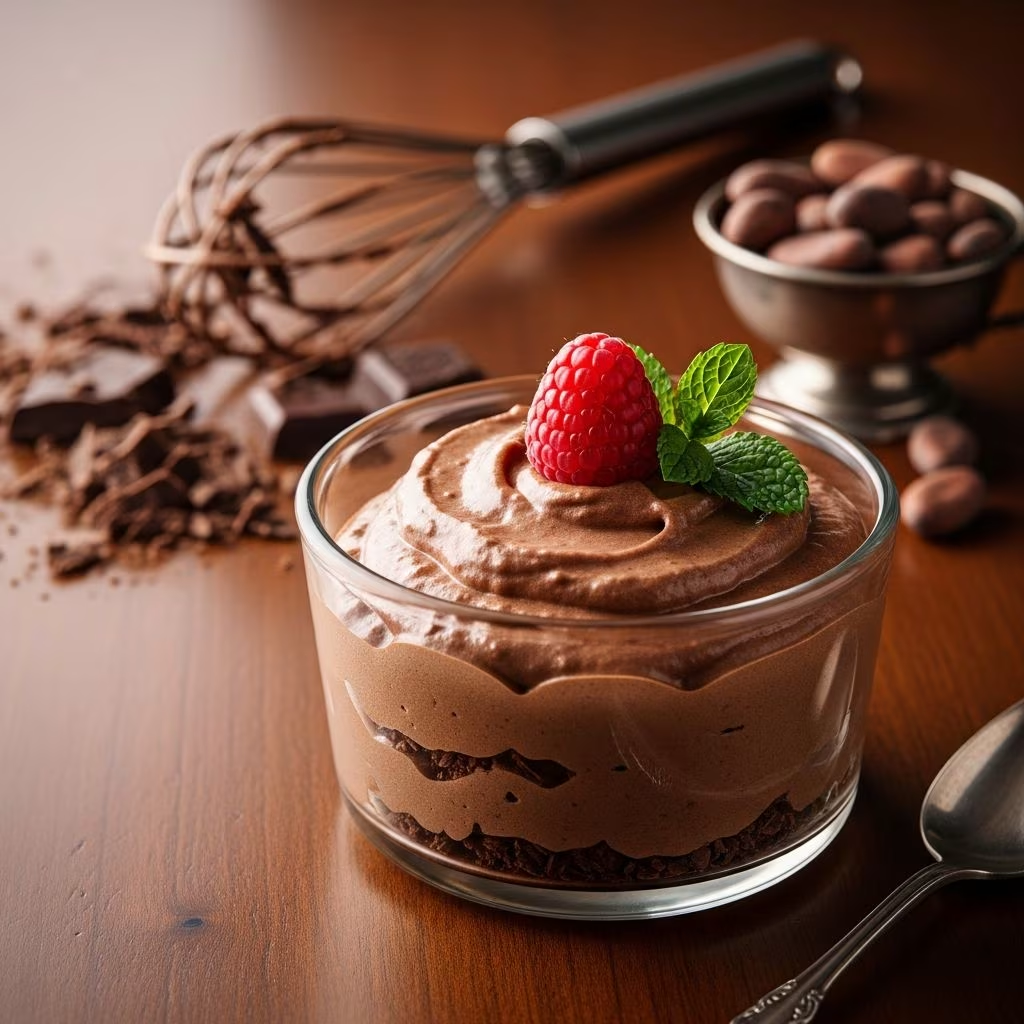
Mousse’s elegant nature invites thoughtful presentation. Serve in individual glasses, small bowls, or martini-style glasses for visual impact. Layer mousse with contrasting elements—fresh berries, crumbled cookies, or complementary mousses (white chocolate or coffee varieties)—for complexity.
Top with freshly whipped cream, chocolate shavings created by running a vegetable peeler across chocolate bars, or cocoa powder dusted through a fine sieve. Fresh raspberries, strawberries, or mint leaves add color and freshness that contrasts beautifully with rich chocolate.
Common Mistakes and Prevention
Separated or grainy texture: Results from chocolate overheating or insufficient incorporation. Ensure chocolate never exceeds 115°F and blend thoroughly when combining components.
Deflated mousse lacking airiness: Occurs when folding too aggressively or combining components that haven’t reached proper consistency. Fold gently with minimum motions required for combination, and allow whipped components to reach peak consistency before folding.
Overly dense, heavy result: Indicates insufficient whipping cream or egg whites, or melted chocolate that cooled too much before folding. Ensure adequate aeration time and monitor chocolate temperature carefully.
Mousse that separates or weeps liquid: Suggests excessive chilling causing fat separation or egg content concerns. Cover surfaces with plastic wrap during storage to prevent dehydration.
Flavor Variations Worth Exploring
Begin with the classic formula, then experiment. Incorporate orange zest or Grand Marnier for citrus sophistication. Add 1-2 tablespoons of instant coffee powder for intensified chocolate depth. Substitute half the chocolate with white chocolate for varied flavor profiles. Infuse cream with vanilla beans, lavender, or Earl Grey tea before whipping for subtle flavor complexity.
These variations maintain the fundamental technique while creating entirely different dessert experiences from the same basic method.
Storage and Make-Ahead Considerations
Properly stored mousse remains excellent for 2-3 days when refrigerated in airtight containers. The combination of fat and protein resists degradation effectively. Do not freeze mousse, as the ice crystal formation and thawing process destroys the delicate texture that defines the dessert.
You can prepare mousse several hours ahead, making it ideal for entertaining. This advance preparation reduces last-minute stress while ensuring components reach optimal temperature and consistency.
Frequently Asked Questions
Can I make mousse without a mixer?
Yes, though it requires more effort. Whip cream or egg whites with a balloon whisk in a bowl, using vigorous upward strokes. This manual method takes 10-15 minutes compared to 3-5 minutes with an electric mixer but produces identical results if you maintain consistent effort.
What’s the difference between mousse and pudding?
Mousse incorporates whipped cream or egg whites for airiness, creating a light, foam-like texture. Pudding relies on thickening agents (cornstarch, gelatin, or egg) without significant aeration, resulting in denser, spoonable texture.
Is raw egg consumption dangerous?
Raw egg consumption carries minimal risk when using fresh, high-quality, preferably organic eggs from reliable sources. Pasteurized eggs offer additional safety assurance. Those with compromised immune systems, very young children, elderly individuals, or pregnant women should avoid raw eggs entirely.
How do I adjust sweetness level?
Taste the chocolate mixture after cooling but before folding in whipped cream. Add powdered sugar (1 teaspoon at a time) if additional sweetness is desired, stirring thoroughly before tasting again.
Can I prepare mousse in advance for parties?
Absolutely. Prepare mousse up to 8 hours ahead and refrigerate covered. Add garnishes and final presentation elements just before serving for optimal visual appeal.
References
- Understanding Chocolate: Chemistry and Science — International Cocoa Organization. 2024. https://www.ico.org
- Dairy Science and Cream Processing Standards — U.S. Department of Agriculture Food Safety and Inspection Service. 2023. https://www.fsis.usda.gov