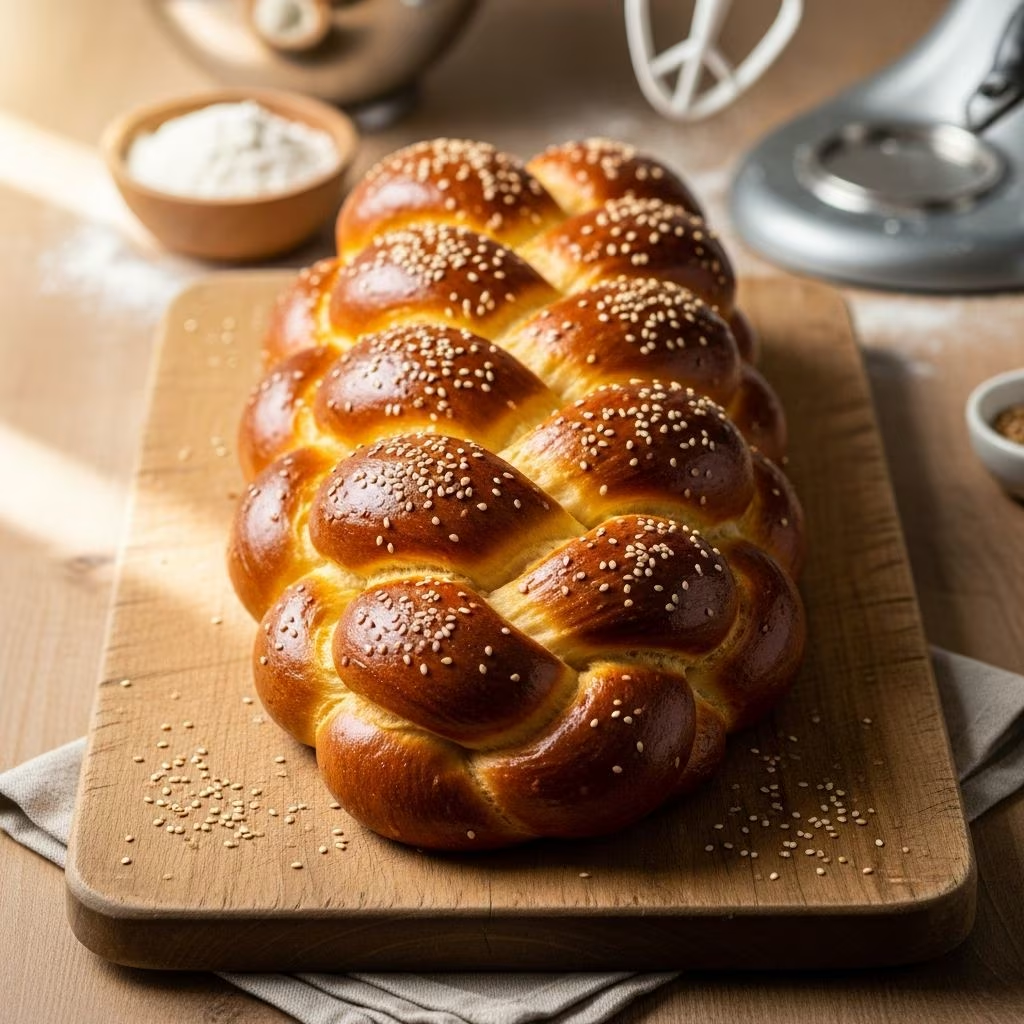
Challah, the iconic braided bread central to Jewish tradition, transforms simple ingredients into a work of art. With its soft, egg-enriched crumb and shiny crust, it’s perfect for Shabbat dinners, holidays, or any meal needing elevation. This guide draws from time-honored methods to help beginners and seasoned bakers alike create bakery-quality loaves at home.
Understanding Challah’s Roots and Role
Challah originates from Jewish customs, where it’s blessed and shared during Sabbath and festive occasions. Traditionally, two loaves symbolize the double portion of manna in the desert, reminding participants of divine provision. Today, challah appears in homes worldwide, adapted with flavors like vanilla, citrus, or seeds while preserving its cultural essence.
Baking challah fosters community; many families turn it into a ritual, involving children in braiding. Its versatility extends beyond ritual—use it for French toast, sandwiches, or stuffing. Mastering challah means appreciating its balance of sweetness, tenderness, and structure.
Essential Ingredients for Flawless Dough
The foundation of great challah lies in quality components. Here’s what you need for one large loaf (serving 12):
- Flour: 5 cups bread flour for strength and chew (all-purpose works but yields softer results).
- Yeast: 2¼ tsp active dry or instant for reliable rise.
- Sugar: ½ cup granulated for subtle sweetness and yeast food.
- Salt: 2 tsp to balance flavors and control fermentation.
- Eggs: 4 large whole eggs plus 1 yolk for richness and golden hue.
- Oil: ½ cup neutral like vegetable or canola for tenderness.
- Water: 1 cup warm (110°F) to activate yeast.
- Optional add-ins: 1 tsp vanilla extract, zest of 1 orange, or ½ cup raisins.
Room-temperature ingredients ensure even mixing. High-gluten bread flour promotes the dough’s elasticity, crucial for intricate braids.
Step-by-Step Dough Preparation
Creating challah dough requires patience and precision. Follow these stages:
- Activate Yeast: Dissolve yeast in warm water with 1 tbsp sugar. Let foam for 10 minutes, confirming viability.
- Mix Wet Ingredients: Whisk eggs, oil, remaining sugar, salt, and vanilla in a large bowl.
- Combine: Add yeast mixture to wet ingredients, then gradually incorporate flour to form a shaggy dough.
- Knead: Turn onto a floured surface; knead 10-12 minutes until smooth and supple. Use a stand mixer with dough hook for ease.
- First Rise: Place in an oiled bowl, cover with plastic, and let rise in a warm spot until doubled, about 1-2 hours.
For overnight flavor development, refrigerate after initial rise. This slow fermentation enhances taste and texture.
Art of Braiding: Techniques for Stunning Loaves
Braiding defines challah’s beauty. Start with 3-6 equal dough strands. Common styles include:
| Braid Type | Strands | Best For |
|---|---|---|
| Classic Three-Strand | 3 | Beginners; simple Shabbat loaf |
| Four-Strand | 4 | Balanced twist; holidays |
| Six-Strand Round | 6 | Rosh Hashanah; symbolic spiral |
| Ladder Braid | 4-6 | Advanced; dramatic presentation |
Three-Strand Method: Pinch tops together. Cross right over middle, then left over new middle; repeat, tucking ends under. For rounds, coil one braid atop another. Practice on parchment-lined sheets; egg wash (1 egg beaten with water) before second rise promotes shine.
Baking to Golden Perfection
Preheat oven to 375°F. After braiding and second rise (45-60 minutes), brush again with egg wash. Bake 25-35 minutes until deep golden and internal temp hits 190°F. Tent with foil if browning too fast. Cool on racks to prevent sogginess.
Steam tricks—like a pan of water in the oven—yield a softer crust. Cool completely before slicing for best texture.
Creative Variations to Elevate Your Challah
Experiment beyond basics:
- Sweet: Add chocolate chips, cinnamon swirl, or apple-cinnamon filling. Stuff by rolling dough around mixtures before braiding.
- Savory: Incorporate garlic, herbs, cheese, or olives for dinner rolls.
- Seasonal: Pumpkin for fall, pistachio for holidays, or everything bagel topping.
- Gluten-Free: Use a 1:1 blend with xanthan gum; expect denser crumb.
Stuffed versions: Flatten portions, add filling, seal, and braid. These wow at gatherings.
Troubleshooting Common Issues
Baking mishaps happen—here’s how to fix them:
- Dense Loaf: Under-kneaded or weak yeast. Test yeast first; knead until windowpane.
- Pale Crust: Insufficient egg wash or low oven temp. Brush twice; bake hotter initially.
- Deflated Braid: Over-proofed. Proof until puffy, not doubled.
- Dry Crumb: Too much flour. Measure by weight (600g for 5 cups).
Track variables in a journal to refine your process.
Storing and Reviving Challah
Fresh challah lasts 2-3 days at room temp in a paper bag. Freeze slices up to 3 months; thaw and toast. Revive day-olds by sprinkling water and warming at 350°F for 10 minutes—crust crisps, interior softens.
Leftovers shine in bread pudding, strata, or croutons.
Challah for Special Occasions
Customize for holidays: Round for Rosh Hashanah (symbolizing year’s cycle), ladder for Shavuot (Torah), or seeded for Sukkot. Dye egg wash for Purim colors. Pair with dips like hummus or sweet butters.
Frequently Asked Questions
What if my dough doesn’t rise?
Check yeast freshness (expires after 1 year) and water temp—not over 115°F. Warm spot aids proofing.
Can I make challah vegan?
Yes: Swap eggs for aquafaba or flax eggs, oil for butter alternative. Results are good but less rich.
How far ahead can I bake challah?
Freeze baked, cooled loaves up to 1 month. Thaw overnight, refresh in oven.
What’s the best flour for challah?
Bread flour for structure; King Arthur’s is top-rated for consistent gluten development.
Why egg wash?
It creates shine, color, and helps toppings adhere via proteins and sugars.
References
- All Things Challah: 14 Recipes to Sweeten Shabbat — Reform Judaism. 2023-01-15. https://reformjudaism.org/jewish-holidays/shabbat/all-things-challah-14-recipes-sweeten-shabbat
- Our Favorite Challah Recipes, Plus More Jewish Breads — Jewish Food Society. 2024-05-20. https://www.jewishfoodsociety.org/collections/favorite-challah-recipes
- Great Challah Recipes — A Taste of Challah. 2023-11-10. https://atasteofchallah.com/about-challah/great-challah-recipes/
- 50+ of the best Challah Recipes — The Feedfeed. 2024-02-28. https://thefeedfeed.com/challah
- 20 Ways To Stuff a Challah — Jamie Geller. 2023-09-05. https://jamiegeller.com/recipes/20-stuffed-challah-recipes/