Buttercream frosting stands as a cornerstone of baking, offering a smooth, spreadable texture that transforms simple cakes and cupcakes into stunning creations. This versatile icing combines basic ingredients like butter, sugar, and flavorings into a luxurious topping that’s both easy to prepare and endlessly customizable. Whether you’re piping intricate designs or simply spreading a generous layer, understanding the fundamentals ensures consistent success in your kitchen.
Understanding the Basics of Buttercream
At its core, buttercream relies on the emulsification of fat and sugar to achieve its signature lightness. Powdered sugar provides sweetness and structure, while softened butter creates creaminess. Liquids like cream or milk adjust consistency, and extracts add depth. The process involves creaming butter to incorporate air, gradually adding sugar to prevent graininess, and whipping to build volume.
Room-temperature ingredients are crucial; cold butter won’t aerate properly, leading to a dense result. Professional bakers emphasize beating on medium-high speed for several minutes to develop fluffiness. This American-style buttercream differs from European versions by using more sugar for stability, making it ideal for decorating.
Essential Ingredients for Success
Selecting high-quality components elevates your frosting. Use unsalted butter for control over saltiness, though salted varieties work if balanced carefully. Powdered sugar, also called confectioners’ sugar, must be sifted to remove lumps that clog piping tips.
- Butter: 1-2 cups (2-4 sticks), softened to room temperature for optimal creaming.
- Powdered Sugar: 4-6 cups, sifted for smoothness.
- Liquid: 2-5 tablespoons heavy cream or milk, at room temperature.
- Flavoring: 1-2 teaspoons vanilla extract or alternatives like almond.
- Salt: A pinch (1/4 teaspoon) to enhance flavors.
These proportions yield about 3-4 cups of frosting, enough for a two-layer 9-inch cake or 24 cupcakes.
Step-by-Step Guide to Perfect Buttercream
Creating flawless buttercream takes precision but minimal time—typically 10 minutes. Follow these steps for reliable results.
- Prepare Equipment: Use a stand mixer with paddle attachment or hand mixer. A large bowl prevents splatters.
- Cream the Butter: Beat softened butter (and salt if using) on medium-high until pale and fluffy, about 2 minutes. This traps air for lightness.
- Incorporate Sugar Gradually: With mixer on low, add half the sifted powdered sugar. Mix until combined, then scrape bowl sides.
- Add Liquids and Flavor: Pour in cream and vanilla; mix on low. Add remaining sugar, then increase speed to medium-high for 3 minutes until silky.
- Final Adjustments: Taste and thin with more cream if needed. Beat extra 1 minute for spreadable texture.
Pro tip: Cover mixer with a towel during sugar addition to contain the cloud of dust.
Classic Vanilla Buttercream Recipe
This foolproof version serves as your go-to base.
| Ingredient | Quantity |
|---|---|
| Unsalted butter, softened | 1 cup (2 sticks) |
| Powdered sugar, sifted | 4.5 cups |
| Heavy cream | 4-5 Tbsp |
| Vanilla extract | 1 Tbsp |
| Salt | 1/4 tsp |
Yield: 3 cups. Prep: 10 minutes. Follow the steps above for a frosting that’s pipeable and stable.
Flavor Variations to Elevate Your Frosting
Buttercream’s adaptability shines through endless flavors. Experiment safely by adding to the base recipe after sugar incorporation.
- Chocolate: Mix in 1/2-1 cup sifted cocoa powder with extra 1-2 Tbsp cream for richness.
- Strawberry: Blend 1/4 cup pureed fresh strawberries; reduce cream slightly to compensate.
- Almond or Butter: Swap vanilla for 1 tsp each almond and butter extracts.
- Lemon: Add 2 Tbsp fresh zest and 1 Tbsp juice for tangy brightness.
- Coffee: Dissolve 1 tsp espresso powder in cream for mocha depth.
For colored frosting, use gel food coloring added at the end—liquid dyes thin the mixture undesirably.
Troubleshooting Common Issues
Even seasoned bakers encounter hiccups. Here’s how to fix them.
| Problem | Cause | Solution |
|---|---|---|
| Grainy texture | Undissolved sugar | Sift sugar; beat longer on high speed. |
| Too thick | Insufficient liquid | Add cream 1 tsp at a time, whipping well. |
| Curdled appearance | Cold ingredients | Warm bowl gently over simmering water while mixing. |
| Salty taste | Salted butter overuse | Balance with more sugar and vanilla. |
| Deflates when piped | Overbeating | Beat just until fluffy; chill briefly before use. |
Prevention starts with precise measurements and temperature control.
Storage and Make-Ahead Strategies
Buttercream holds well, extending its utility. At room temperature, it lasts 2 days in an airtight container. Refrigerate up to 2 weeks; thaw and re-whip before use. Freeze in portions for 3 months—thaw overnight in fridge.
For events, prepare a day ahead; the rest enhances flavor melding. Avoid direct sunlight or heat to prevent melting.
Application Techniques for Stunning Results
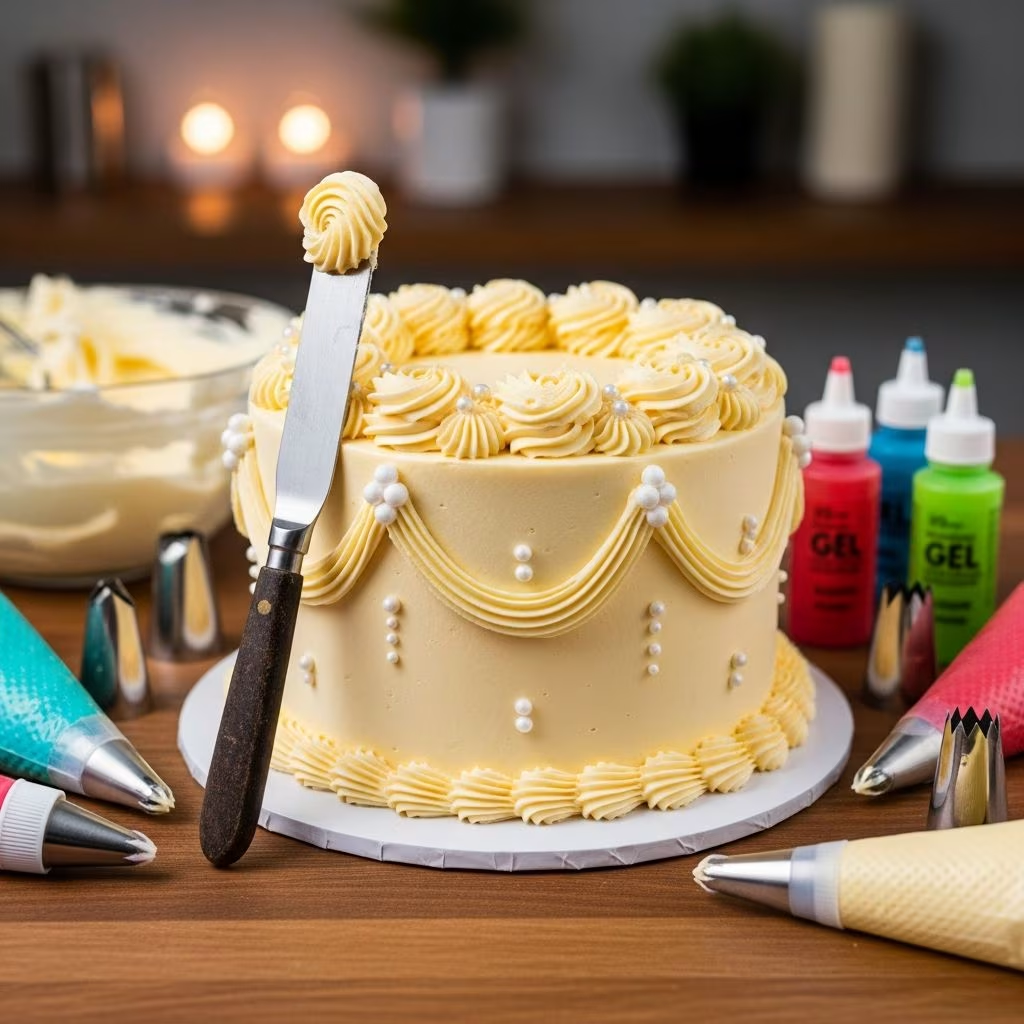
Beyond mixing, technique defines finish. For smooth cakes, apply a crumb coat—thin layer chilled 15 minutes—before final spread. Use an offset spatula for evenness; a bench scraper refines edges.
Piping demands medium consistency: Test by squeezing a ribbon that holds shape. Fill bags halfway, twist tops, and pipe swirls or borders. Bench chill piped cakes 30 minutes to set designs.
Pairing Buttercream with Baked Goods
Match flavors thoughtfully. Vanilla pairs universally with chocolate or vanilla cakes. Chocolate buttercream complements red velvet or yellow cake. Fruit variations suit sponge or angel food for contrast.
Layer generously but evenly—about 1/2 cup per layer. For cupcakes, 2 Tbsp per top yields domes.
Healthier Twists and Substitutions
Traditional buttercream is indulgent; adapt for lighter options. Substitute half the butter with Greek yogurt or cream cheese for tang and reduced fat. Use powdered erythritol for low-carb versions, though texture may vary.
Dairy-free? Coconut oil or vegan butter works, paired with almond milk. Always test small batches.
Advanced Tips from Professional Bakers
Pros dissolve salt in liquid first to avoid specks in tinted frosting. For stability in warm climates, add 1 Tbsp meringue powder. Whipping longer—up to 5 minutes—creates cloud-like volume.
Scale recipes easily: Double ingredients for sheet cakes; halve for small batches. Invest in a kitchen scale for precision.
FAQs
Can I make buttercream without powdered sugar?
Yes, but it requires granulated sugar cooked into simple syrup for Italian meringue buttercream, which is lighter but more involved.
How do I fix separated buttercream?
Chill 20 minutes, then re-whip gradually. If persistent, warm slightly and emulsify.
Is buttercream safe to eat straight from the bowl?
Absolutely, once fully mixed—it’s just safe, edible ingredients.
How far in advance can I frost a cake?
Frosted cakes store 2-3 days at room temp, longer refrigerated. Unfrosted layers freeze best.
Why is my frosting oily?
Over-softened butter or excess liquid; use cooler butter next time.
Conclusion
Mastering buttercream opens endless baking possibilities. With practice, you’ll produce frosting rivaling patisseries. Experiment confidently, using these guidelines as your foundation.
References
- Buttercream Frosting Recipe — The Pioneer Woman. 2024-10-01. https://www.thepioneerwoman.com/food-cooking/recipes/a65890770/buttercream-frosting-recipe/
- The Best Vanilla Buttercream Frosting — Belle of the Kitchen. 2023-05-15. https://belleofthekitchen.com/the-best-vanilla-buttercream-frosting/
- The Best Buttercream Frosting Recipe — From Michigan To The Table. 2024-02-20. https://frommichigantothetable.com/the-best-buttercream-frosting-recipe/
- Perfect American Buttercream Recipe — Grandbaby Cakes. 2023-11-10. https://grandbaby-cakes.com/perfect-american-buttercream-recipe/
- Vanilla Buttercream — Preppy Kitchen. 2024-03-05. https://preppykitchen.com/vanilla-buttercream/