Bubble tea, also known as boba tea or pearl milk tea, has evolved from a niche Taiwanese beverage into a global phenomenon. While café chains dominate the market, creating this delightful drink in your own kitchen offers both cost savings and customization possibilities. Whether you prefer classic milk tea or experimental flavor combinations, understanding the fundamental techniques transforms you from a casual consumer into a confident home brewer.
Understanding the Core Components
Before embarking on your bubble tea journey, it’s essential to recognize that this beverage comprises three interconnected elements: the tea base, the sweetening component, and the signature tapioca pearls. Each element plays a crucial role in the final product’s texture, flavor profile, and mouthfeel. Mastering each component individually ensures success when combining them into a harmonious drink.
Selecting and Brewing Your Tea Foundation
The tea selection establishes the backbone of your bubble tea experience. Black tea remains the most traditional choice, offering robust flavors that complement milk and sweeteners beautifully. Quality matters significantly—loose-leaf tea generally outperforms standard tea bags in flavor intensity and complexity, though either option works for home preparation.
Begin by bringing fresh water to a rolling boil. For optimal results, use approximately 1 ounce of water per cup of finished tea. Remove the water from direct heat before adding your tea leaves or bags, as extremely high temperatures can create bitter, harsh flavors. Allow the tea to steep for ten to fifteen minutes, depending on your preferred strength. This extended steeping period creates a concentrated brew that won’t become diluted when combined with ice and milk.
For those preferring a gentler approach, cold brewing offers an alternative method that reduces bitterness. Simply place tea leaves in a French press with room-temperature water, submerge the leaves below the surface, and refrigerate overnight. This technique produces naturally sweet, smooth tea with minimal effort.
Crafting the Perfect Sweetness Balance
Sweetness in bubble tea serves multiple functions: it balances the tea’s natural astringency, complements the milk’s richness, and provides the perfect counterpoint to chewy tapioca pearls. Rather than relying on granulated sugar, preparing simple syrup beforehand ensures even distribution and superior texture.
To create simple syrup, combine equal parts sugar and water in a saucepan over medium-high heat. Stir constantly until the sugar completely dissolves and the mixture reaches a rolling boil. Remove from heat and allow to cool completely before storing in a glass jar. This concentrated sweetener blends seamlessly into cold beverages without requiring additional stirring.
Brown sugar syrup offers another dimension entirely. Combining dark brown sugar with water creates a deeper, more complex sweetness reminiscent of caramel. This variation pairs exceptionally well with tapioca pearls, as the pearls can absorb the syrup’s robust flavor, creating a cohesive taste experience throughout each sip.
The Art and Science of Tapioca Pearl Preparation
Tapioca pearls represent the defining characteristic of bubble tea, providing the signature textural contrast that elevates this beverage beyond ordinary milk tea. These small spheres, derived from cassava starch, transform from hard pellets into chewy, tender orbs through precise cooking.
Cooking Methodology for Optimal Texture
The cooking process requires attention to detail but remains straightforward. Begin by bringing a substantial pot of water to a boil—approximately four cups for every three-quarters cup of dried pearls provides adequate space for expansion and movement. Stir the pearls immediately upon adding them to the boiling water, preventing clumping and ensuring even cooking.
Cooking duration varies based on pearl size and personal texture preferences. Standard pearls typically require five to seven minutes, though some sources recommend up to twenty minutes for larger varieties. Test a pearl approximately halfway through cooking by removing it with a slotted spoon and biting it to assess doneness. The ideal texture combines a chewy, slightly resistant outer layer with a tender interior that yields without grittiness.
Upon reaching desired consistency, immediately drain and rinse the pearls under cold running water. This halts the cooking process and prevents the pearls from becoming mushy. Transfer the cooled pearls to a clean bowl, where they’re ready for flavor infusion or immediate use.
Flavor-Infusing Your Pearls
While plain tapioca pearls possess subtle sweetness, infusing them with flavored syrups elevates their contribution to the overall beverage. Brown sugar syrup represents the classic choice, creating pearls that contribute sweet, caramel-like notes. Alternatively, experimenting with honey, ginger, or fruit-based syrups allows personal creativity to shine.
To infuse pearls, combine approximately two tablespoons of your chosen syrup with the cooked pearls and allow them to steep for fifteen to twenty minutes. This resting period permits the pearls to absorb the syrup’s flavors while developing a glossy exterior. If preparing pearls in advance, store them in their syrup at room temperature for up to four hours, though immediate use yields the best texture.
Assembly and Serving Techniques
Constructing Your Perfect Glass
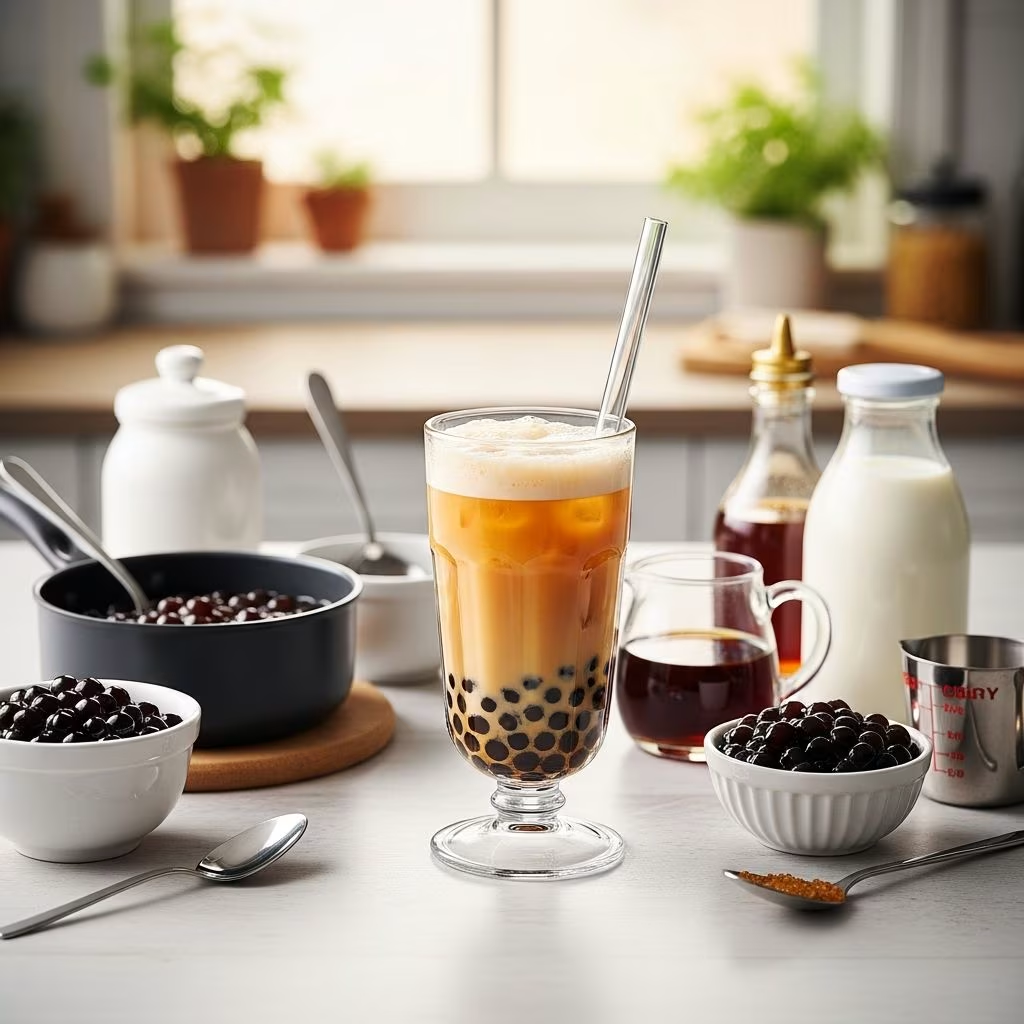
The assembly process follows a logical sequence that affects flavor distribution and drinking experience. Begin by dividing prepared tapioca pearls evenly among your serving glasses, typically allocating one-quarter to one-third cup of pearls per beverage. This generous portion ensures you encounter chewy pearls with nearly every sip.
Next, add ice to each glass. The ice quantity influences dilution speed and drinking duration—more ice creates a longer-lasting, gradually diluting experience, while minimal ice prioritizes flavor intensity in the drink’s opening moments. Select ice cubes of consistent size to ensure even chilling.
Pour your cooled tea base into each glass, filling approximately halfway to two-thirds of the available space. This tea foundation establishes the flavor profile you’ve carefully constructed through brewing and steeping. Following the tea, add your chosen milk—whether traditional whole milk, half-and-half, or alternative milk varieties like oat or soy. The typical ratio ranges from two to four tablespoons of milk per serving, though personal preferences should guide final proportions.
Finally, incorporate your sweetener by pouring in your prepared simple syrup to taste. Begin conservatively, stirring well, and adjusting upward if necessary. This cautious approach prevents over-sweetening while ensuring you achieve your preferred flavor balance.
Customization and Flavor Variations
The beauty of homemade bubble tea lies in its adaptability to personal preferences and creative experimentation. Consider these popular modifications:
- Matcha Milk Tea: Whisk one to two teaspoons of high-quality matcha powder with a small amount of hot water to form a smooth paste before adding to your assembled drink
- Taro-Infused Variation: Substitute traditional black tea with taro powder mixed into milk for an earthy, nutty flavor profile
- Fruit-Forward Versions: Incorporate fruit purees, fresh juices, or flavored syrups into your tea base or use fruit-flavored simple syrups for sweetness
- Seasonal Specialties: Adjust milk type and flavor intensity based on weather—lighter preparations for summer, richer versions for cooler months
Advanced Boba Preparation From Scratch
For dedicated enthusiasts seeking ultimate control, creating tapioca pearls from raw tapioca starch represents the pinnacle of homemade bubble tea craftsmanship. This technique requires precision but rewards effort with superior flavor customization and textural control.
Step-by-Step Boba Creation Process
Begin by combining water and brown sugar in a saucepan, bringing the mixture to a rolling boil. Stir thoroughly until the sugar completely dissolves, creating a clear syrup. Reduce heat to low and add approximately one-third of your tapioca starch directly to the boiling syrup. Whisk vigorously and constantly—this creates a thick, translucent, gelatinous paste that forms the foundation of your pearls.
Remove the pan from heat and incorporate the remaining tapioca starch, mixing with a spatula until a shaggy dough emerges. Transfer this hot dough to a clean surface lightly dusted with additional tapioca starch. Exercise caution during handling, as the mixture remains quite hot. Knead the dough for two to three minutes until it achieves smoothness and develops a slightly tacky consistency resembling children’s modeling dough.
Adjust consistency as needed—add a few drops of hot water if the dough appears too dry and crumbly, or incorporate additional starch if excessive stickiness develops. Once reaching ideal consistency, form small pearls by rolling portions between your palms or using a small melon baller. Cook these fresh pearls immediately in boiling water until they float to the surface, then continue cooking for an additional five minutes before testing for doneness.
Ingredient Quality Considerations
The quality of your final product correlates directly with ingredient selection. Invest in loose-leaf black tea from reputable sources, as these typically offer superior flavor compared to mass-produced tea bags. Select high-quality milk—whether traditional dairy or premium plant-based alternatives—as this component comprises a significant portion of your finished beverage.
Tapioca pearl quality varies considerably among suppliers. Larger pearls generally deliver superior texture and visual appeal compared to smaller varieties. When selecting brown sugar, choose varieties specifically labeled “dark brown sugar” for deeper, more complex sweetness.
Troubleshooting Common Challenges
| Issue | Cause | Solution |
|---|---|---|
| Bitter or Harsh Tea Flavor | Over-steeping or water too hot | Reduce steeping time or use slightly cooler water |
| Pearls Stick Together | Insufficient stirring during cooking | Stir immediately when pearls enter boiling water |
| Mushy, Disintegrating Pearls | Over-cooking | Test pearls earlier and reduce cooking duration |
| Excessively Sweet Beverage | Too much simple syrup added | Add more tea or milk to dilute |
| Gritty Pearls | Incomplete cooking | Extend cooking time by 2-3 minutes |
Frequently Asked Questions
How far in advance can I prepare bubble tea components?
Tea bases can be prepared up to two days ahead and refrigerated in airtight containers. Simple syrups remain shelf-stable in jars for several weeks. Cooked tapioca pearls maintain optimal texture for approximately four hours when stored in their syrup at room temperature; refrigeration extends storage but may compromise texture quality.
Can I substitute milk alternatives in bubble tea?
Absolutely. Oat milk provides creamy richness, coconut milk offers tropical notes, and almond milk delivers lighter flavor. Soy milk creates authentic flavor profiles found in traditional Asian preparations. Experiment to discover your preferred combination.
What ratio of tea to milk works best?
Traditional proportions range from one cup of cooled tea with two to three tablespoons of milk per serving. Adjust based on personal preference—some enjoy stronger tea flavor with minimal milk, while others prefer creamier preparations with increased milk ratios.
How do I achieve the perfect pearl texture?
Test pearls frequently during cooking, beginning around the five-minute mark. Ideal texture combines a slight resistance when bitten with a tender interior that doesn’t feel gritty or rubbery. This balance typically occurs within five to seven minutes for standard pearls.
Can frozen tea work for bubble tea preparation?
Yes, though room-temperature or lightly chilled tea creates better flavor integration with milk and sweeteners. Extremely cold tea may require longer stirring to combine ingredients thoroughly.
Elevating Your Bubble Tea Experience
Creating bubble tea at home transforms from occasional indulgence into an accessible daily ritual. By mastering fundamental techniques—brewing quality tea, cooking perfect pearls, and balancing sweetness and milk—you develop a foundation supporting endless creative exploration. Whether adhering to traditional preparations or experimenting with innovative flavor combinations, homemade bubble tea delivers satisfaction that exceeds store-purchased alternatives while providing significant cost benefits and customization opportunities suited to your unique preferences.
References
- How to Make Bubble Tea — The Forked Spoon. Accessed April 2026. https://theforkedspoon.com/bubble-tea/
- How to Make Bubble Tea (Boba Tea) — Healthy Nibbles and Bits. Accessed April 2026. https://healthynibblesandbits.com/how-to-make-bubble-tea/
- Homemade Bubble Tea Drink (Boba Tea) — The Flavor Bender. Accessed April 2026. https://www.theflavorbender.com/boba-bubble-milk-tea-recipe/
- How to Make Bubble Tea (Easy Boba Milk Tea Recipe) — An Edible Mosaic. Accessed April 2026. https://www.anediblemosaic.com/how-to-make-bubble-tea-easy-boba-tea-recipe/
- How to Make Boba Tea at Home: A Complete Guide to Bubble Tea — 1992 Share Tea. Accessed April 2026. https://www.1992sharetea.com/news/how-to-make-boba
- Make Your Own Bubble Tea — Paper and Tea. Accessed April 2026. https://www.paperandtea.com/blogs/journal/make-your-own-bubble-tea