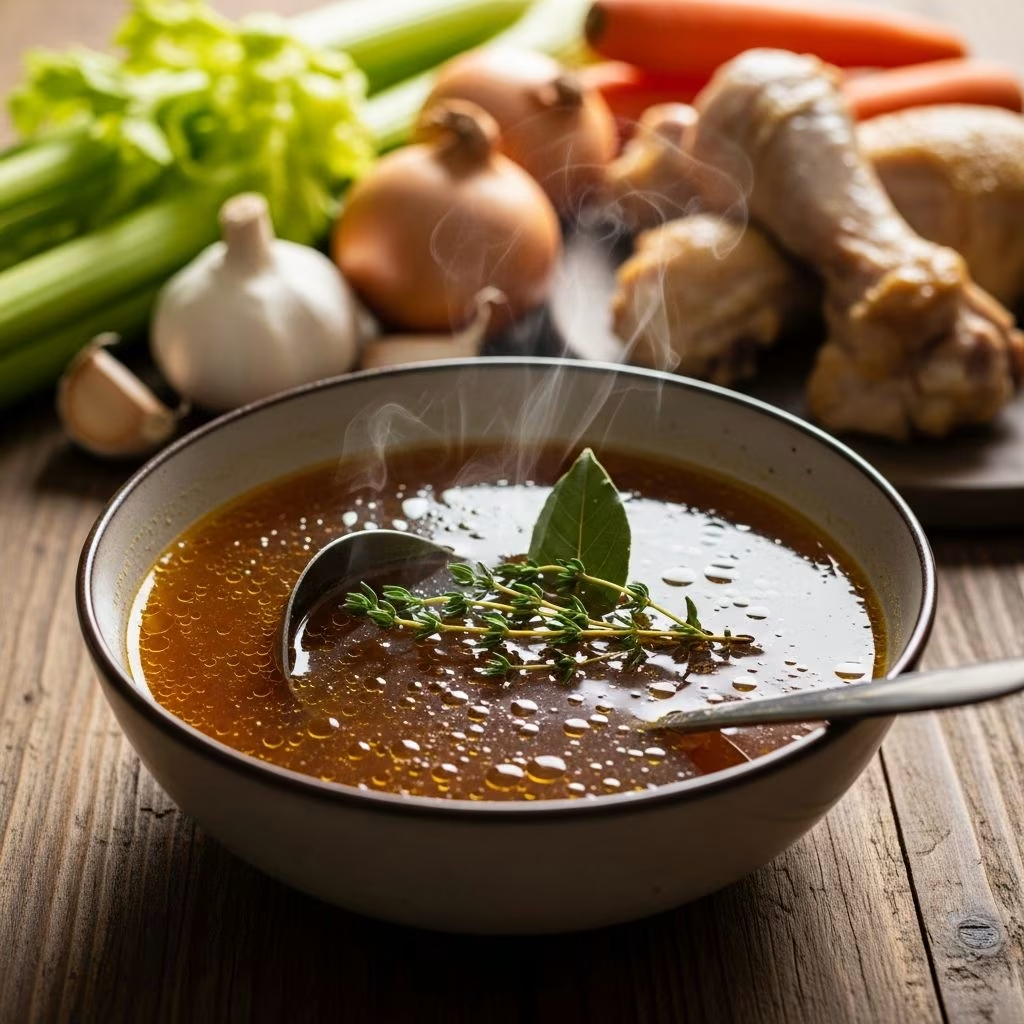
Creating a deep, flavorful brown chicken stock elevates everyday cooking to professional levels. Unlike clear stocks, this version gains its signature rich color and complex taste from roasting bones and vegetables before a long simmer. Home cooks can produce gallons of this versatile base using affordable chicken parts, transforming scraps into liquid gold for soups, risottos, and reductions.
Why Choose Brown Chicken Stock Over White?
Brown chicken stock offers a more intense, caramelized flavor profile compared to its white counterpart, which relies on unroasted ingredients for a lighter taste. The roasting process Maillard reaction—where proteins and sugars brown—creates nutty, savory notes that white stocks lack. This makes brown stock ideal for hearty dishes like French onion soup, mushroom risottos, or pan sauces.
Professionals in kitchens worldwide prefer it for its body and depth, especially in classic preparations such as coq au vin or velouté sauces. At home, it freezes beautifully, providing a shortcut to gourmet results without store-bought versions’ additives or blandness.
Essential Ingredients for Authentic Flavor
Gather these staples to build a robust stock. Quantities yield about 4-5 quarts, scalable as needed.
- 4-5 pounds chicken bones, backs, wings, or carcasses (rotisserie or raw; avoid salted if possible)
- 2 large onions, roughly chopped
- 3-4 carrots, in chunks
- 3 celery stalks, chopped
- 6-8 garlic cloves, smashed
- 2-3 bay leaves
- Handful fresh parsley stems
- 6-8 thyme sprigs or 1 tsp dried
- 1 tsp black peppercorns
- 2 Tbsp tomato paste (optional, for extra color)
- 1/2 cup dry white or red wine (optional, for deglazing)
- Enough cold water to cover (about 5-6 quarts)
Fresh herbs impart subtle aromas, while peppercorns add gentle spice without overpowering. Tomato paste, brushed on bones pre-roast, intensifies the roast.
Step-by-Step Roasting Process
Roasting is the cornerstone, developing flavors through high heat.
- Preheat oven: Set to 375-400°F (190-200°C). Spread chicken parts in a single layer on a large roasting pan. Drizzle with oil if dry.
- Roast bones: Cook 1-2 hours, turning halfway, until deeply golden. Watch for burning, which bitters the stock.
- Add vegetables: Scatter onions, carrots, celery, and garlic in the last 30-45 minutes. Stir once for even caramelization.
- Deglaze pan: Transfer solids to a stockpot. Over stovetop heat, add wine or water to the hot pan, scraping browned bits (fond) with a wooden spoon. Pour into pot.
| Step | Time | Temperature | Key Tip |
|---|---|---|---|
| Roast bones alone | 60-90 min | 375°F | Turn for even browning |
| Add veggies | 30-45 min | Same | Caramelize but don’t char |
| Deglaze | 5 min | Medium-high | Capture all fond |
Simmering for Maximum Extraction
Combine roasted items in a large stockpot. Add herbs, peppercorns, tomato paste if using, and cold water to cover by 1-2 inches. Why cold? It draws out proteins gradually for clarity.
- Bring to a boil over high heat.
- Reduce to bare simmer (tiny bubbles).
- Cook 4-6 hours uncovered, skimming foam and fat periodically. Low heat prevents cloudiness.
Long simmering extracts collagen for silky texture, turning into gelatin when chilled. Taste after 4 hours; extend if needed for intensity.
Straining, Cooling, and Storage Best Practices
Proper finishing ensures quality.
- Strain coarsely: Use tongs to remove large pieces, then fine-mesh sieve or cheesecloth-lined colander into a clean pot or bowl.
- Cool rapidly: Place in an ice bath or shallow pans in fridge. This halts bacterial growth.
- Degrease: Chill overnight; fat solidifies on top for easy skim.
- Store: Refrigerate up to 5 days or freeze in portions (ice cube trays for small uses) up to 3 months.
Label containers with dates. Thaw in fridge before use.
Pro Tips for Flawless Results Every Time
- Bone selection: Mix backs, necks, wings for fat and connective tissue balance. Rotisserie adds pre-roasted flavor shortcut.
- No salt initially: Season end-use dishes to control sodium.
- Skim diligently: Removes impurities for clear stock.
- Scale up: Use multiple pans for larger batches; simmer in slow cooker if pot overflows.
- Troubleshoot cloudiness: Simmer gentler next time or add egg whites for clarification.
Creative Ways to Use Your Stock
This stock shines in diverse recipes:
- Soups: Base for chicken noodle, tortilla, or pho.
- Sauces: Reduce for gravies, or in risotto for creaminess.
- Braises: Chicken cacciatore or osso buco.
- Grains: Cook quinoa, couscous instead of water.
- Everyday boost: Sub for water in mashed potatoes or steamed veggies.
One batch flavors weeks of meals, reducing waste.
Common Mistakes and How to Avoid Them
| Mistake | Why It Happens | Solution |
|---|---|---|
| Bitter taste | Over-roasting/burning | Monitor closely, lower temp if needed |
| Cloudy stock | Boiling too hard | Gentle simmer only |
| Weak flavor | Short simmer | Extend to 6+ hours |
| Greasy | Poor skimming | Chill and remove fat layer |
Nutritional Benefits and Dietary Notes
Homemade stock is nutrient-dense: collagen supports joints, amino acids aid digestion, minerals leach from bones. Low-calorie (about 20 per cup defatted), gluten-free, customizable for low-sodium diets.
Frequently Asked Questions (FAQs)
Can I use a whole chicken?
Yes, but reserve breast meat for other uses; bones provide best yield.
What’s the difference between stock and broth?
Stock uses bones for gelatinous texture; broth is meatier, shorter-cooked.
Vegetarian alternative?
Roast mushrooms, veggies similarly for brown veggie stock.
How do I know it’s done simmering?
Bones disintegrate slightly; flavor tastes rich, bones lighten color.
Can I pressure cook it?
Yes, 1-2 hours high pressure post-roast, but traditional slow simmer builds deeper flavor.
Scaling and Batch Cooking Advice
For families, double recipe using two pans. Simmer in Crock-Pot overnight. Portion into quart bags flat for stackable freezer storage.
References
- Brown Chicken Stock — Emeril’s Homebase. Accessed 2026. https://www.emerils.com/123435/brown-chicken-stock
- How to make Roasted Brown Chicken Stock — Simple Bites. Accessed 2026. https://simplebites.net/how-to-make-roasted-brown-chicken-stock-and-young-love-in-the-summer/
- Elevate Your Home Cooking with a Homemade Brown Stock Recipe — YouTube (Video Description). Accessed 2026. https://www.youtube.com/watch?v=zAkTVXlItuA
- Brown Chicken Stock — Stefan’s Gourmet Blog. 2013-03-04. https://stefangourmet.com/2013/03/04/brown-chicken-stock/
- Brown Chicken Stock — YouTube (Beyond Salmon/Helen Rennie). 2014. https://www.youtube.com/watch?v=TF6Rrd9NmhI