Basil pesto stands as one of the most beloved sauces in culinary history, originating from the sun-drenched regions of Italy. Its fresh, herbaceous flavor profile has captivated palates worldwide, transforming simple dishes into gourmet experiences. This guide explores the essence of basil pesto, from selecting premium ingredients to mastering preparation techniques and beyond. Whether you’re a novice cook or a seasoned chef, you’ll find invaluable insights to create pesto that rivals restaurant quality.
Understanding the Heart of Basil Pesto
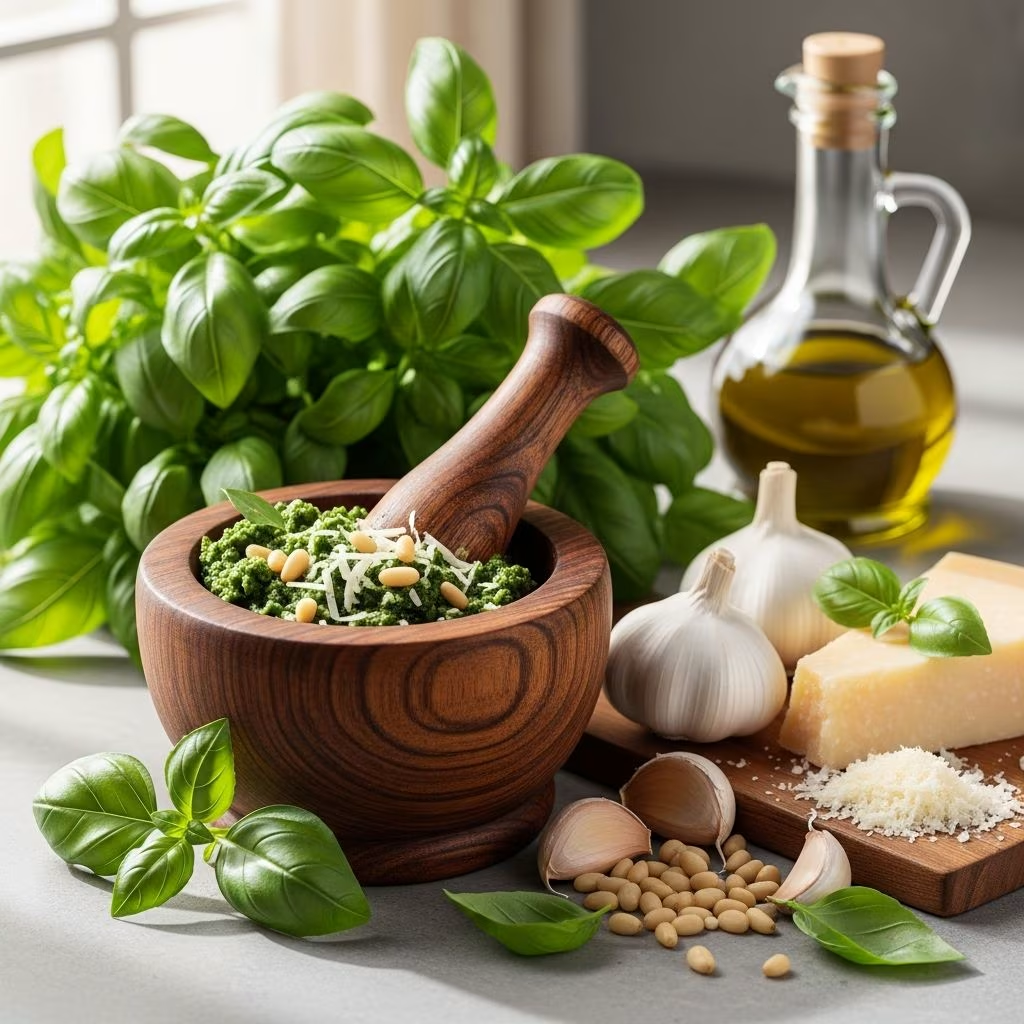
At its core, basil pesto is a blend of fresh basil leaves, nuts, cheese, garlic, and olive oil. This combination yields a vibrant green sauce bursting with aromatic notes. Traditionally from Genoa, Italy, the classic version uses pine nuts, Parmigiano-Reggiano, and Pecorino Romano cheeses for an authentic taste. The magic lies in the balance—bright basil countered by nutty richness and a touch of sharpness from the cheese.
Why does pesto endure? Its versatility allows it to enhance pastas, proteins, vegetables, and even soups. Nutritionally, it’s packed with antioxidants from basil, healthy fats from olive oil, and protein from nuts and cheese, making it a wholesome addition to meals.
Essential Ingredients for Authentic Flavor
Crafting exceptional pesto starts with high-quality components. Here’s a breakdown:
- Fresh Basil: Opt for young, tender leaves from Genovese basil varieties. Avoid older leaves with tough stems, as they introduce bitterness.
- Nuts: Pine nuts provide a subtle sweetness, but walnuts or almonds offer budget-friendly alternatives with distinct profiles.
- Cheeses: A mix of Parmigiano-Reggiano and Pecorino Romano delivers umami depth. Freshly grated is key for smooth incorporation.
- Garlic: One or two cloves add pungency; mellow it by blanching if raw intensity is too much.
- Olive Oil: Extra-virgin varieties impart fruity notes. Use a good one, as it’s the sauce’s backbone.
- Salt and Pepper: Sea salt enhances flavors; black pepper adds a subtle kick.
| Ingredient | Quantity (for 1 cup) | Tips |
|---|---|---|
| Basil Leaves | 2 cups packed | Washed and dried thoroughly |
| Pine Nuts | 1/4 cup | Toasted lightly for extra flavor |
| Parmigiano-Reggiano | 1/2 cup grated | Freshly grated, not pre-shredded |
| Garlic | 1-2 cloves | Crushed and peeled |
| Olive Oil | 1/2 cup | Added gradually |
Step-by-Step Pesto Preparation Mastery
Creating pesto requires minimal equipment—a food processor or mortar and pestle for traditionalists. Follow these steps for perfection:
- Prep Ingredients: Toast nuts in a dry skillet over medium heat until golden, about 3-5 minutes. This intensifies their flavor.
- Blanch Basil (Optional): Briefly dip leaves in boiling water for 5 seconds, then ice bath. This preserves the vivid green color.
- Process Base: In a food processor, pulse basil, nuts, garlic, and a pinch of salt until coarsely chopped.
- Incorporate Cheese: Add grated cheeses and pulse to combine.
- Stream in Oil: With the machine running, slowly drizzle olive oil until emulsified and creamy. Adjust consistency with more oil if needed.
- Taste and Adjust: Season with salt and pepper. For brightness, add a squeeze of lemon juice.
Avoid over-processing to prevent a watery texture. Freshly made pesto is best used immediately, but proper storage extends its life.
Storage and Preservation Techniques
Pesto’s freshness is fleeting due to basil’s volatility. To store:
- Refrigerator: Press plastic wrap directly onto the surface to exclude air, then seal in a jar. Lasts 5-7 days.
- Freezer: Portion into ice cube trays, freeze, then transfer to bags. Thaw as needed for up to 6 months.
- Long-Term: Cover with a thin olive oil layer before freezing to prevent oxidation.
Pro Tip: Freeze in small amounts for single-use convenience, ideal for impromptu meals.
Creative Variations to Suit Every Palate
While classic pesto shines, experimentation opens new horizons:
- Nut-Free Pesto: Use sunflower seeds for allergy-friendly options.
- Arugula Pesto: Swap half the basil for peppery arugula.
- Roasted Red Pepper Pesto: Blend in charred peppers for smokiness.
- Vegan Pesto: Omit cheese; use nutritional yeast and extra nuts.
- Cilantro Pesto: Mexican twist with cilantro, lime, and pepitas.
These adaptations maintain pesto’s spirit while accommodating dietary needs or ingredient availability.
Pairing Pesto with Perfect Dishes
Pesto’s adaptability makes it a kitchen MVP. Try these ideas:
Pasta Classics
Toss with linguine or trofie for Genoa’s traditional pairing. Add cherry tomatoes and mozzarella for caprese vibes.
Protein Boosters
Grill chicken or shrimp, then brush with pesto. It also elevates baked salmon or steak.
Vegetable Enhancers
Roast potatoes or zucchini, then mix in pesto post-cook for infused flavor.
Bread and Apps
Spread on crostini with burrata or use as pizza base.
Soup and Salad Star
Swirl into minestrone or drizzle over Caprese salad.
Common Mistakes and How to Avoid Them
Even pros falter. Sidestep these pitfalls:
- Brown Pesto: Use blanched basil and airtight storage.
- Grainy Texture: Pulse, don’t puree; add oil slowly.
- Over-Garlicky: Taste incrementally; blanch garlic.
- Separated Oil: Emulsify properly and stir before use.
With practice, you’ll achieve silky results every time.
Nutritional Profile and Health Benefits
Per 2-tablespoon serving: ~200 calories, 20g fat (mostly healthy monounsaturated), 4g protein, vitamins A, C, K from basil. Supports heart health via olive oil’s oleic acid and anti-inflammatory properties from herbs. A USDA report highlights basil’s antioxidants combating oxidative stress (USDA FoodData Central, 2023).
Frequently Asked Questions (FAQs)
What is the best basil for pesto?
Genovese basil offers the ideal sweet, anise-like flavor and tender leaves.
Can I make pesto without a food processor?
Yes, use a mortar and pestle for authentic, superior texture control.
How do I keep pesto green?
Blanch basil briefly and cover with oil to block air exposure.
Is pesto gluten-free?
The sauce is naturally gluten-free; pair with GF pasta.
Can I freeze pesto?
Absolutely—ice cube trays make portioning easy for future use.
What’s a good pine nut substitute?
Walnuts add earthiness; almonds provide crunch.
Advanced Tips from Culinary Experts
Chefs recommend seasonal basil for peak flavor and hand-chopping for rustic appeal. Experiment with herb blends like basil-mint for summer freshness. According to the International Olive Council, high-polyphenol oils enhance pesto’s stability (IOC, 2024).
References
- FoodData Central: Basil, fresh — USDA. 2023-05-15. https://fdc.nal.usda.gov/fdc-app.html#/food-details/169225/nutrients
- Olive Oil Composition and Health Benefits — International Olive Council. 2024-02-10. https://www.internationaloliveoil.org/what-is-olive-oil/olive-oil-composition/
- Traditional Ligurian Pesto Techniques — Academia Barilla. 2022-11-01. https://www.academiabarilla.com/en/recipes/pesto-alla-genovese/
- Antioxidant Properties of Culinary Herbs — PubMed (DOI:10.1016/j.foodchem.2019.125804). 2020-04-15. https://doi.org/10.1016/j.foodchem.2019.125804
- Italian Regional Sauces Guide — Slow Food Foundation. 2023-08-20. https://www.fondazioneslowfood.com/en/ark-of-taste-slow-food/pesto/
With this guide, you’re equipped to conquer basil pesto. Experiment boldly and enjoy the fresh, vibrant results in your cooking repertoire.