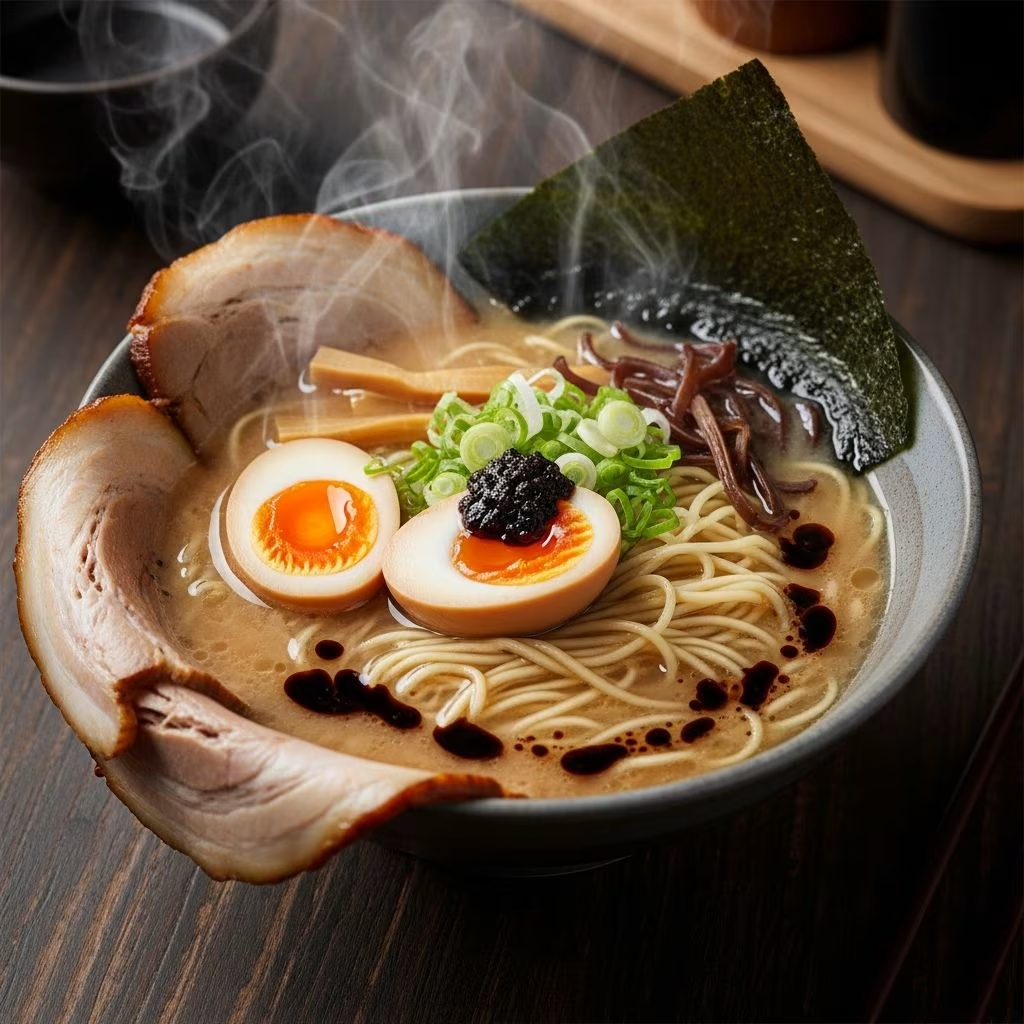
Experience the luxurious creaminess of tonkotsu ramen, a Hakata-style dish from Fukuoka, Japan, renowned for its pork bone broth simmered for hours until milky and packed with flavor. This guide breaks down every element—from the foundational broth to finishing touches—empowering you to replicate professional results in your kitchen.
Understanding Tonkotsu Ramen Essentials
Tonkotsu ramen stands out due to its five core components: the intensely rich pork bone broth, wavy noodles, braised pork (chashu), soft-marinated eggs, and concentrated seasoning sauce (tare). Each plays a vital role in balancing silkiness, chew, and depth of taste. Originating in Kyushu, this ramen evolved from long-simmered pig bones, often trotters and backs, blended with aromatics for nutrition and texture.
- Broth: The star, cooked 8-12 hours for emulsified fat and collagen.
- Noodles: Thin, curly wheat noodles that hold up to the heavy broth.
- Chashu: Soy-braised pork belly or shoulder, sliced thin.
- Eggs: Soft-boiled and marinated for jammy yolks.
- Tare: Soy or miso-based essence that seasons the broth per bowl.
Building the Signature Tonkotsu Broth
The broth demands patience, transforming bones into a velvety elixir through low-heat extraction. Pig trotters provide gelatinous body, while chicken bones add clarity and fat. Start by blanching bones to remove impurities: submerge in boiling water for 10 minutes, rinse thoroughly.
In a large pot, combine 5 lbs cleaned pig trotters, 2 lbs chicken wings or backs, halved onions, garlic heads, leeks, ginger slices, and green onions. Cover with cold water, bring to a boil, then simmer uncovered for 10-12 hours, skimming foam regularly. Add water as needed to keep bones submerged. For creaminess, increase heat briefly toward the end to emulsify fats—target a noodle-like thickness.
| Ingredient | Quantity | Role |
|---|---|---|
| Pig trotters | 5 lbs | Collagen and pork essence |
| Chicken wings | 2 lbs | Balanced fat and clarity |
| Onion, garlic, aromatics | 1 each + extras | Aromatic base |
| Water | As needed | Extraction medium |
Strain through cheesecloth, cool, and skim excess fat if desired. Yields about 8 cups concentrated stock. Refrigerate up to 3 days or freeze portions.
Mastering Chashu Pork Perfection
Chashu elevates tonkotsu with melt-in-mouth pork belly, braised in a sweet-savory glaze. Roll and tie 2 lbs skinless pork belly with butcher’s twine for uniform cooking.
Combine ½ cup soy sauce, ½ cup mirin, ½ cup sake, ¼ cup sugar, smashed garlic, ginger slices, and green onions in a pot. Add pork, cover with water or stock, bring to simmer, and braise 2-3 hours until fork-tender. Cool in liquid overnight for deeper flavor, then slice thinly. Reserve braising liquid for tare or egg marinade.
- Tips: Low simmer prevents toughness; chill before slicing for clean cuts.
- Variations: Use pork shoulder for leaner texture.
Crafting Versatile Tare Seasonings
Tare is the customizable soul of ramen, added per bowl to control saltiness. Shoyu tare uses soy, mirin, and dashi; miso tare brings fermented depth.
Shoyu Tare
Simmer 4 Tbsp light soy sauce, 2 Tbsp each mirin and sake, 2 Tbsp water, kombu piece, ginger, garlic, and scallion for 5 minutes. Strain and store.
Miso Tare
Blend ½ cup shiro miso, ¼ cup each mirin and sake, pinch shichimi togarashi, and salt. Warm gently without boiling to preserve enzymes.
Portion 2-3 Tbsp per bowl, adjusting to taste after adding broth.
Preparing Jammy Ramen Eggs
Ajitsuke tamago feature custardy yolks marinated in soy mixtures. Boil room-temperature eggs 6-6.5 minutes for soft centers, shock in ice water, peel gently.
Marinate in ⅓ cup soy sauce, ⅓ cup mirin, ½ cup water, 1 Tbsp sesame oil, and optional chashu liquid for 6-24 hours. Halve to reveal marbled whites and golden yolks.
Selecting and Cooking Noodles
Authentic tonkotsu pairs with thin, wavy ramen noodles (about 12 oz for 4 servings). Fresh or high-quality dried work best—avoid instant varieties.
Cook in unsalted boiling water 2-4 minutes until al dente, stirring to prevent sticking. Drain and rinse briefly under cold water to stop cooking, then divide into bowls immediately before assembly.
Essential Toppings and Garnishes
Toppings add crunch, freshness, and contrast:
- Thinly sliced green onions
- Enoki or shiitake mushrooms, blanched
- Nori sheets, toasted
- Bean sprouts or bamboo shoots (menma)
- Black garlic oil or sesame for aroma
Arrange artfully: eggs halved, chashu fanned, onions sprinkled, mushrooms tucked.
Step-by-Step Bowl Assembly
- Add 2-3 Tbsp tare to deep bowl.
- Ladle 1½-2 cups steaming broth over tare; stir to blend.
- Place hot noodles in center.
- Top with chashu (2-3 slices), half egg, mushrooms, onions, nori.
- Drizzle oil if using; serve instantly.
Pro Tips for Restaurant-Quality Results
- Blanch everything: Removes scum for clearer broth.
- Emulsify broth: Blend or simmer vigorously for creaminess without dairy.
- Customize heat: Add rayu chili oil or togarashi.
- Scale up: Broth freezes well; make tare in batches.
- Shortcuts: Use pork back fat emulsion for quicker creaminess.
Common Mistakes to Avoid
| Mistake | Fix |
|---|---|
| Over-boiling broth | Gentle simmer preserves clarity |
| Soggy noodles | Cook last minute, rinse cold |
| Bland seasoning | Layer tare boldly, taste broth first |
| Tough chashu | Braise low and slow, cool in liquid |
Nutrition and Pairing Suggestions
Tonkotsu ramen delivers protein from bones and pork, plus collagen for joint health. Pair with Japanese pickles, gyoza, or crisp cucumber salad. For drinks, try chilled sake or hoppy lager to cut richness.
Frequently Asked Questions
What makes tonkotsu broth creamy?
Long simmering extracts collagen from trotters, emulsifying with fat into a milk-like texture—no cream needed.
Can I make this vegetarian?
Substitute with mushroom and vegetable stock, but it won’t replicate pork depth. Use miso tare for umami.
How long does broth last?
Refrigerate 3-4 days or freeze 3 months. Reheat gently to maintain emulsion.
Best noodles for beginners?
Dried wavy ramen from Asian markets; cook per package, subtracting 30 seconds.
Scaling for crowds?
Double bones proportionally; broth improves with resting overnight.
References
- Tonkotsu Ramen Recipe — La Cooquette. Accessed 2026. https://lacooquette.com/tonkotsu-ramen-recipe/
- Tonkotsu Ramen at Home — Glebe Kitchen. Accessed 2026. https://glebekitchen.com/tonkotsu-ramen-home/
- Rich & Creamy Tonkotsu Ramen Recipe — Joshua Weissman. Accessed 2026. https://www.joshuaweissman.com/recipes/best-tonkotsu-ramen-recipe
- Homemade Tonkotsu Ramen Recipe — Sweet Tea + Thyme. Accessed 2026. https://www.sweetteaandthyme.com/tonkotsu-broth-ramen-recipe/
- Easy Tonkotsu Ramen Recipe — Just One Cookbook. Accessed 2026. https://www.justonecookbook.com/easy-tonkotsu-ramen-recipe/