Nothing beats the vibrant green hue and fresh, herbaceous flavor of pesto made right in your own kitchen. This versatile Italian sauce, originating from the sun-drenched Liguria region, transforms simple ingredients into a culinary powerhouse. Whether drizzled over pasta, spread on bread, or mixed into soups, pesto adds a burst of summer to any dish. In this comprehensive guide, we’ll explore its rich history, break down the essential components, provide foolproof recipes, and share innovative ways to incorporate it into your cooking repertoire.
The Origins and Evolution of Pesto
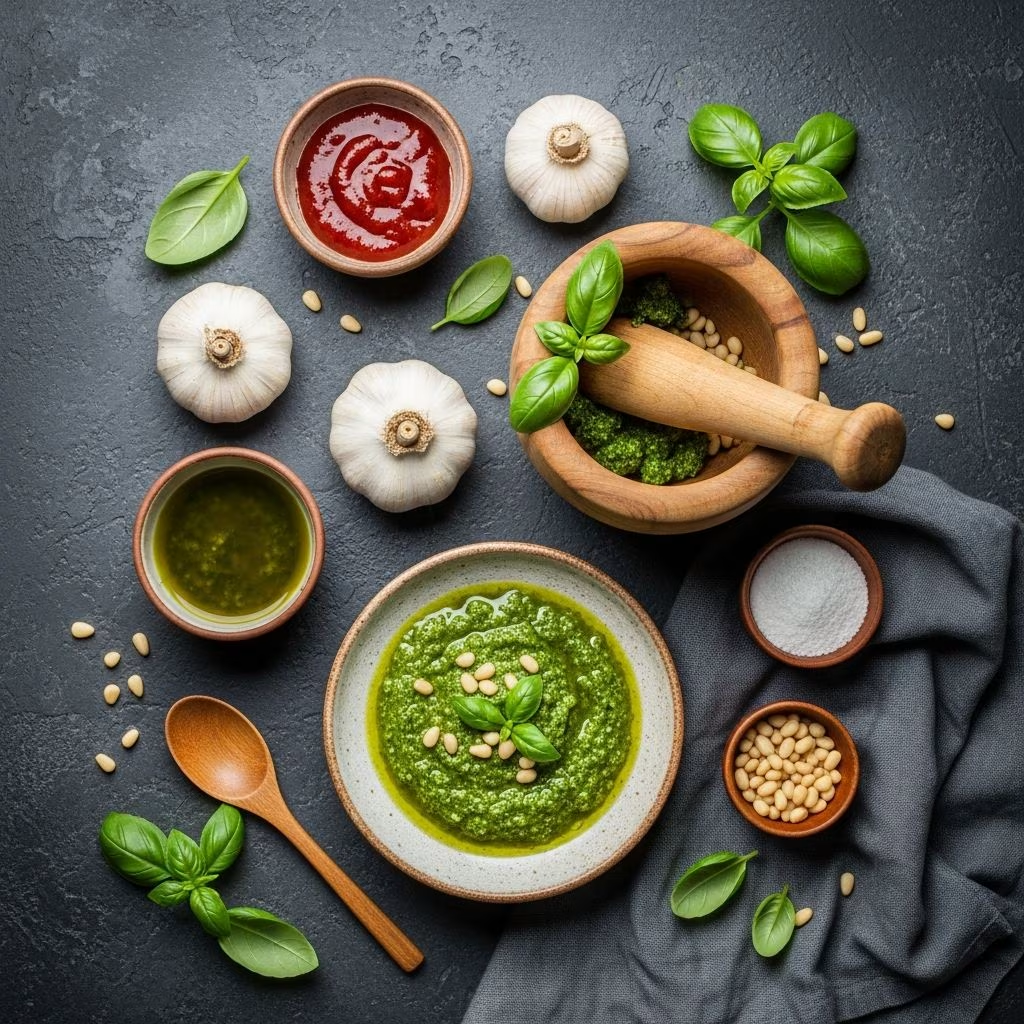
Pesto’s story begins in Genoa, Italy, where the Ligurian dialect gave it its name—’pestâ’ meaning to pound or crush. Traditionally prepared in a marble mortar with a wooden pestle, this labor-intensive method preserved the delicate oils in the basil leaves, preventing bitterness. The classic recipe dates back to the 19th century, though ancient Romans used similar pounded mixtures of herbs, garlic, and olive oil.
Over time, pesto evolved from a local peasant dish to a global sensation. The 20th century saw commercial versions emerge, but purists argue nothing rivals the homemade version. Today, while the Genovese style remains the gold standard—protected by Italian DOP status—cooks worldwide experiment with regional twists, incorporating everything from arugula to kale.
Key Ingredients for Authentic Pesto
Great pesto starts with high-quality ingredients. Here’s what you need for the traditional version:
- Fresh Basil: Use sweet Genovese basil if possible; its tender leaves yield the best flavor. Aim for 2 packed cups.
- Pine Nuts: Toasted for nuttiness, about 1/4 cup. Walnuts or almonds work as budget-friendly substitutes.
- Garlic: One plump clove adds punch without overwhelming.
- Parmesan and Pecorino: Freshly grated, 1/2 cup each for creamy, salty depth.
- Extra-Virgin Olive Oil: The star—use a fruity Ligurian oil, 1/2 cup.
- Salt and Pepper: To taste, enhancing all flavors.
Pro tip: Choose basil with vibrant green leaves, avoiding any wilting or browning. Quality matters here more than quantity.
Mastering the Technique: Mortar vs. Food Processor
Traditionalists swear by the mortar and pestle for superior texture—the gentle crushing releases essential oils gradually. Start by pounding garlic and salt into a paste, add nuts, then basil, cheese, and finally oil in a slow drizzle. This method takes 15-20 minutes but rewards with nuanced flavor.
For speed, a food processor shines. Pulse garlic and nuts first to chop finely, add basil and pulse briefly (over-processing turns it bitter), then stream in oil with the machine running. Scrape sides often for even consistency. Both yield excellent results, but the processor suits busy weeknights.
| Method | Time | Texture | Flavor Intensity | Best For |
|---|---|---|---|---|
| Mortar & Pestle | 15-20 min | Chunky, rustic | Superior, fresh | Small batches, purists |
| Food Processor | 5 min | Smooth, uniform | Bright, convenient | Large batches, everyday |
| Blender | 3 min | Very smooth | Can be bitter if overdone | Quick fixes |
Classic Basil Pesto Recipe
Yield: 1 cup | Prep Time: 10 minutes
- Toast pine nuts in a dry skillet over medium heat until golden, 2-3 minutes. Cool slightly.
- In a food processor, pulse garlic, nuts, and 1/2 tsp salt until finely chopped.
- Add basil leaves and pulse 5-6 times until coarsely chopped.
- With motor running, slowly add olive oil until emulsified. Add cheeses, pulse to combine.
- Taste and adjust seasoning. Use immediately or store as below.
Nutritional info per tablespoon: 120 calories, 12g fat, 1g carbs, 2g protein.
Creative Variations to Try
Pesto’s adaptability makes it endlessly exciting. Here are five twists:
- Sun-Dried Tomato Pesto: Swap basil for 1 cup rehydrated sun-dried tomatoes, add roasted red peppers for smokiness. Ideal for pizza.
- Arugula Pesto: Peppery arugula replaces basil; lemon zest brightens. Pairs with grilled fish.
- Kale Pesto: Blanch kale for 1 minute, then proceed. Nutritious and hearty for winter pastas.
- Cilantro Pesto: Mexican flair with cilantro, lime, and pepitas. Taco topping extraordinaire.
- Roasted Red Pepper Pesto: Char peppers, peel, blend with almonds. Vegan-friendly and vibrant.
Experiment freely—pesto forgives bold ideas!
Storage and Preservation Tips
Fresh pesto oxidizes quickly, turning brown. To preserve its emerald glow:
- Short-Term: Press plastic wrap directly on surface in a jar; refrigerate up to 5 days.
- Freezer-Friendly: Freeze in ice cube trays, then transfer to bags. Thaw cubes as needed—lasts 6 months.
- Longevity Hack: Omit cheese before freezing; stir in fresh after thawing.
- Avoid metal utensils post-making to prevent discoloration.
Bonus: Drizzle with a thin oil layer atop the jar to seal out air.
Best Ways to Use Pesto in Your Kitchen
Pesto transcends pasta. Elevate everyday meals:
- Pasta Perfection: Toss with hot linguine or trofie; add cherry tomatoes and shrimp.
- Protein Power: Marinate chicken, dollop on salmon, or mix into meatballs.
- Veggie Boost: Stir into roasted potatoes, spread on zucchini boats, or blend with hummus.
- Bread and Beyond: Swirl into focaccia dough, layer in sandwiches, or thin for salad dressing.
- Soup Enhancer: Stir a spoonful into minestrone or gazpacho for herbaceous depth.
For breakfast, mix with eggs for a scramble or spread on avocado toast.
Common Mistakes and How to Avoid Them
Even seasoned cooks falter. Sidestep these pitfalls:
- Bitter Pesto: Use young basil, pulse gently, chill ingredients first.
- Too Oily: Add oil gradually; balance with more cheese.
- Watery Texture: Dry basil leaves thoroughly after washing.
- Lackluster Flavor: Toast nuts, use real Parmigiano-Reggiano, taste iteratively.
Remember: Freshness is key—make small batches often.
Pairing Pesto with Wines and Sides
Pesto’s bold herbs call for crisp whites. Try Vermentino di Sardegna or Sauvignon Blanc to cut richness. For reds, opt for light Pinot Noir. Serve with crusty bread, Caprese salad, or grilled vegetables for a complete Ligurian feast.
Frequently Asked Questions (FAQs)
- Can I make pesto without pine nuts?
- Absolutely! Walnuts, almonds, or sunflower seeds substitute well, offering similar creaminess.
- Is pesto vegan?
- Classic isn’t, but skip cheese and use nutritional yeast for a plant-based version.
- How do I fix brown pesto?
- Add fresh basil and a squeeze of lemon juice; blend briefly.
- Can I use dried basil?
- No—fresh basil is essential for authentic flavor and color.
- What’s the best pasta shape for pesto?
- Trofie or trenette trap sauce best, but any short pasta works.
References
- Disciplinare della produzione della Denominazione di Origine Protetta “Pesto Genovese” — Ministero delle politiche agricole alimentari e forestali. 2023-01-15. https://www.politicheagricole.it/flex/cm/pages/ServeBLOB.php/L/IT/IDPagina/14385
- Basil Essential Oils: Composition, Antioxidant Activity, and Recent Advances — Journal of Food Science (Wiley). 2022-05-10. https://doi.org/10.1111/1750-3841.16189
- The Oxford Companion to Italian Food — Oxford University Press. 2007 (reprint 2023). https://global.oup.com/academic/product/the-oxford-companion-to-italian-food-9780195387399
- USDA Nutrient Database: Basil, fresh — United States Department of Agriculture. 2024-03-22. https://fdc.nal.usda.gov/fdc-app.html#/food-details/171325/nutrients