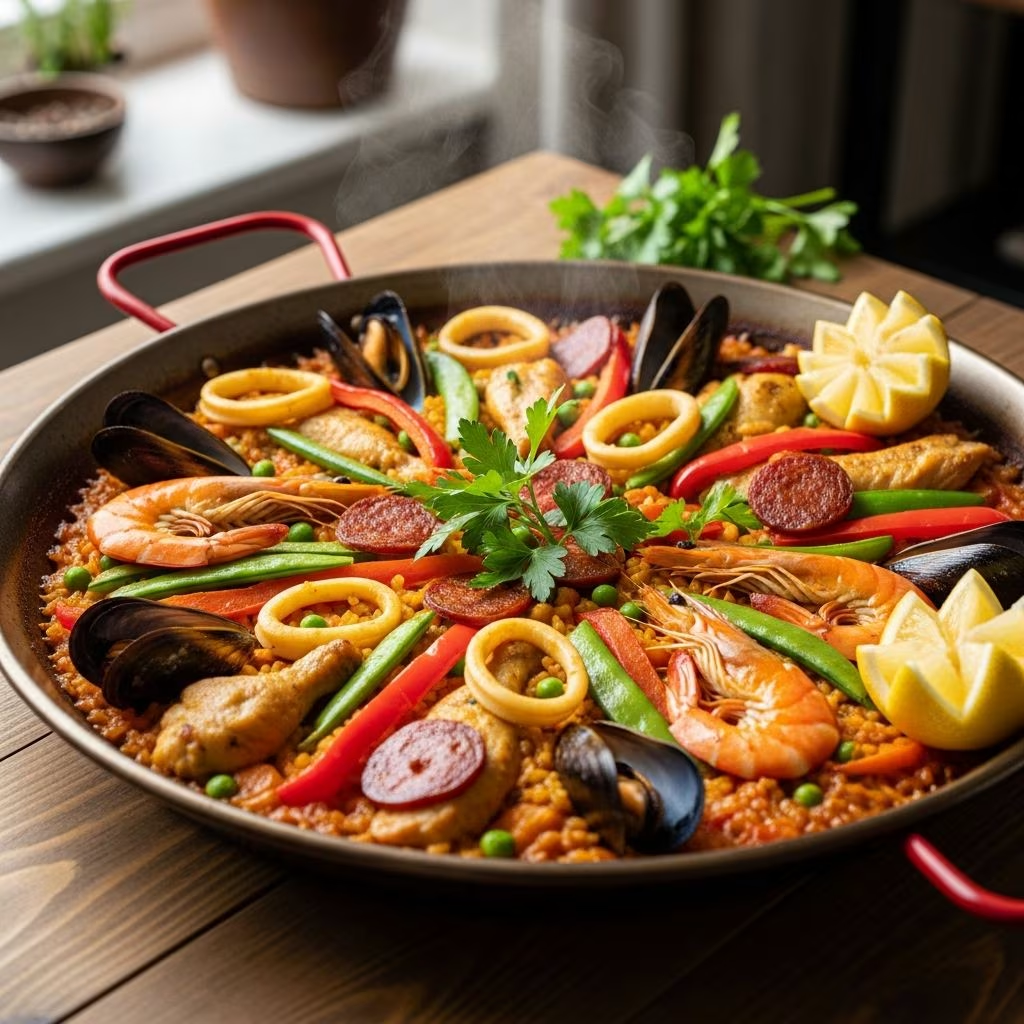
Paella stands as one of Spain’s most celebrated culinary exports, a vibrant rice dish that captures the essence of Mediterranean flavors through its blend of proteins, aromatic spices, and perfectly cooked grains. Originating from the Valencia region, this one-pan wonder has evolved into countless variations, each telling a story of local ingredients and traditions. Whether you’re aiming for a seafood-laden feast or a hearty meat-based version, mastering paella involves understanding its core elements: short-grain rice, saffron-infused broth, and the coveted crispy bottom layer known as socarrat.
Understanding Paella: Origins and Essentials
At its heart, paella is a rice dish cooked in a wide, shallow pan over an open flame, allowing for even heat distribution and that signature crust. Traditional versions feature rabbit, chicken, and snails, but modern adaptations incorporate seafood, chorizo, and vegetables to suit diverse palates. The key to authenticity lies in using bomba or arborio rice, which absorbs liquid without becoming mushy, and saffron for its golden hue and earthy aroma.
Essential tools include a paella pan, ideally 15-18 inches wide for home use, though a large skillet works in a pinch. Firewood or a gas burner imparts smokiness, but a stovetop or oven suffices for beginners. Broth forms the backbone—chicken, fish, or vegetable—simmered with garlic, onions, and smoked paprika for depth.
Key Ingredients for Flavorful Paella
Building layers of flavor starts with quality components. Proteins like chicken thighs, shrimp, mussels, and chorizo provide texture and richness. Rice absorbs the juices, while vegetables such as bell peppers, tomatoes, and peas add freshness.
- Rice: Medium-grain Spanish varieties like bomba or Calasparra for optimal absorption.
- Saffron: A pinch steeped in warm water colors and scents the dish.
- Proteins: Chicken, shrimp, clams, mussels, chorizo for mixed paella.
- Aromatics: Onions, garlic, smoked paprika, rosemary.
- Liquids: Broth, white wine, diced tomatoes.
Proportions matter: aim for 2.5 cups rice to 5-6 cups liquid, adjusting for evaporation. Fresh lemons for serving brighten the final dish.
Classic Chicken and Chorizo Paella Recipe
This straightforward version serves 6 and takes about 1 hour, ideal for weeknight dinners or gatherings. It balances smoky sausage with tender chicken and crisp rice edges.
Ingredients
| Ingredient | Quantity |
|---|---|
| Chicken thighs, boneless | 1 lb, cubed |
| Chorizo sausage | 8 oz, sliced |
| Arborio rice | 2 cups |
| Chicken broth | 4.5 cups |
| Yellow onion | 1, diced |
| Garlic cloves | 4, minced |
| Smoked paprika | 1 tsp |
| Saffron threads | Pinch |
| Diced tomatoes | 14 oz can |
| Olive oil | ¼ cup |
| Salt and pepper | To taste |
| Parsley and lemon | For garnish |
Step-by-Step Instructions
- Season chicken with salt, pepper, and half the paprika. Heat oil in paella pan over medium-high; brown chicken 5 minutes. Remove and set aside.
- Add chorizo; cook until crisp, 3 minutes. Remove.
- Sauté onion and garlic until soft, 4 minutes. Stir in remaining paprika and saffron.
- Add rice; toast 2 minutes. Pour in tomatoes and broth; bring to boil.
- Return chicken and chorizo; simmer 20 minutes uncovered, no stirring.
- Check rice doneness; increase heat 2-3 minutes for socarrat. Rest 5 minutes, garnish with parsley and lemon.
Prep: 15 mins | Cook: 45 mins | Total: 1 hr. Serve with crusty bread.
Luxurious Seafood Paella Variation
For coastal vibes, this seafood paella swaps meat for ocean treasures. Shrimp, mussels, and clams shine in a saffron broth, yielding 4-6 servings.
Ingredients Highlights
- Shrimp (peeled): 12 oz
- Mussels and clams: 1 lb each, cleaned
- Spanish rice: 1.5 cups
- Fish broth: 3.5 cups
- Smoked paprika, oregano: 1 tsp each
- Fire-roasted tomatoes: 15 oz
- Frozen peas: ½ cup
Cooking Method
Marinate shrimp lightly. Sauté chorizo (optional) first, then aromatics. Add rice, liquids, and seafood in stages: hardy clams first, delicate shrimp last. Cover briefly for shellfish to open. Aim for 30-40 minutes total cook time.
Pro tip: Use a seafood stock from shells for intensified flavor. Discard unopened shellfish.
Perfecting the Socarrat: Tips and Tricks
The holy grail of paella is socarrat—that caramelized rice crust. Avoid stirring after adding liquid to let it form. Listen for crackling sounds near the end; a final high-heat blast seals it. Outdoor cooking enhances smokiness, but indoor ovens at 425°F for 15 minutes mimic the effect.
- Use hot broth to maintain simmer.
- Don’t overcrowd the pan.
- Rest off-heat 10 minutes for flavors to meld.
- Experiment with rabbit or rabbit for Valencia authenticity.
Common Mistakes to Avoid
Over-stirring turns rice gummy. Insufficient liquid leads to dry results—measure precisely. Skipping saffron diminishes color and taste; substitutes like turmeric fall short.
Low-quality rice breaks down. Fresh, high-heat cooking is non-negotiable for texture.
Paella Pairings and Serving Suggestions
Paella pairs beautifully with Albariño white wine or Tempranillo red. Serve family-style straight from the pan. Accompany with aioli, grilled vegetables, or simple green salad. For dessert, opt for crema catalana.
Nutritional Breakdown
A serving (1/6 recipe) of mixed paella offers ~500 calories, 25g protein, 50g carbs, 20g fat. Seafood versions are leaner, rich in omega-3s.
Storage and Reheating
Refrigerate leftovers up to 2 days. Reheat gently in a skillet with broth splash to revive moisture. Freezes well for 1 month; socarrat won’t return.
Frequently Asked Questions (FAQs)
What rice is best for paella?
Bomba or Calasparra rice absorbs up to 3x its volume in liquid without mushiness.
Can I make paella without a paella pan?
Yes, a wide cast-iron skillet or baking dish works, though even cooking may vary.
How do I clean mussels and clams?
Soak in salted water 30 minutes to purge sand; scrub shells, debeard mussels. Discard open ones that don’t close when tapped.
Is vegetarian paella authentic?
While traditional includes meat/seafood, veg versions with artichokes and beans honor Spanish roots.
Why is my paella soggy?
Too much liquid or low heat—use exact ratios and high simmer.
Advanced Variations for Seasoned Cooks
Try black paella with squid ink for drama, or vegan with mushrooms and roasted peppers. Rabbit paella revives Valencia classics. For crowds, scale up pan size and ingredients proportionally.
Paella embodies communal dining—gather friends, fire up the stove, and let the aromas transport you to Spain. With practice, you’ll craft personalized masterpieces.
References
- Authentic Spanish Inspired Paella Recipes — Carolina Rice (Mahatma). Accessed 2026. https://carolinarice.com/paella/
- Paella Recipe — i am a food blog. Accessed 2026. https://iamafoodblog.com/paella-recipe/
- Easy Spanish Paella Recipe — Panning The Globe. 2013-05 (authoritative classic). https://www.panningtheglobe.com/easy-spanish-paella/
- Easy Spanish Paella Recipe — What’s Gaby Cooking. Accessed 2026. https://whatsgabycooking.com/spanish-paella/
- 24 Paella recipes — Delicious Magazine. Accessed 2026. https://www.deliciousmagazine.co.uk/collections/paella-recipes/
- Paella Recipes — Paella Pans. Accessed 2026. https://www.paellapans.com/recipes/